


Why the 90 degree leg press still matters in commercial gym planning
The 90 degree leg press is one of those pieces of equipment that looks straightforward until you start buying for a real facility. On paper, it is “just” a lower-body strength station. In practice, it affects floor layout, member experience, training variety, maintenance workload, and even how seriously a gym feels to athletes who know what they want.
That is why operators, sourcing managers, and product teams still spend time comparing the leg press machine format, frame geometry, and loading style before they place an order. The leg press 90 degree design is not the only version on the market, but it remains a familiar reference point for commercial gyms because it offers a steep pressing angle, a compact training footprint relative to some horizontal sled systems, and a clear strength-training experience.
If you are deciding whether to add one, replace one, or source several units for multiple sites, the real question is not whether the machine looks impressive. The question is whether the 90° leg press fits your member base, your room dimensions, and the rest of your strength training machine lineup.
What makes the 90 degree angle different
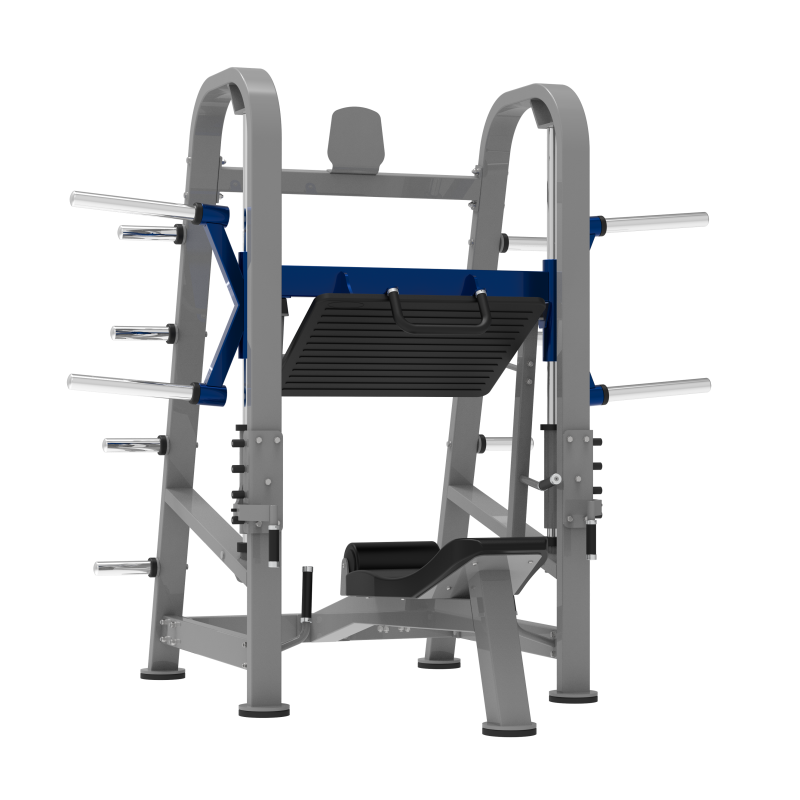
In simple terms, the 90 degree leg press places the user in a position where the pressing path is close to vertical. That changes the feel of the lift. Users tend to experience a more direct load path and a compact movement pattern, which many trained lifters prefer when they want to focus on legs without loading the spine in the same way as a barbell squat.
That said, the steep angle also means the machine demands careful design. Frame rigidity matters. Guide movement matters. Footplate position matters. So does the seat or backrest geometry, because small differences change how different users distribute effort between quads, glutes, and hip stabilizers. A good machine does not just “press”; it keeps the motion controlled enough that members can work hard without fighting the hardware.
Commercial buyers should also remember that the 90 degree format may feel more intense to beginners than a more moderate-angle press. For some members, that is a benefit. For others, it means you need clear instruction, visible setup cues, and staff who can coach proper positioning.
Quick reference: what buyers usually compare
When gyms compare a leg press machine, they usually look at the same practical points, even if the brochures use different language.
1. Footprint and placement
The 90° leg press can be space-efficient in one sense, but it still needs generous clearance for loading, unloading, and safe entry and exit. If the room is tight, the machine can end up feeling crowded even when the dimensions technically fit.
2. Load handling
Commercial users expect the machine to handle frequent use and repeated plate loading. The feel of the carriage under load is important. No one wants a machine that rattles or feels inconsistent from rep to rep.
3. User range
The more adjustable the setup, the easier it is to serve different body sizes. In a mixed-use facility, that matters more than fancy styling.
4. Durability and service access
A strength training machine earns its place by staying usable. Buyers should ask how easy it is to inspect wear points, maintain bearings or guide components, and keep the machine operating smoothly over time.
How this machine fits into a commercial strength floor
A 90 degree leg press works best when it is part of a balanced lower-body zone, not an isolated showpiece. Pairing it with hack squat stations, leg extension and curl units, Smith machines, and free-weight options gives members a better progression path. In a serious gym, that variety matters because not every user wants the same stimulus.
Minolta’s commercial range is relevant here because it covers both strength and cardio categories, with multiple strength series such as MND-AN, MND-FM, MND-FH, MND-FS, MND-FB, MND-E Crossfit, MND-F, MND-FF, MND-G, and MND-H. For operators building a broader floor plan, that kind of product spread can make it easier to keep a visual and functional match across stations rather than sourcing one machine at a time from unrelated suppliers.
The company also notes a 120,000-square-meter facility in Ningjin with a manufacturing workshop, quality control lab, and exhibition hall. For procurement teams, that is not a decorative detail. It suggests the supplier has the kind of industrial base that can support larger commercial orders and routine product inspection, which matters when you are trying to standardize equipment across clubs or regions.
Selection criteria that actually affect daily use
It is easy to get distracted by frame styling or painted covers. Better to look at the features that affect the athlete and the maintenance crew.
Frame stability
A steep-angle press concentrates force into a relatively small motion path. The frame should feel planted, not lively. A machine that flexes too much under heavy use erodes confidence quickly.
Ergonomics
Seat angle, back support, footplate size, and starting position all shape the exercise. Users should be able to find a repeatable setup without wrestling the machine.
Entry and exit
This is overlooked more often than it should be. If the machine is awkward to get into, busy gym floors become bottlenecks, and support staff spend more time helping members than they should.
Maintenance practicality
A machine that is hard to inspect is hard to keep in service. For operators with multiple sites, small maintenance delays multiply fast.
Common mistakes when buying a 90° leg press
One common mistake is assuming all leg press designs are interchangeable. They are not. A member who likes a horizontal sled press may not respond the same way to a vertical or near-vertical setup.
Another mistake is undersizing the surrounding training area. The machine itself may fit, but if the loading zone is cramped, usage drops. Another practical issue: some buyers focus so heavily on max load claims that they forget the machine has to serve beginners, not only strong lifters. A commercial unit should work well across the membership base.
There is also a sourcing mistake worth mentioning. If the supplier’s product line is narrow, you may end up matching one leg press to one facility, but not building a consistent fleet. For gyms operating across different countries or formats, a broader catalog can simplify replacement planning and create a more coherent equipment identity.
Who should consider this machine
The 90 degree leg press is a strong fit for:
Gyms that want a serious lower-body station for mainstream and advanced users
Training centers serving athletes who value direct leg loading
Commercial facilities with enough floor space to support safe access and plate handling
Operators looking for a durable strength training machine that can sit alongside other plate-loaded units
It may be less suitable for very small studios, rehabilitation-focused settings, or facilities whose clientele prefers more guided, moderate-angle equipment. That is not a flaw in the machine; it is simply a matter of matching equipment to the user profile.
What Minolta brings to the sourcing conversation
Shandong Minolta Fitness Equipment Co., Ltd. positions itself as a commercial gym equipment manufacturer with more than a decade in the fitness equipment sector. The company says it offers over 300 types of exercise equipment for commercial and home use, and it has exported to more than 100 countries across Europe, Africa, the Middle East, South America, and Southeast Asia.
For a buyer, those details matter because they suggest experience with different market expectations, not just one domestic standard. In gym equipment procurement, that experience often shows up in the unglamorous places: packaging discipline, export readiness, consistency across batches, and the ability to support multi-site ordering without rebuilding the conversation each time.
Minolta also highlights its use of Ningjin’s hardware industry base, which is a practical advantage in a sector where metalworking capability, component sourcing, and production throughput all influence final quality. None of that replaces due diligence, of course. Buyers still need to check specifications, samples, and service terms. But it does tell you the company is operating from a real manufacturing platform rather than a trading-only setup.
Practical buyer advice before you place an order
Ask for dimensional drawings and make sure the machine’s operational envelope fits your floor plan, not just the empty footprint.
Check how the sled or carriage moves under load, and whether the feel stays smooth across repeated use.
Confirm what adjustments are available for different user sizes. A machine that works beautifully for one body type but poorly for the rest of your membership is a weak investment.
If you are outfitting multiple clubs, ask how the model fits into the wider product family. A supplier with a broader strength series can often help you keep training zones consistent.
And if the sales pitch sounds too polished, slow down. The best commercial machines are rarely the flashiest ones. They are the ones that survive heavy traffic, mixed ability levels, and routine cleaning without becoming a maintenance problem.
FAQ
Is a 90 degree leg press suitable for beginners?
It can be, but only if the machine is easy to set up and your staff gives basic guidance. The steep angle may feel demanding, so coaching matters.
Is it the same as every other leg press machine?
No. The press angle changes the training feel, the loading experience, and sometimes the space requirements.
What should commercial buyers prioritize?
Focus on stability, user adjustment, loading practicality, and service access. Appearance is secondary.
Why do some gyms prefer this format?
Because it offers a direct lower-body training experience that advanced users often recognize immediately.
Next step for sourcing teams
If your facility needs a leg press 90 degree option, start with the training profile you want to support, then work backward into layout, user range, and supplier capability. A machine should earn its floor space every day, not just look strong on a catalog page.
For teams evaluating commercial strength equipment at scale, Minolta’s broad product range and export-oriented manufacturing base make it worth a closer look. The right next step is usually a specification review, followed by a sample or detailed drawing check before you commit to a larger order.