


Why a commercial plate-loaded pulldown still earns floor space
A Commercial Lat Pulldown machine is one of those pieces of strength equipment that looks straightforward until you try to specify the right one for a gym. The movement is familiar, but the buying decision is not just about “can it train the back?” It is about how the machine feels under load, how it fits different users, how much abuse the frame will take, and whether the layout makes sense in a commercial room where every square meter has to work hard. For operators, sourcing managers, and training facility planners, that matters more than a glossy render or a catchy product name.
The plate-loaded style seen in this category has a few practical advantages. It removes the need for a cable stack, which changes the structure of the machine and often gives it a heavier, more mechanical feel. The movement path is guided by levers and pivot points, so the user gets a controlled pull with less setup fuss. In a busy facility, that simplicity can be valuable. There is less to adjust, fewer wear parts in the load path, and often a more direct, solid training experience that serious lifters notice immediately.
What this machine is designed to do
A Lat Pulldown machine is built for pulling work that targets the back, especially the latissimus dorsi, while also involving the shoulders, arms, and upper back. In practical gym language, it supports one of the core vertical pull patterns. A seated lat pulldown usually gives the user a stable lower body position, with thigh hold-down rollers or pads to keep the body anchored while the arms do the work.
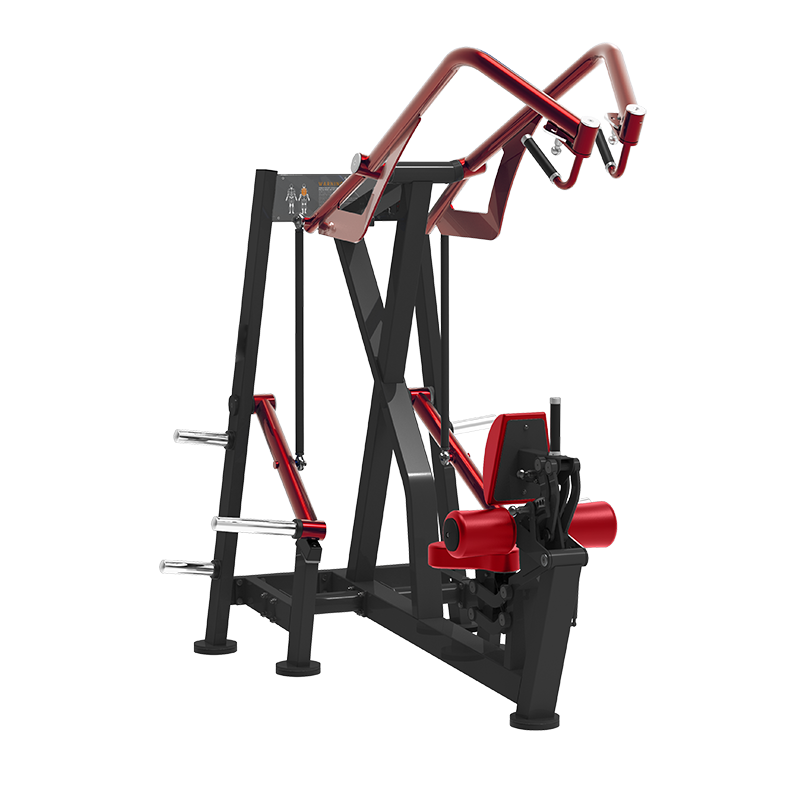
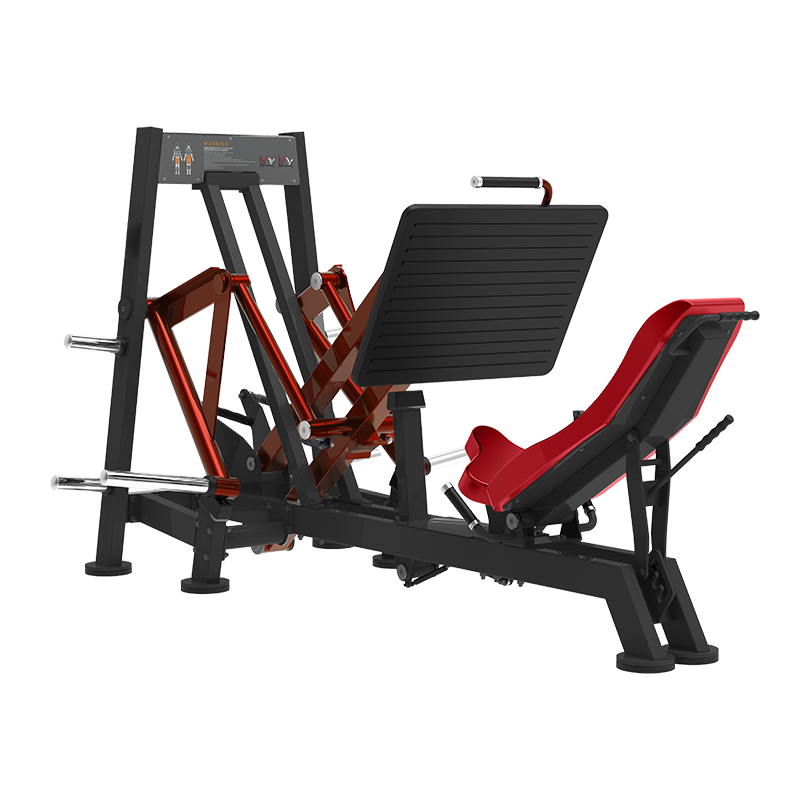
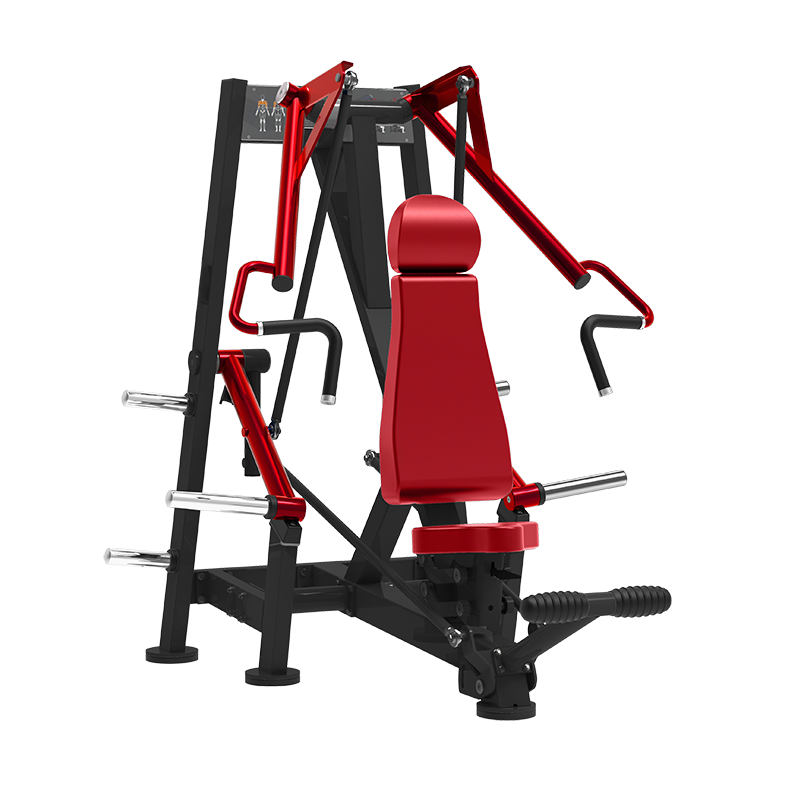
The product category described here appears to be a plate-loaded commercial strength machine with a wide base, heavy steel frame, overhead lever arms, and adjustable lower support. That makes it suitable for commercial gyms, hotel gyms, fitness studios, physiotherapy settings, and even demanding home gyms where the owner wants a floor-standing machine instead of a lighter consumer unit.
A good back workout machine should feel stable before the first plate is loaded. That sounds obvious, but it is often where cheaper equipment falls short. If the frame flexes, the user loses confidence. If the seat geometry is awkward, the machine gets used less. If the grips are poorly placed, the pull path feels forced. Those little details decide whether a machine becomes a regular stop on the training floor or just another metal object in the corner.
Quick-reference buyer takeaways
For teams comparing commercial gym equipment, a plate-loaded pulldown often makes sense when:
It needs to serve experienced members who like a more forceful resistance feel.
The facility prefers strength training equipment with a lower dependence on cable-stack maintenance.
The room layout can accommodate a freestanding frame with a wider footprint.
You want a weight training machine that looks and performs like serious commercial gear rather than a compact home unit.
The user base includes different torso lengths and training styles, making seat and support adjustment important.
That said, a plate-loaded design is not automatically the best choice for every site. If the facility needs rapid, almost casual use by many beginners, a selectorized machine may be simpler. If floor space is limited, the footprint and entry clearance of a lever machine deserve real attention. Buyers sometimes forget that what fits on paper can still crowd the room once installed.
What stands out in the construction
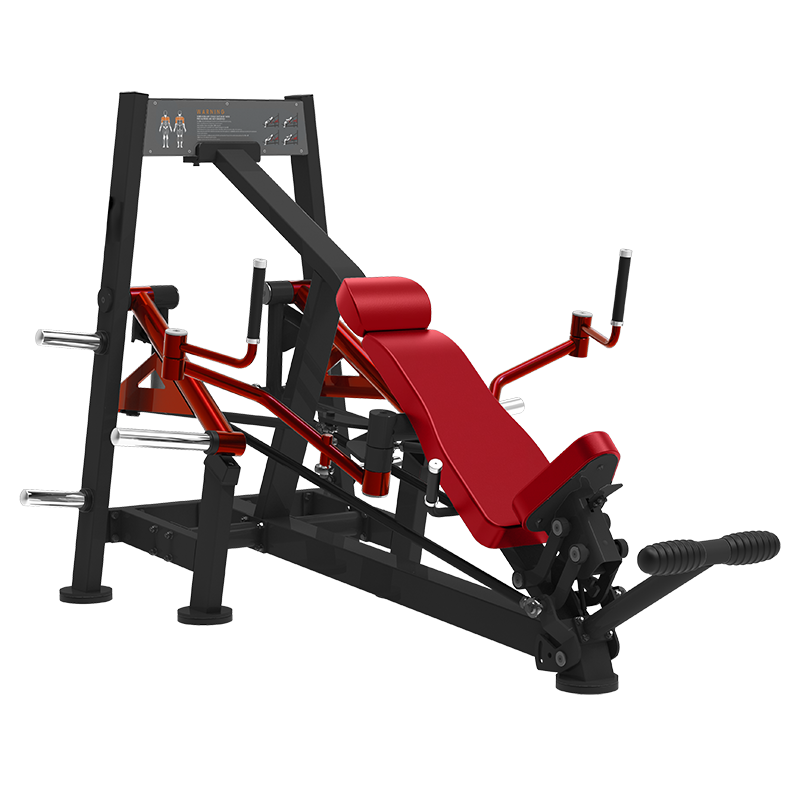
The visible structure suggests a welded steel fabrication with a black powder-coated main frame and red powder-coated moving arms or pads. That combination is common in commercial gym equipment because it gives the machine a tougher visual profile and a finish that can handle repeated contact better than painted surfaces in many everyday settings. Heavy steel tubing, pivot linkages, and visible adjustment points indicate a machine designed for repeated load cycles rather than decorative display.
Several visible elements matter from a sourcing point of view:
The wide base supports stability under pulling force.
The overhead lever arms create the resistance path without a cable stack.
The top handles or grip options suggest multiple hand positions.
The seat and lower leg or thigh support assembly help lock the body into position.
Adjustment holes and pins indicate the machine can be adapted to user height or setup preference.
There is also a practical manufacturing story here. Machines like this are usually produced through welded steel fabrication, tube bending, pivot machining, powder coating, and upholstery assembly. Buyers do not need to know every process detail, but they should care about the results: aligned pivots, clean welds, smooth motion, and durable contact surfaces. A machine can look heavy-duty and still feel crude if the pivot points are sloppy or the adjustment system is awkward.
How to evaluate a commercial gym equipment purchase
When buying a Gym lat pulldown for a commercial environment, compare more than the headline specification sheet. The important questions are often physical, not promotional.
1. Does the geometry suit your users?
A good back workout machine should accommodate a range of body sizes without forcing users into a compromised position. The seat height, thigh hold-down range, grip positions, and start point all affect comfort. If the machine is too tall or too narrow in the wrong places, taller users may feel cramped and shorter users may struggle to stabilize themselves.
2. Is the load path smooth and controlled?
A plate-loaded lever machine should move in a way that feels predictable. This is not only about “smoothness” in a marketing sense. It is about whether the machine loads evenly, tracks without wobble, and lets the user keep tension through the range. Rough movement often points to basic mechanical issues that become more annoying with time.
3. Will it survive the room it is going into?
Commercial gyms are hard on equipment. Members drop plates, shift seats quickly, and use machines in ways the brochure never imagines. Heavy-duty frames, proper protective finishes, and durable upholstered contact points matter. If the machine will live in a hotel gym or rehab space, appearance may matter as much as brute durability. If it will live in a strength-focused club, durability probably wins every time.
4. Can maintenance be managed easily?
A non-cable lever structure can reduce some of the wear associated with stacks and pulleys, but it does not eliminate maintenance. Pivot joints, upholstery, and adjustment hardware still need inspection. Buyers should ask how service access works and whether replacement parts are practical to source. That question is easy to postpone and expensive to ignore.
Common mistakes buyers make
One common mistake is choosing a machine because it looks massive. Size alone does not equal quality. Some of the most frustrating machines on the gym floor are oversized but poorly thought out.
Another mistake is underestimating the difference between exercise variations. A Commercial Lat Pulldown machine may look similar to other upper-back machines, but the exact body position and pull path change the user experience. A machine that works well for one training style may feel wrong for another.
A third mistake is ignoring the entry and exit flow. If the lower support or foot platform makes it awkward to get seated, users will avoid it during peak hours. In a commercial setting, convenience is not a luxury. It is part of utilization.
Finally, some buyers focus too heavily on price and too little on frame quality and finish. In strength training equipment, cheap can become expensive the first time a seat bracket loosens or the coating starts looking tired after a short period of use.
Where a plate-loaded pulldown fits best
This style of weight training machine is a strong fit for facilities that want a rugged, muscle-focused training zone. It can sit comfortably beside plate-loaded rows, presses, and squat variants, creating a consistent training language across the room. That consistency is useful. Lifters understand how to approach the equipment quickly, and staff can explain the setup without a long learning curve.
It is also a practical choice for a facility that wants to balance training intensity with lower mechanical complexity. The machine delivers a substantial feel without requiring the same stack-and-cable architecture as some selectorized units. For some operators, that simplicity is enough to tip the decision.
About the manufacturer behind the equipment
Shandong Minolta Fitness Equipment Co., Ltd. positions itself as a manufacturer of commercial gym equipment with over a decade of experience in the fitness sector. The company says its facility covers 120,000 square meters and includes a manufacturing workshop, quality control lab, and exhibition hall. Its product range reportedly includes more than 300 exercise equipment types across strength and cardio lines, and it exports to over 100 countries across Europe, Africa, the Middle East, South America, and Southeast Asia.
For buyers, that scale can matter because it often indicates a more developed production system, broader product coverage, and the ability to support mixed equipment orders. Minolta’s strength series and cardio series suggest it is not a niche builder of one or two machines, but a broader supplier for commercial and home use. Of course, buyers should still verify the exact unit, configuration, and commercial suitability of any specific machine rather than assuming every product in a catalog is built to the same standard.
Practical questions to ask before you place an order
Before committing to a Lat Pulldown machine, ask for the real details that affect installation and use:
What are the overall dimensions and floor clearance requirements?
How many load points or plate sleeves does the machine use?
Are the grip positions fixed, multi-grip, or interchangeable?
How is the seat and thigh support adjusted?
What kind of finish is used on the frame and moving components?
How should the machine be maintained over time?
Those questions help separate a showroom sample from a machine that will actually hold up in a busy environment.
A simple next step for buyers
If you are comparing a Commercial Lat Pulldown machine for a gym project, start with the training profile of the site, then map that against footprint, user comfort, and mechanical build. Ask for photos, drawings, and the exact configuration of the machine you intend to buy. If the supplier can show consistent fabrication details and clearly explain the adjustment system, you are already ahead of the average purchase.
For procurement teams and fitness operators, the right choice is usually the one that feels honest in its construction and practical in daily use. That is the real test of any commercial pull machine: not how it reads in a catalog, but how it behaves after months of plates, sweat, and repeated use on a crowded floor.