


Why commercial gyms keep investing in plate-loaded pressing machines
Commercial gym equipment is judged less by how flashy it looks than by how it holds up to daily traffic, changing user skill levels, and the pressure to keep members training safely. That is where a plate loaded machine often earns its place. For operators, coaches, and sourcing managers, the real question is not whether free weights are “better” in the abstract. It is whether a guided resistance station can deliver predictable training value, manageable upkeep, and a smoother user experience on a busy floor.
A plate-loaded design sits in a practical middle ground. It gives users the familiar loading flexibility of plates while keeping the movement path more controlled than a barbell. In a commercial setting, that matters. Beginners need support. Experienced lifters want efficient progression. Staff want fewer complaints about awkward setup. And facilities that serve hotel guests, rehab clients, or personal training members often need equipment that feels stable without being intimidating.
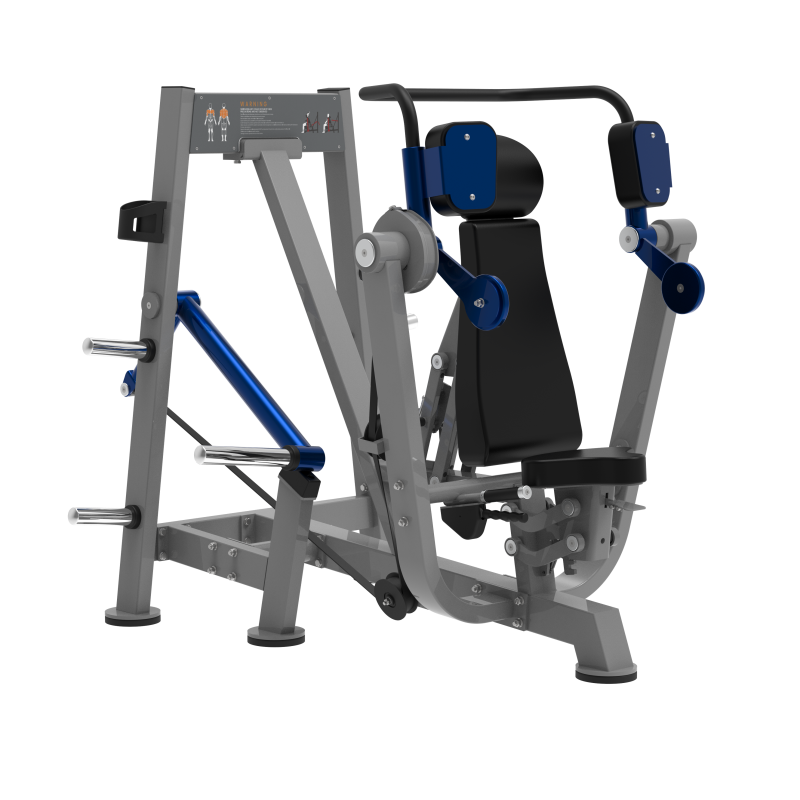
The machine described here fits that use case well: a welded steel frame, red moving arms, a contoured seat and tall backrest, dual lever arms, and visible plate-loading horns on both sides. It is the kind of commercial fitness machine that signals serious strength training without requiring a user to balance an external load in open space.
What this type of machine is designed to do
At a glance, the machine is built for upper-body pressing and pulling patterns, with a likely chest press, shoulder press, or fly-style function. The exact exercise set depends on the final geometry and lever path, which cannot be confirmed from appearance alone. Still, the broader purpose is clear enough: fixed-path resistance for the chest, shoulders, and upper arms.
That is one reason gym machinery of this sort remains common in commercial rooms. It helps standardize training. When a user sits down, sets the seat, and loads plates, the machine supplies structure. The movement is guided, the range is easier to repeat, and the transition between sets is simpler than handling loose free weights in a crowded area.
For operators, this kind of strength training equipment also helps diversify the floor. A facility that already has dumbbells, benches, and racks can still benefit from a machine that offers controlled pressing or fly movement. Not every member wants to bench press with a spotter. Not every client wants to learn a complex free-weight pattern on day one.
What stands out in the build
The visual cues matter here because they tell a buyer a lot about the intended use.
The black welded frame suggests a structure made for commercial duty rather than light home use. The red lever arms and support components create a clear contrast, which is not only cosmetic. In a busy gym, visible moving parts are easier for users to understand. The seat is padded and contoured, and the tall backrest offers upright support, which is useful when a user needs a stable torso position during pressing work.
The dual lever arms and pivot joints are important as well. They suggest independent or semi-independent arm movement, which can help users press with a more natural pattern than a rigid single-bar mechanism. The black handles with curved grips and chrome ends are a small detail, but details like that affect usability. Grip comfort matters more than it gets credit for.
The plate horns on both sides are the clearest signal of all: this is not a selectorized stack machine. It is a plate loaded machine, so the gym controls resistance by adding plates. That gives operators flexibility, especially in facilities where plate inventory already exists.
Why buyers still choose plate-loaded over stack machines
There is no universal winner in the strength machine category, but plate-loaded stations have some advantages that are hard to ignore.
First, they tend to feel closer to free-weight training. For many lifters, that matters. A machine with a strong lever action and plate loading can deliver a heavier, more athletic feel than a stack machine, especially in pressing patterns.
Second, loading can be intuitive for members who already use plates elsewhere in the gym. That makes it easier to integrate into an existing training culture.
Third, plate-loaded systems are often attractive when a buyer wants commercial gym equipment that is durable, visually substantial, and capable of handling serious workloads without the complexity of a weight stack enclosure. That is not a guarantee of lower maintenance, of course. Hinges, pivots, and upholstery still need attention. But the mechanical logic is straightforward.
There is a caution here, though. Plate-loaded does not automatically mean better for every facility. If your floor is dominated by casual members, a stack machine may be simpler. If your clientele is experienced or coached, plate loading can be the stronger commercial choice.
How to judge whether a machine like this fits your facility
The right buying decision usually comes down to a few practical checks.
1. Who will use it most?
If your members are beginners, rehab patients, or hotel guests, a guided machine with stable seating and clear loading points is valuable. If your users are advanced lifters, they may care more about leverage feel, grip variety, and the ability to load plates progressively.
2. What kind of training culture do you have?
A strength-focused gym can justify more plate-loaded stations because users expect to handle plates and train with intent. In a mixed-use facility, the same machine still works, but the operator should think about instruction and floor layout.
3. How much space can you spare?
Commercial fitness machines with lever arms usually need more room than their outline suggests. You are not only buying the footprint of the base; you are buying the arc of motion, the loading side access, and the clearance for users moving in and out.
4. Can your staff support the equipment?
Even well-built fitness equipment benefits from routine checks. Upholstery wear, bolt tightness, pivot smoothness, and plate horn condition should be part of normal maintenance. Ignore that, and the machine will tell the story later.
Common mistakes buyers make
One common mistake is treating all plate-loaded strength stations as interchangeable. They are not. Handle position, lever length, seat geometry, and arm path change the user experience more than many buyers expect.
Another mistake is focusing only on appearance. A clean finish and bold color scheme help sales floors, but a machine earns its keep through repeat use. If the movement feels awkward, members will drift away from it.
Buyers also sometimes underestimate how a commercial gym equipment purchase affects the overall traffic pattern. A machine that is popular but poorly placed can create bottlenecks. This is especially true in hotel gyms and personal training studios, where a single station may dominate a small room.
Finally, it is a mistake to assume all plate-loaded units are equally suited to rehabilitation environments. Some may offer controlled motion, but that does not automatically make them appropriate for every patient profile. In physiotherapy settings, staff should always match the machine to the user’s needs.
Where Minolta fits into the picture
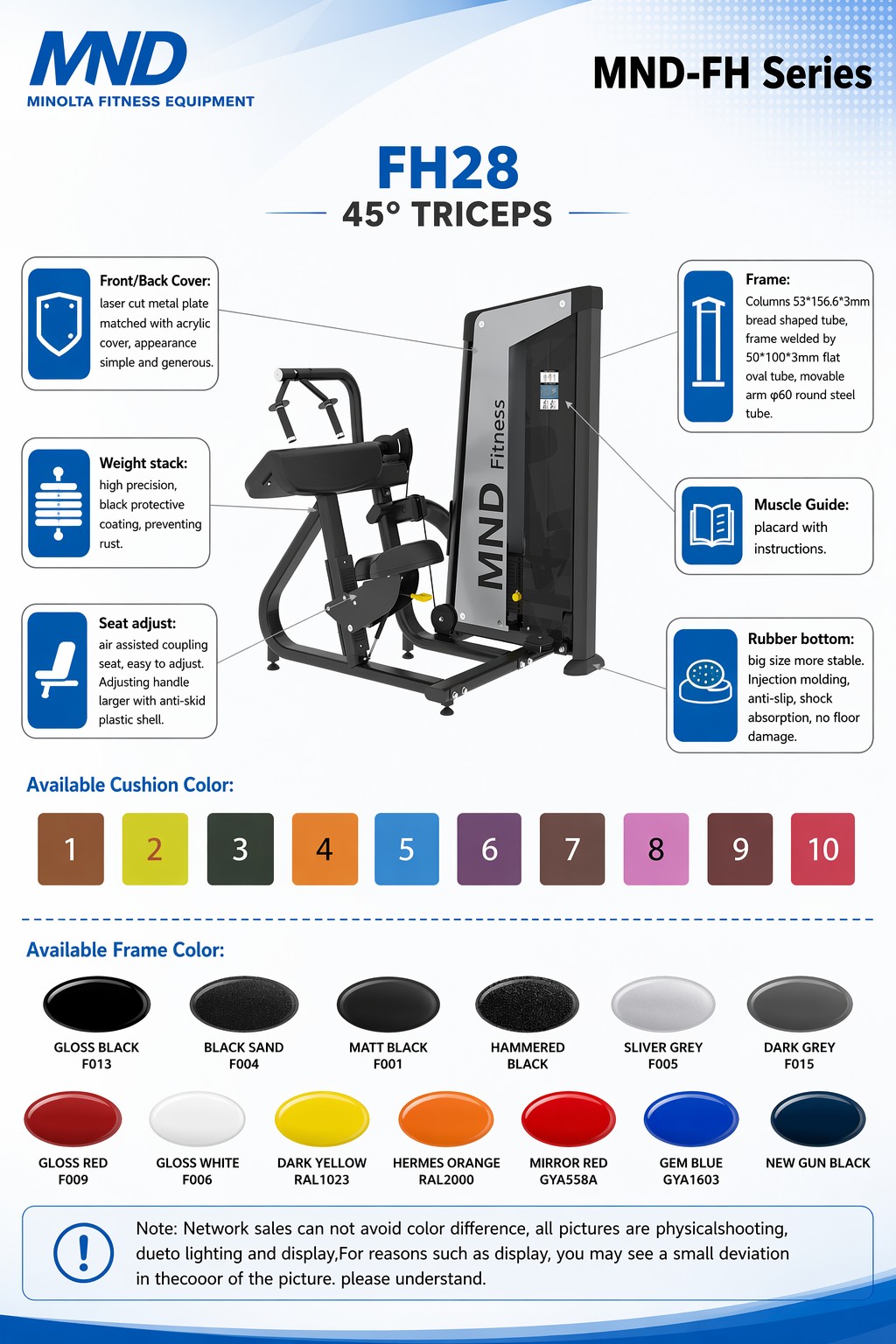
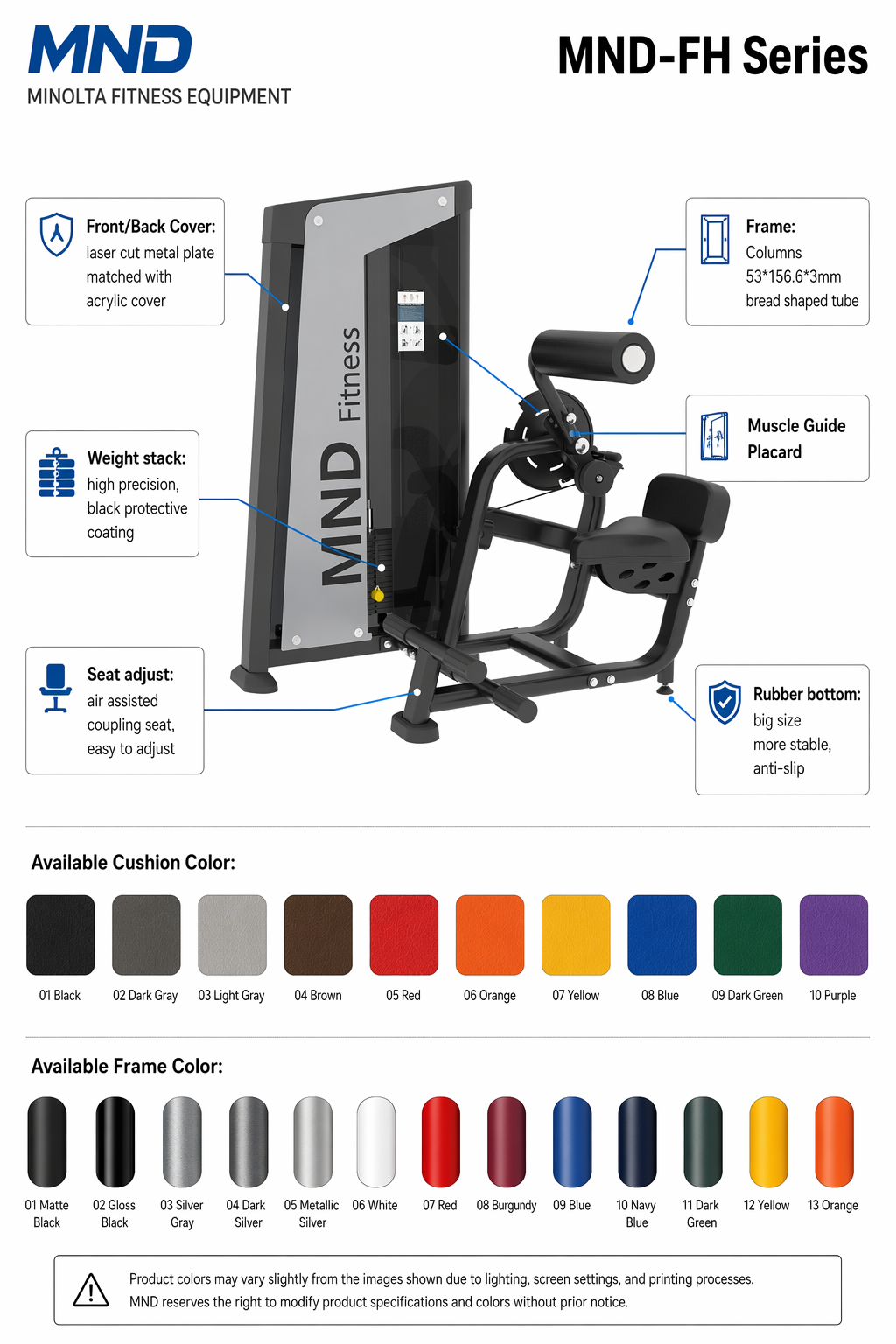
Shandong Minolta Fitness Equipment Co., Ltd. operates in Ningjin’s hardware manufacturing environment and positions itself as a manufacturer with more than a decade of experience in the fitness equipment sector. The company says its facility covers 120,000 square meters and includes a manufacturing workshop, quality control lab, and exhibition hall. It also reports more than 300 types of exercise equipment across strength and cardio lines, including multiple Strength Series families such as MND-AN, MND-FM, MND-FH, MND-FS, MND-FB, MND-E Crossfit, MND-F, MND-FF, MND-G, and MND-H, plus cardio ranges like MND-D, MND-X500, X600, and X700.
For buyers, that kind of breadth can matter. It suggests a supplier used to serving multi-unit facility projects rather than isolated retail sales. The company also states that it has exported to more than 100 countries across Europe, Africa, the Middle East, South America, and Southeast Asia. That does not by itself guarantee the exact machine you need, but it does indicate a business built around international commercial fitness equipment supply.
A quick buyer’s checklist before you request a quote
Before you move forward on a machine like this, ask for the details that determine whether it truly fits your floor:
- exact exercise function and lever path
- dimensions and required operating clearance
- load compatibility and plate horn configuration
- seat adjustment range and pad geometry
- frame finish and upholstery specifications
- assembly requirements and spare-part support
Those details will matter more than a glossy photo.
FAQ
Is a plate loaded machine good for commercial gyms?
Yes, especially where members want guided strength work with the feel of free weights. It is a strong fit for gyms that prioritize pressing and pulling stations.
Is this type of machine better than a weight stack machine?
Not always. Plate-loaded equipment usually offers a more free-weight-like experience, while stack machines are often simpler for quick changes and beginner use.
Can one machine serve multiple training goals?
Sometimes, yes. Depending on the lever design, a single commercial fitness machine may support pressing, shoulder work, or fly-style movement. But buyers should confirm the actual function rather than assume it from the frame alone.
What should I inspect first on a new plate loaded machine?
Check stability, arm smoothness, seat comfort, loading access, and whether the movement feels natural under light and moderate resistance. That first impression usually predicts long-term satisfaction better than the brochure does.
What to do next
If you are sourcing commercial gym equipment for a strength-focused floor, this kind of plate-loaded station deserves a serious look. It offers controlled resistance, a familiar loading method, and the kind of durable, floor-standing presence that commercial buyers tend to prefer.
The smart next step is to request the technical sheet, confirm the exact exercise function, and compare the machine against the needs of your space and user base. If you are building a full strength area, use it as part of a broader equipment mix rather than a standalone decision. That is usually where the best commercial value shows up.