


Why buyers keep asking about the commercial leg press machine
A commercial leg press machine is one of those purchases that looks simple on paper and turns complicated the moment you put it into a real facility. Floor space matters. Member expectations matter. So does the difference between a machine that feels solid at 7 a.m. and one that starts rattling when the gym fills up. For sourcing managers, coaches, and product teams, the question is rarely just “which leg press?” It is usually: which design matches my users, my room layout, and the kind of wear a busy commercial gym creates day after day.
That matters because lower-body strength equipment is often judged by first touch. A machine may be technically capable, but if the carriage feels awkward, the setup is fussy, or the footprint swallows half the training zone, it becomes a hard sell on the gym floor. The right choice should make loading intuitive, support a wide range of users, and survive repeated use without becoming a maintenance headache.
What the term really covers
The phrase commercial leg press machine gets used loosely, and that causes avoidable confusion during purchasing. In everyday buying language, it may refer to several different formats: a plate loaded leg press, a selectorized leg press, a seated leg press machine, or a 45 degree leg press. Each style changes how the machine feels, how much floor space it needs, and how operators manage resistance.
A plate loaded leg press usually appeals to strength-focused facilities because it feels direct and familiar. A selectorized leg press is often easier for general fitness users, since the resistance stack removes plate handling. A seated design can fit tighter rooms and offer a more compact training angle, while the classic 45 degree leg press is often chosen for its recognizable biomechanics and heavy-duty look. None of these is automatically better. The right answer depends on the facility’s user base and the type of training culture you are trying to build.
Quick comparison: what buyers are usually deciding between
Plate loaded versus selectorized
Plate-loaded machines bring a satisfying, honest training feel. The user sees the load, adds plates, and gets a direct mechanical response. For commercial gyms, that visibility can be part of the appeal. The tradeoff is plate management. If the facility is crowded or under-ordered on storage trees, the area around the machine can turn messy fast.
A selectorized leg press machine reduces that friction. It is quicker to use and easier for beginners, though it adds stack complexity and may cost more in the internal mechanisms. In many facilities, this choice comes down to member profile: performance athletes often prefer plate loading, while general population gyms usually value speed and simplicity.
Seated format versus angled sled format
A seated leg press machine can be easier to integrate into a multi-station strength area because it often has a more compact footprint than a large sled. A 45 degree leg press, by contrast, brings visual heft and a training feel many lifters recognize immediately. It also tends to create a more prominent “anchor” in the weight area, which can be useful in high-end commercial gyms where equipment appearance shapes perceived value.
How the pictured machine informs the buying conversation
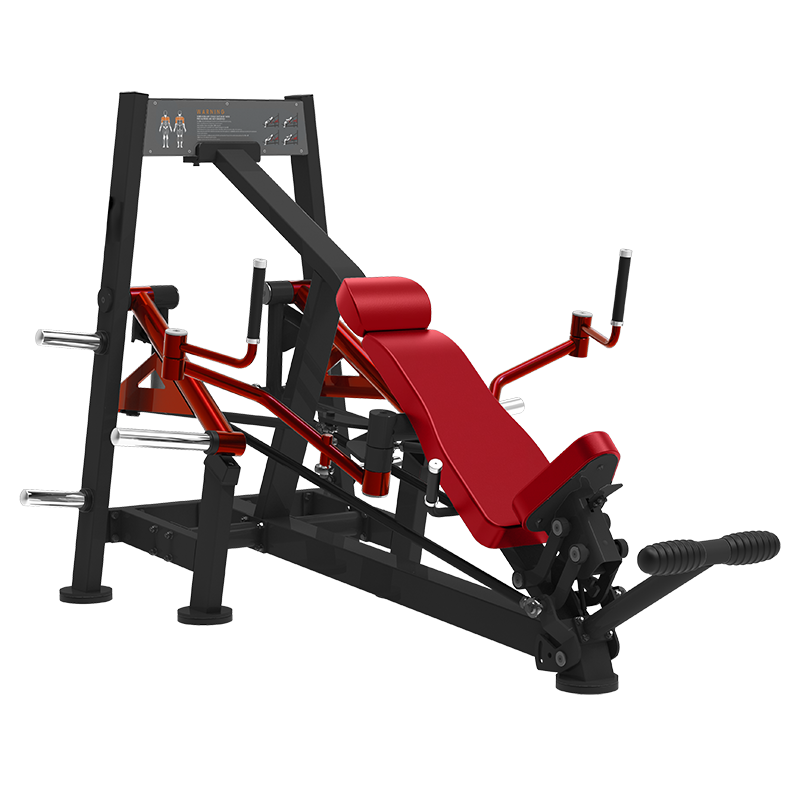
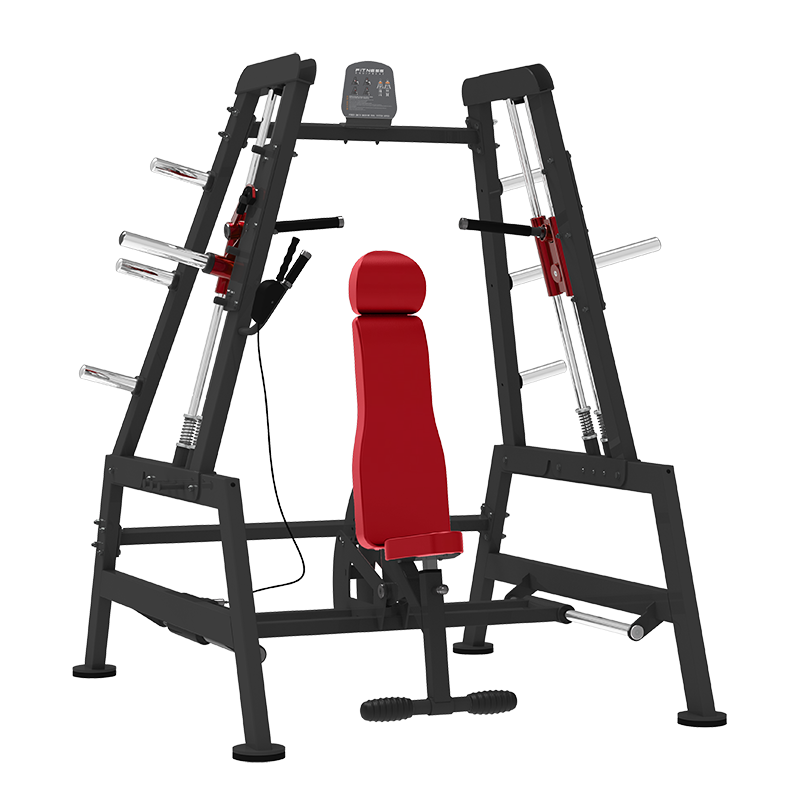
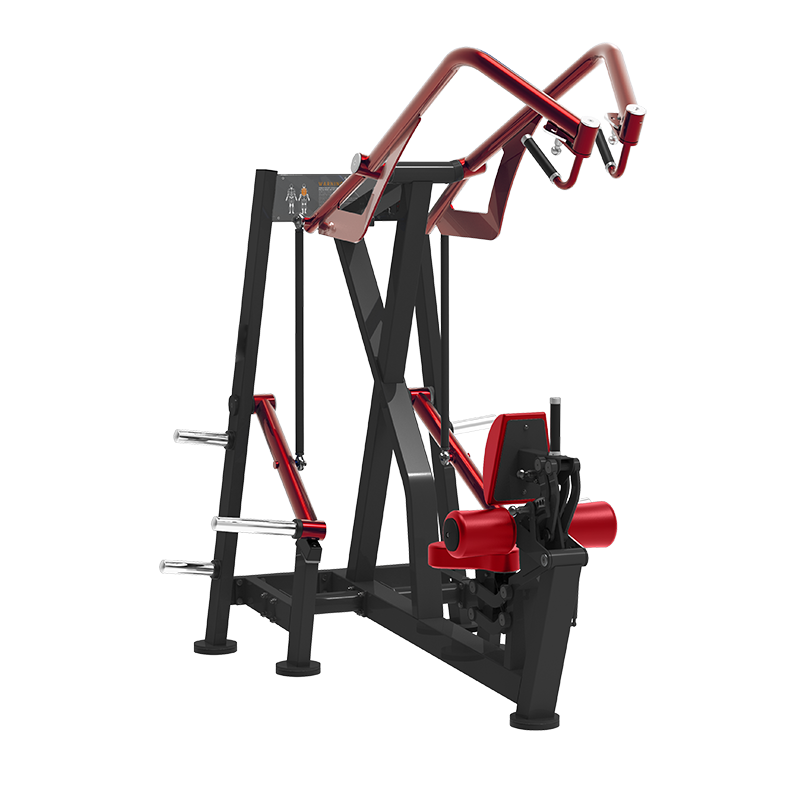
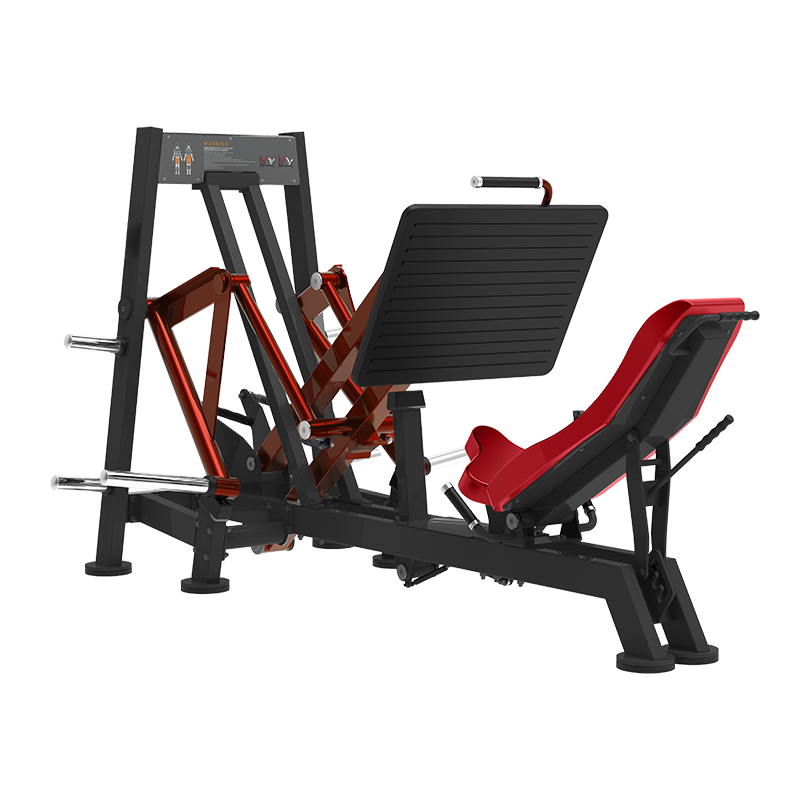
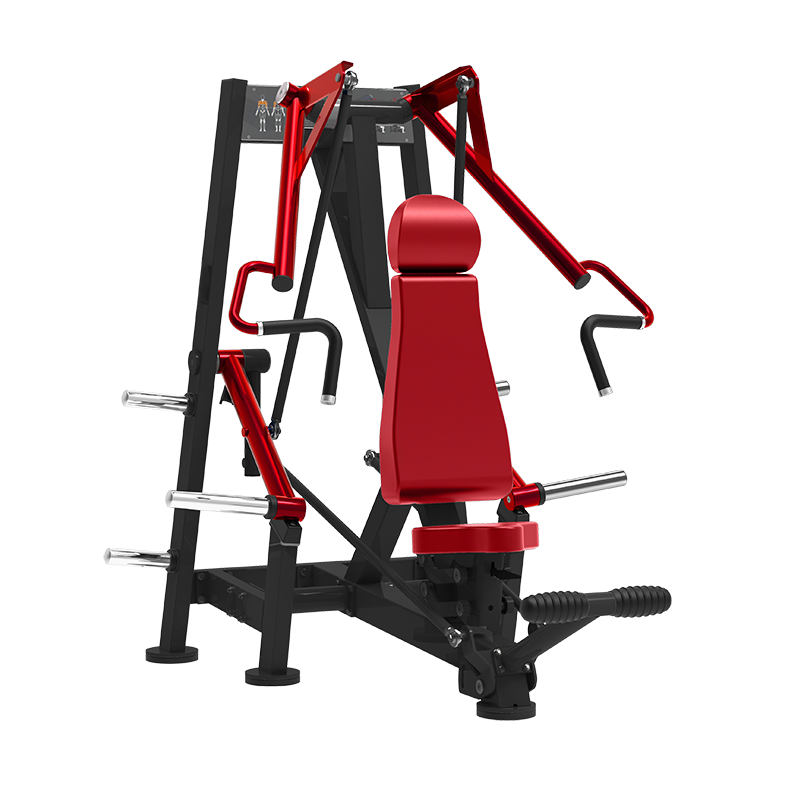
The equipment described in the product information appears to be a plate-loaded strength machine with independent lever arms, a welded steel frame, and a black powder-coated structure with red-and-black pads. That combination tells a buyer a few useful things, even without assuming the exact exercise type.
First, independent arms usually allow more natural left-right movement than a fixed bar path. That can help users with minor asymmetry or shoulder and elbow preferences, and it often makes the machine feel less rigid than a single fixed lever. Second, plate sleeves on the sides indicate plate-loading capability, which is still the standard language of many commercial strength zones. Third, the wide base and pivot joints suggest the manufacturer is prioritizing stability and guided movement rather than a lightweight, home-use feel.
There is also a practical clue here: compact plate-loaded machines often deliver a good balance between training presence and space efficiency. In a commercial gym, that can be worth more than an oversized station that photographs well but clogs the aisle.
What to look for before you buy
Frame behavior under load
Buyers should pay close attention to how the frame handles force transfer. Weld quality, base width, and the stiffness of the main structure are not decorative details. They influence whether the machine feels planted or slightly vague when the load comes up. A heavy-duty leg press should not dance across the floor or flex visibly in normal use.
Adjustability and access
The product details mention adjustable-looking seat or starting-position hardware. That is important because setup is where many machines lose users. If a machine requires too many steps before the first rep, members tend to avoid it. Clean access to the load sleeves, reachable handles, and a starting position that does not force awkward body contortions all improve usability.
Padding and contact points
Upholstered pads may not sound critical, but they affect both comfort and perceived quality. Dense foam, stable covering, and tidy pad placement help the machine look finished and feel secure. In commercial settings, the pads are also a wear item; they will show age faster than the steel frame, so a buyer should not treat them as a minor detail.
Selection criteria for commercial facilities
If you are sourcing for a commercial gym, training studio, hotel fitness room, or rehab-oriented facility, start with the user profile rather than the machine type. A leg press for a performance club is not automatically the same as one for a mixed-use hotel gym.
For a strength-driven environment, a plate loaded leg press often makes sense because experienced users want tactile loading and visible progression. For a broader audience, a selectorized leg press can reduce friction and keep turnover high. If space is tight, a seated leg press machine may be easier to place without sacrificing adjacent traffic lanes. If your members expect a traditional lower-body flagship station, a 45 degree leg press still carries strong visual and practical appeal.
Also consider maintenance behavior. Commercial gym leg press units are rarely judged only when they arrive; they are judged after months of dust, chalk, repeated plate changes, and the occasional rough user. A machine that is easy to inspect, clean, and service will usually age better than one that looks impressive but hides weak access points.
Common mistakes buyers make
One common mistake is choosing on footprint alone. Compact is good, but not if the setup becomes so cramped that users bump knees, clip handles, or avoid the station entirely.
Another is treating all plate loaded strength machines as interchangeable. The feel of a lever press, the path of motion, and the ergonomics around the seat can change the user experience more than a spec sheet suggests.
A third mistake is forgetting about plate storage and traffic flow. A commercial leg press machine can look self-contained in a showroom and still create congestion on a live gym floor if nearby storage is weak.
Finally, buyers sometimes overvalue the most intimidating-looking machine. A heavy-duty leg press should be sturdy, yes, but the better question is whether the machine supports repeat use by the actual member mix you serve.
Where Minolta fits into the picture
Shandong Minolta Fitness Equipment Co., Ltd. operates from Ningjin, a region known for its hardware manufacturing base, and says it offers commercial gym equipment across multiple strength and cardio series, including MND-AN, MND-FM, MND-FH, MND-FS, MND-FB, MND-E Crossfit, MND-F, MND-FF, MND-G, MND-H, plus cardio lines such as MND-D bikes and MND-X treadmills. The company also states it has more than a decade of experience, a 120,000-square-meter facility, and exports to over 100 countries.
For a buyer, that background suggests a supplier with broad production capability rather than a one-off workshop. The practical value is not just scale; it is the ability to support different equipment categories, which matters if you are building out a full commercial floor rather than buying one isolated station.
Practical questions to ask before placing an order
Before purchase, confirm the exact exercise function, since a plate-loaded press may be chest-oriented, shoulder-oriented, or another guided press variant. Do not assume the movement from a product photo alone.
Ask how the machine is assembled, how the frame is finished, and how replacement pads or moving parts are handled after installation. If the unit will go into a high-traffic club, ask about packaging and transport protection as well. A strong frame can still arrive with damaged pads or scuffed coating if the shipping method is careless.
If your team is comparing a commercial gym leg press with other lower-body stations, decide whether your priority is user friendliness, loading speed, or a compact layout. That one decision usually narrows the field faster than any long feature list.
FAQ
Is a plate loaded leg press better for commercial gyms?
Not always, but it is often a strong choice for strength-oriented facilities because it offers direct loading and a familiar feel.
When is a selectorized leg press the better option?
Usually when the user base includes many beginners, hotel guests, or general fitness members who benefit from faster setup and simpler operation.
Should I choose a seated or 45 degree design?
Choose based on room layout and training style. A seated design can be easier to place in tighter spaces, while a 45 degree leg press often feels more traditional and visually substantial.
What should I verify before buying from a supplier?
Confirm the exact machine type, frame construction, adjustment range, and after-sales support details. If those are vague, press for clarification before you issue a purchase order.
Next step for sourcing teams
If you are comparing options for a commercial facility, start with the training profile, then match the machine format to your available space and maintenance plan. For buyers evaluating a commercial leg press machine or a related plate loaded strength station, the smartest move is to request exact specifications, assembly details, and layout guidance from the supplier before narrowing the shortlist. That is usually where a good-looking machine becomes a workable one.