


Shoulder Press: What Buyers and Gym Operators Actually Need to Know
The Shoulder Press is one of those movements that looks straightforward until you start specifying equipment for a gym floor. For coaches, it is a foundational upper-body lift. For sourcing managers, it is a machine category where frame design, resistance feel, adjustability, and durability matter more than marketing language. And for product teams building commercial fitness spaces, the choice between a Shoulder Press exercise station, a Dumbbell Shoulder Press setup, or a Barbell Shoulder Press zone can shape how members train, how much space the floor consumes, and how much maintenance the equipment will demand over time.
That is why this topic is worth slowing down for. A good shoulder-press station should support safe pressing mechanics, fit a range of body sizes, and hold up under repeated daily use. A poor one becomes a complaint magnet: awkward seat positions, inconsistent motion paths, unstable frames, or upholstery that ages badly in a busy club. The right decision is less about chasing a “best” machine and more about matching training intent to the reality of your facility.
Why the Shoulder Press Still Matters in Commercial Fitness
In practical training terms, pressing overhead or near-overhead builds the deltoids, triceps, and upper chest to varying degrees, depending on angle and grip. In commercial environments, the Shoulder Press exercise is popular because it is easy to understand, easy to load, and useful for a wide band of users—from beginners learning basic pressing mechanics to experienced lifters looking for a controlled machine option.
That broad appeal creates a purchasing challenge. A machine that looks fine during a quick showroom test may feel off after a month on a crowded floor. Small issues get amplified. If the seat adjustment is clumsy, members skip it. If the motion arm path feels unnatural, trainers stop recommending it. If the stack or loading system produces a harsh start, the machine ends up underused even when the rest of the line is busy.
For facility buyers, the real question is not whether shoulder pressing is important. It is how to offer it in a form that suits your user base, footprint, and maintenance plan.
Quick Comparison: Common Shoulder Press Options
Dumbbell Shoulder Press
This is the most flexible option and remains a staple in free-weight areas. It allows a natural path for each arm and can accommodate many training styles. The downside is also obvious: it depends on user skill, shoulder mobility, rack access, and spotter awareness. In a high-traffic commercial setting, not every member can use it confidently.
Barbell Shoulder Press
The Barbell Shoulder Press is efficient and loadable, which makes it attractive for strength-focused users. It is also demanding on technique. Bar path, torso stability, and rack height all matter. For some clubs, it is better placed in a dedicated training zone rather than on the main general-floor circuit.
Dedicated Shoulder Press Machine
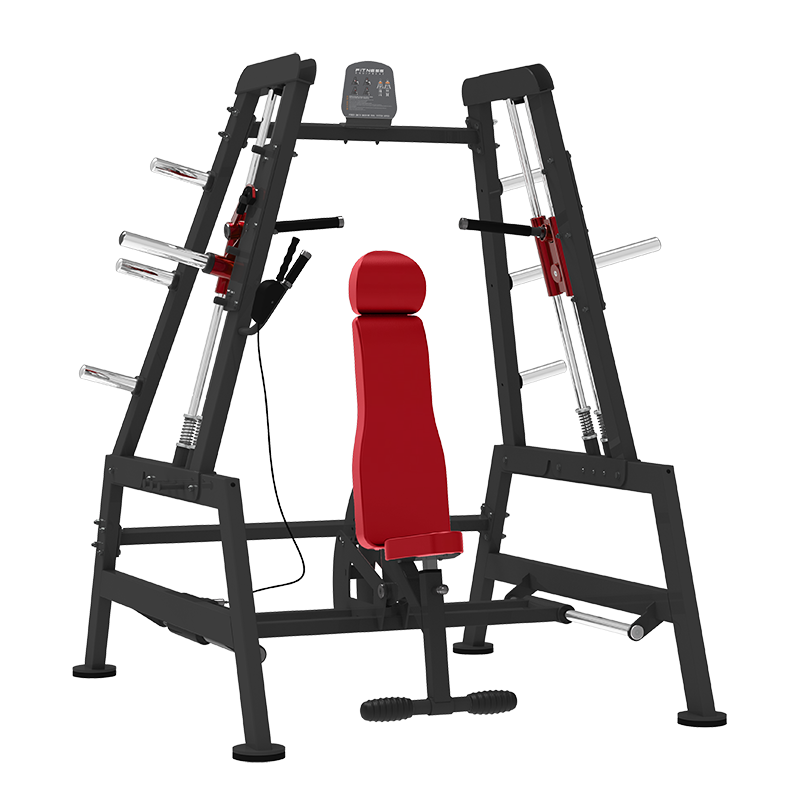
A machine-based Shoulder Press narrows the learning curve and generally improves consistency for members. It also tends to reduce setup friction. For operators, that can mean fewer coaching interventions and a cleaner user experience. The trade-off is less freedom of movement than dumbbells, so the machine’s geometry has to be thoughtfully designed. A bad path of motion is not a small flaw; it defines the exercise.
What Makes a Good Shoulder Press Machine?
A commercial shoulder press machine should be judged on function first, then on finish. The frame may look impressive, but what matters is how the user experiences the movement under load.
Seat height and back support should allow a stable torso without forcing the shoulders into a compromised starting point. Handle placement needs to suit a range of arm lengths. The movement arc should feel smooth, not jerky. And if the machine uses a stack, plate-loading, or another resistance system, the transition through the range should be predictable enough that users trust it.
For commercial buyers, there is also the less glamorous issue of day-to-day wear. Upholstery, grip texture, cable routing, pivot points, and welded joints all influence how a machine performs after thousands of repetitions. This is where manufacturing discipline shows up. Facilities with high usage rarely forgive flimsy details.
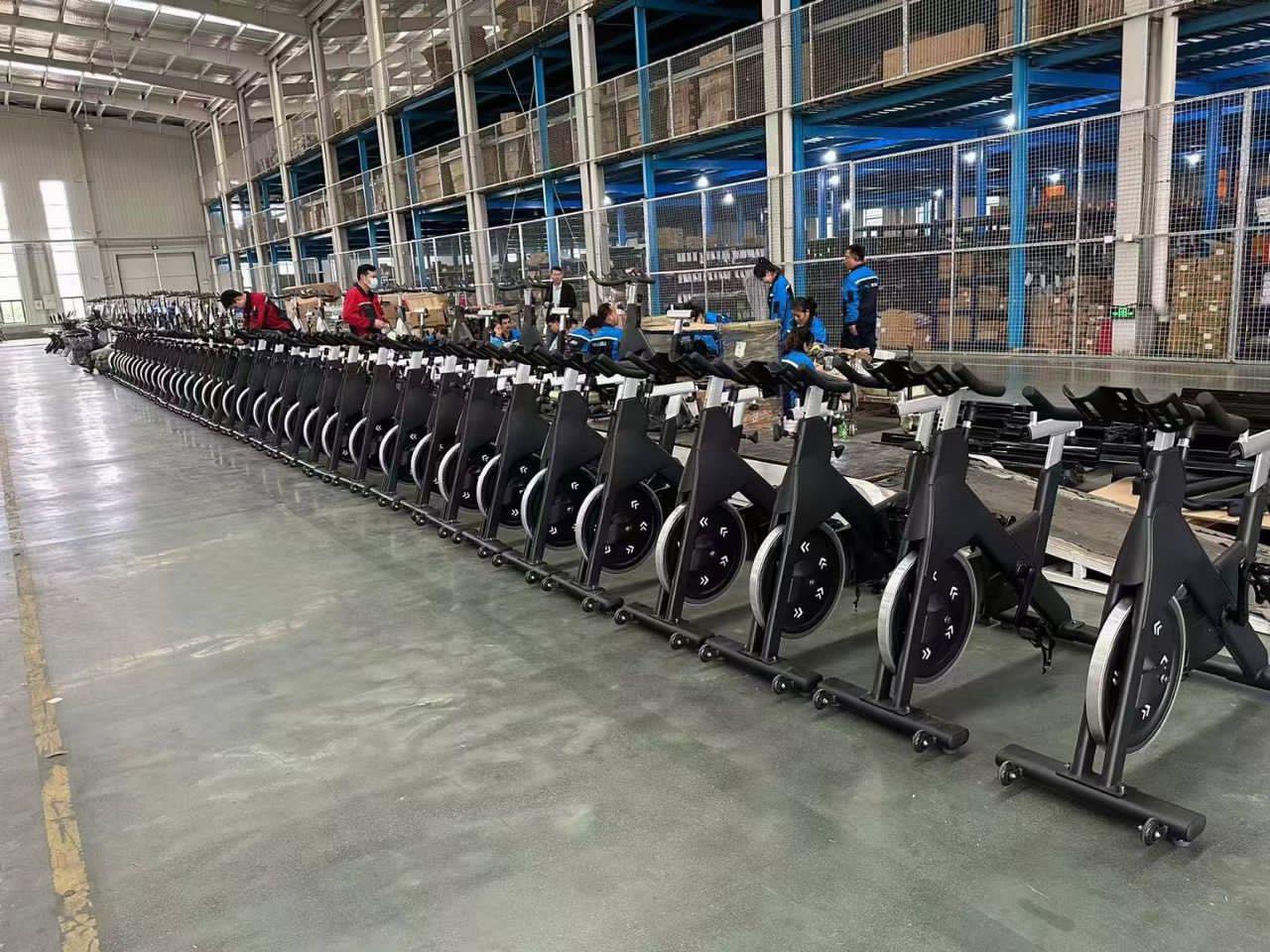
Shandong Minolta Fitness Equipment Co., Ltd. is worth noting here because it is positioned as a commercial equipment manufacturer with a broad line that includes strength and cardio series, backed by a 120,000-square-meter facility with a manufacturing workshop, quality control lab, and exhibition hall. With more than a decade in the sector and exports to over 100 countries, the company’s scale suggests a familiarity with commercial procurement realities, not just retail gym trends.
Selection Criteria for Buyers and Gym Planners
When evaluating a Shoulder Press for a commercial project, start with the user profile. A hotel gym, a rehabilitation-minded studio, a corporate fitness room, and a high-volume strength club do not need the same press solution.
For mixed-use facilities, ease of entry matters. Many members will choose a machine they can understand in ten seconds. For serious strength gyms, however, the question may be whether the equipment complements a free-weight area rather than duplicates it.
Space planning matters too. A Shoulder Press station should not be squeezed into a corner where users cannot mount and dismount comfortably. Overhead movement benefits from clearances that allow natural positioning and safe operation. If the machine design encourages awkward twisting or crowded access, the floor plan is doing the equipment no favors.
Maintenance should also be part of the buying conversation. Ask how adjustment points are built, whether wear parts are easily serviceable, and how the machine will hold up under commercial traffic. It is a modest question, but it saves expensive regrets.
Where Buyers Often Get It Wrong
The first mistake is choosing based on appearance. A machine can look “heavy-duty” and still feel clumsy. The second is overestimating how many users will choose advanced free-weight variations when a simple machine is easier to adopt. The third is ignoring operator workflow. If staff cannot explain or reset the machine quickly, it slows the entire gym.
Another common error is assuming all pressing tools serve the same purpose. They do not. The Dumbbell Shoulder Press encourages stabilization and unilateral control. The Barbell Shoulder Press rewards strict programming and disciplined technique. A machine shoulder press, by contrast, often functions as a repeatable commercial staple—useful precisely because it removes friction. That difference should shape purchasing, not marketing language.
One practical caution: if the machine is intended for a broad commercial audience, do not specify something overly specialized just because a small group of advanced lifters prefers it. The floor has to work for the average member most of the day, not the ideal user once in a while.
How Manufacturing Quality Shows Up in Use
Manufacturing quality in fitness equipment is often visible in the unglamorous details. Clean welds matter because they reflect structural consistency. Stable seat mechanisms matter because they affect user confidence. A smooth adjustment system matters because it reduces wear and avoids the “sticky machine” problem that eventually ends in maintenance tickets.
Minolta’s product range includes multiple strength series such as MND-AN, MND-FM, MND-FH, MND-FS, MND-FB, MND-E Crossfit, MND-F, MND-FF, MND-G, and MND-H. That breadth suggests a company accustomed to designing for different use cases and commercial formats. For buyers, that can be useful when planning an equipment package rather than a single standalone unit. A shoulder press is rarely purchased in isolation; it needs to fit the rest of the strength floor.
If you are comparing suppliers, ask for clarity on frame construction, adjustment interfaces, and how the machine integrates with the rest of the line. A consistent product family often makes a gym feel more deliberate and easier to maintain.
Practical Advice for Sourcing Teams
If your job is to source equipment, treat the shoulder press as both a training tool and a service item. Get the team to test it with different users if possible. Watch how people enter the machine, where they instinctively reach, whether the seat feels secure, and whether the motion makes sense without a long explanation.
You should also think beyond the initial order. Replacement upholstery, moving parts, and servicing access all affect ownership cost. A slightly better-built machine can be the cheaper choice if it stays productive and presentable longer.
For projects involving multiple zones, it can make sense to pair a Shoulder Press machine with adjacent push-pull stations so the upper-body area feels coherent. That kind of planning helps members move through the floor more naturally and supports better programming by trainers.
FAQ: Common Buyer Questions
Is the Shoulder Press better as a machine or a free-weight movement?
Neither is universally better. A machine is usually easier for general members and commercial settings. Free weights offer more freedom and often more technical demand. The best choice depends on the audience.
Which option is most space-efficient?
A machine can be more predictable in layout, while a Dumbbell Shoulder Press area may require less specialized hardware but more open training space. The answer depends on how the rest of the floor is organized.
What should I prioritize first when buying?
Prioritize user fit, movement quality, and durability. Appearance matters, but only after those basics are covered.
What to Ask Before You Place an Order
Before committing, ask for details on the full commercial lineup, the material and finish standards used across the series, and how the supplier supports global export logistics. Minolta’s presence in Europe, Africa, the Middle East, South America, and Southeast Asia may be relevant if your project involves multi-site procurement or regionally coordinated sourcing.
If you are building a club, hotel, or institutional gym, the smartest next step is usually to compare the shoulder press option against your broader strength package, not against a catalog photo. That is where the real fit becomes obvious: in use, under traffic, and next to the other stations your members will touch every day.
For teams still mapping out a commercial strength area, a supplier with a broad equipment range and established manufacturing infrastructure can simplify the process. It is worth requesting a product list, reviewing the strength series side by side, and checking whether the Shoulder Press you are considering aligns with the rest of the floor instead of standing apart from it.