


Why an Iso-Lateral Pulldown or Press Station Deserves a Serious Look
The term Iso-Lateral Pulldown is often used loosely in gym floors and product catalogs, sometimes to describe any machine with independent arms and a guided upper-body path. That matters, because buyers who are sourcing a strength station for a commercial facility are not just buying a label. They are choosing how people train, how the machine feels under load, and how much wear the equipment will take after years of steady use.
For operators, coaches, and sourcing managers, the real question is simple: does the machine deliver controlled upper-body training that is smooth enough for beginners, serious enough for athletes, and durable enough for daily commercial use? In practice, that means looking beyond the name and checking the construction, loading method, user position, and the kind of movement the machine actually supports.
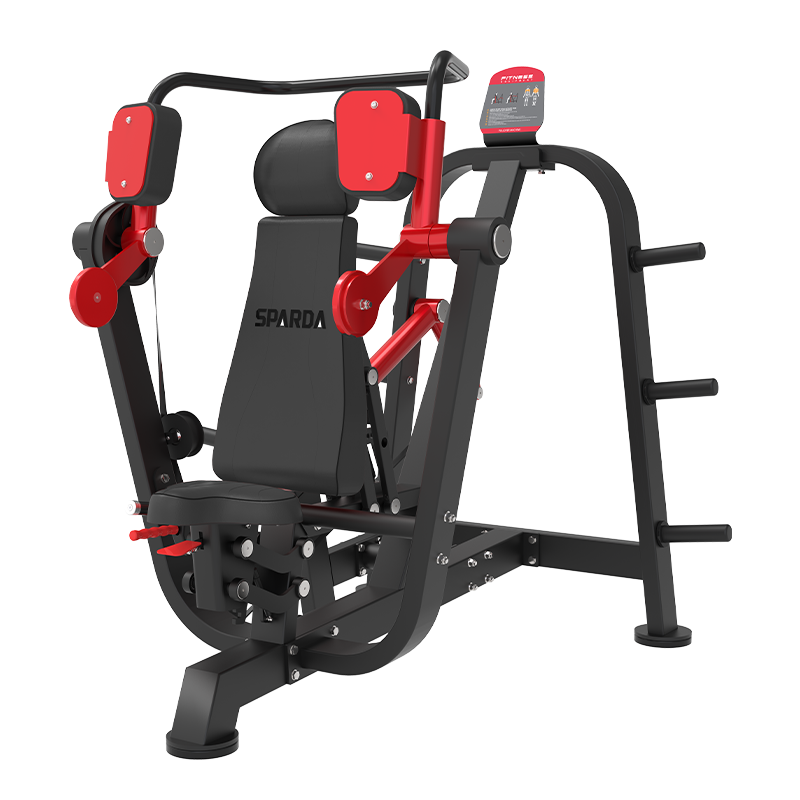
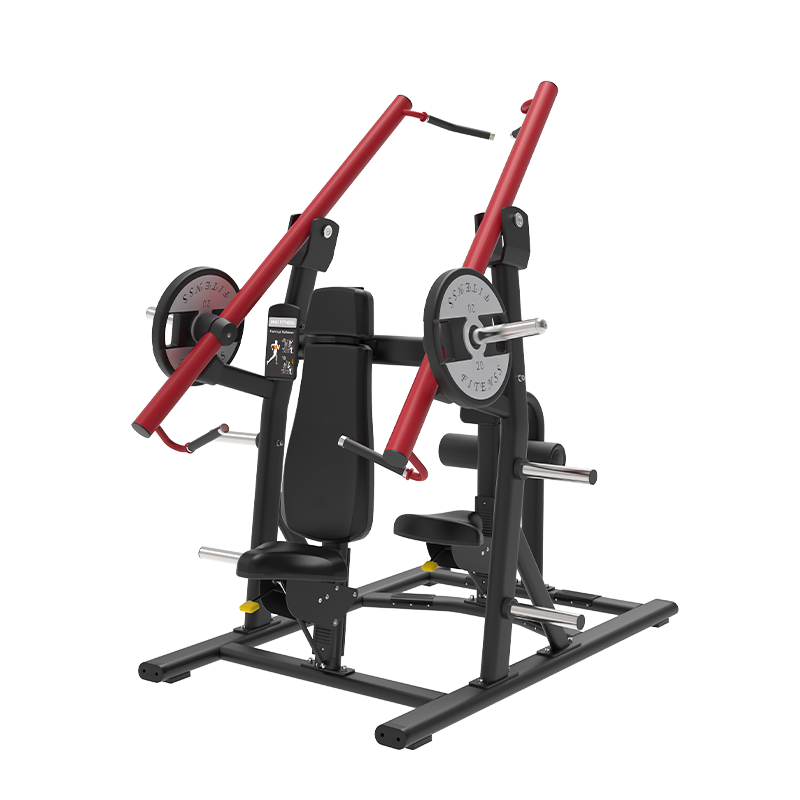
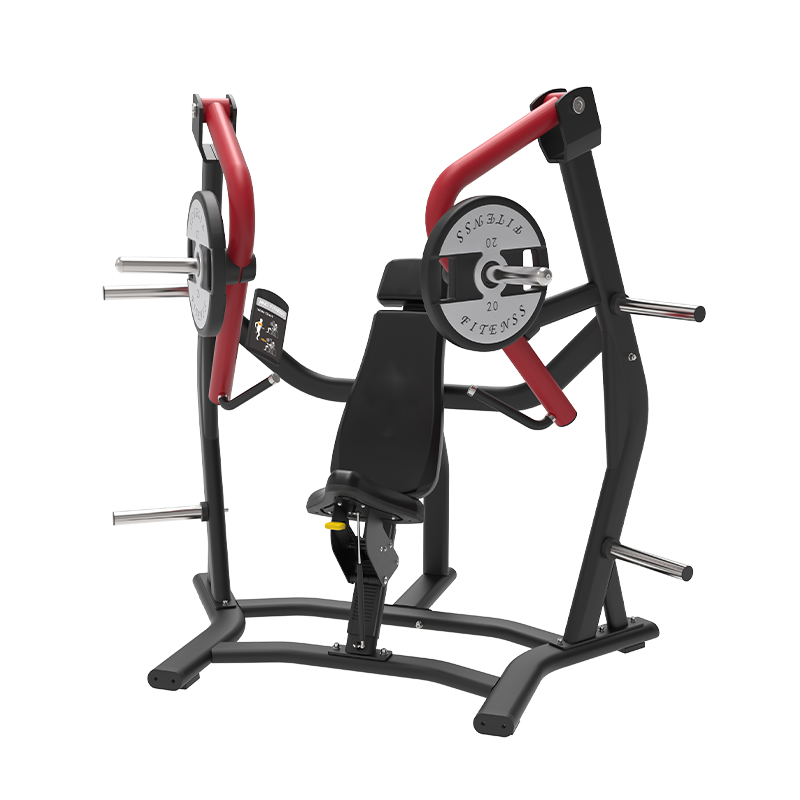
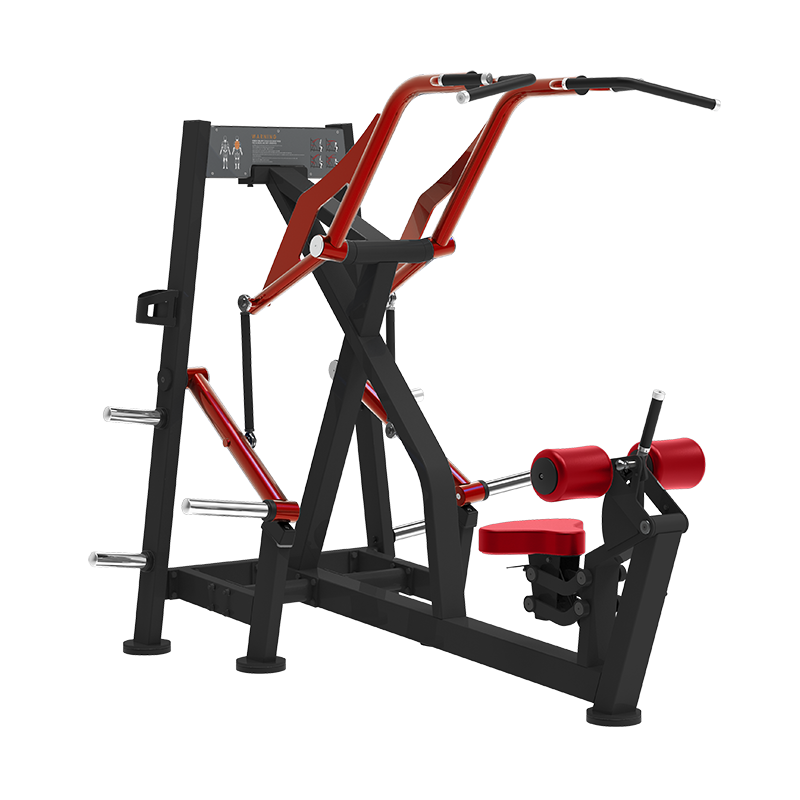
The visible machine data here points to a plate-loaded strength machine with independent left and right arms, a black powder-coated steel frame, red lever arms, grey plate horns, and a seated back pad and support rollers. That combination usually signals a guided pressing pattern for commercial gym environments. It may function more like an overhead or shoulder press than a classic lat pulldown, so buyers should confirm the exact exercise path before placing an order. That small caution saves a lot of trouble later.
What Buyers Usually Mean by Iso-Lateral Training
Iso-lateral training lets each side of the body work independently. In plain English, the left arm does not get to hide behind the stronger right arm. For upper-body strength training, that matters because asymmetry shows up quickly when a machine has separate arms. The user can press or pull one side at a time, or drive both sides together, depending on the design.
This is why an iso-lateral machine is often preferred over a fixed-bar path in serious training rooms. It gives a more natural feel than some selectorized stations, while still controlling the movement enough to reduce sloppy technique. That balance is attractive in commercial gyms, hotel fitness rooms, rehab settings, and performance facilities where users have different skill levels but still need a meaningful training stimulus.
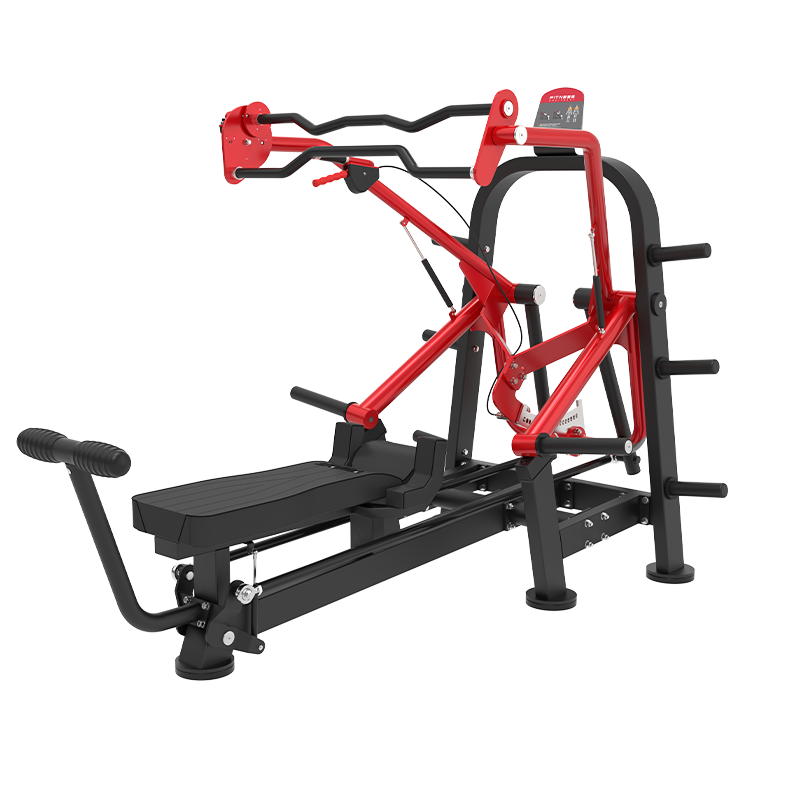
A lat pulldown machine is usually the reference point many buyers think of first. But once you move into plate-loaded equipment with independent arms, the category gets broader. A machine can serve a pulldown-style motion, a chest press motion, or an overhead press motion depending on the arm geometry. That is why the frame and handle path matter more than the marketing name on the brochure.
What the Visible Design Suggests About This Machine
From the provided product details, the machine appears to be a floor-standing plate loaded machine with a wide base for stability and dual-sided independent arms. The frame is black powder-coated steel, which is a common and sensible choice for commercial gym equipment because it helps protect the structure from scuffs, sweat exposure, and general abuse.
The red lever arms are not just cosmetic. Color-coded moving parts help operators and users identify the active mechanism quickly, and in a busy gym that can be a minor but useful advantage. The grey circular plate horns on each side indicate a free-weight loading setup, which appeals to operators who want a strong resistance curve without relying on a stack of selectorized weights.
The black upholstered back pad and seat suggest a seated press position, and the visible support rollers or cylindrical pads help keep the user stable. That stability is important on a plate-loaded machine because the user is not just pushing weight; they are also managing body position against a guided arc. If the machine is intended for heavier use, that kind of positioning can make the difference between a useful training tool and a piece of equipment people avoid because it feels awkward.
Why plate-loaded matters
A Plate Loaded Machine often makes sense for facilities that already stock Olympic plates and want flexible loading options. It can be more appealing than a fixed-stack machine in some commercial settings because resistance can be scaled precisely with available plates. It also tends to have a sturdier, more mechanical feel that many experienced lifters prefer.
There is a tradeoff, of course. Plate-loaded units need floor space, and they require users or staff to handle plates. That is not a dealbreaker, but it is a practical point for buyers planning a compact floor layout or staffing lighter-duty hotel gyms.
How This Fits Into Commercial Strength Training
For operators building a balanced upper-body zone, a machine like this sits between free weights and pure guided selectorized equipment. It gives structure to the lift without removing all effort from the user. That is useful in a gym where some members want confidence and others want load progression.
It also has a place in training environments where one machine needs to serve multiple user types. In sports performance facilities, for example, unilateral arm work can help expose side-to-side strength differences. In rehab or return-to-training environments, the guided motion can support a more controlled range than a barbell-based press.
If the actual motion is press-oriented, it may sit alongside other upper-body stations such as an Iso-Lateral Chest Press or related shoulder press equipment. If the intent is true pull training, then operators should compare it directly with a Lat Pulldown Machine and verify the seat position, handle path, and arm arc. In other words, do not buy off the silhouette alone.
Manufacturing and Build Details That Matter to Buyers
The product information points to a welded steel fabrication approach, with tube bending, machining of load pins or axles, padding and upholstery assembly, and powder coating. That is standard enough in the industry, but it is still worth noting because machine quality is often hidden in the frame and joints, not the paint.
A well-made commercial machine should present clean welds, stable foot contact, consistent arm motion, and durable upholstery attachment points. Buyers rarely get a second chance to judge this once the equipment is installed. If the machine wobbles, binds, or looks underbuilt, members notice immediately.
Shandong Minolta Fitness Equipment Co., Ltd. says it leverages Ningjin’s hardware industry base and offers commercial gym equipment across multiple strength and cardio series, with more than 300 types of exercise equipment and export experience in over 100 countries. The company also states that its facility covers 120,000 square meters with a manufacturing workshop, quality control lab, and exhibition hall. For sourcing teams, that signals a manufacturer operating at scale, though the final purchase decision should still rest on the actual model specs, documentation, and sample inspection.
Selection Criteria: What to Check Before You Buy
A buyer comparing this kind of machine should focus on a few practical points rather than getting lost in the marketing copy.
First, confirm the exercise path. Is it truly a pulldown, a chest press, or an overhead press? The visible structure suggests an upper-body pressing movement, but the exact function should be verified.
Second, inspect the arm action. Independent arms are valuable only if the movement remains smooth under load. If one side feels sticky or mismatched, the machine will not be well received in a serious training room.
Third, check how the user is stabilized. A good back pad, seat, and lower-body support points make a large difference in control and comfort.
Fourth, review the footprint. The wide base is helpful for stability, but commercial buyers still need to know whether the unit fits the allocated bay and whether plate storage or loading clearance will be a problem.
Fifth, ask about maintenance. Plate loaded machines are often durable, but moving joints still need attention over time. If the machine is going into a high-traffic facility, serviceability matters more than glossy appearance.
Common Mistakes Buyers Make
One common mistake is assuming that every machine with independent arms performs the same way. It does not. The geometry changes everything. A machine that looks like a pulldown may behave like a shoulder press once the user sits down and grips the handles.
Another mistake is overvaluing compact dimensions without considering usability. A small footprint is nice, but not if the loading space is awkward or the arm path forces users into a cramped position.
There is also a habit in some facilities of buying based on visual similarity to a known brand model. That can be risky. Unless the brand, model, loading range, and adjustability are confirmed, buyers should treat resemblance as a clue rather than proof.
Who Should Consider This Kind of Gym Equipment
This type of Gym Equipment is a good fit for commercial gyms that want a guided free-weight feel, hotel fitness rooms that need broad usability, and sports facilities that value unilateral strength work. It may also suit rehab-minded training spaces if the motion is controlled and the loading increments are manageable.
For home gyms, the decision is less straightforward. Plate-loaded commercial equipment is robust, but it takes space and usually makes sense only if the user already trains regularly and has room for dedicated equipment. A lighter home setup might benefit more from smaller stations unless the buyer specifically wants a commercial feel.
Practical Buyer Advice Before Ordering
If you are sourcing this machine, request clear confirmation on the exact movement pattern, the dimensions, the machine weight, the loading method, and whether the arms are linked or fully independent. Those details are not minor. They define how the equipment will be used and whether it fits the room plan.
Ask for photos or drawings that show the seat position, handle start point, and loading clearance. If you are comparing it with other upper-body stations, place it mentally next to the rest of your Upper Body Strength Training layout. The right machine should complement the zone, not crowd it.
For commercial buyers, consistency matters more than novelty. A well-built plate-loaded press or pulldown station may not be the flashiest piece on the floor, but it often becomes one of the most used. That is usually a better investment than chasing a machine with a dramatic look and unclear function.
What to Ask the Supplier
Before you commit, ask for:
exact exercise function and movement path
frame material and coating details
whether the loading arms are independent or mechanically linked
seat and support adjustability, if any
dimensions and installation footprint
recommended plate compatibility
photographs of the actual production model, not just a catalog render
These questions are ordinary, but they are the questions that separate a clean purchase from a costly assumption.
Final Thought for Sourcing Teams
An iso-lateral style upper-body machine can be a strong addition to a commercial gym floor, but only if the buyer understands what the unit actually does. The visible design here suggests a plate-loaded, seated, independent-arm strength machine built for controlled upper-body training. That can be useful in the right setting. It can also be the wrong purchase if the buyer assumes it is a lat pulldown when the motion is actually a press.
If you are evaluating this model for a facility, the next step is straightforward: confirm the movement, compare the footprint with your floor plan, and request production details from the supplier before ordering. That extra step is not bureaucracy. It is basic equipment discipline, and it usually pays for itself the moment the machine reaches the floor.