


Why an alternate leg curling machine gets attention in busy training spaces
An alternate leg curling machine is the kind of lower-body station that looks straightforward until you watch how people actually use it. In a commercial gym, rehab room, or sports performance facility, the difference between a well-designed curl unit and a clumsy one shows up fast: smoother setup, cleaner movement, fewer awkward posture corrections, and less time spent waiting for a staff member to explain the machine. For buyers comparing a hamstring curl machine against other lower body workout machine options, the real question is not whether it “works,” but whether it fits the training floor, the user mix, and the level of durability the facility needs.
The category also matters because leg isolation equipment tends to take a beating. Users pull on handles, slam pads into place, adjust seats half a dozen times a day, and expect the motion to feel stable whether they are rehabbing a knee or pushing through a hard set. A machine with alternating leg action adds another layer of movement and user control, which can be helpful, but it also raises the bar for frame rigidity, pivot quality, and pad alignment. That is where commercial-grade construction starts to matter more than surface appearance.
What the machine is trying to solve
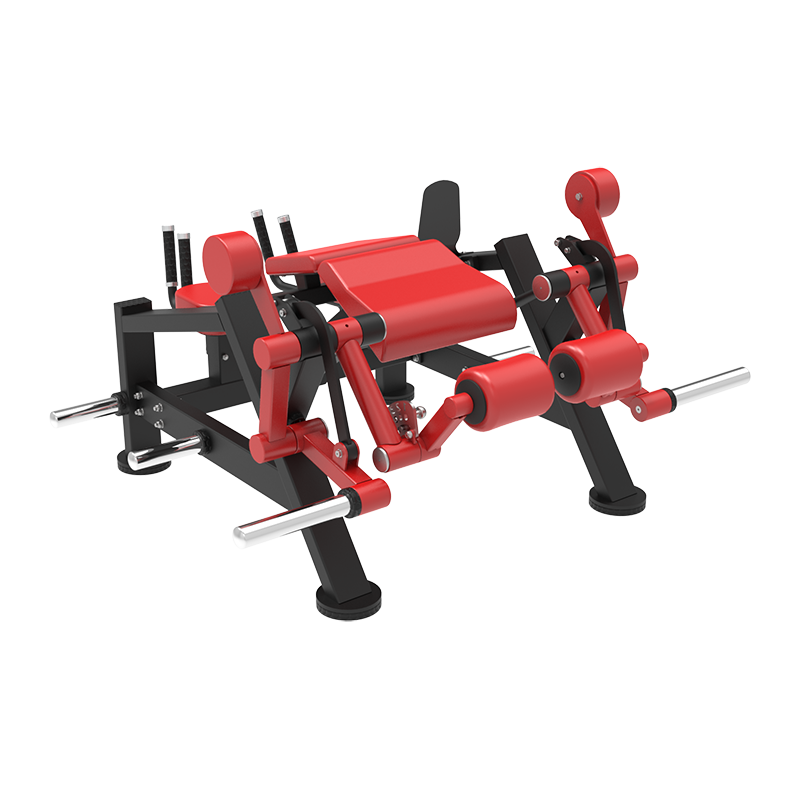
In practical terms, alternating leg curl equipment is built to isolate the hamstrings and support controlled knee flexion, although exact motion depends on the final mechanism. The visible product category here suggests a seated lower-body station with lever arms, roller pads, and a compact floor-standing frame. Machines in this family are valued because they reduce the number of variables a trainee has to manage. The torso is supported, the legs are guided, and the resistance comes through a pivoting system rather than free movement that demands full balance.
That simplicity is useful in more than one setting. A strength coach may want a machine that helps athletes work one side at a time. A physical therapy clinic may prefer a design that allows careful progression and a more measured range of motion. A commercial gym may simply want another station that does not eat too much floor space while still feeling serious enough to justify itself next to bigger plate loaded leg curl machine options.
Quick buyer comparison: what to look at before you choose
Not every curl machine serves the same purpose, and it is easy to over-focus on the wrong detail. A plate loaded leg curl machine may offer a familiar loading style and a more obvious strength-training feel. A dual leg curl machine may be useful where bilateral training and quick turnover matter. An alternating setup can be more interesting for unilateral work, but it also needs thoughtful ergonomics so one side does not feel like an afterthought.
Useful comparison points
Frame stiffness: A welded steel frame with broad floor contact points usually gives a more reassuring feel during repeated rep cycles.
Adjustment logic: If the machine has multiple pivot positions, seat settings, or support changes, the transitions should feel deliberate rather than loose.
Pad quality: Roller pads and torso supports need enough density to hold shape without digging into the user.
Footprint: In smaller gyms, a compact alternating machine can earn its place simply by occupying less space than a multi-station lower-body rig.
Maintenance burden: Moving joints, upholstery, and finish quality are not glamorous buying points, but they decide how long the machine stays in service before it starts rattling or looking tired.
What the visible construction tells a buyer
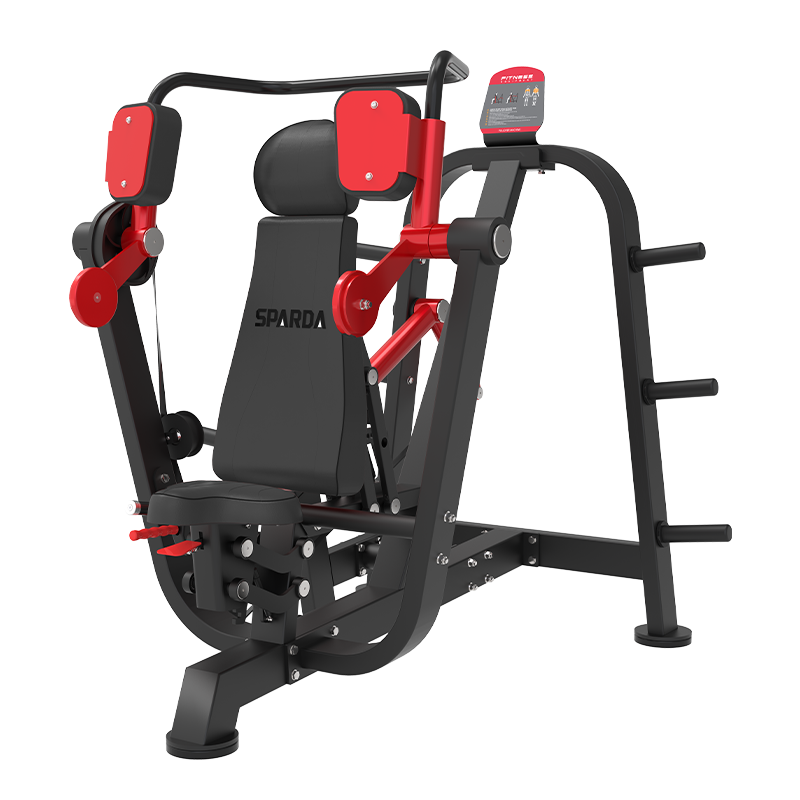
From the supplied product details, this machine appears to use a welded steel frame with a black and red painted finish, plus red foam or molded roller pads and a padded seat or torso support. That combination is common in commercial fitness equipment manufacturing because it balances structural strength with user comfort. The diagonal support legs and floor contact pads suggest a stable base, which matters when users apply force unevenly from side to side.
The presence of multiple lever arms and adjustment hardware is especially important. Even without a full model specification, the geometry suggests that the unit is not just decorative; it is built around a pivot system that guides motion through a controlled arc. For engineering teams and sourcing managers, that means the hidden quality lives in the joints, bushings, weld integrity, and alignment of the moving arms. Those are the parts that decide whether a machine feels crisp or sloppy after a few months of heavy use.
It is also worth noting what cannot be assumed from the image alone. The exact loading style is not confirmed. It may be plate loaded, selectorized, or arranged around another resistance method, but that should be verified before purchase. The same caution applies to dimensions, capacity, and target muscle emphasis. Buyers should resist the temptation to infer too much from a clean product photo.
Why alternating motion can be useful
One reason gyms consider alternating leg curl equipment is simple user variety. Some trainees prefer bilateral work because it feels balanced and efficient. Others want one leg at a time to spot side-to-side differences or reduce compensation. An alternating machine can support both habits if the mechanics are well thought out.
That kind of versatility is particularly helpful in facilities serving mixed populations. A sports training center may use unilateral work to address asymmetry after an injury or to build more even force production. A rehab facility may value the slower, more controlled pace that unilateral loading encourages. And in a commercial gym, any lower body workout machine that gives members a slightly different training experience can reduce boredom, which is not a trivial issue when retention depends partly on perceived equipment quality.
Selection criteria that matter more than marketing language
When buyers compare a hamstring curl machine or alternating leg curl equipment across suppliers, the spec sheet can become noisy very quickly. Marketing language tends to emphasize “smooth motion” and “premium feel,” but the purchasing decision usually comes down to a shorter list of practical checks.
1. Frame and weld quality
Commercial users notice wobble faster than they notice paint color. A heavy-duty steel frame with clean welds and sensible reinforcement usually holds alignment better under repeat loading. If the machine looks visually compact, that is fine, but compactness should not mean fragility.
2. Adjustment accessibility
Seat and pad settings should be easy to reach. If a user has to stand up, crouch, and fight the machine just to get into position, the unit will spend more time looking occupied than being used. That is a common mistake in equipment selection, especially when buyers judge from renders or catalog photos.
3. Pad ergonomics
Roller pads on a curl machine do more than press against the leg. They shape the feel of the whole movement. Pads that are too hard create pressure points; pads that are too soft can feel vague and unstable. The upholstery, foam underlay, and roller diameter should work together.
4. Serviceability
Commercial fitness equipment lives or dies on maintenance reality. Can the joints be inspected easily? Are replacement pads or hardware straightforward to source? Can a service technician get access without dismantling half the machine? Those questions are rarely exciting, but they matter when the machine is used daily.
Common buying mistakes
One frequent mistake is assuming every leg curl station will suit every user. In truth, biomechanics vary, and seat position, pad placement, and movement arc all affect comfort. A machine that feels excellent for one body type may feel off for another. Another mistake is choosing on looks alone. A glossy frame and bright upholstery do not guarantee stable operation.
Buyers also sometimes overbuy complexity. More pivots are not automatically better. More features only help if the machine remains intuitive. In a busy gym, a confusing lower-body station becomes an unused one. That is a costly mistake because floor space is expensive, and underused equipment quietly drags down the perceived quality of the whole room.
Finally, do not ignore the finish. Painted steel, vinyl-covered pads, and exposed hardware all age differently. Sweat, cleaning chemicals, and repeated contact eventually expose weak finish choices. A machine that looks good on day one but chips, loosens, or frays quickly is a poor long-term purchase.
Where Minolta fits into the picture
Shandong Minolta Fitness Equipment Co., Ltd. operates as a commercial fitness equipment manufacturer with more than a decade of experience and a facility spanning 120,000 square meters, including a manufacturing workshop, quality control lab, and exhibition hall. The company states that it offers over 300 types of exercise equipment across strength and cardio lines, and exports to more than 100 countries across Europe, Africa, the Middle East, South America, and Southeast Asia. For buyers, that signals a supplier with the scale to support broader procurement needs, not just a single machine order.
That matters because a buyer interested in an alternate leg curling machine is often buying as part of a larger equipment package. Matching frame style, upholstery color, and construction logic across a gym floor can make the space feel intentional. It also simplifies future sourcing if additional stations or related strength pieces are needed later. Minolta’s strength series lineup suggests that sort of broader planning is possible, though exact model matching should still be checked against current product catalogs.
Practical advice for sourcing teams
Ask for clear photos of the moving joints, not just the front view. Ask how the pads are mounted and whether replacement upholstery is available. Confirm whether the machine is intended for commercial gyms, rehab use, or home use, because the duty cycle changes the design expectations. If a supplier offers multiple strength series, compare them side by side instead of treating every curl machine as interchangeable.
If the machine will go into a rehabilitation setting, prioritize smooth adjustability and predictable motion over aggressive styling. If it is for a high-traffic gym, prioritize durability, floor stability, and easy maintenance access. If it is for athletic training, check whether the alternating motion genuinely supports unilateral work or simply creates the appearance of it.
FAQ for first-time buyers
Is an alternating machine better than a standard curl station?
Not automatically. It depends on the user base. Alternating motion can be useful for unilateral training, but a standard station may be simpler and faster for general gym traffic.
Should I choose plate loaded or another resistance style?
That depends on your facility model. Plate loaded units are familiar and flexible, while other systems may be easier for some members to use. Confirm the actual loading method before ordering.
What should I inspect first when the machine arrives?
Check welds, joint smoothness, pad alignment, hardware tightness, and whether the machine sits level on the floor. Those basics tell you a lot before the first session begins.
A sensible next step
If you are comparing an alternate leg curling machine for a commercial gym, rehab room, or sports facility, start with the mechanics, not the brochure. Ask for the exact model structure, loading method, adjustment range, and service parts support. A well-built machine should feel calm under load, easy to set up, and sturdy enough that nobody thinks about the frame while they are training.
For procurement teams evaluating commercial fitness equipment manufacturing partners, it is usually worth requesting a broader equipment catalog as well, especially if you want matching strength stations from one source. That reduces inconsistency on the floor and can simplify future expansion. In this category, the best buying decision is often the one that keeps the machine useful three years later, not just attractive on delivery day.