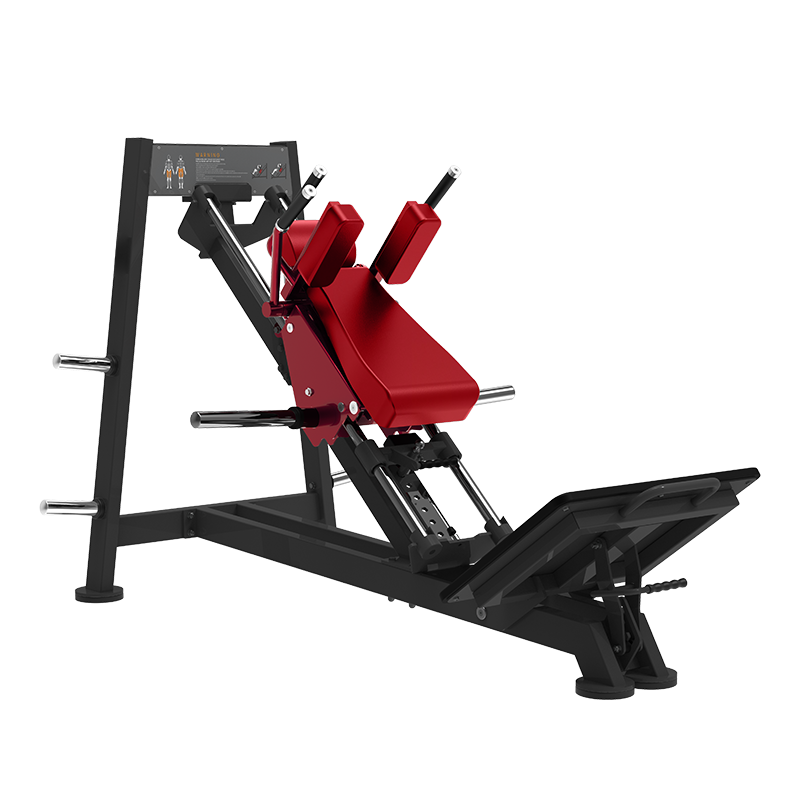



Why a belt squat machine has become a serious buying consideration
A belt squat machine looks straightforward at first glance, but that simplicity is part of the appeal. For buyers building a commercial floor, the real question is not whether the movement is popular; it is whether the machine solves a specific problem better than a barbell squat rack, hack squat, or leg press. In many facilities, the answer is yes. A belt squat shifts the load away from the shoulders and spine and into the hips and legs, which makes it useful for strength programs, athletic training, and older lifters who still want hard lower-body work without the same axial stress.
That is why belt squat equipment keeps showing up in strength rooms, performance centers, and boutique training spaces. It gives coaches another way to load the lower body, and it gives gym owners a piece of equipment that often sees steady use instead of occasional novelty traffic. If you are comparing a belt squat machine for sale against other plate-loaded stations, the decision usually comes down to floor space, training versatility, and how well the unit is built for repeated commercial use.
What the machine is designed to do
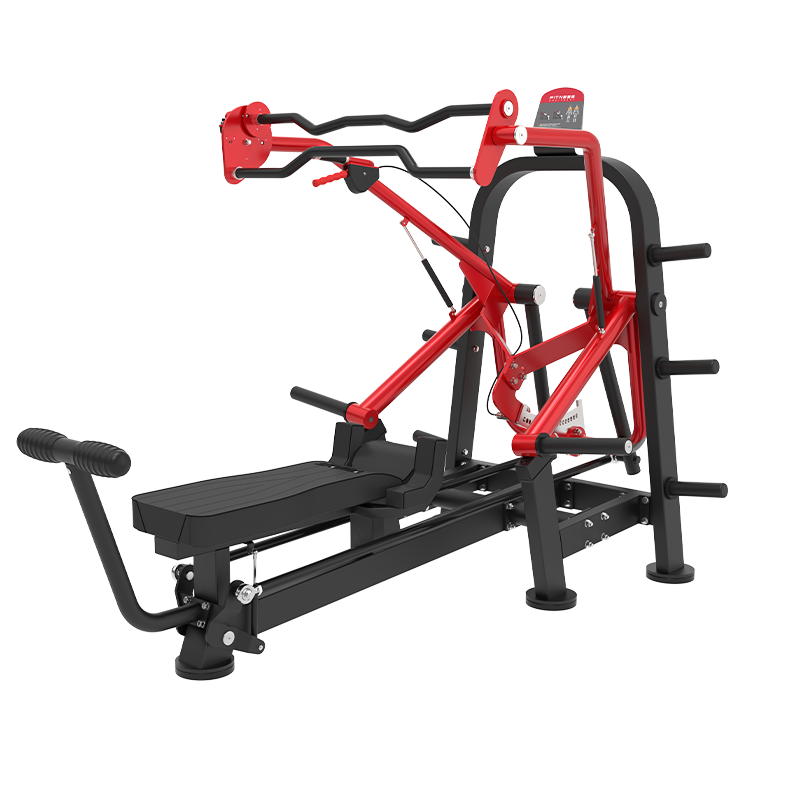
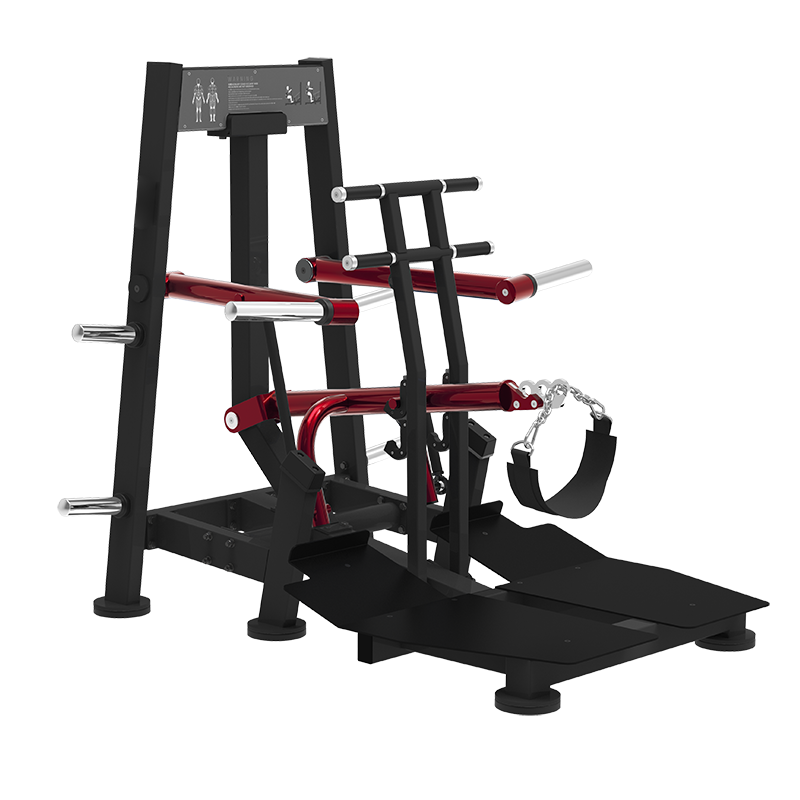
The unit described here is a commercial, plate-loaded lower-body machine with a heavy steel frame, a black powder-coated-looking main structure, red accent arms, and multiple handle positions. It appears to use a lever-based resistance path with a hanging belt or strap attachment on a short chain. From a buyer’s point of view, that combination points to a guided lower-body training station that can support squat-style movement patterns and possibly related hip or lunge work. The exact exercise pattern is not fully identifiable from the image alone, so it is better to treat the machine as a lower-body loading platform rather than overstate its function.
That caution matters. In commercial purchasing, the difference between “looks like a belt squat” and “is a belt squat” affects programming, user instructions, and floor placement. A gym belt squat machine should be easy for members to understand, but it should also be versatile enough that one station does not sit idle because the movement feels too niche.
Why the belt squat pattern works for commercial training
The main advantage of lower body training belt squat setups is simple: they let the lifter drive force through the legs while reducing the burden on the upper back. That can be useful when a trainee wants to keep training legs hard after a shoulder issue, a back irritation, or just a heavy week of barbell work. It is not a miracle substitute for every squat pattern, and it should never be marketed that way, but it fills a real gap between free-weight lifting and fixed-path machines.
For coaches, the pattern is also easier to standardize than a barbell squat. The belt connection provides a more obvious load path, and the machine frame guides the user through a consistent movement arc. In practical terms, that can reduce setup confusion on the gym floor, especially in busy facilities where a rack-based movement may require coaching every time.
Features buyers should inspect closely
When evaluating belt squat equipment, the frame is more than just structure; it is the whole user experience. The machine described here appears to rely on a stable floor-mounted base, welded steel tubing, pivoting lever arms, and bolted or pinned joints. Those are the kinds of details that make or break a commercial station over time. If the pivot points feel loose or the frame flexes under load, the machine may look strong in a catalog photo but feel cheap in daily use.
Frame and finish
Heavy steel construction is the baseline expectation. A durable coating matters too, because lower-body stations live in high-contact environments. Plates scrape, shoes kick the base, chalk finds its way into corners, and cleaning chemicals eventually test every finish. A powder coat or similar industrial finish is often preferred for that reason, though buyers should confirm the exact coating process rather than assume from appearance alone.
Handles and adjustment points
The visible multi-handle setup is useful because different users want different grips. Taller trainees, rehab clients, and athletes warming up for more explosive work may all prefer a slightly different hand position. Adjustable contact points also make a machine feel less cramped. That is a small detail on paper, but on the gym floor it often separates a station that feels natural from one that feels awkward after the first week.
Belt or strap interface
The hanging ankle or foot strap on a short chain raises an important buyer question: is that strap standard, optional, or part of a specific movement system? Do not assume. Ask for the exact attachment method, replacement options, and whether the belt interface is designed for repeated commercial use. A weak connection point is not a minor issue when a machine is expected to take daily load in a busy facility.
Choosing the right machine for your training floor
If you are comparing a belt squat machine for sale with other lower-body stations, start with the training population. A strength-and-conditioning facility may prioritize a heavier, more rugged lever path and faster user turnover. A rehab or athletic training setting may care more about entry height, stable handles, and smoother load progression. A boutique fitness studio may want a machine that is visually clean, compact enough for the room, and simple enough that members can use it with minimal supervision.
Then look at plate loading. Plate-loaded machines are appealing because they are mechanically straightforward and do not depend on a stack system. But buyers still need to confirm how plates are loaded, whether the horns are accessible, and whether the machine remains balanced when partially loaded. A machine that is easy to load on one side but awkward on the other becomes a nuisance fast.
Space is another practical filter. Some buyers shop by the footprint in theory and by aisle clearance in reality. Belt squat stations often need room not just for the frame, but for the user to step in, connect the belt, and move without clipping nearby equipment. If your gym floor is already crowded, a “great machine” that blocks traffic will still create complaints.
What Minolta brings to the table
Shandong Minolta Fitness Equipment Co., Ltd. positions itself as a commercial fitness manufacturer with more than a decade in the sector, a 120,000-square-meter facility, and over 300 types of exercise equipment across strength and cardio lines. That breadth matters for buyers who want a supplier capable of matching one lower-body station to a broader gym package rather than a one-off purchase. The company also notes exports to more than 100 countries across Europe, Africa, the Middle East, South America, and Southeast Asia, which suggests experience with international commercial supply chains.
For a sourcing manager, that does not replace machine-level due diligence, but it does frame the conversation. You are not only buying a single station; you are evaluating whether the supplier can support repeat orders, consistent finish quality, and a coordinated line of strength equipment. In that sense, the machine is part of a larger floor strategy, not just a standalone piece of steel.
Common mistakes buyers make
The first mistake is overfocusing on appearance. A red-and-black frame can look impressive in a sales image, but the real question is how the pivots feel under load and how the machine holds up after months of rack bumps and cleaning cycles. Another common mistake is underestimating user education. Even a well-designed belt squat workout needs a short orientation for new members, especially if the attachment system is unfamiliar.
The third mistake is failing to define the use case. If the station is meant for athletic training, it should be judged for fast transitions and durability. If it is meant for general gym traffic, comfort and simplicity matter more. A machine can be excellent and still be the wrong fit for the floor.
Practical buyer checklist
Before placing an order, ask for the machine’s exact exercise description, loading method, and attachment details. Confirm the frame construction, coating type, and joint design. Ask whether the belt or strap shown is included or optional. Request dimensions, shipping weight, and any available assembly information. For commercial buyers, those are not trivial questions; they determine whether the machine will fit, move, and hold up as expected.
If possible, compare the station against two alternatives: a rack-based belt squat attachment and a different plate-loaded lower-body machine. That side-by-side view often reveals whether you are buying versatility, convenience, or simply a visually strong piece of equipment. The best choice is usually the one that matches your floor, not the one that looks most aggressive in a photo.
FAQ: quick answers buyers usually want
Is a belt squat machine only for advanced lifters?
No. It is often useful for beginners, rehab clients, and general members because the setup can feel more stable than barbell squatting. The key is proper instruction.
Does it replace free squats?
No, and it should not. It complements free squats by offering a different loading path and a way to train hard when the shoulders or spine need a break.
What should commercial buyers watch most closely?
Load path, frame stability, attachment durability, and floor space. Those four items tell you far more than a polished product photo.
Where this machine fits next
For gyms building a serious lower-body zone, a belt squat machine can be one of the more practical investments on the floor. It serves a clear training purpose, it appeals to a wide range of users when properly introduced, and it tends to earn its footprint when the construction is robust. If you are sourcing belt squat equipment for a commercial setting, the best next step is to request the full specification sheet, confirm the exact movement pattern, and compare it against your current lower-body lineup before committing space to it.