


Why a glute growth program succeeds or stalls
A good glute growth program is not just a list of exercises. It is a plan that makes the hips, glutes, and surrounding muscles work hard enough, often enough, and with enough control to actually change shape and strength. That sounds obvious, but a lot of training plans miss the point. They chase fatigue without structure, or they copy “booty day” routines that look impressive and produce little besides sore lower backs.
For athletes, general gym users, and even people who only want a better-fitting pair of jeans, the decision is the same: do you want a random workout for bigger hips, or a repeatable lower body training plan that builds muscle where it matters? The difference is usually program design, not motivation. If you want to strengthen hips and improve lower-body mechanics, you need exercises that load the hips through useful ranges, trackable progression, and enough recovery to let tissue adapt.
This matters because hip development is not only cosmetic. Stronger glutes and better hip control can support squatting, running, stair climbing, and day-to-day joint stability. A well-built hip strengthening routine is often a smarter buy than a string of trendy movements that never progress beyond light bands and endless burnout sets.
What a serious program actually needs
Most effective glute plans share a few traits. They include at least one heavy hip-extension pattern, one squat or split-squat pattern, one hinge pattern, and one accessory movement that targets glute medius and the smaller stabilizers around the pelvis. You do not need twenty exercises. You do need enough mechanical tension to force adaptation.
The practical test is simple: if every workout feels like a cardio circuit, it is probably not a true muscle-building plan. A workout for bigger hips should leave room for progressive overload. That means adding load, reps, sets, or better control over time. Without that progression, the body has no clear reason to grow.
Another point that gets overlooked: the hips work in more than one plane. Pure hip thrust variations may help glute max size, but they do not solve everything. Side-to-side stability, knee tracking, and pelvis control all matter. That is why a balanced lower body training approach tends to outperform a one-exercise obsession.
Key movement categories for glute and hip development
1. Hip extension lifts
These include hip thrusts, glute bridges, Romanian deadlifts, and similar patterns. They load the glutes in ways that are easy to measure and progressively overload. For many lifters, this is the core of a glute growth program.
2. Squat and split-squat patterns
Squats, Bulgarian split squats, step-ups, and lunges train the hips through knee and hip flexion together. They are useful for building the legs as a unit, not just one muscle group in isolation. They also expose side-to-side weakness quickly, which can be useful, even if it is a little annoying in the moment.
3. Lateral and stabilizer work
Band walks, cable abductions, machine abductions, and controlled single-leg work support the muscles that help strengthen hips during walking, cutting, and single-leg loading. These movements are rarely the main event, but they help round out the program.
4. Machine-based resistance
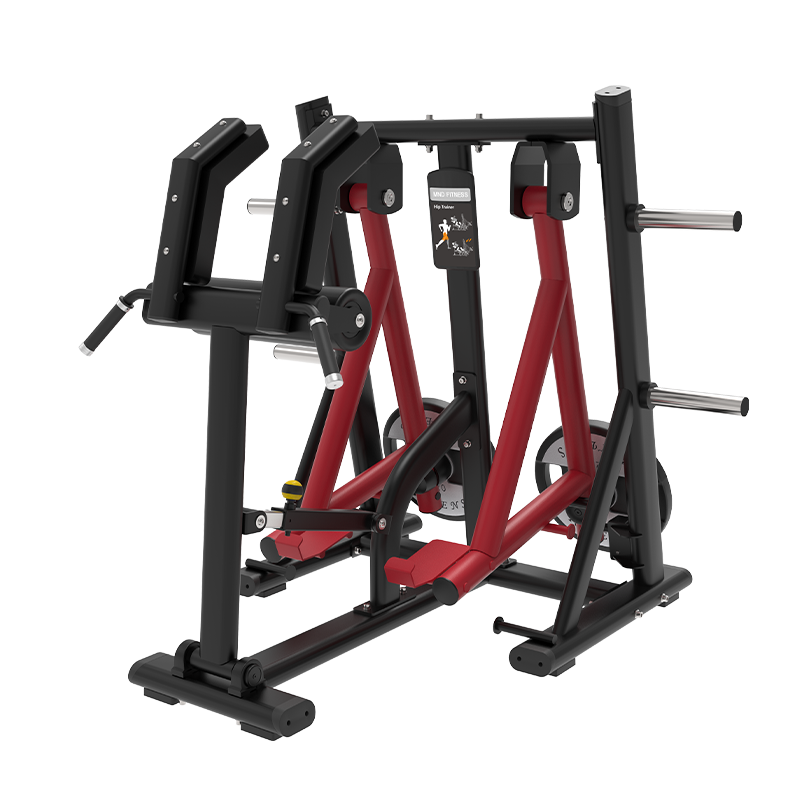
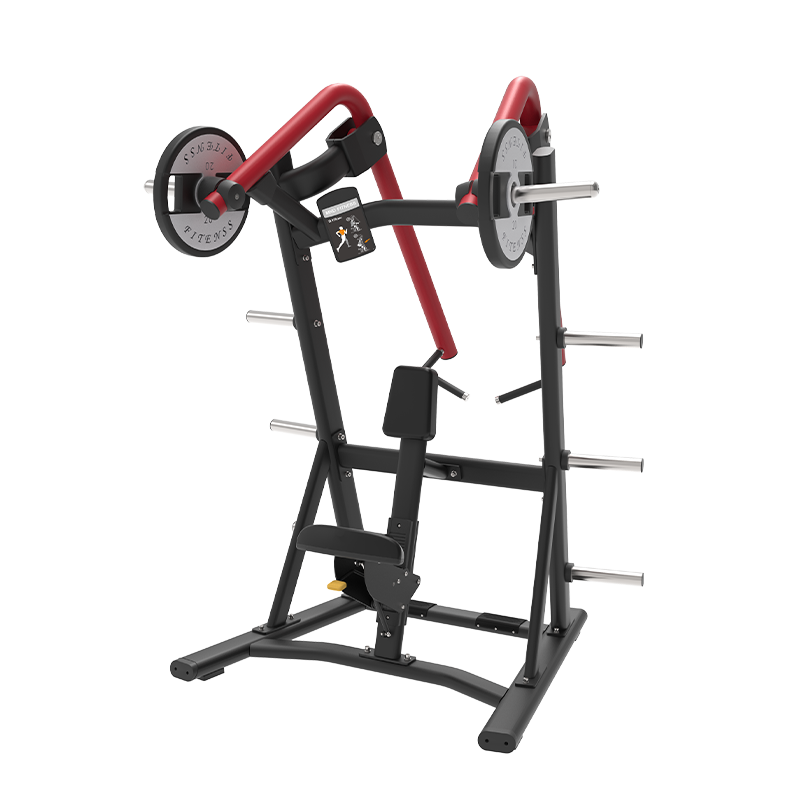
Plate-loaded machines can play a useful role in a commercial or semi-commercial training space because they offer stable resistance, consistent tracking, and less setup friction than some free-weight options. A plate-loaded strength training machine with independent press arms and a welded steel frame, for example, is a familiar sight in gyms and fitness centers. While the exact model and exercise name may vary, the design usually supports controlled pressing against a lever-based resistance path rather than a cable stack. That kind of layout is valued for durability and straightforward use.
In a training environment, this matters because machine work can help users keep effort high without depending entirely on balance or technique skill. That is especially useful in busy facilities where people want efficient lower body training sessions without long adjustments between sets.
How to structure a glute growth program
A practical structure usually includes two to four lower-body sessions per week, depending on training age and recovery. One session may be more strength-focused, another more volume-focused, and a third optional day can address weak links or lighter accessory work. The point is not to destroy the hips every session. The point is to give them enough productive work to adapt.
A simple weekly outline might look like this: one heavy hip-extension day, one squat/split-squat day, and one accessory or machine-supported day. On paper that is plain, but in practice it is often more effective than a complicated spreadsheet of random glute exercises.
For hypertrophy, sets taken close to failure matter. So does range of motion, but only if the lifter can maintain position. A shortened range with control is usually better than a bigger range that turns into lumbar compensation. That caution is worth repeating. Many people think they are feeling the glutes when they are really loading the lower back.
When machine training helps, and when it does not
There is a reason commercial gyms keep plate-loaded equipment on the floor. It gives users a stable base, repeatable resistance, and a lower technical barrier than some free-weight lifts. For glute-focused training, machine work can be especially useful when fatigue is high or when the goal is to isolate effort without requiring much setup.
Still, a machine should not replace every other pattern. Independent press arms, adjustable grip positions, or a heavy-duty welded frame can make a machine versatile, but versatility is not the same as completeness. The smart use case is support, not substitution. Let the machine supply volume and consistency; let free weights and unilateral work build coordination and resilience.
In a commercial setting, that blend is often the best answer. A gym operator wants equipment that holds up to repeated use, while the trainee wants a predictable movement path. A plate-loaded unit with side loading pegs and a floor-standing base can serve both needs if it is maintained properly and used by people who understand the movement they are doing.
Common mistakes that limit hip growth
The first mistake is treating glute training like a burn contest. High reps alone do not guarantee growth. If load never increases, progress usually stalls. The second mistake is neglecting the hips as a system. Glutes do not work alone; adductors, hamstrings, core, and stabilizers all matter. The third mistake is training with poor pelvis control and assuming any discomfort means effectiveness.
Another issue is over-relying on small accessory movements while avoiding the hard lifts. A hip strengthening routine should include enough challenge to force adaptation. Bands and isolation work have a place, but they are usually not the foundation.
Finally, many lifters change programs too quickly. Glute development is slow enough that a plan needs time. If you keep swapping exercises every week, you may stay busy without getting stronger.
What buyers should look for in equipment supporting lower body training
For gyms, studios, hotels, and training centers, the equipment choice should match the user base. A plate-loaded strength training machine with visible steel tubing, pivot joints, and a stable base is often attractive because it is straightforward and robust-looking. The features you can verify from a machine matter more than the marketing text that sometimes follows it around.
Look at the frame construction, the quality of the welds, the smoothness of the pivot points, and whether the loading system is practical for your plate inventory. Multi-handle grips can improve usability for different body sizes. Independent arms may help users train unilaterally or find a more comfortable path. Rubberized end caps and a floor-standing footprint are small details, but in a busy room they reduce noise and improve day-to-day usability.
At the same time, do not assume that heavy-looking equipment automatically equals commercial durability. Ask for the specifications that matter: dimensions, weight, load capacity, adjustment range, and compatibility with your plates. If those details are not clear, treat the machine cautiously.
About Minolta and the broader equipment context
Shandong Minolta Fitness Equipment Co., Ltd. operates from Ningjin and offers a wide range of commercial gym equipment, including strength and cardio series. The company information provided describes a 120,000-square-meter facility with a manufacturing workshop, quality control lab, and exhibition hall, plus exports to more than 100 countries across Europe, Africa, the Middle East, South America, and Southeast Asia.
For buyers, that kind of footprint suggests a supplier accustomed to serving mixed markets and different facility types. If you are sourcing equipment for a training room or fitness center, it is worth asking how a given machine fits into the wider strength series, what options exist for matching pieces, and how the frame finish and fabrication approach support long-term use. Exact model details still need to be confirmed, of course. Image-based guesses are not enough when you are specifying equipment for a commercial floor.
Practical advice for coaches and purchasing teams
If you are building a glute growth program for clients, make the progression visible. Track loads, reps, and unilateral differences. If you are buying equipment for a facility, make sure the machine mix supports real training, not just appearances. The best rooms are not filled with gimmicks; they are filled with tools that help people train hard, stay safe, and come back tomorrow.
For the lifter, the message is just as direct. Stop asking whether one perfect exercise exists. Ask whether your weekly lower body training gives the hips enough meaningful work. If the answer is no, the fix is usually a better structure, not a better excuse.
FAQ
Can a machine help with glute development?
Yes, especially when it lets you train with stability and repeatable resistance. It works best as part of a larger program, not as the entire program.
Is a workout for bigger hips different from general leg training?
Somewhat. It should still include squatting, hinging, and unilateral work, but with extra attention to hip extension, lateral stability, and progression.
How often should I strengthen hips?
Most people do well with two to four focused lower-body sessions per week, depending on recovery and training experience.
What should I avoid?
Avoid random exercise swaps, endless burnout sets, and anything that turns the lower back into the main limiter. Those habits usually slow progress rather than speed it up.
Next step
If your goal is a glute growth program that actually changes how the hips look and perform, build it around progression, not novelty. And if you are sourcing equipment for a gym or training studio, choose machines that support that kind of training with stable construction, practical adjustment, and a clear resistance path. That is the difference between a room full of hardware and a room that helps people train better.