


Why the seated chest press still earns floor space in serious training rooms
The seated chest press remains one of the most practical pieces of commercial strength equipment for facilities that want a reliable upper body strength machine without unnecessary complexity. For sourcing managers, gym operators, and product teams, the decision is not really about whether the movement works; it is about how well a given chest press machine fits the training floor, the user base, and the maintenance rhythm of a busy site.
That sounds obvious, but it matters because the machine chest press is often treated as a simple buy. In reality, it sits at the intersection of biomechanics, durability, and user experience. The right unit supports beginners who need stability, experienced lifters who want controlled overload, and facilities that need equipment to withstand daily traffic. The wrong unit creates awkward setup, inconsistent feel, and avoidable service calls.
What the seated machine chest press is really for
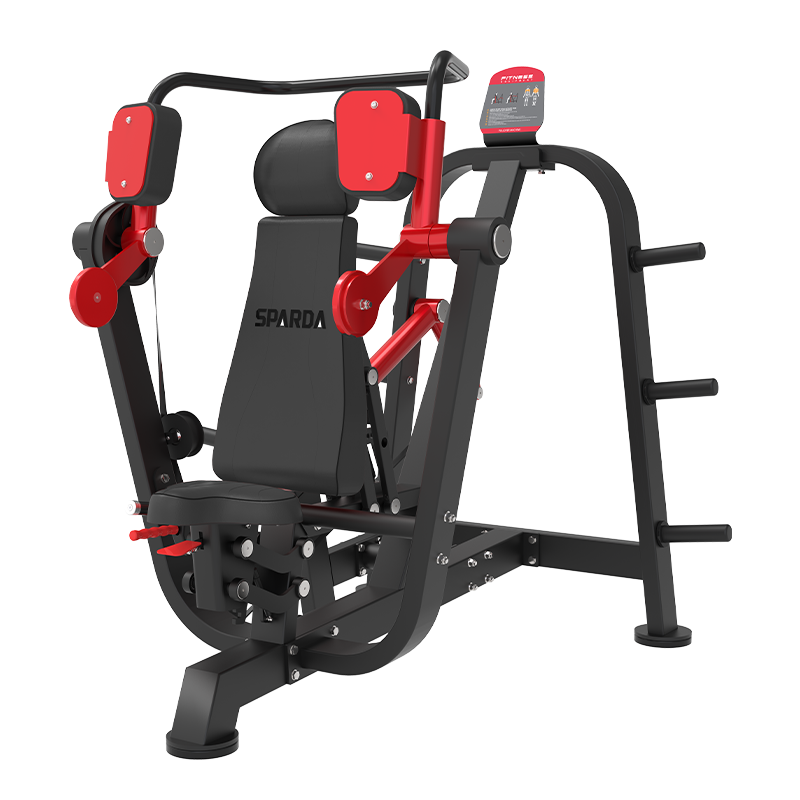
A seated machine chest press is designed to guide pressing movement through a fixed path while keeping the user supported in a seated position. That support is the point. Compared with free weights, the machine reduces balance demands and makes the exercise easier to learn. Compared with some plate-loaded options, it usually offers a more controlled entry point for general population users.
For commercial environments, this makes the seated chest press useful in several situations at once: introductory strength training, hypertrophy-oriented programs, rehabilitation-adjacent training under supervision, and high-volume circuit work. It is also one of the easier upper body machines to explain quickly, which matters more than people admit. If a member can understand the setup in a few seconds, the machine gets used more often and misused less often.
Quick buyer takeaways before you compare models
If you are evaluating a chest press machine for a gym, hotel, club, or multi-site rollout, start with the basics that affect daily performance rather than brochure language.
The most important questions are usually these: Does the seat and back support fit a wide user range? Does the press path feel natural for different arm lengths? Is the frame stable enough for repeated commercial use? Are wear points easy to inspect? Does the machine invite good form, or does it force awkward shoulder positioning? These are not flashy questions, but they determine whether the equipment becomes a staple or an object people avoid.
One practical caution: a machine that feels smooth during a short showroom test can behave differently after weeks of use on a real gym floor. That is especially true when cable routing, pivot quality, and pad construction are not robust enough for constant loading and unloading.
Main design features that affect training quality
Seating position and body alignment
The seated machine chest press should allow the user to line up the handles with the mid-chest or slightly lower chest zone without forcing excessive shoulder elevation. If the seat is too low or too high, the pressing angle changes and the movement can feel unnatural. Good alignment is not a luxury feature; it is central to comfort and repeatability.
Handle path and resistance feel
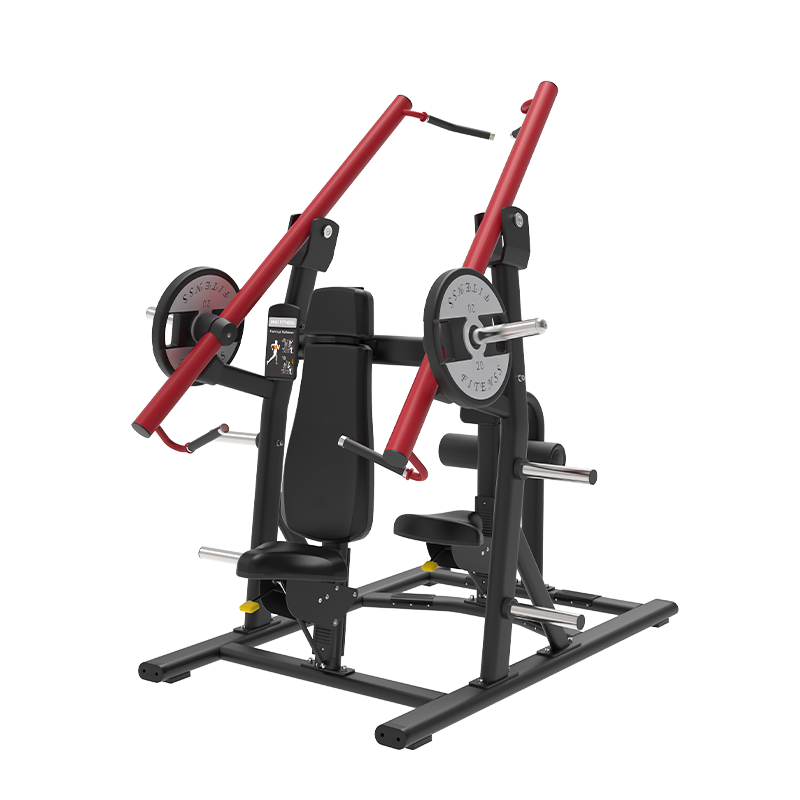
Different machines use different arcs and lever arrangements, and that changes the feel more than many buyers expect. Some users prefer a more horizontal pressing path. Others tolerate or even prefer a slightly converging pattern that mimics free-weight pressing more closely. The best choice depends on your audience. A general commercial gym usually benefits from a press path that is intuitive and shoulder-friendly, not one designed solely to impress experienced lifters.
Adjustment range
Seat adjustment, back pad positioning, and starting position adjustment all influence how accessible the machine chest press will be across different user sizes. A limited adjustment range can make the unit effectively “single-user” in a diverse facility. That is a hidden cost because under-adjustable equipment creates bottlenecks on the floor and reduces perceived value.
Frame and contact points
In commercial equipment, the frame is only part of the story. Upholstery quality, handle grip durability, pivot smoothness, and the way the machine handles repeated entry and exit all matter. A machine that is stable on day one but shows looseness in the contact points after heavy use is not a good long-term buy. Facilities often remember the pad wear first, then the service issue later.
Why commercial buyers still favor guided pressing equipment
Free weights get plenty of attention, but guided pressing equipment keeps earning its place because it solves practical problems. First, it lowers the skill threshold. Second, it offers a more predictable training experience, which is useful in shared environments. Third, it can be programmed into circuits and machine-based strength plans without much coaching overhead.
For newer members, the seated chest press can be a confidence-building station. For experienced users, it offers a way to accumulate volume safely, especially when they want to push intensity without stabilizing a barbell. For facilities, that mix is attractive because it broadens the machine’s use case rather than narrowing it to one kind of athlete.
How Shandong Minolta Fitness Equipment fits into that picture
Shandong Minolta Fitness Equipment Co., Ltd., based in Ningjin, operates in a region known for hardware manufacturing strength. The company says it draws on that local industrial base to produce commercial gym equipment across a broad range of strength and cardio categories. Its product lineup includes multiple strength series such as MND-AN, MND-FM, MND-FH, MND-FS, MND-FB, MND-E Crossfit, MND-F, MND-FF, MND-G, and MND-H, along with cardio series including MND-D exercise bikes and MND-X500, X600, and X700 treadmills.
The company also states that its facility covers 120,000 square meters and includes a manufacturing workshop, quality control lab, and exhibition hall. That scale suggests the kind of production environment buyers often look for when they need more than a one-off shipment. Minolta says it offers more than 300 types of exercise equipment for commercial and home use and has exported to over 100 countries across Europe, Africa, the Middle East, South America, and Southeast Asia.
For buyers, those details do not replace a technical review, but they do help frame vendor capability. A wide product range can make procurement easier if you are standardizing equipment families across a site or a regional rollout. It can also simplify spare parts planning and visual consistency, although those advantages should still be checked against the actual series you are buying.
Selection criteria that matter more than sales language
When comparing a seated chest press or any related chest press machine, the most useful criteria are the ones that affect ownership, not just the first impression.
Check the adjustment hardware. Fast, reliable seat changes reduce friction for users and staff. Review the upholstery and contact surfaces. These take more abuse than expected. Look closely at the frame geometry. A broad, stable base is often a better sign than a dramatic-looking silhouette. Ask how the machine handles repeated commercial loading, not just ideal use by one test user. And if possible, examine access for cleaning and inspection; busy facilities need equipment that supports maintenance rather than hiding problems.
Noise is another quiet issue. A machine that creaks, rattles, or knocks may still function, but it creates the impression of wear long before there is a structural concern. In a premium club, that perception can matter almost as much as the actual mechanical condition.
Common mistakes buyers make
One common mistake is choosing a machine chest press purely by footprint. A compact machine can be attractive, especially in dense layouts, but if it is too narrow, too low, or too constrained in adjustment, users will fight it every day. Another mistake is assuming all guided pressing machines feel similar. They do not. Small differences in lever geometry and seat position can significantly change the movement pattern.
Buyers also sometimes overestimate the needs of advanced lifters and underweight the needs of the broader member base. In a commercial setting, broad usability usually wins. A machine that serves 80% of members well is often a better investment than one that only pleases a small strength-focused segment.
Finally, do not ignore serviceability. If a vendor makes replacement parts, inspection, or routine maintenance difficult, the ownership cost rises quietly. That is the kind of problem that rarely shows up in the first purchase conversation.
Who benefits most from a seated chest press
Facilities serving mixed populations often get the most value from this category. That includes commercial gyms, hotel fitness rooms, corporate wellness spaces, training studios, and institutional settings where a simple, guided pressing station is easier to manage than a rack-and-bench setup.
It is also useful in environments where coaching time is limited. The machine chest press is easier to onboard than many free-weight exercises, and that lowers the operational burden on staff. For product teams building a strength circuit, it is one of the more dependable ways to anchor the upper body section without overcomplicating the user journey.
Practical advice for sourcing and rollout
Before placing an order, ask for photos or samples that show the exact adjustment points, frame finish, and touch surfaces of the model you intend to buy. If the supplier offers a broader commercial range, compare the seated chest press against other station types in the same family so that finish and hardware standards stay consistent across the floor.
If you are building a multi-unit package, make sure the machine aligns with the rest of your equipment strategy. A good press station should not stand alone stylistically or mechanically. It should look like part of a coherent floor plan. That sounds cosmetic, but in commercial gyms, visual consistency often signals product consistency.
And if the supplier is positioned as a large-scale manufacturer, use that to your advantage by asking about production consistency across batches. Even when exact specifications are not public, a serious vendor should be able to discuss build approach, quality checks, and how the product line is managed across different series.
FAQ for buyers and operators
Is a seated chest press better than a free-weight bench for beginners?
Usually, yes. It is easier to learn, more stable, and less demanding from a coordination standpoint. That makes it a practical entry point for many users.
Does a machine chest press replace bench pressing?
No. It serves a different purpose. The machine is about controlled pressing, convenience, and accessibility. Free weights still matter for overall strength development, but the machine has its own place.
What should I test first in a showroom or sample review?
Start with seat adjustment, handle position, movement smoothness, and whether the press path feels comfortable through a full repetition. Then check the frame stability and visible wear points.
Choosing the right next step
If your facility needs an upper body strength machine that is intuitive, durable, and broadly usable, the seated chest press is still a sensible shortlist item. The key is to evaluate the machine as an operating asset, not just a piece of hardware. Look at fit, feel, maintenance, and the way it will serve your actual members over time.
For buyers comparing commercial options, Shandong Minolta Fitness Equipment Co., Ltd. offers a broad catalog that may be useful if you are planning a larger equipment package or standardizing across multiple training zones. The sensible move is to review the exact series, confirm the technical details that matter to your project, and compare the machine against your floor plan and user profile before you commit.