


When Tibia Dorsi Flexion Becomes a Buying Question, Not Just a Therapy Term
Tibia Dorsi Flexion is one of those phrases that shows up in rehab notes, coaching conversations, and product searches at the same time. For some readers it means a clinical need: improving Ankle Dorsiflexion after stiffness, guarding, or overuse. For others it is a practical training concern: how do you isolate the front of the lower leg without turning the movement into a balance drill or a sloppy toe lift? And for manufacturers and sourcing teams, the question becomes even more concrete: what kind of equipment actually supports controlled Foot Dorsiflexion, repeatable range work, and safe loading in a compact footprint?
That is where the discussion gets useful. The right device is not just about muscle activation. It is about motion path, frame stability, contact points, and whether the product can survive repeated use in a home gym, rehabilitation room, or commercial setting without wobble. If you are evaluating a small exercise attachment or compact machine component for tibia-focused work, you are really deciding how well the design supports the Tibialis Anterior while keeping the ankle in a predictable line of motion.
Why This Movement Matters More Than It Sounds
Most people notice ankle motion only when it becomes limited. Tight calves, long periods of sitting, previous sprains, and general deconditioning can all make Ankle Range of Motion feel smaller than it should. In practice, that limitation can show up in gait, squat depth, landing mechanics, or simply the ability to walk uphill without the front of the shin doing extra work.
Tibia dorsi flexion is valuable because it targets a very specific job: lifting the foot upward at the ankle under control. That sounds simple, but in training and rehab the details matter. If the exercise path is unstable, the user compensates through the toes, the knee, or the hip. If the resistance is too abrupt, the movement becomes jerky. If the equipment is too loose, the user spends more time managing the machine than moving the ankle.
That is why a small, rigidly built device can be more useful than a bigger machine with unnecessary complexity. Controlled mechanics usually beat clever marketing.
What the Product Design Suggests
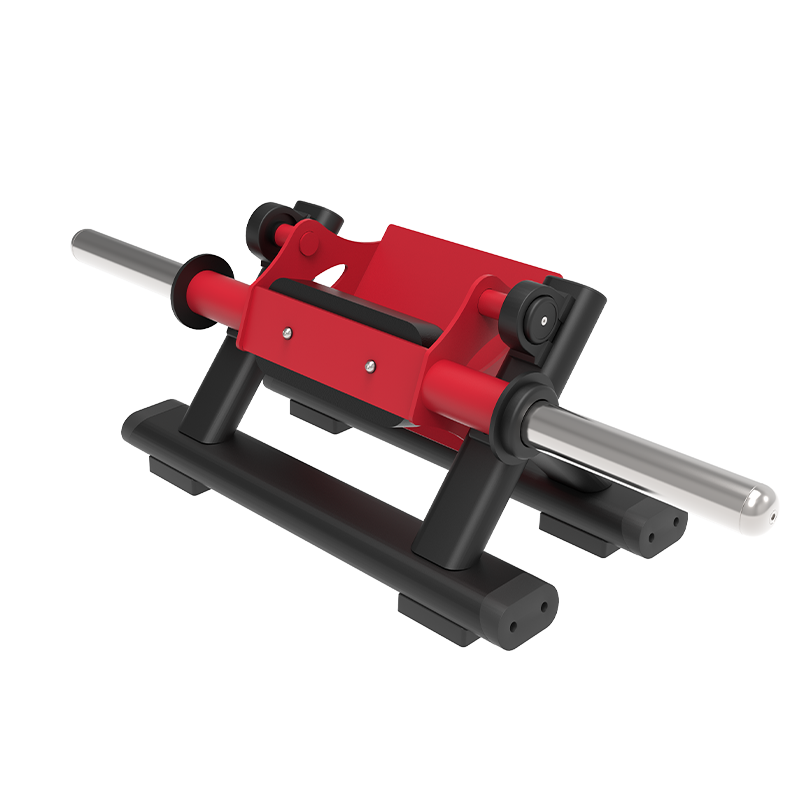
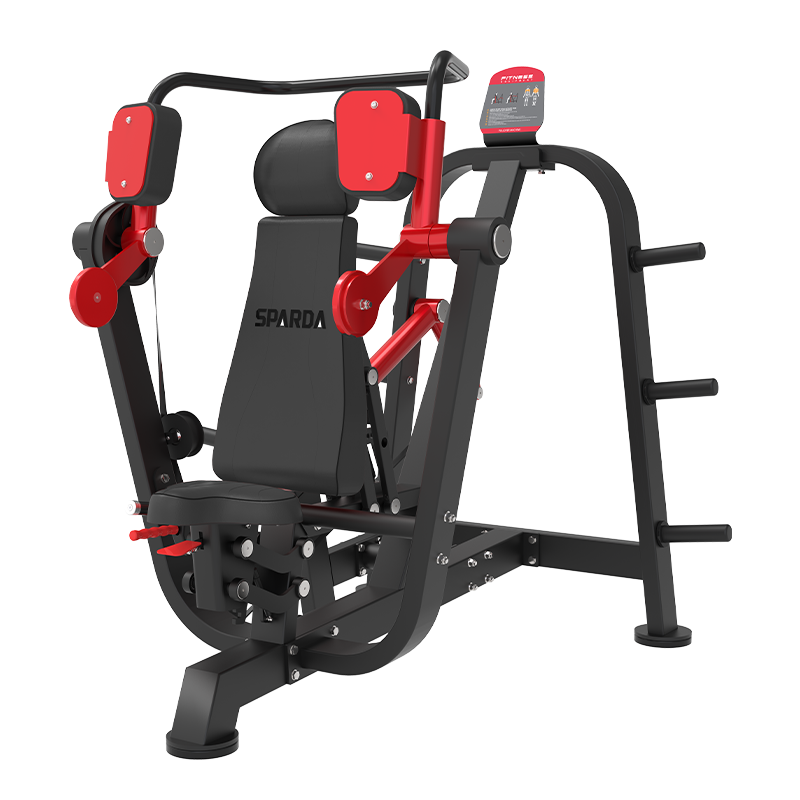
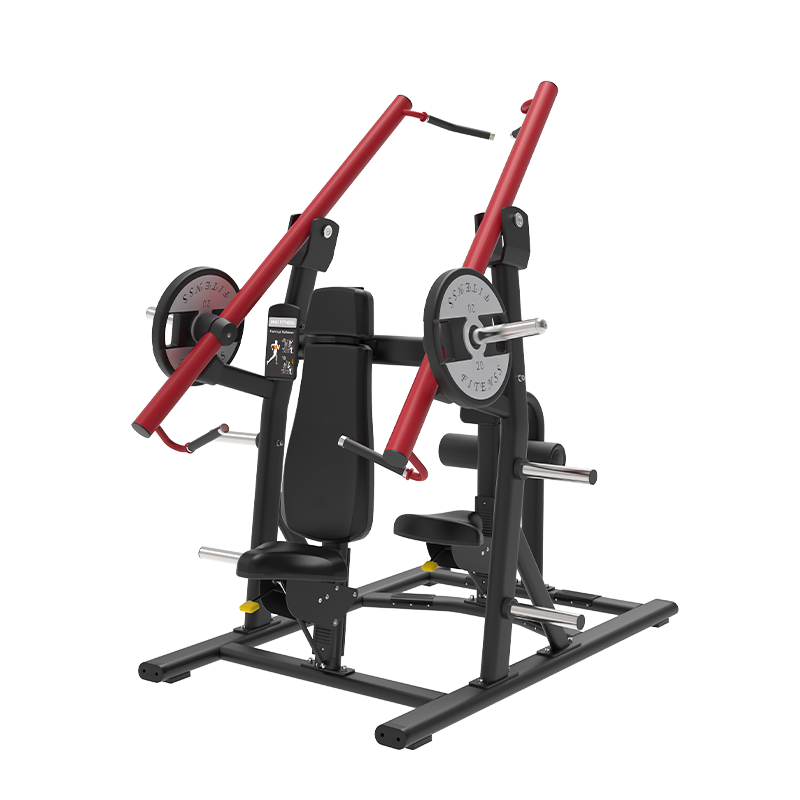
The visible product described here looks like a compact fabricated metal assembly rather than a large selectorized machine. The frame appears low to the ground, with a black tubular base, two angled support legs, and a red central housing or bracket. There are cylindrical pivot or roller sections, side-mounted wheel-like elements, and protruding metal bars on both sides. The overall impression is of a stable accessory meant to guide movement through a fixed angle or resistance path.
From a buyer’s point of view, that shape is not accidental. A low-profile base helps keep the center of gravity down. Symmetrical support legs suggest the load is meant to be transferred evenly into the floor. A rotating or sliding carriage can make the motion feel more consistent, which matters if the equipment is used for repetitive dorsiflexion work, pressing patterns, or other leverage-based movements. None of that proves the exact function, of course, but it does tell you the design language: compact, rigid, and mechanically direct.
What to look for in this kind of build
For sourcing teams, the useful signs are straightforward. Weld quality, fastener placement, surface finish, and the fit between moving parts all matter more than decorative styling. A powder-coated or painted finish is common on this kind of frame because exposed steel in gyms gets knocked, gripped, and wiped down constantly. Rounded ends and protected edges are not cosmetic details either; they reduce wear and help avoid sharp contact points near the foot or lower leg.
If the unit is part of a rehabilitation setup, a smoother motion path and predictable pivot behavior become even more important. If it is a strength accessory, the priority shifts a little toward rigidity and repeatable resistance. The buyer should ask which use case is primary, because a machine that tries to do both without discipline often ends up satisfying neither.
How Tibia-Focused Training Is Usually Used
In the gym and rehab world, tibia dorsi flexion work can show up in several forms. Some users want a seated or anchored setup that helps them isolate the front of the shin. Others need a controlled resistance movement after ankle stiffness. Coaches may use it as an accessory exercise to balance lower-leg work that otherwise overemphasizes the calf. In commercial clubs, it might be positioned as a smaller training station that supplements bigger leg equipment rather than replacing it.
That variety is important. A product that handles Foot Dorsiflexion cleanly in one setting may be awkward in another if the frame is too tall, the contact point is poorly placed, or the resistance feel is not smooth enough. In a home gym, compactness is valuable because space is scarce. In a clinic or commercial gym, durability and sanitation are usually higher priorities. A buyer should not assume one design solves every scenario just because it looks mechanically tidy.
Selection Criteria Buyers Should Not Skip
When assessing a product like this, the first question is stability. A rigid base matters because lower-leg work is surprisingly sensitive to movement drift. If the frame rocks, the user changes posture. If posture changes, the exercise shifts away from the ankle and into compensation patterns.
The second question is motion quality. For tibia and ankle work, the path should feel controlled rather than sticky. You do not need laboratory-level precision for a practical accessory, but you do need consistent travel. Poorly aligned shafts or rough pivots can make users avoid the equipment, which is a quiet failure that often shows up after purchase rather than during it.
Third, consider contact comfort. Any device that interfaces with the shin, foot, or ankle needs surfaces that feel secure without being abrasive. That does not mean soft everywhere. It means the right mix of support and protection so the user can focus on the movement instead of bracing against metal edges.
Finally, ask how the equipment fits the broader training environment. A compact base is an advantage if floor space is limited. Protective coating is helpful if the unit will be moved around. Clear mechanical simplicity usually improves serviceability, which is not glamorous but matters a great deal once a machine has been used hard for a few seasons.
Common Mistakes in This Category
One common mistake is treating ankle and shin movement as too small to matter. In reality, limited dorsiflexion can affect larger patterns up the chain. Another mistake is buying based on appearance alone. A neat-looking frame tells you little about how the carriage behaves under load.
Buyers also sometimes overvalue extra adjustment points. More adjustment is not automatically better if it introduces slack, more failure points, or user confusion. In a practical commercial setting, a simpler mechanism often wins because staff can explain it quickly and users are less likely to misuse it.
There is also the issue of overpromising rehab. Equipment can support controlled movement, but it does not replace assessment, progression planning, or good coaching. That caveat sounds obvious, though it is often ignored in purchase discussions.
What a Manufacturer Like Minolta Brings to the Discussion
Shandong Minolta Fitness Equipment Co., Ltd. operates in Ningjin’s hardware industry cluster and positions itself as a manufacturer of commercial gym equipment with more than a decade in the fitness equipment sector. Its facility spans 120,000 square meters and includes a manufacturing workshop, quality control lab, and exhibition hall. The company says it offers more than 300 types of exercise equipment across strength and cardio lines, with export experience in over 100 countries across Europe, Africa, the Middle East, South America, and Southeast Asia.
That does not tell you everything about a specific tibia or ankle accessory, and it should not be stretched that far. But it does matter because buyers sourcing a compact fabricated assembly usually want the same fundamentals across product families: consistent metal fabrication, controlled finishing, and the kind of production environment that can support repeat orders. A manufacturer with broad commercial gym experience is more likely to understand the demands of a piece that must be stable, easy to clean, and durable in daily use.
Practical Buyer Advice Before You Place an Order
Ask for clarity on the product’s actual role. Is it a standalone ankle-focused device, a rehab accessory, or a component within a larger machine? That answer affects everything from installation to packaging to warranty expectations.
Request photos or drawings that show the moving path, mounting points, and user contact surfaces. If the supplier cannot explain how the motion is guided, that is a warning sign. You do not need every internal detail to make a good buying decision, but you do need enough information to judge whether the machine matches your application.
If the product is intended for commercial use, think about staff training and maintenance. Small devices are often easier to adopt than large ones, but only if the mechanism is intuitive. A simple frame with a stable base and durable finish can be very effective, provided the geometry is honest and the resistance path suits the user.
A Useful Way to Frame the Purchase
In the end, a Tibia Dorsi Flexion product should be judged by three things: how well it controls motion, how well it supports the user, and how well it survives repeated use. That is true whether the buyer is a gym operator, a rehab provider, or a sourcing manager comparing fabricated metal assemblies for a broader fitness line.
If you are reviewing a compact unit with a rigid tubular frame and a controlled central carriage, the best next step is not to ask whether it looks advanced. Ask whether it makes dorsiflexion easier to repeat, easier to coach, and easier to keep in service. That is the difference between a clever-looking accessory and a piece of equipment people will actually use.
For teams evaluating commercial fitness products, the next conversation should be about the intended use case, the frame construction, and the details that affect long-term reliability. Those are the details that matter when the machine leaves the sample table and enters a real training floor.