


Why buyers look at the MND Fitness FS line camber curl in the first place
The MND Fitness FS line is the sort of commercial strength range that gets attention from gym owners, rehab coordinators, and equipment specifiers who want durable, space-conscious stations rather than flashy extras. Within that context, the MND Fitness FS line camber curl sits in a very specific lane: it is a dedicated biceps curl machine built for isolated arm work, with a seated/preacher-style support, an integrated weight stack, and a stable floor-standing frame. For a buyer, that matters because arm stations often have to do two jobs at once — look inviting enough for general members, while remaining predictable and robust enough for heavy daily use.
This kind of machine is not meant to replace a full free-weight zone. It solves a narrower problem: helping users train elbow flexion with controlled body position and less room for cheating. In commercial settings, that can mean better consistency, easier coaching, and fewer awkward setups than a cambered curl bar machine or a loosely supervised dumbbell station. It also makes the exercise more accessible to newer users who need a clearly guided path.
What the machine is designed to do
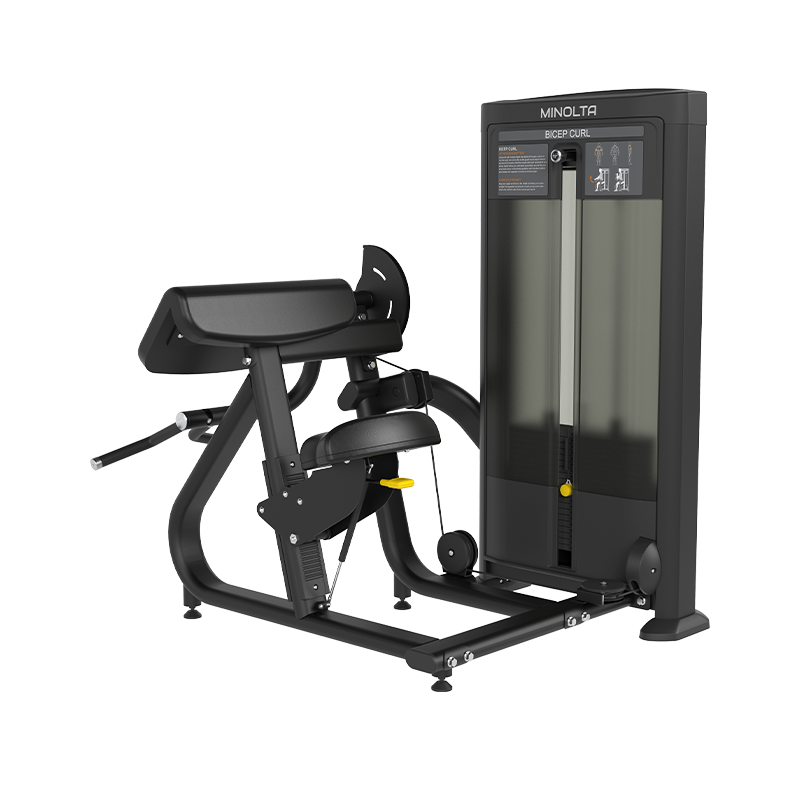
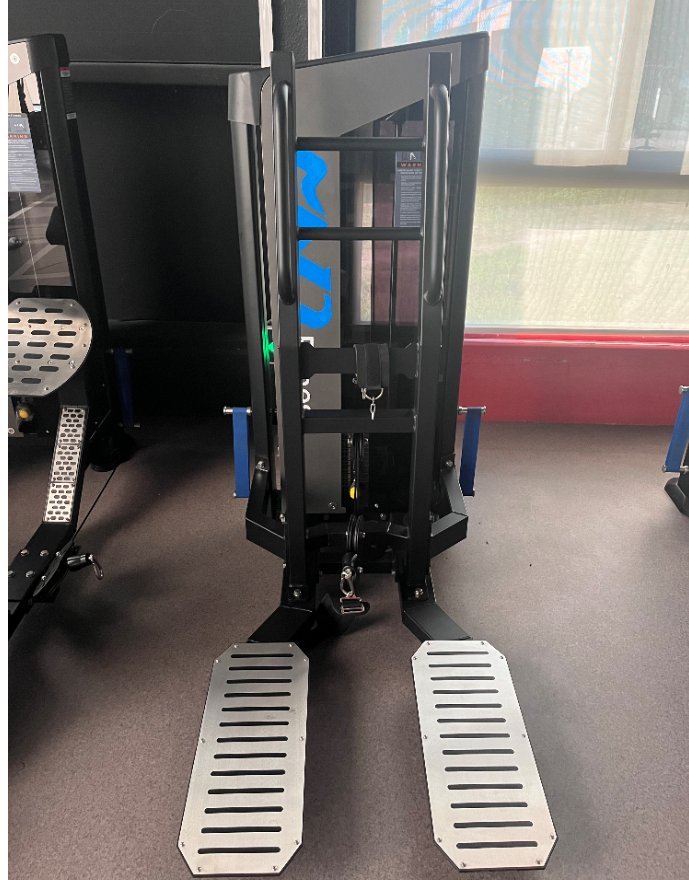
Visually, the unit combines a preacher pad, a seated position, and a lever or cable-based resistance path that guides the arms through a curl motion. The front panel is labeled “BICEP CURL,” and the upper shroud carries the MINOLTA branding. Those details point to a single-purpose station rather than a multi-function attachment. The result is simple: the user sits, braces the upper arm against the support, selects a load from the stack, and curls through a fixed path.
That fixed path is the key selling point. A biceps curl camber setup can be useful in different ways depending on the frame geometry, but the appeal is usually the same — keep the shoulder quieter, reduce body swing, and isolate the elbow flexors. For many facilities, that makes the station easy to teach and easy to keep in rotation during busy hours.
How the FS line camber curl fits into a commercial floor plan
Not every gym needs a dedicated biceps station. The machine earns its space when the facility wants to offer a clear arm-training option without occupying a large footprint. The FS line camber curl station appears compact, floor-standing, and stabilized with base feet, which is a practical trait in commercial interiors where equipment has to sit in tight rows and still feel planted.
That matters in several environments:
- Health clubs that want a complete selectorized strength area
- Hotel and corporate fitness rooms where users need straightforward equipment
- Physiotherapy or rehab spaces where controlled movement matters
- Strength-training areas that serve a broad range of experience levels
A cambered curl bar machine may be cheaper and more flexible in some settings, but it depends on free weights, rack space, and user familiarity. A selectorized station removes some of that friction. The trade-off is obvious: less exercise variety, but more consistency.
Key construction features buyers can verify from the product description
The machine appears to use a welded steel frame with a matte black powder-coated finish. That is standard language in commercial gym equipment, but it is still worth noting because finish quality affects both appearance and maintenance. Powder coating generally helps the frame resist scuffs and daily cleaning chemicals better than a basic painted surface, though no finish is invincible once the equipment lives in a high-traffic room.
The upholstery is described as black and likely vinyl-covered foam. That sounds ordinary, but ordinary is often what survives on the floor. For a seated preacher-style machine, the arm pad is not decorative; it has to support repeated contact, sweat, and shifting user sizes without collapsing too quickly. The same is true of the seat pad.
Another useful detail is the enclosed weight stack tower on the right side, guarded by a front shroud. That does two things. First, it protects users from moving hardware. Second, it gives the unit a cleaner visual profile, which matters more than many buyers admit when they are trying to keep the training floor from looking chaotic.
What is known, and what should not be assumed
It is reasonable to infer that resistance is selected with a pin-based stack system, but the exact mechanism type is not fully visible. Likewise, the exact stack weight, cable ratio, tube thickness, and adjustability range are not provided. Those details should be confirmed directly before purchase. In commercial procurement, it is a mistake to fill gaps with assumptions just because the machine looks familiar.
Why a dedicated arm station can outperform improvised options
A lot of gyms try to cover arm training with a bench, a curl bar, and a cable column. That setup can work, but it also relies on user knowledge and discipline. A dedicated FS line camber curl machine removes the setup step and narrows the movement pattern. For operators, that often means fewer complaints about messy stations and fewer coaching interventions for poor form.
There is also a programming benefit. When the elbow and upper arm are supported, the target muscle group becomes easier to isolate. That can be useful for hypertrophy-focused users, but also for people returning from an overuse issue or trying to reduce momentum during rehab-adjacent work. Of course, any rehabilitation use should be handled within the scope of qualified professionals; a commercial strength machine is not a medical device simply because it feels controlled.
Selection criteria that actually matter
When evaluating a MND camber curl or any comparable selectorized biceps station, buyers should look beyond the brochure image.
The first issue is user fit. A preacher-style pad needs to work for a wide range of torso lengths and arm spans, or the station becomes awkward fast. If the support height and seat position are too restrictive, taller users will feel cramped and shorter users may struggle to align properly.
The second issue is frame stability. Arm stations can generate more sideways load than people expect, especially when users start the rep with a tug instead of a smooth pull. A solid base and sensible weight distribution matter.
The third issue is access and maintenance. Enclosed stacks are attractive because they look tidy, but the service panels still need to be practical. If routine inspection is difficult, minor problems tend to linger.
The fourth issue is clarity of use. The exercise diagram on the front panel is a small thing, but it reduces confusion and keeps circulation moving. In a public gym, that is not a minor benefit at all.
Common buyer mistakes with camber curl machines
The most common mistake is overbuying specialization. A facility may love the idea of a biceps curl camber station, then discover that shoulder work, triceps work, and cable accessories have a higher utilization rate. That does not make the machine a bad choice; it just means it should be purchased for a specific programming gap, not as a substitute for a better-rounded selectorized line.
Another mistake is underestimating floor planning. Even compact machines need breathing room. Users must be able to sit, load, and exit without clipping neighboring equipment. In busy gyms, awkward spacing becomes a service problem.
A third mistake is treating all commercial frames as equivalent. The real difference often shows up after months of cleaning, use, and minor impacts. Weld quality, shroud fit, seat durability, and the smoothness of the resistance path all influence how long the machine feels “new.”
Where the MND Fitness FS line makes sense as a supplier choice
Shandong Minolta Fitness Equipment Co., Ltd. positions MND FITNESS as a manufacturer with over a decade in the sector, a 120,000 square meter facility, and a range that spans more than 300 types of exercise equipment across strength and cardio. It also notes exports to more than 100 countries. For a sourcing manager, that sort of scale suggests a supplier that understands commercial production, not just isolated sample builds.
The relevant point is not the marketing language itself. It is the implication that the company operates across manufacturing, quality control, and exhibition functions, which can matter when buyers need consistent batch production and a broader equipment portfolio. If you are trying to standardize a full gym floor, a vendor with a recognizable strength series — including MND-FS — can simplify procurement and after-sales coordination.
Practical advice before you place an order
Ask for the details that are not visible. Confirm dimensions, selectorized resistance specifics, stack weight, upholstery options, and the exact service access points. If your facility serves larger users or has strict cleaning protocols, ask about pad replacement and shroud removal as well. Those are not glamorous questions, but they are the ones that save headaches later.
If possible, compare the machine against your current arm-training traffic. If the free-weight area is already crowded and under-controlled, the station may be a smart addition. If your members mostly use cables and dumbbells for arms already, the new unit should earn its place with clear programming value rather than novelty.
One small caution: commercial arm machines can look very similar across brands. Do not decide from the label alone. A reliable image may tell you enough to shortlist the unit, but not enough to approve it for a demanding floor without confirming the mechanics.
FAQ for buyers and facility managers
Is the MND Fitness FS line camber curl a free-weight machine?
No. Based on the visible configuration, it is a selectorized commercial machine with an enclosed weight stack, not a free-weight station.
Is this the same as a cambered curl bar machine?
Not really. A cambered curl bar machine usually relies on bars, racks, or free-weight loading. The FS line camber curl is a dedicated machine with guided resistance and a built-in stack.
Can it be used in rehab settings?
It may be suitable for controlled strength work in physiotherapy or rehab-oriented facilities, but only under appropriate professional supervision and programming.
What should I verify before purchase?
Confirm dimensions, stack weight, adjustment range, resistance mechanism, maintenance access, and whether the unit fits your training floor and user base.
A sensible next step
If you are considering the MND Fitness FS line for a commercial gym, the camber curl station is best viewed as a targeted tool: useful when you want reliable biceps isolation, predictable user experience, and a compact selectorized footprint. Request the technical sheet, compare it with your available floor space, and check how it fits alongside your other arm-training options. That is usually enough to tell whether it will become a high-use station or just another piece of steel taking up space.