


Specifying Commercial Lower-Body Stations: An Engineering and Sourcing Guide to the SPL49 Leg Extension Machine
For commercial gym operators and equipment procurement teams, selectorized quad stations present a perennial maintenance and ergonomic challenge. Few pieces of strength equipment endure the relentless cycle of eccentric loading, abrupt pin drops, and multi-user wear quite like a knee extension unit. When evaluating a unit like the SPL49 leg extension machine, the purchasing decision extends far beyond aesthetic footprint or upholstery color swatches. Sourcing managers must assess rotary axis alignment, cam profile geometry, structural tubing gauge, and bearing tolerance to ensure the asset survives high-traffic commercial environments without constant service calls.
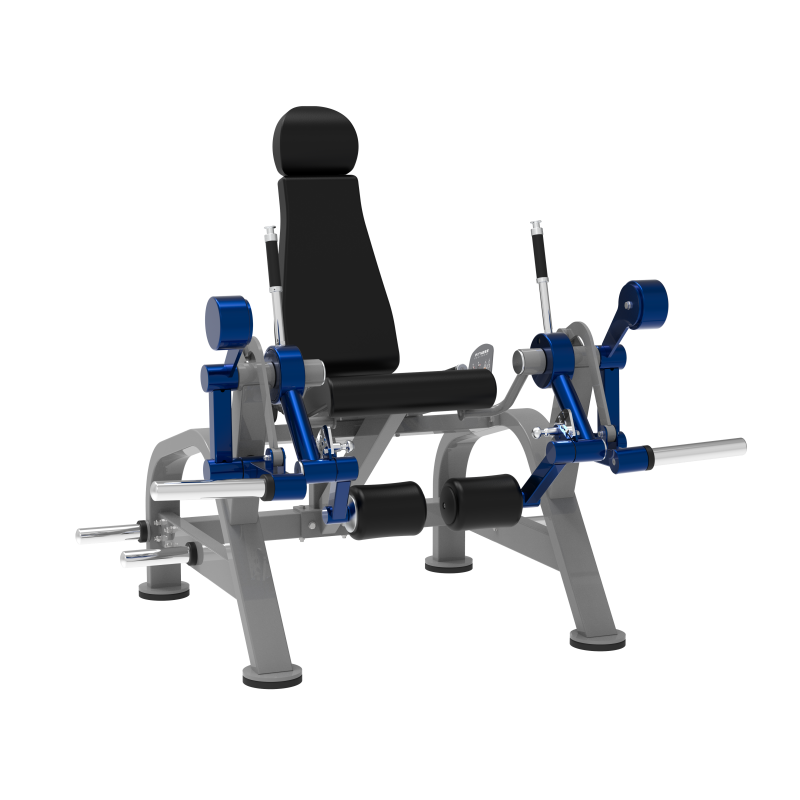
Every commercial gym floor needs dependable lower-body isolation gear. However, mismatches between user anthropometry and machine pivot points remain one of the leading causes of member complaints regarding patellar shear stress. At the same time, poor component specification—such as undersized pivot shafts or thin guide rods—rapidly leads to premature cable fraying and uneven bushing wear. This guide breaks down the structural design, biomechanical requirements, and manufacturing criteria essential for specifying the SPL49 leg extension machine or evaluating an alternate leg extension machine for your portfolio.
Biomechanical Fundamentals: Pivot Alignment and Cam Profiling
The core engineering difficulty in any leg extension unit lies in matching human joint kinematics. The human knee does not flex and extend along a static hinge; it follows a shifting instant center of rotation (polycentric movement). A rigidly designed commercial unit cannot fully replicate this without an optimized cam and a clear, easily accessible axis-of-rotation marker.
When reviewing technical drawings or production prototypes of the SPL49 leg extension machine, pay close attention to three biomechanical interfaces:
- Rotary Axis Alignment: The primary pivot bearing must sit on the same horizontal plane as the user's lateral femoral epicondyle. If the backrest adjustment lacks fine enough increments, shorter or taller athletes are forced to shear their knee joints against the pad during peak quadricep contraction.
- Variable Resistance Cam: The human quadriceps force-velocity curve drops off at terminal extension (the last 15 to 20 degrees). Quality commercial machines integrate an eccentric cam profile that slightly tapers torque resistance right at lockout, preventing joint compression while maintaining peak tension through the midrange.
- Adjustable Tibia Pad Assembly: Fixed lower-leg rollers inevitably slide up and down the user's shins under heavy loads, causing friction burns and lateral torque on the ankle joint. A self-aligning lower arm or a quick-release pull-pin mechanism is critical for rapid gym turnover.
Structural Fabrication and Material Standards
From a manufacturing and quality control perspective, commercial lower-body equipment must endure dynamic shock loads far exceeding the nominal weight stack rating. During a rapid drop or eccentric deceleration, peak force transfer surges into the main frame welds and pulley mounts.
In China's primary fitness manufacturing clusters—most notably Ningjin County in Shandong Province, where companies like Shandong Minolta Fitness Equipment Co., Ltd. (MND FITNESS) operate industrial-scale production facilities—equipment frames typically use heavy-gauge rectangular or oval steel tubing. For a heavy-duty unit like the SPL49, procurement teams should expect cold-drawn steel frames with wall thicknesses no less than 2.5 mm to 3.0 mm. MND FITNESS utilizes extensive metalworking capacity across its 120,000-square-meter facility to laser-cut, bend, and robotically weld structural members for commercial series, reducing human weld inconsistencies that often cause fatigue fractures near pivot junctions.
Pivot points require dual industrial-grade sealed bearings (typically deep groove ball bearings or flanged units) housed in precision-machined bearing cups. If a supplier uses simple oil-impregnated bronze bushings on the main swing arm to cut bill-of-materials costs, expect play and lateral arm wobble within twelve to eighteen months of commercial use.
SPL49 vs. Alternate Leg Extension Machine Configurations
Sourcing managers frequently debate whether a standard selectorized bilateral setup or an alternate leg extension machine configuration makes the most sense for their client mix. While single-station selectorized machines dominate typical fitness franchises due to their intuitive operation and compact space utilization, independent-arm or plate-loaded alternatives offer distinct functional tradeoffs.
Independent unilateral movement arms help identify and balance quad strength discrepancies, which is popular in sports performance and rehabilitation clinics. However, unilateral linkage mechanisms introduce additional pivot shafts, linkages, and maintenance inspection points. For typical commercial facilities, high-density apartment developments, and corporate wellness centers, a rugged, single-pivot selectorized platform like the SPL49 leg extension machine remains the operational workhorse. It maximizes user throughput, reduces onboarding friction, and provides a continuous load path that minimizes cable deflection.
Key Inspection Criteria for Gym Equipment Buyers
When conducting on-site factory audits or reviewing pre-shipment inspection (PSI) samples for commercial strength lines, focus on these five inspection checkpoints:
- Weight Stack Guide Rods: Check that the guide rods are solid cold-rolled steel with hard chrome plating. Hollow tubes or poorly polished rods introduce friction, causing selector plates to hang mid-stroke during slow eccentric phases.
- Cable and Sheave System: Look for heavy-duty aircraft-grade steel cable jacketed in nylon (minimum 5.6 mm outside diameter) paired with fiber-reinforced nylon or CNC-machined aluminum pulleys with shielded bearings. Deep cable grooves prevent slip-offs during aggressive member drop-sets.
- Seat and Backrest Adjustments: Test the selector pull-pins. The spring-loaded pins should engage positively into laser-cut indexing holes without sticking. Torsion springs or gas-assisted cylinders on backrest linkages are valuable inclusions that enhance user experience.
- Foam and Upholstery Density: Commercial pads should feature high-density molded polyurethane foam rather than glued scrap foam layers. The vinyl cover should have double-stitched perimeter seams and resist sweat degradation and tear wear.
- Powder Coating Durability: Structural steel should undergo automated shot-blasting or acid-pickling to remove scale before electrostatic powder coating. A dual-coat process (primer plus hard thermoset topcoat) ensures long-term resistance to sweat corrosion and chipping around base contact points.
Practical Sourcing Considerations
Working with established commercial manufacturers allows distributors and gym brands to tailor selectorized lines to target market price tiers. MND FITNESS, for example, supplies broad commercial strength lines alongside cardio equipment to overseas distributors across Europe, the Middle East, and Latin America. However, when placing volume orders, buyers should clearly define customization specifications in the initial contract.
Specify weight stack increments explicitly. A machine configured with 10 kg jumps may satisfy intermediate bodybuilders, but general fitness consumers will struggle with progression unless incremental add-on weights (such as 2.5 kg magnetic intermediate plates) are included. Similarly, ensure spare wear items—such as replacement cables, pulley wheels, guide rod bushings, and safety pull-pins—are bundled directly into the container load to avoid delayed floor maintenance later.
Frequently Asked Questions
How often should selectorized leg extension cables be replaced?
In high-traffic commercial environments, cables should undergo weekly visual inspections for jacket cracking, internal strand kinks, or collar elongation. Full replacement is recommended every 12 to 18 months regardless of visible wear, or immediately if any cable jacket split reveals internal steel strands.
What floor anchoring is required for this class of strength machine?
While the machine's low center of mass and integrated weight tower provide substantial stability, commercial standards in many regions recommend anchoring selectorized equipment to the subfloor if users regularly exert lateral torque during mount or dismount. Look for base feet pre-drilled with anchoring holes and fitted with heavy-duty rubber protective boots.
Next Steps for Your Facility or Portfolio
Specifying commercial lower-body equipment requires balancing biomechanical precision with industrial-grade mechanical robustness. If you are updating a commercial gym floor, outfitting a corporate facility, or developing an OEM equipment catalog, evaluate the SPL49 platform against your facility's daily user volume and aesthetic requirements. Contact our technical team to request detailed 2D/3D facility layout models, exploded parts schematics, and volume production lead times tailored to your procurement schedule.