


Evaluating Commercial Overhead Press Stations for High-Traffic Facilities
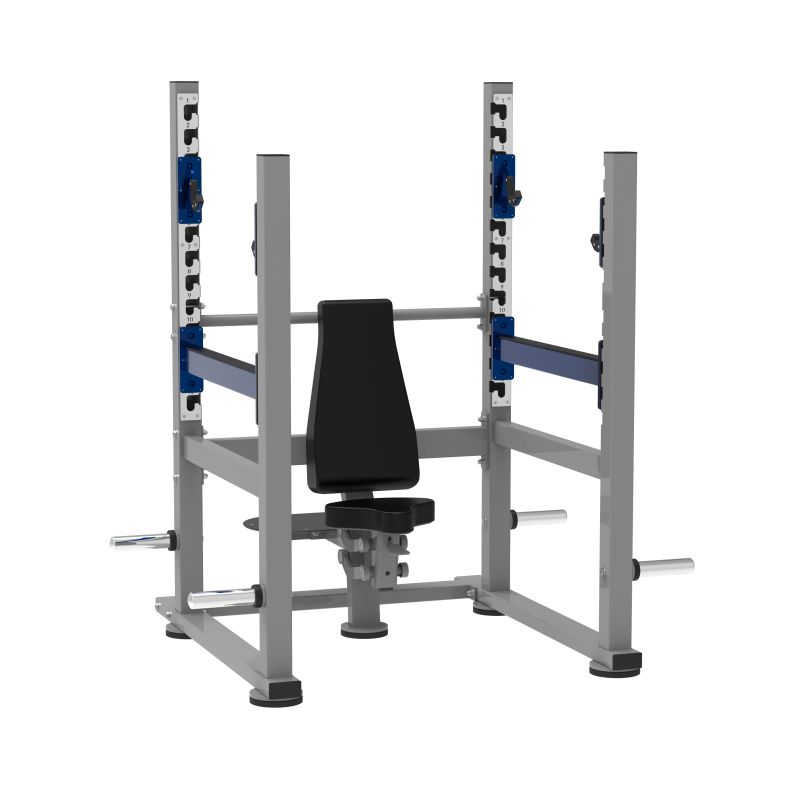
For gym owners and procurement directors, specifying an overhead pressing station is often treated as an afterthought compared to flat benches or multi-station rigs. Yet, overhead barbell presses subject frame joints and weldments to unique shear stresses and dynamic tipping loads that flat presses never encounter. The SPL63 Olympic Seated Shoulder Press Bench addresses this specific equipment category, designed to bridge the gap between heavy lifter safety and long-term facility durability.
Selecting the right Olympic shoulder press bench comes down to how well the machine balances ergonomic biomechanics for lifters of varying arm spans with the structural realities of a 24/7 commercial environment. A poorly designed frame either cramps the user during the unrack or forces an exaggerated lumbar arch before the bar clears the uprights. When sourcing benches at scale, facility managers need to look beyond cosmetic finishes and inspect tube gauge, upright racking angles, catch pin configurations, and integrated spotter stations.
Biomechanical Geometry: Racking Angles and Spinal Support
An Olympic seated press presents distinct biomechanical challenges. Unlike an incline bench where the load path travels somewhat backward into the pad, a vertical or near-vertical press demands direct overhead clearance. If the upright catches sit directly over the lifter's head, the risk of clipping the j-hooks during lockout increases significantly.
On well-engineered units like the SPL63, upright profiles are set at a calculated backward incline—typically between 5 and 10 degrees. This tilt allows the athlete to unrack without aggressive shoulder impingement, clear the catches cleanly, and re-rack safely even under terminal fatigue. Seat angle also dictates lumbar safety. A completely vertical 90-degree back pad often forces lifters into excessive anterior pelvic tilt to generate drive. A subtle rear tilt (often 80 to 85 degrees relative to the deck) preserves a neutral lumbar spine under heavy axial load while keeping the focus squarely on the anterior and medial deltoids.
Structural Standards: What to Inspect in the Steel Frame
Commercial benches live or die by their steel gauge and joint design. Shandong Minolta Fitness Equipment Co., Ltd. produces heavy-duty commercial equipment leveraging the deep metalworking infrastructure of Ningjin, where heavy tube fabrication forms the backbone of commercial strength ranges like the MND strength lines.
When reviewing technical data sheets for units like the SPL63 Olympic Seated Shoulder Press Bench, pay attention to the following fabrication details:
- Mainframe Wall Thickness: Look for at least 2.5 mm to 3.0 mm structural steel tubing (typically 50x100 mm or 60x120 mm oval/rectangular sections). Thin 14-gauge (approx. 2.0 mm) steel might suffice for light institutional settings, but it will develop bolt-hole play and noticeable frame flex in a dedicated strength club.
- Bar Catch Protection: Bare steel hooks are a maintenance red flag. They shave knurling off high-end Olympic bars and eventually mushroom under repetitive metal-on-metal drops. Durable benches incorporate thick, injection-molded or high-density UHMW (ultra-high-molecular-weight polyethylene) wear guards along both the front racking horns and resting saddles.
- Tiered Racking Heights: Athletes vary dramatically in torso length and arm span. Having dual or triple catching tiers allows a shorter lifter to rack safely without hyperextending their shoulders, while providing taller users an efficient unrack point that preserves their setup tension.
- Spotter Footplate Integration: A stable, elevated diamond-plate or textured spotter platform is non-negotiable. It must be welded or heavily cross-bolted directly into the lower frame spine, elevated sufficiently so the spotter has proper mechanical leverage without having to lean precariously over the lifter's face.
Footprint, Weight Distribution, and Floor Anchoring
An Olympic shoulder press bench occupies substantial real estate, not just because of its physical frame, but because of the operating clearance required for a standard 2.2-meter Olympic barbell and plate-loading zones on either side. Operators frequently underestimate the working perimeter needed around the station.
While the static footprint of the SPL63 might measure roughly 1.4 to 1.6 meters in length and 1.2 to 1.3 meters in width, the effective operational envelope must extend at least 1.2 meters to each side to allow safe plate loading without interfering with adjacent stations. Rear access must remain clear if coaches or spotting partners are active in the area.
Stability depends heavily on the base spread. Benches with narrow rear stabilizer bars tend to rock slightly when heavy loads are re-racked aggressively into the top catches. Wide-stance rubber end-caps dampen vibration and protect commercial flooring, but for dedicated powerlifting sectors or high-volume collegiate weight rooms, verify whether the base tabs feature pre-drilled floor-anchoring holes. Bolting down is always good practice for multi-tier Olympic stations.
Upholstery, Density, and Wear Maintenance
Upholstery failure is the most common cosmetic issue in strength zones, usually occurring along the top edges of the headrest and the lower seam of the seat pad where lifters slide in under load. Single-stitched commercial vinyl will split under steady contact with gym belts and abrasive workout clothing.
Quality manufacturing requires high-density reconstituted foam wrapped in industrial-grade PVC or PU synthetic leather, backed by solid 18 mm to 20 mm layered plywood or composite backer boards. The pad should feel firm upon initial inspection; overly plush foam bottoms out under a 100 kg lifter holding a 120 kg barbell, leaving the user pressing against raw backing board and destabilizing scapular retraction.
Routine maintenance on an Olympic bench like the SPL63 is straightforward but critical:
- Weekly checks on structural bolt torque, specifically around the backrest mounting brackets and spotter deck attachments.
- Periodic inspection of UHMW catch inserts for cracks or fastener loosening.
- Cleaning vinyl with non-corrosive, non-alcohol sanitizers to prevent surface brittleness and premature seam tearing.
Frequently Asked Questions
Can the SPL63 Olympic Seated Shoulder Press Bench accommodate lifters of various heights?
Yes. Multi-level bar catches positioned at calibrated heights along the front uprights allow users with different arm lengths to establish a solid unrack position without needing an adjustable-height racking mechanism, which can introduce mechanical play.
Is a dedicated Olympic shoulder press bench preferable to a modular utility bench inside a power rack?
While power racks offer versatility, dedicated Olympic shoulder press benches provide faster throughput and better spotting logistics in busy commercial gyms. They eliminate rack bottlenecks and feature a purpose-built frame geometry with integrated spotter stands that modular benches inside a cage rarely match in stability.
What floor space is recommended around the station?
Plan for a clear zone measuring at least 3.0 meters wide by 2.2 meters deep. This accommodates a full-length 7-foot Olympic barbell, provides loaders enough elbow room to slide 20 kg or 25 kg plates onto the sleeves safely, and allows a spotter unimpeded access to the rear platform.
Next Steps for Facility Planning
Selecting commercial strength hardware requires balancing capital allocation, floor efficiency, and long-term serviceability. If you are laying out a new free-weight zone or upgrading aging equipment across multiple clubs, reach out to the MND FITNESS engineering and commercial sales team to request full structural specifications, 2D/3D floor planning files, and container-load freight quotes tailored to your region.