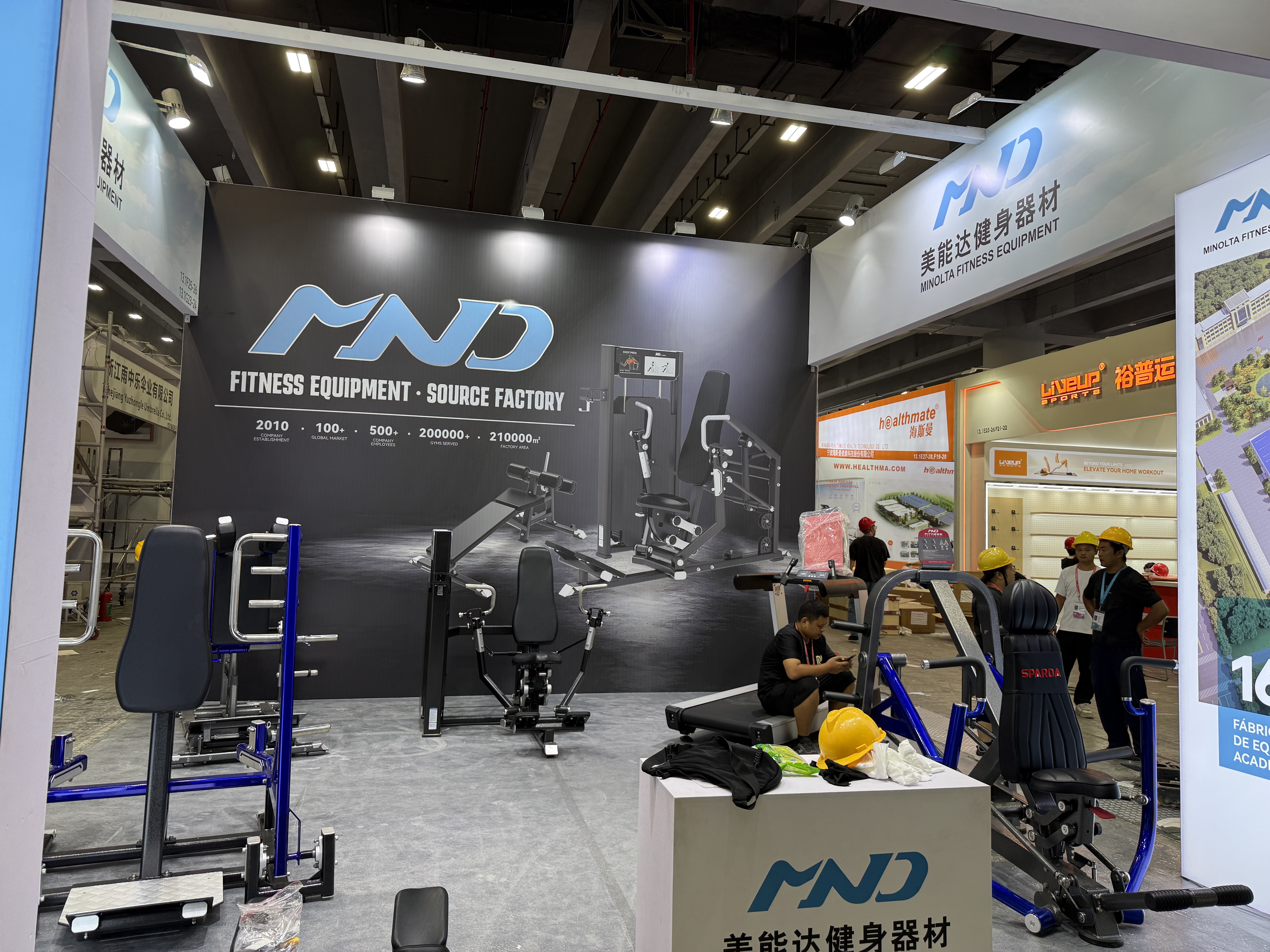



Walking the endless halls of the Pazhou Complex during the CantonFair can be disorienting for even seasoned procurement directors. In the sports and recreation pavilion, dozens of booths display gleaming fitness equipment under bright halogen lights, all promising European design standards, commercial warranties, and competitive FOB container pricing. Yet anyone who has received a container of racked frames with misaligned pulley brackets or powder coating that flakes during unboxing knows that trade show samples rarely tell the full mechanical story.
For gym owners, regional fitness brand distributors, and institutional buyers, the CantonFair remains an indispensable sourcing window. But treating it as a transactional marketplace rather than a technical vetting ground is an expensive mistake. Sourcing reliable commercial gym equipment requires an eye for steel fabrication, an understanding of regional supply clusters in China, and a structured protocol to separate genuine tier-one factories from trading intermediaries repackaging entry-level units.
The Floor Assessment: Inspecting Structural Integrity Behind the Glitz
When you step into a supplier's booth, look past the backlit logos and high-gloss upholstery. The physical stresses placed on fitness machines in a 24-hour commercial facility require specific engineering choices that you can verify by hand right on the carpeted booth floor.
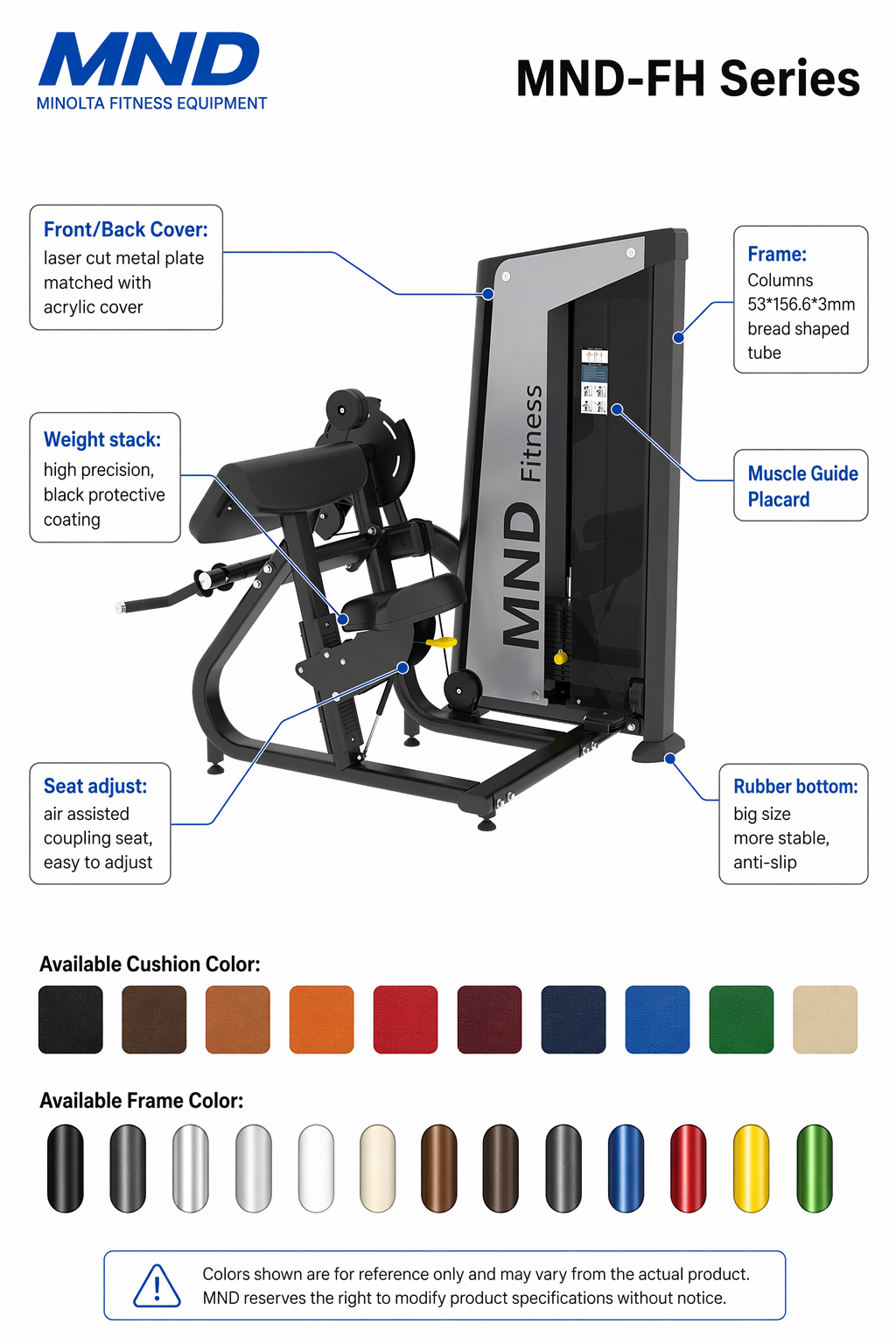
Start with the raw frame construction. Commercial strength training equipment should utilize cold-rolled steel tubing with a wall thickness of at least 2.5 mm to 3.0 mm, typically cut on flatbed or multi-axis fiber lasers. Take a flashlight to the joints: look for smooth, continuous robot-welded seams rather than uneven manual spot welds that have been ground down and heavily bogged with body filler prior to painting. A heavy weld bead that hasn't been smoothed out is often more structurally sound than a suspiciously seamless, over-sanded corner.
Next, inspect the mechanical moving parts on selectorized stations:
- Guide Rods and Weight Stacks: Run your finger along the vertical guide rods. They should be hard-chrome plated solid steel, not hollow decorative pipe. Drop the selector pin into the bottom plate and pull the handle slowly; any hitching or lateral rattle indicates poor bushing tolerance in the weight stack plates.
- Pulleys and Cable Assemblies: Check whether the manufacturer uses deep-groove aluminum pulleys with sealed bearing sets or cheap nylon sheaves. The aircraft-grade steel cables should be coated in nylon or polyurethane, ideally with swaged terminal ends rather than simple bolt-clamp fittings.
- Adjustment Mechanisms: Pull the spring-loaded pop-pins on weight benches and seat posts. The engagement should feel firm and positive with minimal lateral slop in the sliding tube. Sloppy seat posts lead to frame wear and safety hazards once placed in high-traffic facilities.
Understanding Regional Manufacturing Hubs: Why Ningjin Dominates
Most experienced sourcing managers avoid buying gym equipment from coastal trading agencies that source indiscriminately from disparate workshops. In China, fitness manufacturing has distinct geographic specializations. While coastal Zhejiang focuses heavily on light residential items, consumer exercise equipment, and injection-molded accessories, the heart of heavy-gauge commercial iron production sits inland in Shandong province, centered around Ningjin County.
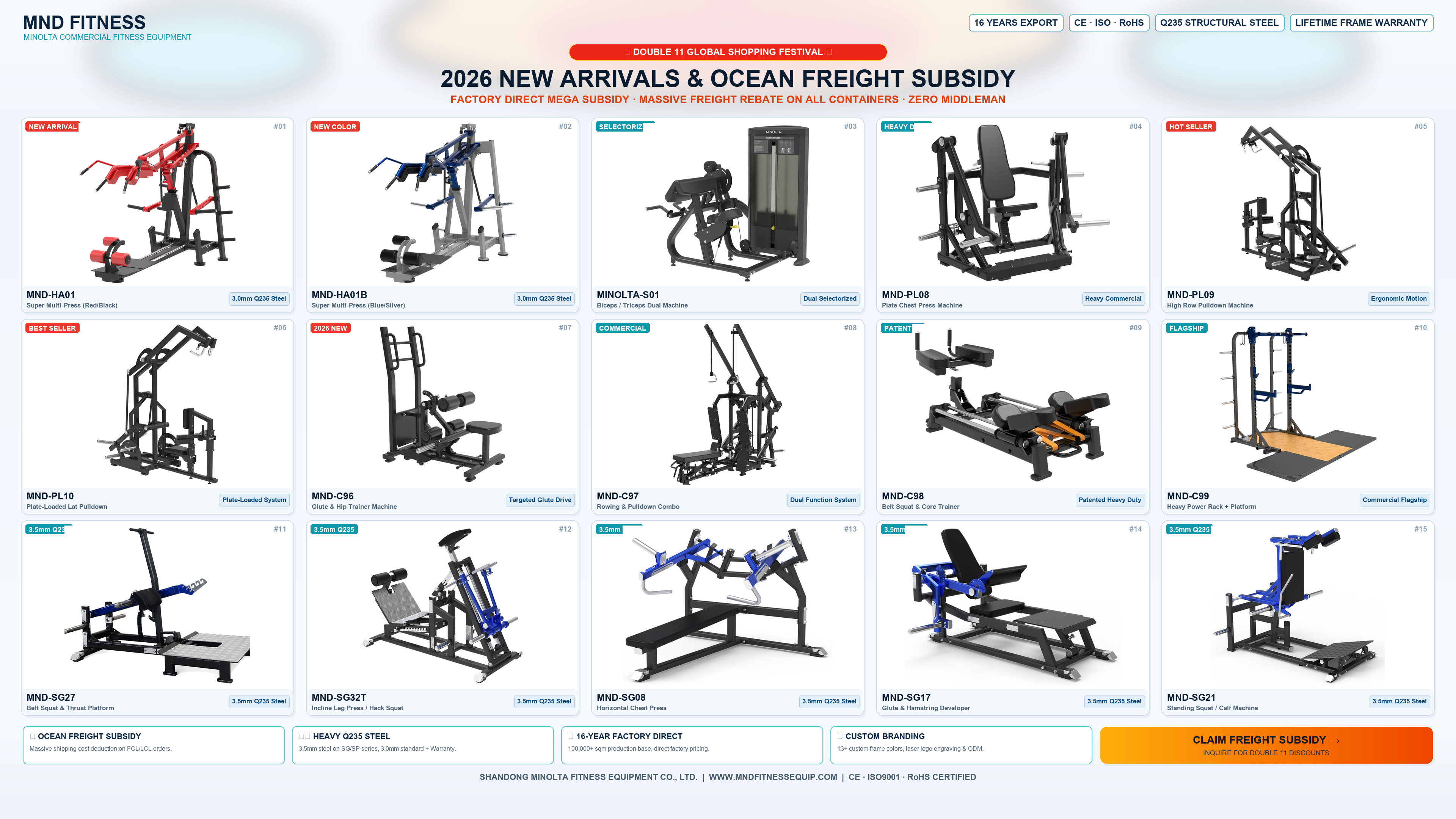
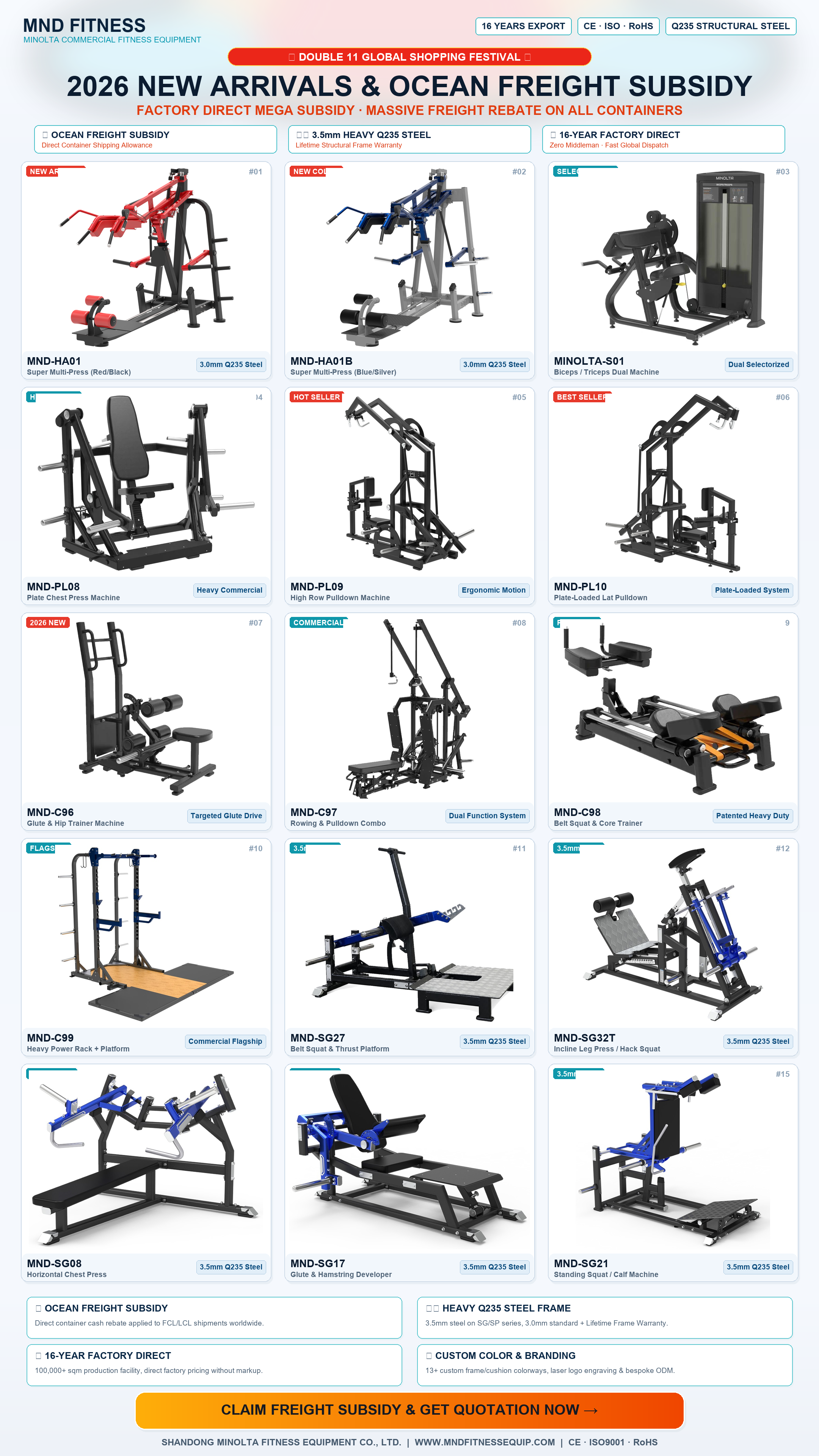
Ningjin's industrial base evolved directly out of heavy hardware, agricultural machinery, and precision tubing ecosystems. This proximity gives local manufacturers a direct advantage in raw tube processing, robotic laser cutting, and in-house powder-coating lines. Established facilities like Shandong Minolta Fitness Equipment Co., Ltd. (MND FITNESS) operate on this home turf. Spanning a 120,000-square-meter facility with dedicated manufacturing workshops and quality control labs, Minolta leverages that local supply chain to engineer broad product lines—such as their MND-F, MND-FM, and MND-G strength series—without relying on external fabricators for critical frame assemblies.
When speaking with booth representatives at the CantonFair, ask them directly where their laser cutting and tube bending take place. If a vendor claims a factory in southern China but their selectorized units closely resemble Shandong chassis designs, you are likely speaking with a broker rather than the original manufacturer.
Cardio vs. Strength: Different Vetting Rules Apply
A vendor that excels at heavy steel power racks or squat racks may struggle with the electronics and drive-train balancing required for motorized cardio equipment. Very few manufacturers produce both categories with equal competence in the same building, so pay attention to how a company organizes its lines.
On cardio equipment, mechanical noise and thermal dissipation are the true quality indicators. For exercise bikes, such as the MND-D series, test the belt tensioner and magnetic resistance system under a heavy load. Listen for harmonic vibration or bearing chatter in the bottom bracket spindle. For treadmills (like Minolta's MND-X series) or commercial stair climbers, ask about the motor duty cycle (continuous HP versus peak HP) and the thickness of the running deck. Many buyers forget to ask whether the electronic inverter and motor control board are proprietary or off-the-shelf industrial components—a detail that makes a massive difference when you need field replacement parts three years down the line.
Conversely, when evaluating strength lines—whether heavy-duty weight training equipment or versatile plate-loaded units—the emphasis shifts back to biomechanics. Sit in the machine and track the movement arc. Does the converging chest press actually match the natural rotation of the human shoulder, or is it a flat-plane lever that binds at the bottom of the rep? Good factories employ CAD biomechanical models; lower-tier shops simply eyeball the pivot geometry from photos of Western brand flagships.
The Show-Floor Verification Protocol
To avoid getting overwhelmed by glossy sales collateral, use a standardized checklist when auditing potential manufacturing partners during the event:
| Audit Dimension | What to Look For at the Booth | Immediate Red Flag |
|---|---|---|
| Structural Steel | Minimum 2.5 mm to 3.0 mm tubing; cleanly laser-cut junction plates. | Thin 1.5 mm residential tubing on commercial-labeled benches. |
| Bearings & Pivots | Sealed industrial pillow-block or linear bearings with grease fittings. | Excessive play; unsealed plastic bushings on high-load pivot points. |
| Finish Quality | Two-layer electrostatic powder coat; uniform texture around brackets. | Runs, orange peel, or paint chipping around bolt hole edges. |
| OEM / ODM Scope | In-house CAD diagrams, clear component exploded views, testing rigs. | Booth staff unable to explain weld methods or structural yield strength. |
Moving Beyond the Booth: The Shandong Factory Audit
Never sign a high-value purchase contract or wire a 30% production deposit based purely on a CantonFair handshake. The fair should be step one in your procurement funnel, used to shortlist three to four candidates. The decisive step is boarding the high-speed train north to inspect the factory floor.
When visiting facilities like Minolta's 120,000-square-meter campus in Ningjin, verify that the capacity advertised in the catalog matches real production flow. Look at their raw tube staging yards, confirm that automated tube benders are running, and inspect their powder coating pre-treatment baths (acid washing and phosphating are critical to prevent subsurface rust during ocean transit). Inspect the testing bay: are sample frames being cycle-tested with hydraulic rams to measure fatigue life on weld points?
A manufacturer with over a decade of continuous operation and exports to more than 100 countries across Europe, the Middle East, and South America will welcome this scrutiny. They will readily introduce you to their lead welding technicians, show you their finished-goods buffer, and walk you through their spare-parts inventory.
Frequently Asked Questions
Which phase of the Canton Fair features fitness and gym equipment?
Commercial and home workout equipment is traditionally featured in Phase 3 of the Canton Fair under the Sports, Travel, and Recreation Products exhibition category. Always double-check the official exhibition directory schedule prior to booking travel, as organizers occasionally adjust booth cluster layouts across the complex halls.
Can I purchase the floor samples directly from the booth?
Yes, many exhibitors prefer selling booth samples at a discount on the final afternoon of the phase rather than paying domestic reverse-logistics costs to ship them back to the factory. However, inspect the sample thoroughly for transport scratches, confirm voltage compatibility for cardio consoles, and ensure you have an export agent or forwarder ready to crate and load the pieces into your container.
What is standard MOQ when ordering customized commercial gym equipment?
For custom frame powder-coat colors and custom upholstery stitching, established manufacturers typically require a 1x20GP container minimum order, which can be mixed across different strength series and cardio units. Completely custom sheet-metal tooling or ground-up ODM designs will demand higher volume commitments to cover the initial stamping dies and laser jigging setup costs.
Next Steps for Your Sourcing Pipeline
If you are planning your upcoming visit to the CantonFair, draft your technical specification sheets before stepping onto the exhibition floor. Define your preferred steel gauges, pulley specifications, and frame warranties in advance. If your schedule allows, set aside two extra days post-fair to visit production plants directly in Ningjin, Shandong, to audit manufacturing standards firsthand. Alternatively, contact the engineering team at MND Fitness to request technical specifications, exploded mechanical drawings, and private showroom appointments.