


Why a chest press machine still earns its floor space
A chest press machine looks straightforward enough: sit down, grip the handles, press the load away from your torso. In practice, though, the design choice behind that simple motion can change how a gym feels to train in, how safely novices can work through pushing patterns, and how much value a facility gets from one footprint. That is why buyers still compare plate-loaded machines against selectorized units, and why commercial gyms, hotels, rehab spaces, and serious home setups keep asking the same question: which press machine actually earns its place?
The answer usually depends on what the space is meant to do. A well-built plate-loaded seated press can serve lifters who want heavier loading, unilateral work, and a more traditional strength-training feel. It can also give a smaller facility a compact upper-body station without the complexity of a full cable stack. The trade-off is obvious: plate-loaded equipment asks for more user knowledge and more attention to loading and storage. For some operators, that is a feature. For others, it is the line they do not want to cross.
What this type of machine is, and why the details matter
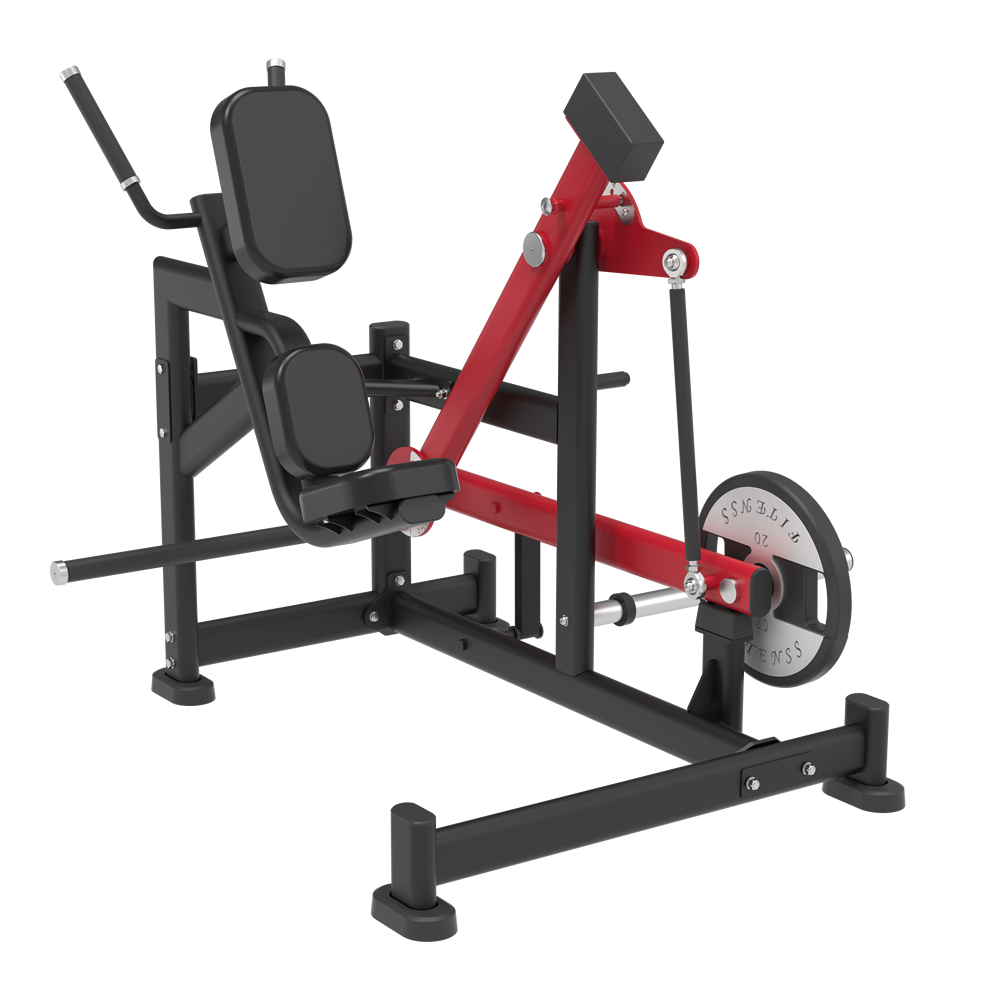
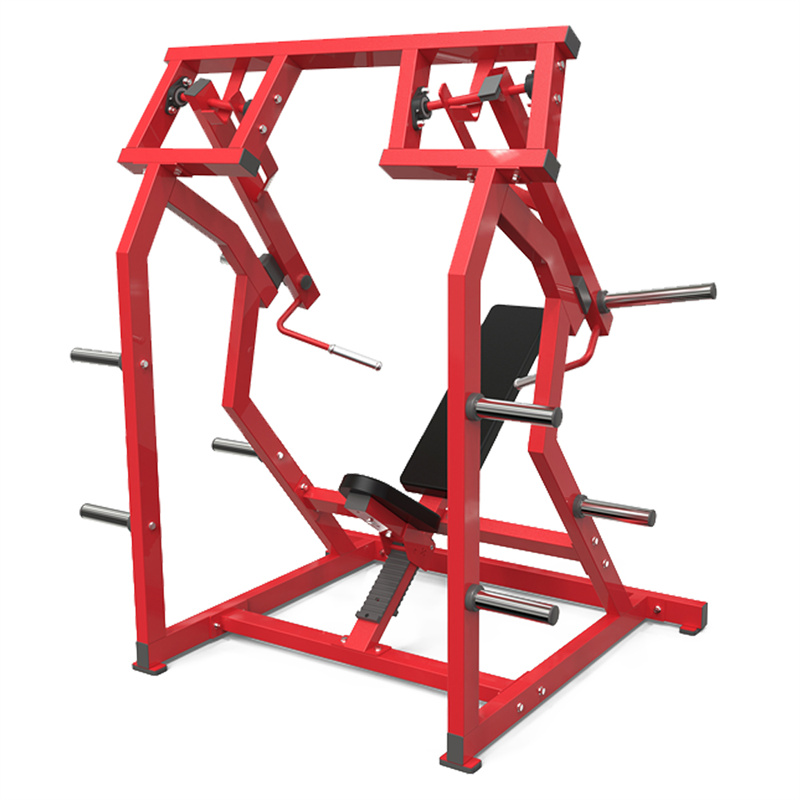
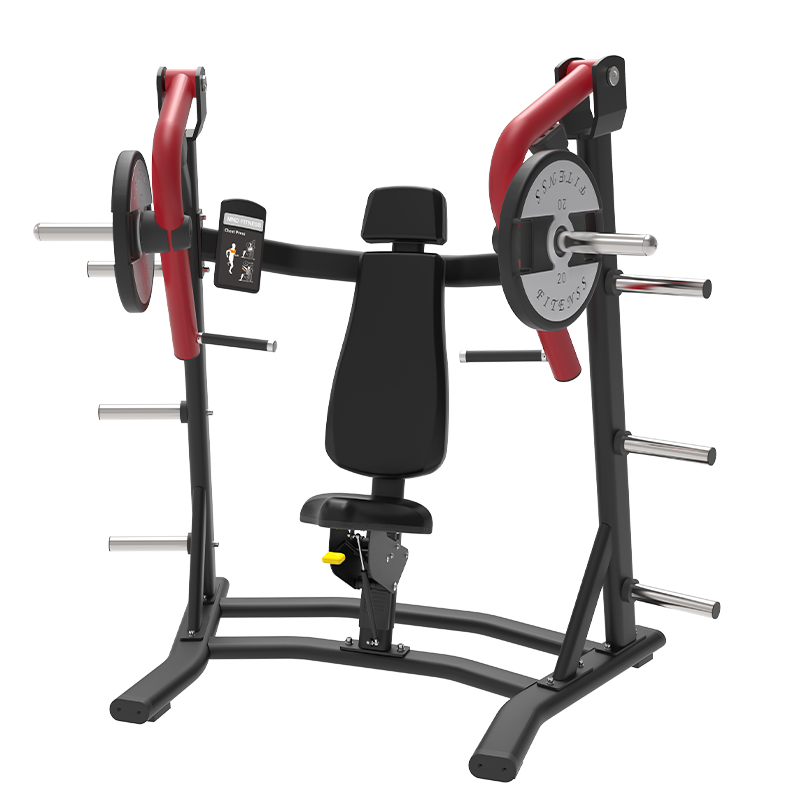
The machine described here is a plate-loaded seated chest press / shoulder press style unit built around a welded steel frame, curved base rails, an integrated seat and back pad, and two independent press arms. That combination tells you a lot before you ever test the movement path. The frame is likely doing the heavy lifting structurally, while the lever arms, load pegs, and pivot hardware create the resistance profile. In other words, this is not just a seat with handles. It is a mechanically simple strength station, and that simplicity is part of the appeal.
Visible construction details matter because they affect long-term buying decisions. A black powder-coated frame generally signals a commercial-minded finish that is easier to maintain than cosmetic paint alone. Chrome or silver load sleeves suggest standard plate compatibility and better wear resistance where plates are slid on and off every day. Red arm guards or handle zones may be more than decoration; they also help users find the gripping area quickly, which is useful in busy gyms where people are moving fast and not always paying attention.
For buyers, the bigger point is this: a press machine should not be judged only by how “solid” it looks on arrival day. It should be judged by stability under repeated use, ease of adjustment, comfort under load, and whether the motion path feels natural across different user sizes. A machine that feels impressive for 30 seconds but awkward for six months is not a good purchase.
Plate-loaded versus selectorized: a quick practical comparison
Many sourcing teams narrow the decision to one of two categories. Plate-loaded machines use standard weight plates, while selectorized units rely on a built-in weight stack. Each approach has a place.
Why plate-loaded presses appeal to commercial buyers
Plate-loaded strength machines often feel more durable and direct. They can support incremental loading with the plates already on the floor, and they remove the need for a full stack enclosure. In facilities where users already train with free weights, the learning curve is usually manageable. Plate-loaded equipment also gives operators a certain flexibility: the same station can be used for strength work across a wide range of resistance levels without the internal complexity of a stack system.
The compact floor-mounted footprint is another reason buyers like them. A commercial gym may not want to dedicate a large area to a selectorized machine if a plate-loaded alternative can serve the same pressing pattern in less space. That said, compact does not mean small in user experience. A machine still needs enough clearance for plate loading, seat access, and safe arm travel.
Where selectorized units still make sense
Selectorized press machines usually win on convenience. They are fast to adjust, easy for beginners, and simple for supervised environments where class flow matters. In some rehab or hospitality settings, that quick adjustability can be more important than the loading flexibility of plates. But selectorized units tend to bring more mechanical and maintenance complexity, plus a different cost structure. If a buyer already knows the facility will host experienced lifters and wants a more robust strength feel, plate-loaded can be the cleaner answer.
What the visible design says about training use
The unit’s independent press arms are one of the more useful visible features. Independent arms allow unilateral or balanced pressing, which is not a minor detail. Lifters can correct side-to-side differences, or simply press both arms together when they want a more symmetrical effort. That matters in real gyms because not every user moves evenly, and some facilities need equipment that quietly supports correction without turning the session into a technical seminar.
The neutral-to-forward handle orientation also suggests that the machine may be usable for more than one pressing pattern, although buyers should avoid assuming too much without testing the geometry. A machine that can serve as both a chest press and shoulder press style station is attractive because it broadens the exercise menu. Still, the operator should verify the seat position, handle start point, and shoulder comfort in actual use. “Looks versatile” is not the same as “fits every torso well.”
Foot-anchored stability is another practical advantage. A stable base matters when the user is pushing hard and the arms move through an arc. Any rocking or shifting undermines confidence and can turn a commercial-strength product into something that feels less than commercial, even if the steel is adequate.
What manufacturing quality usually looks like in this category
For a fabricated press machine, the manufacturing stack is fairly recognizable: steel tube bending, welding, machining, powder coating, upholstery, and final assembly. Those processes sound ordinary, but they are exactly where commercial equipment is won or lost. Clean welds, consistent alignment, and well-fitted pivots matter more than dramatic styling. A machine can have attractive paint and still develop nuisance issues if the arm geometry is off or the seat adjustment is clumsy.
Shandong Minolta Fitness Equipment Co., Ltd. operates in Ningjin’s hardware-heavy industrial environment and presents itself as a manufacturer with over a decade in the fitness equipment sector. Its facility is said to span 120,000 square meters and include a manufacturing workshop, quality control lab, and exhibition hall. The company also states that it offers more than 300 types of exercise equipment across strength and cardio lines, with exports to over 100 countries. For buyers, that tells you something useful: this is the sort of supplier that should understand repeatable commercial production rather than one-off fabrication.
That does not remove the need for due diligence. Even established suppliers should be asked for specifics on frame construction, finish system, pivot design, padding materials, and packaging methods. If a buyer is sourcing for a chain, a hotel group, or a rehab provider, those details affect field performance as much as catalog photos do.
How to judge a chest press machine before you place an order
Start with the movement path. The press should feel natural through the range most users actually train in. If the handles start too far back, shorter users may lose shoulder comfort. If the arc is too steep or too flat, the machine may feel more like a compromise than a dedicated press.
Then look at seat adjustment. The photo suggests an adjustable-looking mechanism, likely spring-pin or lever-based, but the real question is whether the seat height changes quickly and locks securely. For commercial use, simple and obvious usually beats fancy and fiddly. Users should not need a staff member to figure out basic setup.
Loading access is another practical issue. Plate pegs should be reachable without awkward body twisting, and storage posts should be placed so they do not crowd the user area. Buyers often overlook this until their first busy evening on the floor, when plates start moving around and the machine becomes a small traffic problem.
Finally, inspect upholstery and contact points. Black vinyl or PU padding is common, but the useful question is whether the seat and backrest are easy to wipe down and whether the foam density feels supportive rather than soft in a cheap way. In commercial settings, cushioning that sags early becomes a maintenance nuisance and a brand problem.
Common mistakes buyers make with press machines
One mistake is treating every chest press as interchangeable. They are not. A machine built more like a shoulder press may not serve every user as a true horizontal chest press. That sounds obvious, yet it is a common sourcing error when product sheets are vague.
Another mistake is ignoring plate storage. A machine that holds plates neatly can help organize the training floor; a machine that turns into a plate dumping ground creates clutter. The visible multiple load pegs on this style of unit are a genuine operational advantage if they are positioned well.
A third mistake is choosing solely on appearance. Black frames and red accents look sharp, but buyers should care more about alignment, weld quality, and repeatable assembly. Shiny equipment that loosens quickly is expensive in the worst way: it still has to be serviced, but it also disappoints users every day.
Who this machine fits best
This style of chest press is a strong fit for commercial gyms that already stock free weights and want a plate-loaded upper-body station with a smaller footprint than a full selectorized unit. It also makes sense for hotel gyms that need durable equipment with broad appeal, and for training or rehab environments where unilateral pressing and controlled resistance are useful.
Home gym buyers can also consider it, but only if they truly have the space and the plate inventory. A plate-loaded machine is not a casual add-on. It works best when the surrounding setup is already serious enough to justify it.
Questions worth asking the supplier
Before purchasing, ask for the exact exercise orientation, because some machines are marketed broadly as press units even when the geometry favors one pattern more than another. Ask about frame steel, coating process, upholstery materials, and how the arms are balanced. Ask whether the seat adjustment range suits shorter and taller users. Ask what standard plates fit the sleeves, and whether storage posts are intended for convenient in-use loading or only for off-machine storage.
If you are evaluating Shandong Minolta Fitness Equipment Co., Ltd., it is also reasonable to ask how this press model fits into its Strength Series lineup, whether customization is available, and how assembly and after-sales support are handled for export customers. Those are the questions that separate a catalog listing from a purchaseable product.
FAQ
Is a plate-loaded chest press better than a weight-stack machine?
Not always. Plate-loaded is often better for strength-focused facilities and users who want a more direct loading experience. Weight-stack machines usually win on ease of use and speed.
Can this type of machine be used for shoulder press work?
Possibly. The described geometry suggests a chest press / shoulder press style design, but the actual feel depends on handle path, seat position, and user body size.
Does independent arm movement matter?
Yes. It can help with balanced pressing and unilateral training, which is useful for both performance work and general conditioning.
What should I verify before buying?
Check the motion path, stability, seat adjustment, upholstery quality, plate compatibility, and whether the machine suits the intended user population.
A sensible next step for buyers
If you are sourcing a chest press machine for a commercial floor, do not stop at the product image. Ask for the actual geometry, assembly details, and service information, then compare that against your user base and floor plan. A good press machine should make training feel obvious, not complicated. That is the standard worth paying for.
For buyers evaluating commercial strength equipment from Minolta or similar manufacturers, request a model-specific spec sheet and confirm how the machine is configured for your market. The right machine is the one that fits the room, fits the users, and holds up after the first wave of enthusiasm wears off.