


Why a hip thrust machine keeps showing up in serious training spaces
A hip thrust has moved well beyond “glute day” social media culture. In commercial gyms, performance centers, and rehab-minded training rooms, it is now one of the more practical lower-body movements for building posterior-chain strength without asking the spine to carry all the load. That is why buyers searching for a hip thrust solution are usually not shopping for a novelty piece. They are trying to decide whether a plate-loaded machine can handle repeated commercial use, fit a mixed-user environment, and deliver a movement pattern that feels stable enough for beginners but heavy enough for advanced lifters.
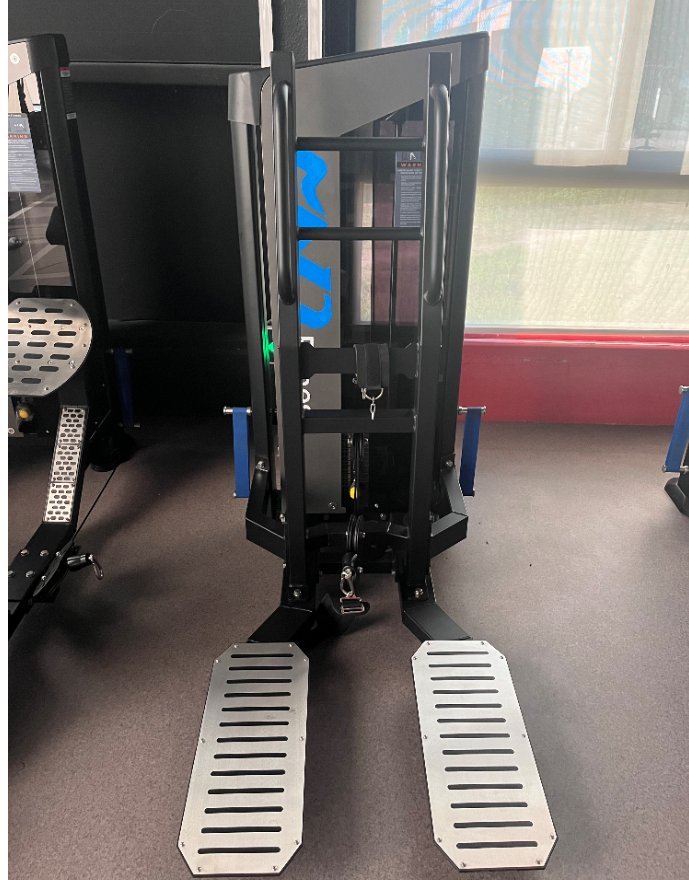
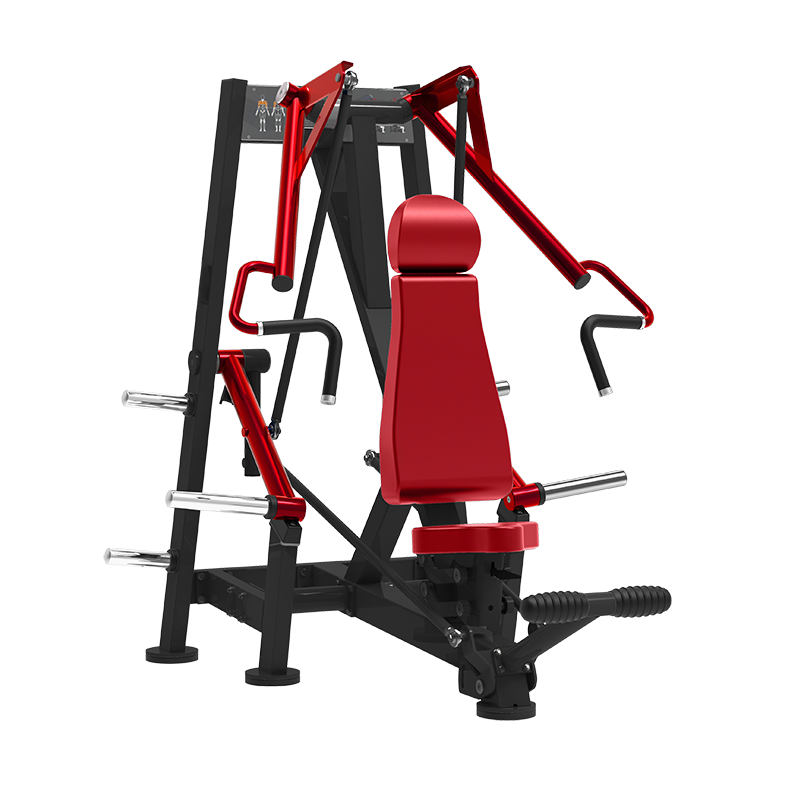
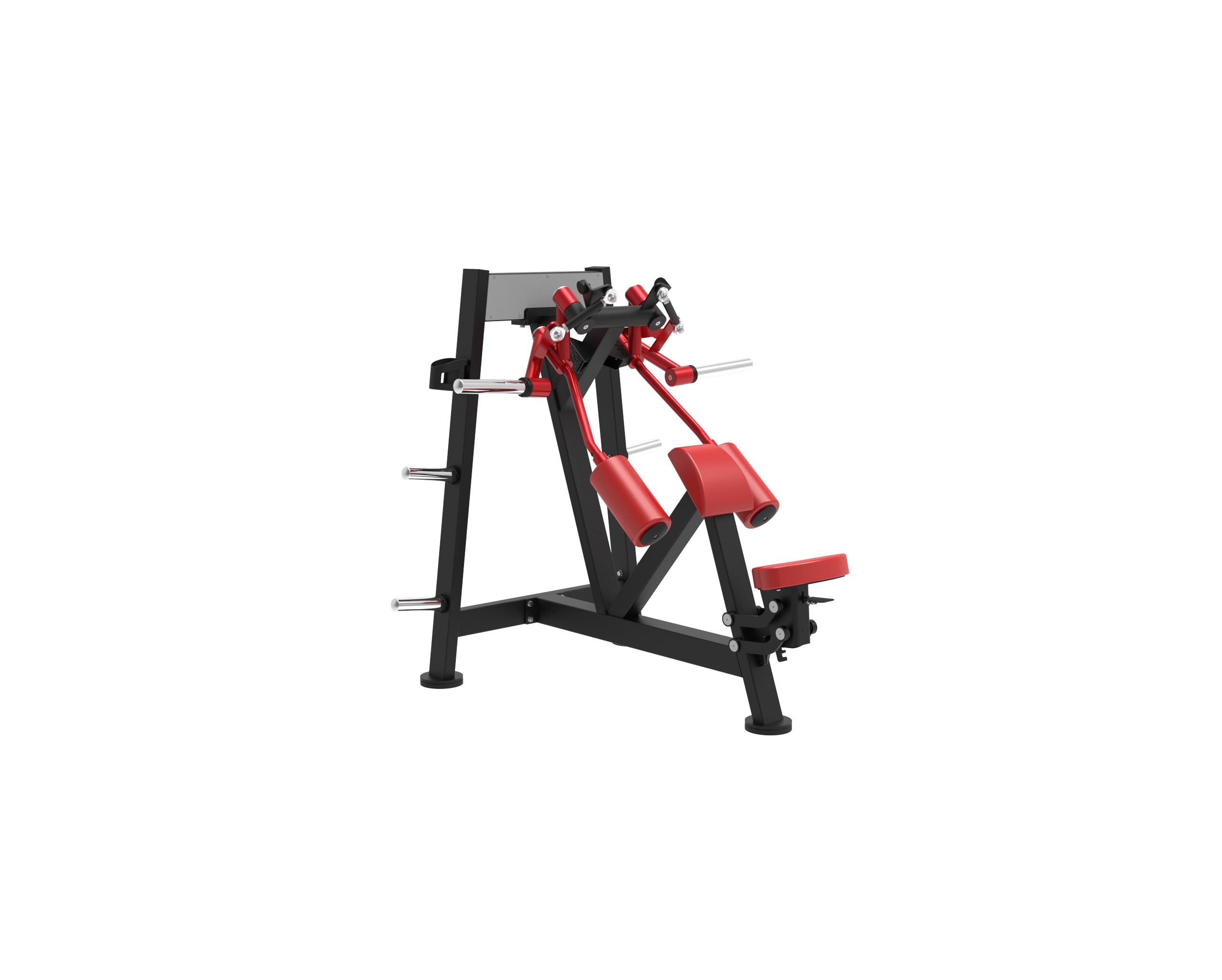
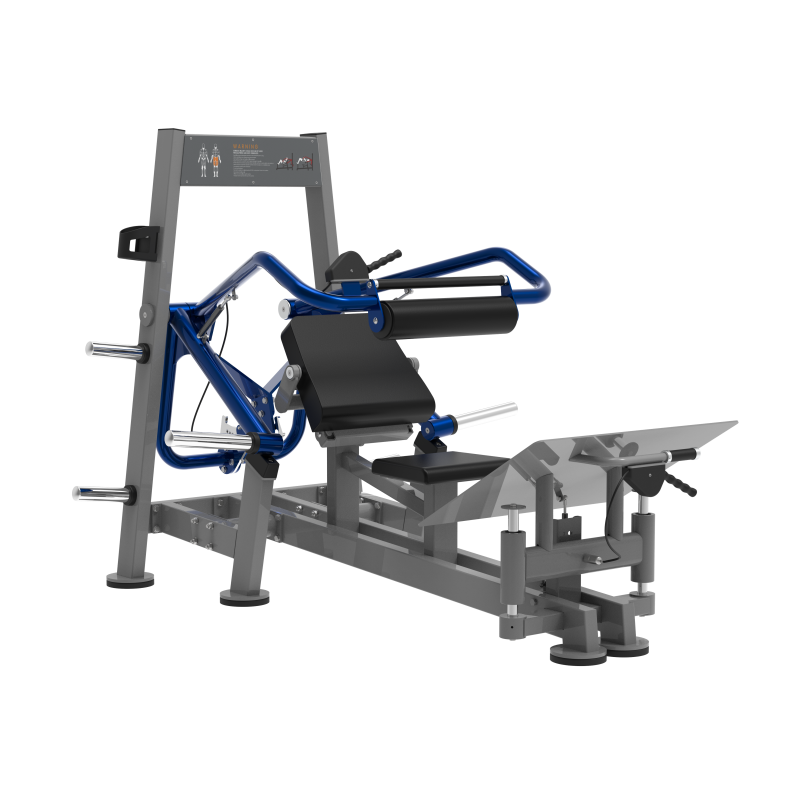
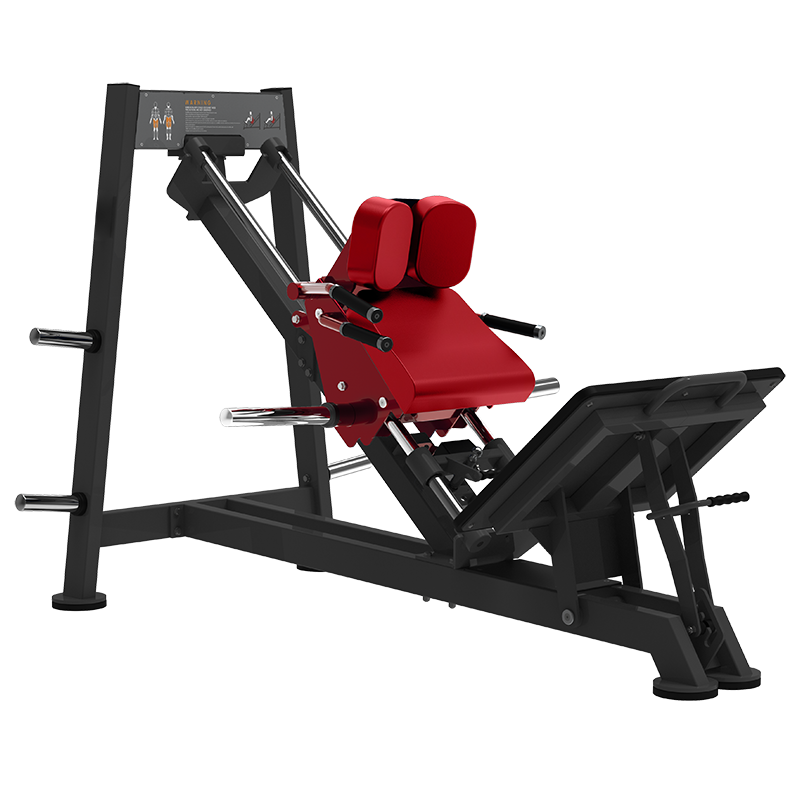
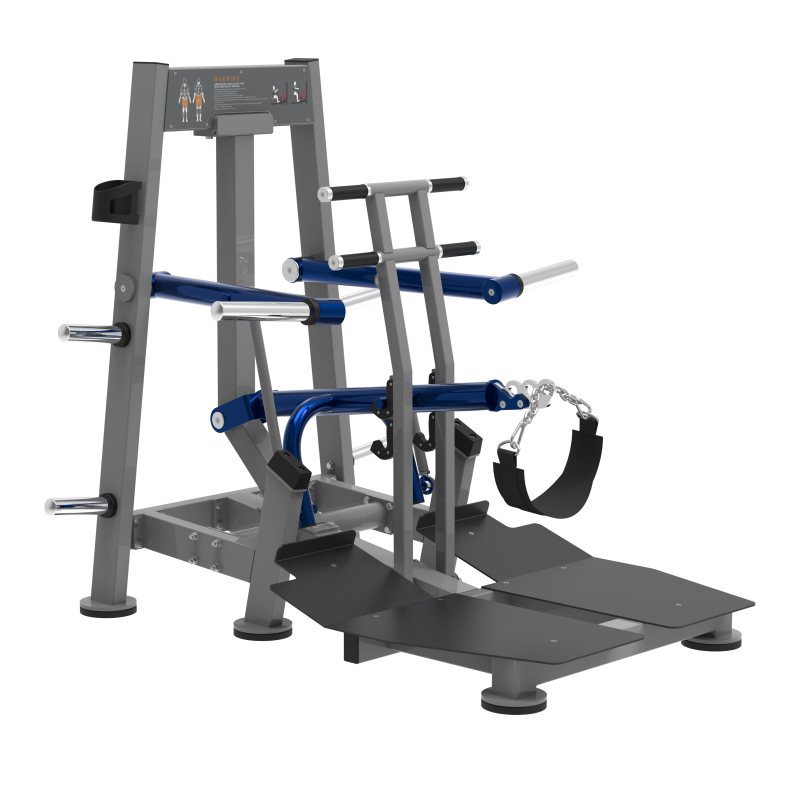
The machine described here looks like a heavy-duty plate-loaded lower-body unit built around welded steel framing, moving arms, an angled foot platform, and padded support surfaces. It shares visual traits with squat, leg press, or hack-squat style equipment, so I would be careful about naming the exact model from the image alone. Even so, the layout clearly points to one thing: a guided lower-body strength station meant to take load off the user’s balance and put it into the working muscles. For many facilities, that is the deciding factor.
What buyers usually want from this category
When someone searches for a hip thrust machine, the real question is rarely just “What is it?” More often it is:
Will this machine reproduce the movement cleanly?
Can it handle a busy gym schedule without loosening up, wobbling, or feeling rough?
Will different users be able to set it up quickly, or will staff have to babysit every session?
Those questions matter because the hip thrust and closely related movements, such as the glute bridge or barbell hip thrust, have become common in strength training programs for athletes, general fitness members, and rehabilitation clients. Free-weight versions work well, but they also introduce setup friction: benches move, barbells roll, pads get misplaced, and less experienced users often struggle with positioning. A machine reduces some of that noise.
The visible design features here suggest a commercial-intent product: a heavy welded steel frame, chrome loading horns for plates, black upholstered contact points, and a broad foot platform. That is the kind of hardware gym operators usually look for when they want a lower-body station to survive daily use rather than just look good on a showroom floor.
Hip thrust machine, barbell hip thrust, or glute bridge: what’s the practical difference?
It helps to separate the movement from the equipment.
A barbell hip thrust is the classic free-weight version. It gives experienced lifters a lot of control over stance, load, and tempo. It also requires a bench, barbell, plates, and usually a pad. For strong users who know their setup, it is efficient. For everyone else, setup can become a minor obstacle every single session.
A glute bridge is usually a shorter-range variation, often performed from the floor. It is useful in warm-ups, accessory work, and rehab progressions. It is simpler, but load potential is more limited and the movement is not always as convenient for heavy training.
A dedicated machine, if designed well, sits between those two worlds. It should offer a stable path, predictable resistance, and quicker setup. That predictability is what makes a plate-loaded station appealing in a commercial setting: users can focus on force production instead of managing equipment.
Why the hardware details matter more than marketing language
The most useful clues on this kind of equipment are physical, not promotional. Visible welded steel, multiple loading horns, and a reinforced base usually indicate a machine intended for repeated loading cycles. The angled footplate matters too. It helps users establish pressure through the feet and makes body positioning more repeatable than an improvised bench setup.
The upholstery and contact pads may sound secondary, but in day-to-day gym use they are not. Shoulder, upper-back, or hip support pads must hold up under sweat, friction, and constant adjustment. If the foam compresses too quickly or the vinyl covering wears early, the machine starts feeling tired long before the frame does. That is a common commercial-fitness failure point, and buyers sometimes miss it because they focus only on steel thickness.
Another practical detail is the loading system. Chrome-plated or polished steel sleeves are common on plate-loaded machines because they provide a durable interface for Olympic-style plates. If the loading horns are short, poorly spaced, or awkwardly positioned, staff and users will feel it immediately. A good layout makes plate changes easy and reduces pinched fingers, twisted bodies, and general annoyance. Those small annoyances add up in a busy facility.
Where this kind of machine fits best
A commercial hip thrust machine is not just for bodybuilding gyms, though that is an obvious home. It can also make sense in sports performance centers, boutique strength studios, and rehabilitation-oriented facilities where lower-body pressing work needs to be accessible and repeatable.
For sports teams, the appeal is simple: posterior-chain work is important, but it should not always be tied to complex setup. For general fitness members, the machine can lower the intimidation factor. For rehab and conditioning settings, the guided path can be useful when trainers want to dose effort carefully. That said, no machine replaces coaching. Users still need cueing on rib position, foot placement, and range of motion. The equipment can make the movement easier to learn, but it will not fix sloppy technique.
Selection criteria that actually help a sourcing decision
If you are evaluating a machine in this category, do not start with color or branding. Start with these basics:
Frame stability: the base should look broad and grounded, with enough contact points to resist rocking under load.
Movement quality: lever arms and linkages should move smoothly and consistently, without obvious binding.
Pad geometry: support surfaces need to match real users, not only one ideal body type.
Loading convenience: the number and placement of weight horns should suit your floor traffic and staff workflow.
Adjustment logic: if the unit has stop hardware or adjustable supports, it should be obvious and quick to use.
Commercial finish: powder-coated steel and durable upholstery are standard expectations, not extras.
These points sound obvious, but in equipment sourcing the obvious details are often where a purchase succeeds or fails. A machine can look stout and still be frustrating if users cannot get into position comfortably.
Common mistakes buyers make
One mistake is assuming every lower-body plate-loaded machine with a back pad is automatically a hip thrust machine. The visual overlap with hack squat and leg press designs can be confusing, especially in catalog photos. Buyers should verify movement pattern, user position, and intended exercise before placing an order.
Another mistake is underestimating how much floor traffic matters. If the machine is going into a busy gym, the question is not just whether it is strong enough. It is whether members can approach it, load it, and exit it without blocking adjacent stations.
A third mistake is overvaluing machine specificity. Yes, a dedicated hip thrust station can be excellent. But if a facility already has strong lower-body equipment and limited floor space, a more versatile plate-loaded machine may be the smarter spend. That trade-off is worth discussing before procurement, not after delivery.
What Shandong Minolta Fitness Equipment brings to the picture
Shandong Minolta Fitness Equipment Co., Ltd. says it operates from Ningjin’s hardware manufacturing base and has more than a decade of experience in fitness equipment. The company also states that its facility spans 120,000 square meters and includes a manufacturing workshop, quality control lab, and exhibition hall. Its lineup includes multiple strength and cardio series, and it has exported to more than 100 countries.
For buyers, that matters less as a slogan than as context. A manufacturer with breadth in commercial fitness equipment is usually better positioned to support mixed product needs: not just one machine, but a coherent gym package. If you are sourcing for a multi-station project, that can simplify coordination. Still, as with any supplier, the critical step is confirming the exact machine configuration, available options, and the technical data sheet before you sign off.
FAQ for buyers comparing hip thrust equipment
Is a machine better than a barbell setup?
Not universally. A barbell hip thrust gives experienced users flexibility and heavy loading potential. A machine is usually faster to set up and more consistent across users.
Can this type of machine be used for glute bridge work?
In many cases, yes, but that depends on the machine’s geometry and user position. The closer the setup is to a controlled thrust pattern, the easier it is to adapt for bridge-style training.
Is it only for glute training?
No. While the glutes are the obvious focus, buyers often use this category for broader posterior-chain work. The exact training effect depends on programming and setup.
What should I verify before ordering?
Confirm the machine type, dimensions, load rating, adjustment range, and assembly requirements. Do not rely on a photo alone if the product family includes multiple similar machines.
The decision that matters
If your facility needs a lower-body machine that makes thrusting and bridge-style work easier to load, easier to teach, and easier to repeat, this category is worth serious attention. The real value is not in the trend name. It is in the way a good commercial machine removes friction from training.
For sourcing teams, the next step is straightforward: compare the actual structure, loading layout, pad design, and service expectations against your gym’s user base. If the unit fits the floor plan and the workload, it can be a strong addition to a commercial strength zone. If not, it becomes just another large frame occupying valuable space.
Before you move forward, ask the supplier for full technical specifications and confirm exactly which lower-body movement the machine is designed to support. That small check can save a lot of trouble later.