


Why buyers keep circling back to MND Fitness equipment
MND Fitness equipment tends to come up in the same conversations as durability, commercial uptime, and how quickly a gym floor can be refreshed without creating a maintenance headache. For engineers, sourcing managers, and product teams, that is the real question behind any strength purchase: will the machine keep members moving, and will it hold up once daily traffic starts to climb?
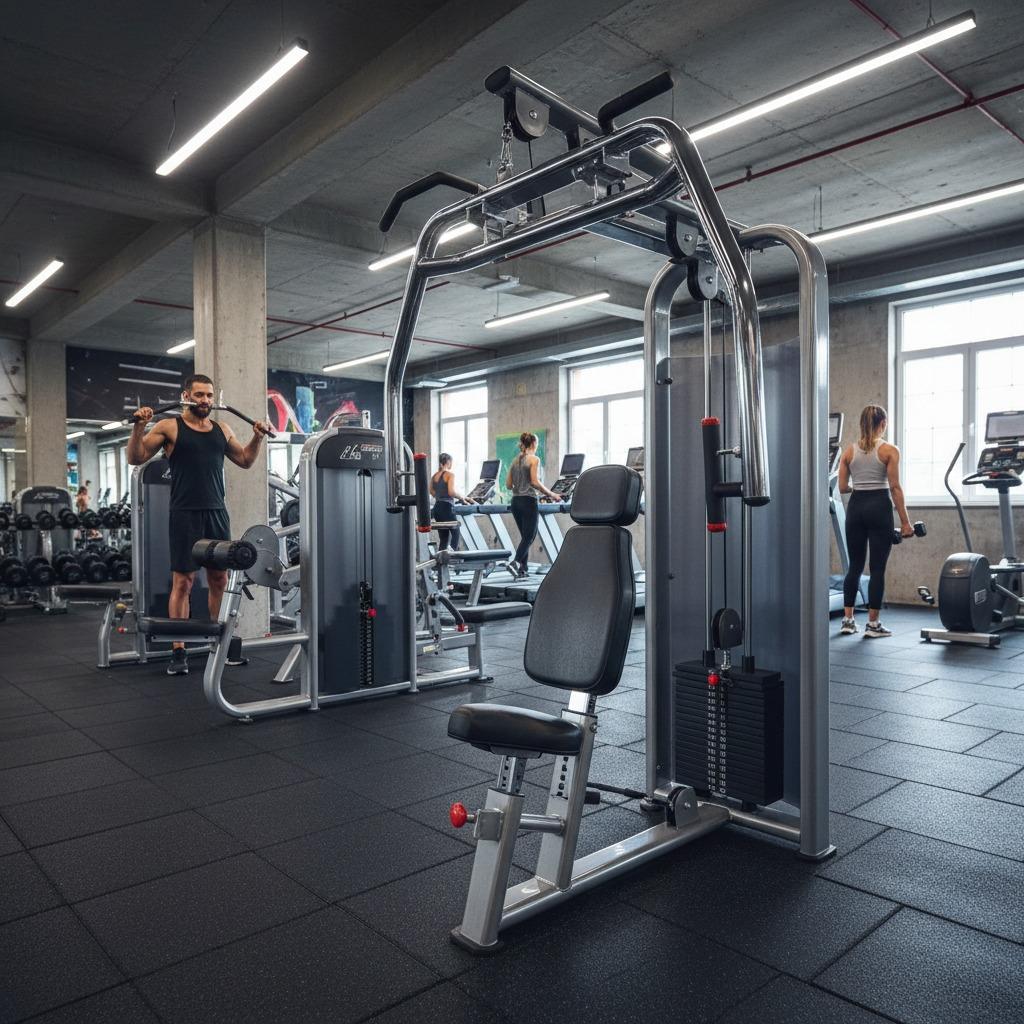
That is especially true for selectorized units and pin loaded stations, where the buying decision is rarely just about price. You are weighing frame stability, feel under load, serviceability, footprint, and whether the lineup can cover a full training floor without looking pieced together. A good pin loaded strength machine can solve a lot of problems quietly. A poor one becomes a recurring support ticket.
Shandong Minolta Fitness Equipment Co., Ltd. is positioned around that commercial reality. The company says it has more than a decade in the sector, a 120,000 square meter facility with a manufacturing workshop, quality control lab, and exhibition hall, and a catalog of more than 300 exercise equipment types for commercial and home use. It also notes export experience in more than 100 countries across Europe, Africa, the Middle East, South America, and Southeast Asia. That does not tell you everything about a machine, but it does tell you something about scale and the kind of buyer base the company is used to serving.
What matters first in a selectorized strength purchase
When teams evaluate a selectorized strength machine, the temptation is to compare the visible features: upholstery, shrouds, paint, and the size of the weight stack. Those matter, but they are only part of the story. The more useful question is how the unit behaves after months of repeated use by different body types, in different workout styles, with varying levels of operator care.
A selectorized strength machine should do three things well. It should adjust quickly enough that users do not stall at the station. It should feel predictable through the range of motion. And it should be maintainable without turning every minor issue into a floor shutdown. That is true for premium club builds, hotel gyms, and municipal facilities alike. The use case changes. The basic expectation does not.
Where the FH Pin loaded Machine fits
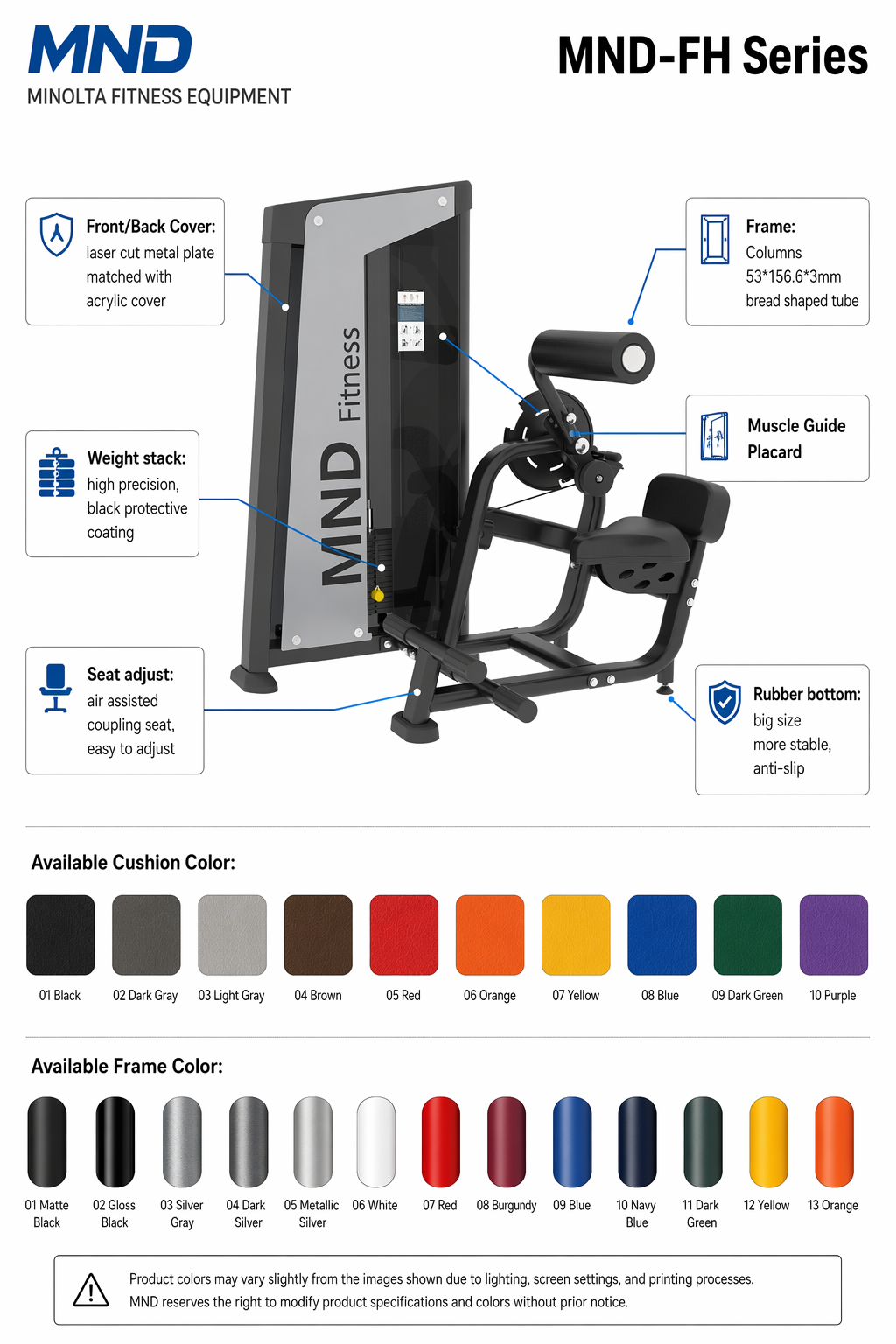
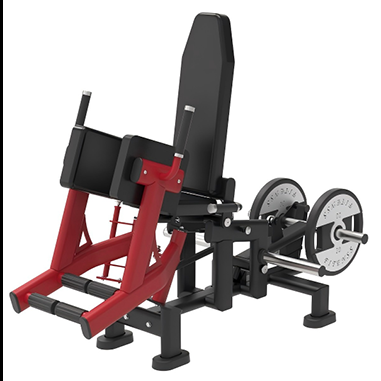
The FH Pin loaded Machine sits within the broader strength series offered by MND FITNESS, which includes lines such as MND-AN, MND-FM, MND-FH, MND-FS, MND-FB, MND-E Crossfit, MND-F, MND-FF, MND-G, and MND-H. For buyers, that matters because a single machine rarely wins a project. A coherent line does.
In commercial settings, pin loaded units are often chosen because they balance simplicity and accessibility. Members can change resistance with minimal instruction, and staff can manage floor traffic without spending time explaining plate loading every hour. In practical terms, a pin loaded strength machine is often easier to deploy across a mixed-ability user base than free-weight stations alone.
The FH Pin loaded Machine, as part of a commercial gym equipment lineup, is most relevant where consistency is valued more than customization. That includes chain gyms, institutional facilities, and operators trying to create an intuitive training zone that does not intimidate new users. It is not a replacement for every training style, but it is a strong baseline for core strength training equipment.
Quick buyer takeaways before you compare models
If you are shortlisting gym strength training equipment, use a simple filter before you get lost in spec sheets.
First, check whether the line supports the movements your users actually perform most often. Chest press, lat pulldown, row, shoulder press, leg extension, leg curl, and abdominal work usually cover a large share of floor demand. Second, look at the footprint versus the training floor plan. A machine that is technically strong but awkward to position is still a planning mistake. Third, ask how the unit will be serviced in the field. Small failures are easier to absorb when access is straightforward.
Finally, consider the user population. A selectorized strength machine can be the right answer for beginners, rehabilitation-adjacent training, hospitality gyms, and busy clubs, but only if the feel is smooth enough that users trust the movement. If the carriage sticks or the stack feels inconsistent, adoption drops fast. People notice that faster than most procurement teams expect.
How MND FITNESS approaches a commercial lineup
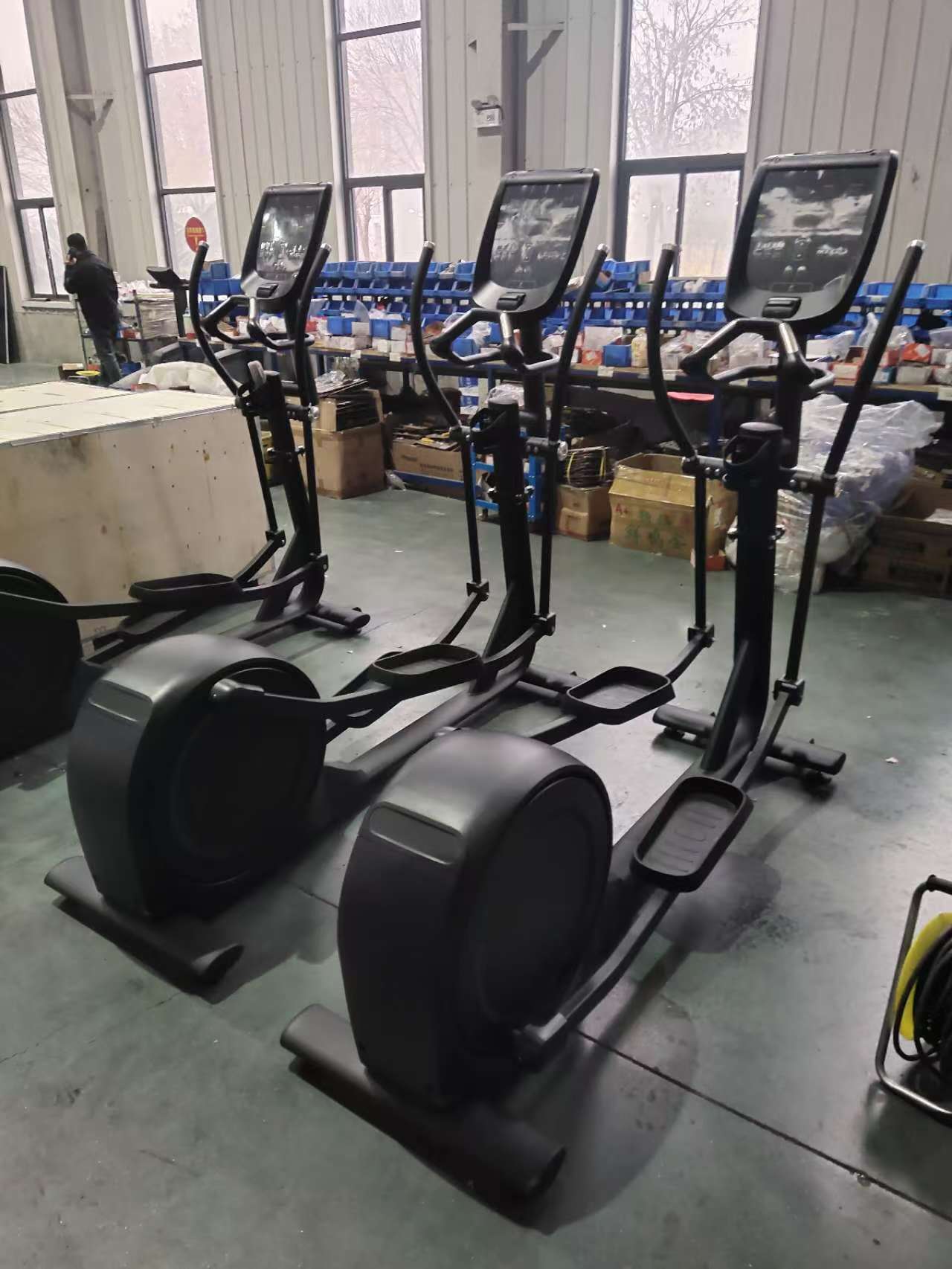
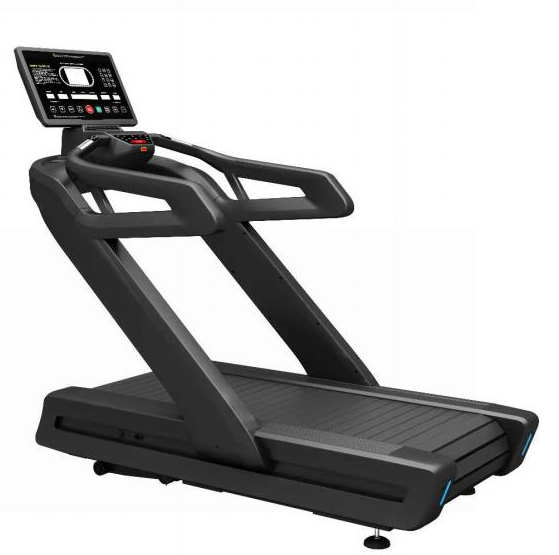
One reason buyers look at MND Fitness equipment is range. The company says it offers more than 300 types of exercise equipment, including both cardio and strength options. Its strength series covers multiple product families, while the cardio side includes MND-D exercise bikes and treadmills such as the MND-X500, X600, and X700. For a purchaser, this kind of breadth can simplify sourcing if the goal is to build a coordinated floor from one supplier rather than piecing together equipment from several vendors.
That does not mean every project should be treated the same. A hotel gym, for instance, may only need a compact set of commercial gym equipment that covers fundamental movement patterns. A club floor might need a much broader mix, with enough choice to reduce wait times during peak hours. A campus or institutional buyer may care more about easy operation and long-term wear than about novelty. The product line should match the operating model, not the other way around.
What to inspect on the floor sample or drawing set
Buyers often ask for a simple checklist, and the best one is still mechanical rather than marketing-driven. Look at frame construction, weld consistency, cable routing, and the way the seat and pad adjustments lock in place. Check whether handles, rollers, and high-contact areas look service-friendly. If you are reviewing drawings, pay attention to the user path and the clearance needed for entry and exit. Some machines look compact until a real user steps into the station.
It is also worth asking how the machine handles repetitive commercial use. In practice, this means looking at wear points where friction and alignment matter most. A machine can look polished on day one and still become noisy, loose, or awkward if the design does not respect repetitive loading. That is one reason seasoned buyers still prefer to see the equipment in person when possible, even if the spec sheet is already attractive.
Do not overfocus on the weight stack alone
The stack gets attention because it is easy to compare, but it is not the whole machine. Stack size does not tell you whether the motion feels natural, whether the pads are positioned for a broad user range, or whether the selector pin is practical for hurried gym traffic. In other words, a larger number is not automatically a better buying argument.
Common mistakes buyers make with pin loaded equipment
One common mistake is treating every pin loaded strength machine as interchangeable. They are not. Small differences in biomechanics, seat geometry, and grip placement can change how a user experiences the station. Another mistake is specifying a floor based on the strongest users in the room. Commercial gyms serve a wide range of bodies and training habits. The machine has to work for the average member, not the loudest one.
A third mistake is ignoring the maintenance plan until after installation. Even well-made selectorized strength machine units need practical support. If a facility has limited technician access, the best choice may be the machine that is simpler to keep running, not the one with the flashiest look. That is an unglamorous point, but in the field it saves money.
How to choose between series and applications
If you are comparing the FH line with other MND series, start with the training profile. Some buyers want a traditional strength floor with broad appeal. Others need a more performance-oriented mix. Still others are building around compact stations for lower-traffic areas. The broader MND FITNESS portfolio makes it possible to match the machine family to the environment instead of forcing one style everywhere.
For commercial gym equipment, consistency across the floor matters. Users appreciate a layout that feels coherent. Staff appreciate machines that are easy to explain. Procurement teams appreciate a supplier that can cover multiple categories without making the purchase process more fragmented than it needs to be.
Frequently asked questions
Is a pin loaded machine better for beginners?
Usually, yes. A pin loaded strength machine is straightforward to adjust and easy to understand, which helps new users get started with less hesitation.
Is selectorized equipment only for large gyms?
No. A selectorized strength machine can work well in hotel gyms, multi-family facilities, clubs, and institutional spaces. The key is choosing the right footprint and exercise mix.
Can one supplier cover both cardio and strength?
That is often the appeal of a larger line like MND Fitness equipment. Minolta states that it supplies both strength and cardio categories, which can simplify purchasing and floor planning.
A practical next step for sourcing teams
If you are building or refreshing a strength zone, start with the exercise list, then map it to user traffic and maintenance capacity. From there, compare the commercial gym equipment options that best fit your floor. Ask for machine dimensions, service details, and a clear explanation of the series relationship before you commit to a large order. That approach sounds basic, but it prevents the expensive kind of surprises.
For teams considering MND Fitness equipment, the sensible next step is to request a catalog review and match the relevant strength series to the facility type. If the goal is a durable, easy-to-use training floor with broad member appeal, the conversation around the FH Pin loaded Machine and related lines is worth having early, before the layout is locked and the budget gets tight.