


Why a Pro Multi Chest Press Machine deserves a closer look
A Pro Multi Chest Press Machine sits in that useful middle ground between a simple bench press station and a more specialized selectorized unit. For commercial gyms, training studios, rehabilitation settings, and hotel fitness rooms, it is the kind of strength station that has to earn its floor space every day. The appeal is straightforward: a guided pressing path, a compact footprint compared with free-weight setups, and enough mechanical structure to handle repeated use without becoming fussy.
That is also why buyers should slow down before they order. The term can cover more than one machine style, and not every chest press frame is built for the same user experience. Some are plate-loaded, some are stack-based, and some are designed with a multi-position frame that can support different pressing angles or user sizes. If you are comparing a chest press machine pro multi against other commercial strength equipment, the real question is not only “what does it do?” but “how does it fit the traffic, maintenance load, and training style of the room?”
Shandong Minolta Fitness Equipment Co., Ltd. is useful to mention here because the company works across commercial gym equipment categories, including multiple strength series and cardio lines. With a large manufacturing base in Ningjin, a quality control lab, and a broad export footprint, it represents the type of supplier buyers typically evaluate when they want a commercial fitness machine that can hold up in a public facility rather than a lightly used home gym.
What the machine appears to offer
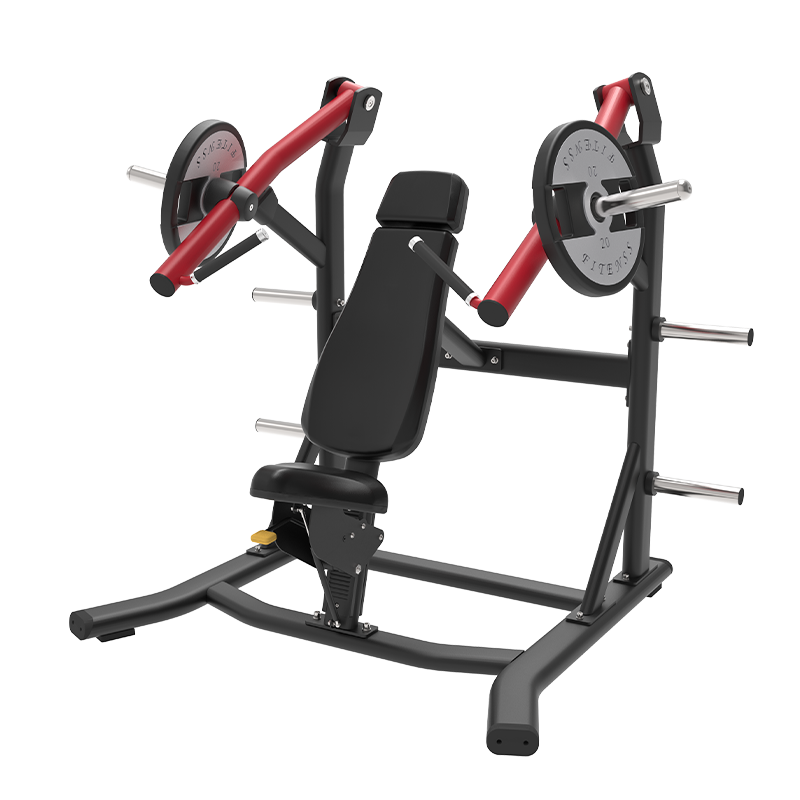
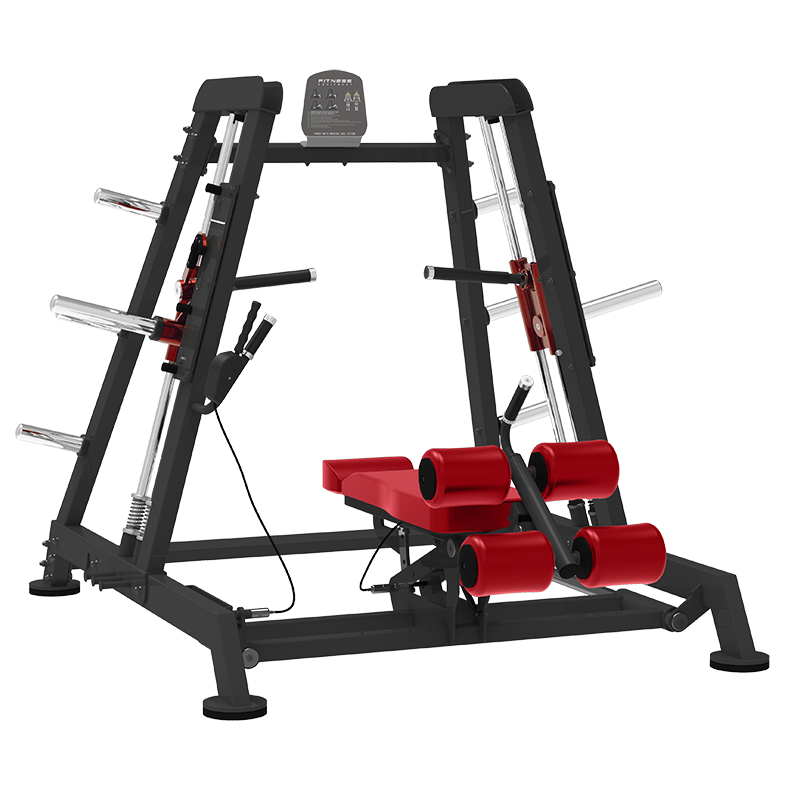
Based on the product information available, this machine is best understood as a plate-loaded commercial strength machine with a welded steel frame, dark powder-coated finish, and upholstered contact points in red. The visible structure suggests a large freestanding A-frame base with angled side towers, a top crossbar, and guided rails or lever tracks. There are also side-mounted handles, adjustment points, roller-style pads, and a lower padded seat or platform.
That combination points to a machine designed for stable, repeatable force transfer. In commercial gyms, that matters as much as raw load handling. Users want a machine that feels anchored, that guides them into a predictable movement path, and that can survive being used by beginners who are still learning body position as well as stronger lifters who want a serious training stimulus.
One caution: the exact exercise function is not fully certain from the available image data alone. It may be related to pressing movements, and the product is being discussed here as a Pro Multi Chest Press Machine, but buyers should confirm the movement path, the intended body position, and whether the unit is truly for chest press work or another lower-body or hip-focused movement. That kind of verification sounds obvious until a freight container arrives and the unit does something slightly different from what the catalog implied.
Quick buyer takeaway: where this type of machine fits
If your facility needs a durable, floor-mounted strength station that can serve a broad user range, a commercial chest press machine in this class usually makes sense. It is especially relevant where equipment turnover is high, users need guided resistance, and free-weight areas are already crowded.
It is less suitable if you need a highly compact rehab device with fine-grained motion control, or if your buyers expect a fully selectorized stack with minimal plate handling. A plate-loaded chest press machine has advantages, but it also requires more room around the frame, some plate storage planning, and more training discipline from users and staff.
Construction details that matter in daily use
Steel frame and weld quality
The backbone of any commercial fitness machine is the frame. Here, the visible welded steel construction and powder-coated finish are exactly what experienced buyers expect in a high-use environment. Welded framing tends to be favored over lighter bolt-together structures when the machine is expected to handle repeated loading, transport stress, and the kind of casual rough handling that comes with a busy gym floor.
The powder coat is not just cosmetic. It helps the machine resist scuffs, sweat, and cleaning chemicals, although no finish is magic. In practice, the best powder coats are the ones that make scratches less obvious and help the unit age evenly rather than looking tired after the first year.
Upholstery and contact points
The red pads and roller-style contact surfaces suggest that the user interface was designed to keep the body in place while pressing. In strength training equipment, contact points do a lot of quiet work. They distribute pressure, improve comfort, and help the user stay consistent rep after rep. If the pads are too soft, the machine can feel unstable. Too firm, and the unit becomes unpleasant during longer sets.
For buyers, upholstery is also a maintenance issue. In commercial environments, seams, foam density, and surface wear matter just as much as aesthetics. Red upholstery can look sharp on the showroom floor, but the real test is whether it still looks respectable after months of chalk, sweat, and disinfectant wipes.
Guided movement and adjustment hardware
The visible adjustment holes, pins, rods, and side handles indicate that this unit likely supports some form of user positioning or mechanical adjustment. That is a strong point for facilities serving mixed populations. A machine that can be adjusted correctly will usually produce better biomechanics, fewer awkward setups, and less staff intervention.
Still, this is one of those areas where buyers should ask direct questions. How many positions are available? What is the adjustment mechanism? Can a user make changes quickly without climbing around the frame? On commercial equipment, easy adjustment is not a luxury. It determines whether the next user gets on smoothly or walks away annoyed.
Why buyers consider plate-loaded machines for commercial use
A plate loaded chest press machine has a few natural advantages in commercial settings. First, it often feels more robust to experienced lifters because the load is visible and easy to understand. Second, it can reduce the complexity of a stack system, which may help when maintenance resources are limited or when the facility prefers simpler mechanical architecture. Third, plate-loaded units often pair well with strength areas that already stock Olympic plates for bars, racks, and lever machines.
That said, plate-loaded equipment also asks more of the operator. Plates must be added and removed, which can slow turnover. Noise can increase if plates are dropped or set down carelessly. And if the room is busy, the machine can end up surrounded by loose plates unless the layout is planned properly. These are not dealbreakers, but they are real operational details that sourcing teams should factor in.
How to evaluate a Pro Multi Chest Press Machine before buying
Match the machine to the user base
Start with the people who will actually use it. If the machine is for a commercial gym with varied traffic, the priority is durability, intuitive setup, and clear movement guidance. If it is for a training center, you may care more about athletic loading and consistency under heavier use. If it is for rehabilitation or mixed medical fitness use, body support and adjustment range become much more important.
Check footprint and floor layout
This type of machine is freestanding and substantial. That makes it stable, but it also means it needs room for loading, unloading, entry, and exit. Too many buyers focus on the machine dimensions alone and forget plate storage, walking clearance, and the space a user needs while moving through the set. A good floor plan is part of the purchase, not an afterthought.
Ask about service access
Commercial equipment inevitably needs inspection and occasional maintenance. Ask whether the frame allows easy access to pivots, bearings, pins, or wear parts. On a machine with guided tracks and adjustable components, service access can save time later. The cheapest unit on paper may be the most expensive if routine maintenance turns into a disassembly project.
Common mistakes buyers make
The first mistake is buying on appearance alone. A bold red-and-black frame looks impressive, but appearance says little about geometry, loading feel, or longevity.
The second mistake is assuming that all chest press machines train the body in the same way. Small changes in handle path, seat position, and resistance arc can make the movement feel quite different. That may be fine, but only if it matches your training goals.
The third mistake is underestimating the role of supply support. For commercial equipment, parts availability and consistent manufacturing matter. A supplier like Minolta, with a broad product range and a dedicated manufacturing base, may appeal to buyers who want a more systematic procurement relationship rather than a one-off equipment purchase.
What Minolta’s manufacturing background suggests
Shandong Minolta Fitness Equipment Co., Ltd. operates across multiple strength series such as MND-AN, MND-FM, MND-FH, MND-FS, MND-FB, MND-E Crossfit, MND-F, MND-FF, MND-G, and MND-H, alongside cardio lines that include exercise bikes and treadmills. That breadth usually matters to sourcing teams because it can simplify procurement across a full gym package instead of piecing together unrelated suppliers.
The company also notes a manufacturing workshop, a quality control lab, and an exhibition hall across a 120,000-square-meter facility. For a buyer, that suggests the supplier is set up for commercial equipment production rather than small-batch novelty assembly. Minolta’s export history across Europe, Africa, the Middle East, South America, and Southeast Asia is another practical signal that the company is used to serving different market expectations and facility types.
FAQ
Is this machine definitely a chest press?
Not from the provided image information alone. It is being discussed as a Pro Multi Chest Press Machine, but the visible structure leaves some uncertainty about the exact movement function. Confirm with the supplier before specifying it for purchase.
Is a plate-loaded unit better than a stack machine?
Not always. Plate-loaded machines can be rugged and familiar to lifters, while stack machines are often quicker to use and easier for high-turnover environments. The better choice depends on your members, staffing, and maintenance preferences.
What should I verify before issuing a purchase order?
Confirm the exact exercise type, dimensions, load system, plate compatibility, adjustment range, and any assembly requirements. If the machine will sit in a commercial gym, also verify floor space, anchoring expectations, and after-sales support.
Practical next step for sourcing teams
If you are comparing commercial strength equipment options, ask for the full spec sheet and assembly details, not just the catalog photo. For a Pro Multi Chest Press Machine, the important questions are simple but non-negotiable: What movement does it actually train? How is resistance applied? How does the frame adjust? What maintenance access do technicians get?
That is the point where a polished image becomes a real procurement decision. A machine that looks strong on a website still has to behave well on the gym floor, day after day. If you are evaluating a product from Shandong Minolta Fitness Equipment Co., Ltd., use the company’s broader commercial manufacturing range as a starting point, then confirm the mechanics carefully before you commit.