


Why the super incline chest press still earns a place on the gym floor
The super incline chest press is one of those pieces of equipment that looks straightforward until you try to buy one for a real training space. On paper, it is a chest press. In practice, it sits somewhere between upper-chest work, shoulder assistance, and heavy pressing machine training. That makes it useful, but only if the machine’s design matches the users, the room, and the training style you want.
For facility owners, strength coaches, and sourcing managers, the decision is rarely about whether pressing machines belong in a gym. It is about which version is worth the footprint. A well-built super incline chest press machine can give you controlled loading, a stable path for newer lifters, and a hard, repeatable press for experienced athletes. A poorly chosen one becomes an awkward corner fixture that looks impressive and gets ignored.
That is why buyers should look beyond the label and study the build, motion, and service life. The right machine can support commercial traffic for years. The wrong one can create bottlenecks, comfort complaints, and maintenance headaches that arrive sooner than expected.
What this machine is trying to do
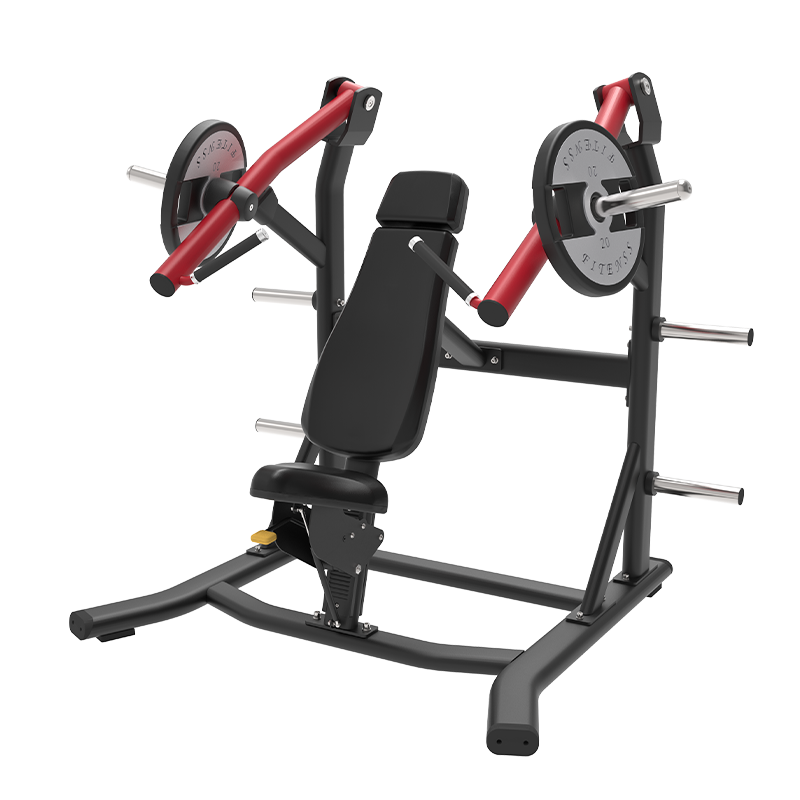
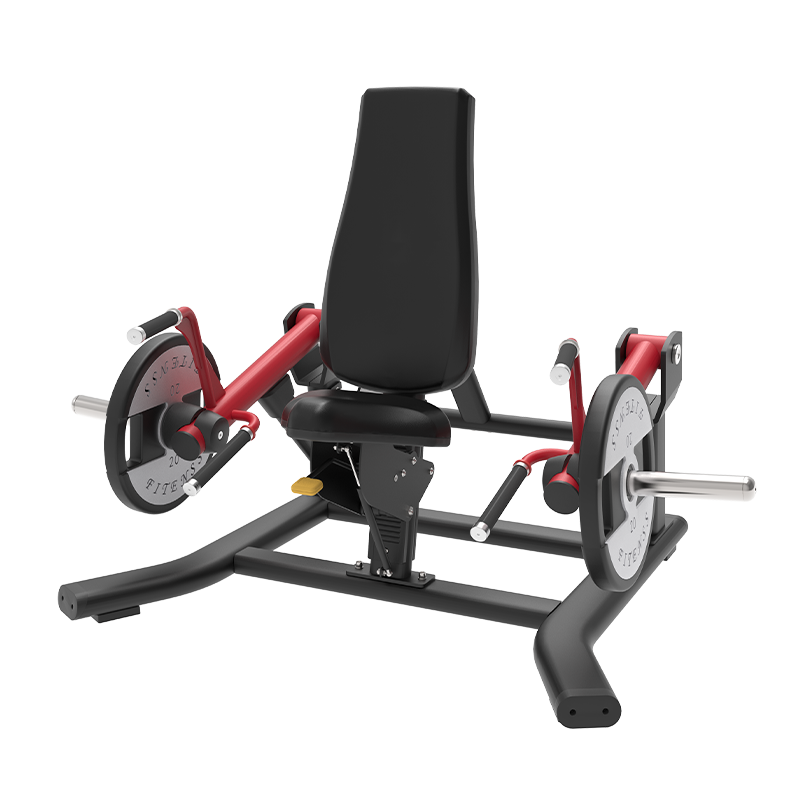
From the product details provided, this is a plate-loaded commercial strength machine with independent converging arms, a fixed seat pad, an angled back pad, and multiple plate loading points. The visible structure suggests welded steel tubing with a black powder-coated frame, red and black moving arms, and polished steel load horns. That is a familiar, durable layout for commercial gym equipment fabrication.
The most important feature is not the paint or the upholstery. It is the independent arm design. That usually means each side can move with a more natural pressing pattern than a linked bar path, and it can help account for small strength differences between left and right sides. For many users, especially in mixed-population gyms, that matters more than people admit. Machines that punish asymmetry tend to get used less.
The available product data does not confirm whether the motion is strictly incline press, flat press, or a chest/shoulder hybrid. So a careful buyer should treat the machine as an upper-body pressing unit with an incline-style bias, rather than assuming it duplicates any one free-weight exercise exactly.
How it compares with free weights and simpler chest machines
If you are deciding between a super incline chest press and a free-weight setup, the question is not which is “better” in the abstract. It is what problem you are solving.
A super incline bench press with barbells or dumbbells gives you more freedom, more stabilization demand, and more technique requirement. That is valuable for advanced lifters, but it also means fatigue, spotter needs, and greater movement variability. A super incline dumbbell press is even more forgiving on joint angles, but it still demands setup time and balance control.
The machine version offers a different tradeoff: more stability, easier progression, and less dependence on coaching every rep. That is why commercial clubs, hotels, rehab-adjacent training rooms, and athletic facilities often keep one around. It gives users a press that feels serious without asking for perfect bar path discipline.
For mixed-ability facilities, the best super incline chest press exercise is often the one a broad user base will actually perform consistently. That sounds plain, but utilization is the real metric in commercial settings. If a machine is comfortable, intuitive, and easy to load, it earns floor space.
Key buying criteria that matter more than marketing copy
Buyers should start with the frame and pivot quality. In a plate-loaded machine, the welded structure and moving joints carry most of the long-term stress. A commercial unit with a compact footprint and independent lever arms needs clean fabrication, good alignment, and pivots that feel stable under repeated loading. If the arms wobble unloaded, they will not improve under heavy use.
Seat and back support also deserve more attention than they usually get. The provided details indicate a fixed seat pad and angled back pad. That may seem basic, but for pressing machines, body position determines whether users can actually drive force without feeling jammed into the shoulder line. Poor pad geometry often shows up as complaints about reaching the handles or losing scapular support.
Then there is loading practicality. Plate horns and polished steel sleeves make a difference on a busy floor because users can load and unload quickly. Multiple loading points can also help distribute weight more cleanly and reduce the visual clutter of plates lying around the machine. That is not glamorous, but it is what operators notice at 5 p.m. on a crowded training day.
Finally, think about maintenance. A plate-loaded machine avoids cables and weight stacks, which can be an advantage in some facilities. Fewer cable-related wear items can simplify service. Still, the absence of a weight stack does not make the machine maintenance-free. Pivots, cushions, and welded joints all still need inspection.
Where a super incline chest press fits best
This type of machine is a strong fit for commercial gyms, fitness centers, hotels, rehab spaces, athletic training rooms, and home garages that want a professional pressing station without the complexity of a full selectorized system. It is especially useful when space is limited but a serious upper-body press is still expected.
In a commercial environment, the compact floor-standing footprint matters. One machine that can handle a wide range of users is often more valuable than two specialty stations that sit idle. In a rehab or performance setting, the stable path can help coaches or therapists control range and loading more closely than they could with free weights alone.
For home users, the calculation is different. A plate-loaded unit makes sense only if the buyer already owns plates, has enough ceiling and floor clearance, and wants a machine that feels closer to club-grade equipment than to a foldable home-gym accessory. It is a serious purchase, not a casual one.
What Minolta’s manufacturing profile suggests
Shandong Minolta Fitness Equipment Co., Ltd. operates from Ningjin and reports more than a decade of experience in fitness equipment manufacturing. Its facility spans 120,000 square meters and includes a manufacturing workshop, quality control lab, and exhibition hall. The company also states that it offers more than 300 types of exercise equipment across strength and cardio categories and exports to over 100 countries.
For a buyer, that background does not replace a product inspection, but it does matter. A manufacturer with breadth in commercial gym equipment is more likely to understand weld consistency, upholstery workflow, assembly discipline, and the realities of shipping heavy equipment overseas. That is the sort of operational experience that usually shows up in the details: cleaner fit-up, more consistent finishing, and a better handle on how equipment behaves after installation.
The likely fabrication process for a unit like this combines welded steel structure, machined pivot points, finishing, and upholstery work. Those are ordinary words, but they hide the real challenge: everything has to line up after fabrication and still feel aligned after years of use. That is where commercial manufacturers either earn trust or lose it.
Common mistakes buyers make with incline pressing machines
The most common mistake is overfocusing on muscle targeting and underfocusing on machine geometry. A buyer may ask whether the unit hits the upper chest, but the more useful question is whether the handles land in a comfortable pressing lane for a wide range of users. Good biomechanics are felt, not advertised.
Another mistake is assuming that plate-loaded automatically means rugged enough for anything. The frame may be strong, but the user experience still depends on the pivot design, pad positioning, and leverage profile. Without those, a heavy-looking machine can still feel awkward.
There is also a habit of ignoring floor layout. A press machine with an independent arm layout needs usable loading space on both sides, enough clearance for plates, and enough access for cleaning and inspection. If the machine is squeezed into a narrow row, it will become annoying faster than expected.
How to evaluate a machine before you commit
Ask for clear product photos from multiple angles, especially the pivot points, seat adjustment area, and loading horns. If possible, request assembly drawings or dimensional information. The product information provided here does not include exact dimensions, weight, load capacity, or resistance curve, so a cautious buyer should not assume those details.
Then test the motion if you can. The handles should track smoothly, the start position should not feel excessive, and the press should not force the shoulders into a cramped line. If the machine is intended for broad commercial use, a few testers with different body sizes will reveal more than a single enthusiastic lifter.
For sourcing teams, warranty terms, spare-part availability, and packing quality are just as important as the press motion. A strong machine that arrives damaged or is difficult to service creates a paperwork problem, not a training asset.
FAQ: quick answers buyers usually need
Is a super incline chest press the same as a super incline bench press?
Not exactly. A bench press typically refers to free weights, while the machine version guides the movement path and reduces stabilization demand.
Does an independent-arm machine help training?
It can. Independent arms often allow more natural movement and may help address left-right differences, though the result still depends on the user and programming.
Is this better than a dumbbell press?
It depends on the setting. Dumbbells offer more freedom and stabilization challenge. A machine offers more control, easier loading, and often better consistency in commercial environments.
What should I verify before ordering?
Confirm dimensions, floor space, load capacity, adjustment range, and the exact motion path. Those items are not visible from the product description alone.
A practical next step for buyers and gym operators
If you are selecting a super incline chest press for a facility, start with the users, not the catalog photo. Decide whether you need a controlled upper-body press for general membership traffic, strength-focused training, or rehab-oriented work. Then compare the machine’s footprint, arm design, pad geometry, and service needs against that real use case.
For commercial buyers looking for manufacturing support, Minolta’s broader strength-equipment range and export experience make it a reasonable supplier to evaluate further. Ask for the specifications that are missing here, review the assembly quality, and make sure the machine fits your floor plan before you place the order. That extra step is usually cheaper than discovering a mismatch after delivery.
In the end, the best super incline chest press is not the fanciest one. It is the one that people can use safely, repeatedly, and without coaching every set. That is the standard worth buying to.