


Why a seated incline chest press machine still matters in commercial training spaces
The seated incline chest press machine sits in an interesting middle ground: it is specific enough to guide a pressing pattern, but versatile enough to earn floor space in a commercial gym, a school weight room, or a hotel training corner. For buyers, that balance is usually the real question. Not whether the machine looks impressive, but whether it helps ordinary users press safely, repeatably, and with enough load progression to keep training moving.
In a busy facility, free weights are not always the answer. A guided press can reduce setup time, limit awkward bar paths, and give newer users a little more confidence under load. That is especially relevant when a room serves mixed ability levels, from first-time lifters to experienced athletes who simply want stable volume work. A commercial incline chest press machine, when built well, becomes one of those pieces that gets used more than people predict.
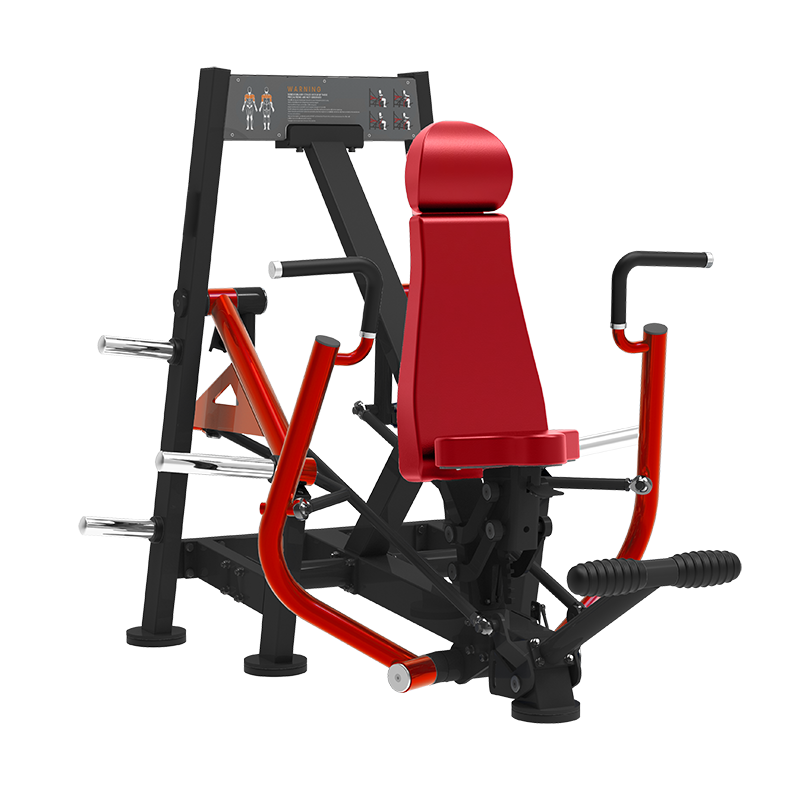
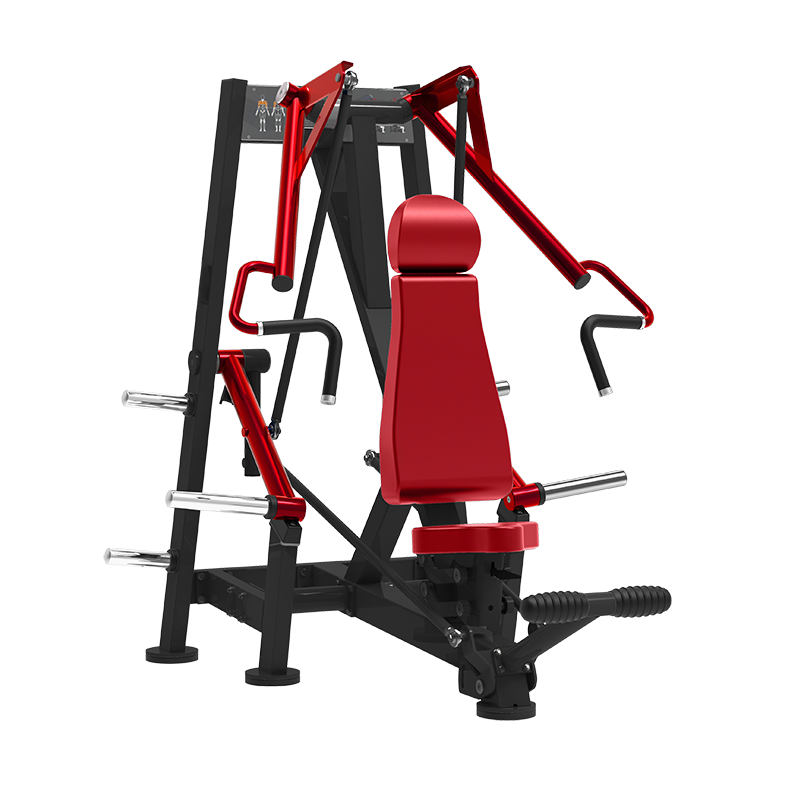
The machine described here appears to be a plate-loaded strength machine with a fixed seated position, lever arms, chrome loading sleeves, and a wide grounded base. That combination points to a simple but practical category: commercial fitness equipment chest press built for guided upper-body pressing without a selectorized weight stack.
What the machine is designed to do
At its core, this type of machine supports a pressing motion from a seated incline angle. The angle shifts the torso position compared with a flat press, which changes the feel of the movement and often makes the machine more comfortable for users with different shoulder preferences. The exact muscle emphasis depends on the geometry, which is not fully identifiable from the supplied information, so it is better to describe it cautiously: this is an upper-body press station intended to train pressing strength through a fixed path.
The visible structure suggests a guided lever system rather than a cable stack. That matters. Plate-loaded lever machines tend to feel direct and mechanically honest. The resistance comes from the weight plates, but the machine controls the travel path and reduces the setup friction associated with dumbbells or barbells. For facilities that want durable strength equipment with lower maintenance complexity, that is a meaningful advantage.
Quick buyer takeaway
If your users need safe, repeatable pressing with adjustable resistance through plates, an incline chest press machine like this is often easier to manage than open free-weight stations. If your floor plan is tight or your audience is highly specialized, you still need to compare the footprint and motion path against other upper-body press options before buying.
Why guided pressing equipment earns its keep
Commercial facilities rarely buy a seated incline chest press machine just because they want another piece of steel. They buy it because it solves a workflow problem.
First, it shortens learning time. A user does not need to stabilize two dumbbells independently or learn barbell rack mechanics. The machine provides a fixed seat, back support, and a consistent pressing arc. For newcomers, that lowers the barrier to entry.
Second, it supports programming consistency. Coaches and trainers can load predictable resistance and ask for repeated sets without adjusting racks, spotter positions, or bench angles. That makes it useful in group training, school settings, and supervised strength rooms.
Third, it can be more approachable for older users or deconditioned users. I would not overstate this point, because machine work is not automatically “safer,” but guided motion does remove some of the balance demands that can make pressing intimidating.
What the visible construction tells a buyer
The described machine uses a heavy-gauge steel frame with a black powder-coated structure and red moving arms and upholstered parts. That is a familiar commercial look, but it also tells you something practical: this is built for repeated contact, not occasional home use. Powder coating helps protect the frame from wear and sweat exposure, though buyers should still think about cleaning habits and room ventilation.
The padded seat and backrest, shown in red vinyl or a leatherette-like upholstery, are not just cosmetic. Seat comfort affects whether users can keep their shoulder blades in position and brace properly. In a pressing machine, a sloppy seat pad or unstable back support can make the whole experience feel less controlled than the steel frame suggests.
The chrome handle and sleeve bars are another useful clue. Chrome surfaces are commonly used on loading and grip interfaces because they present a hard, smoother finish that stands up reasonably well to repeated handling. The visible sleeves also imply plate-loading capability, which makes the machine suitable for progressive strength work in commercial settings.
Commercial incline chest press machine: what to compare before you buy
Not all incline press equipment behaves the same way. Some models use converging arms, some use fixed independent arms, and others feel closer to a leverage press with a flatter path. Without the exact model data, the safest approach is to compare the basics that affect daily usability.
1. Seat position and adjustment
A good chest press machine seated incline setup should let users align themselves comfortably with the handles without shrugging the shoulders or overstretching at the start position. Adjustable seat height, if present, is important. If the adjustment range is too coarse, smaller and taller users may both end up compromising posture.
2. Grip options
Multiple grip positions can make a machine more useful across user sizes and training preferences. Neutral and angled grips often change the feel of the press and may help different users find a joint-friendly position. The machine here appears to include multiple handle areas, which is a strong practical detail, though the exact geometry is not specified.
3. Frame stability
A wide base and full ground contact are not flashy features, but they matter. Plate-loaded lever systems can generate significant moving mass and force. If the frame flexes or rocks, the user notices immediately. In a commercial setting, that hurts confidence and can shorten the useful life of the machine.
4. Movement path
The biggest usability question is whether the press path feels natural. An incline press machine can be very effective or oddly restrictive depending on arm geometry. Buyers should test the motion with a few body sizes, not just one staff member who lifts regularly.
How this kind of equipment fits different facilities
For commercial gyms, the value is straightforward: it adds a plate-loaded option that can absorb traffic from members who want upper-body pressing without waiting for benches or racks.
For strength studios, the machine gives coaches a controlled station for accessory work and hypertrophy blocks. It is not a replacement for barbell training, but it is a reliable complement.
For schools and hotel gyms, the attraction is usually durability and ease of use. These spaces need equipment that does not require constant explanation. A guided press with a fixed seat is easier to supervise than a loose collection of benches and dumbbells.
For rehabilitation-oriented training spaces, caution is needed. A machine like this may be suitable in some settings, but only when the program and user profile justify it. That decision belongs with the clinician or coach, not the brochure.
Common mistakes buyers make with chest press machines
One mistake is buying on appearance alone. A heavy frame and bright upholstery can look premium, but the machine still needs a natural path and usable seat adjustment.
Another mistake is assuming plate-loaded means “simpler” in every sense. It can be mechanically simpler than a stack machine, yes, but it still needs good weld quality, stable pivots, practical loading sleeves, and enough spacing around the user area.
A third mistake is not checking for service access. Pivot joints, upholstery, and contact points are the parts that usually show wear first. If maintenance is difficult, the machine may look fine long after it starts feeling sloppy.
And a small but important warning: do not buy a press machine for a floor plan that cannot accommodate plate handling. If users have to twist around benches or stored plates just to load the machine, the operational benefit disappears quickly.
Where Minolta fits into the picture
Shandong Minolta Fitness Equipment Co., Ltd. operates from Ningjin’s hardware base and reports more than a decade of experience in fitness equipment manufacturing. The company information supplied describes a 120,000-square-meter facility with a manufacturing workshop, quality control lab, and exhibition hall, plus more than 300 types of exercise equipment across strength and cardio lines.
That scale matters to buyers because a commercial incline chest press machine is rarely purchased in isolation. It sits inside a broader procurement plan that may include matching strength stations, frame finishes, and service expectations. A manufacturer with multiple series and export experience across more than 100 countries is typically positioned to support larger commercial buying programs, although each model still needs its own technical review.
Practical buying advice before you place an order
Ask for the exact exercise name, loading geometry, frame dimensions, and upholstery specification. Those details are not optional when you are fitting equipment into a real room.
Confirm whether the arms are independently moving or mechanically linked. The difference changes the feel of the press and may affect user preference.
Check plate compatibility and sleeve length. Facilities often overlook this, then discover that their plate inventory does not fit the machine workflow well.
Inspect welds, pivot smoothness, and finish quality if you can see a sample unit or detailed build photos. On a press machine, small inconsistencies become obvious during repeated use.
Finally, think about the user mix, not just the training trend. A commercial incline chest press machine should match who will actually use it three years from now, not just the strongest person on the floor today.
FAQ: common questions from sourcing teams
Is this a selectorized machine?
Based on the supplied product information, it appears to be plate-loaded rather than stack-based.
Is it suitable for commercial facilities?
Yes, the described construction and use case point toward commercial gyms, studios, schools, hotels, and similar environments.
Does the machine replace free weights?
No. It complements free weights by offering guided pressing and repeatable resistance.
What should be verified before purchase?
Seat adjustability, movement path, frame stability, plate compatibility, and the final build specification are the main points to confirm.
What to do next
If you are comparing incline chest press equipment for a commercial project, start with the user profile and the room layout, then move to motion feel and build quality. A seated incline chest press machine can be a very practical purchase, but only when the geometry, loading style, and durability match the facility’s actual workload.
For buyers evaluating commercial fitness equipment chest press options, request the full technical sheet, a live demo if possible, and clear confirmation of the final structure before committing to an order. The difference between a machine that gets used daily and one that becomes floor clutter is often found in those details.