


Iso-Lateral Horizontal Bench Press: what buyers should know before they spec one
An Iso-Lateral Horizontal Bench Press is one of those pieces of equipment that looks straightforward until you try to compare it with other chest press stations for a real facility. On paper, it is “just” a plate-loaded press. In practice, the arm path, bench position, loading layout, and frame stability can make the difference between a machine that gets used all day and one that sits in the corner because it feels awkward.
For gym owners, sourcing managers, and product teams, the question is not only whether the machine trains chest, shoulders, and triceps. It is whether the station fits your training style, floor plan, and maintenance expectations. That matters more in commercial settings than buyers sometimes admit. A good press station earns its footprint; a poor one becomes a complaint magnet.
What this type of machine is meant to do
An iso-lateral press design usually gives each arm its own movement path. That can help users work one side at a time or press both sides together while keeping the load feel more natural than a fixed bar path. In the horizontal bench press format, the user is seated or braced on a fixed bench and presses forward rather than upward at an angle. Compared with an incline press, the emphasis shifts more squarely to the mid-chest region, though shoulders and triceps still do useful work.
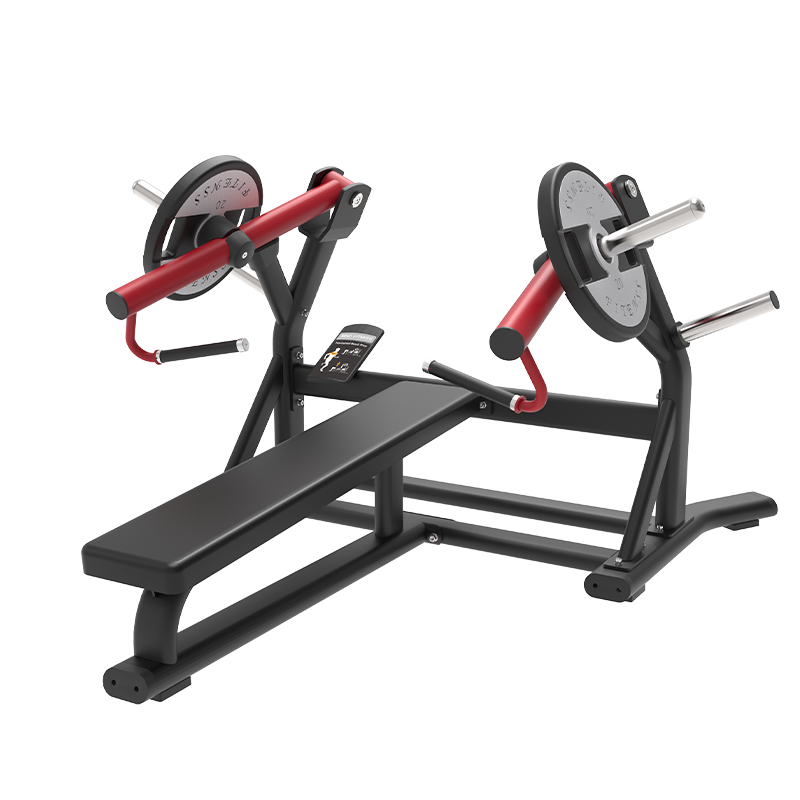
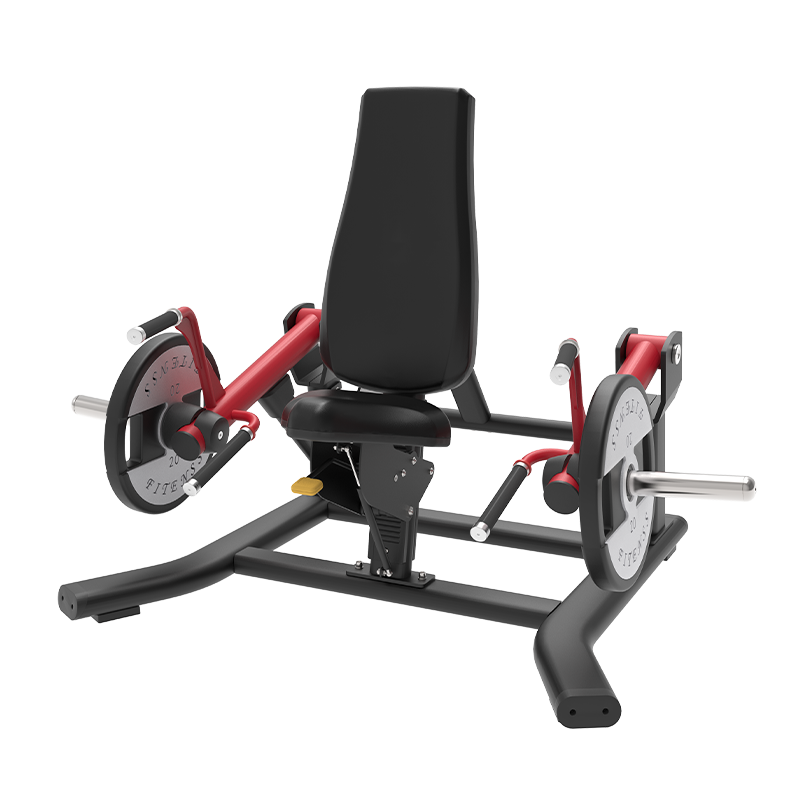
The model described in the supplied product information appears to be a commercial, plate-loaded strength-training machine with dual lever arms, a fixed bench, visible loading sleeves, and a heavy welded frame. The exact mechanism cannot be confirmed from the image alone, so it is safer to treat it as an iso-lateral or independently moving arm design rather than assume a specific linkage. That kind of caution is worth keeping in your spec sheet notes.
Quick buyer reference: where it fits best
For a commercial gym, this machine sits in the same broad family as a Horizontal Chest Press Machine or a Plate Loaded Bench Press, but it usually offers a more guided feel than free weights and a more muscular upper-body training experience than a selectorized press with a fixed handle path.
It is often a good fit for:
commercial gyms that want a durable chest press station with a smaller footprint than a full power area
hotel fitness rooms that need a recognizable upper-body press without a large equipment lineup
training studios that want strength equipment with simple operation and low user instruction time
general strength facilities where plate loading is preferred for progression and heavier work
If your members expect quick swaps, easy signage, and a machine that handles a wide range of users, a plate-loaded press can work well. If your audience is largely novice, you may need clearer labeling or staff guidance than you would with more self-explanatory cardio machines.
Why the design matters in daily use
The commercial value of an iso-lateral press is not just the resistance profile. It is the way the machine manages body position and load distribution. Dual arms with separate loading sleeves allow the user to load each side independently, which is helpful when one side is stronger or when unilateral work is part of the training program. That is one reason the term Iso Lateral Bench Press appears often in commercial gym conversations, even when the exact kinematics vary from model to model.
The supplied product details point to a welded steel frame, matte black powder-coated finish, and black upholstered contact surfaces with dense foam. Those are practical choices, not flashy ones, and that is usually the right direction for commercial strength equipment. Powder coating helps the frame survive routine cleaning and abrasion. Dense foam matters because chest press stations are used hard, then used again by the next person without much ceremony.
The visible red grip levers and silver loading posts also suggest a design that tries to make hand placement and plate loading obvious at a glance. In a busy gym, that is not a small benefit. People do not want to decode a machine every time they return to it.
Key construction points buyers should inspect
Frame and base stability
A chest press with a fixed bench and forward arms needs a stable footprint. The machine described uses a floor-standing base with front support rail and heavy structural members. That is a good sign, but buyers should still look closely at how the machine sits on the floor, how it is anchored or leveled, and whether the frame geometry resists rocking when both arms are loaded unevenly.
Arm movement and pivot quality
Because exact bearing or bushing details are not provided, do not assume a particular pivot system. In practice, the feel of the press depends heavily on those moving joints. Smooth motion, reduced side play, and consistent resistance through the range are what matter to end users. If you are comparing suppliers, ask how the pivots are engineered and how replacement wear parts are handled. That question saves trouble later.
Upholstery and contact surfaces
Commercial upholstery is often overlooked until it starts to split. The product description suggests black vinyl or a similar synthetic cover over dense foam. That is standard for a reason: it is easy to wipe down and more durable than soft consumer-grade padding. Still, stitching quality and pad edges matter. A clean-looking pad on day one can age badly if seams are thin or contact points are poorly reinforced.
Loading sleeves and plate handling
Dual plate-loading posts are a clear functional advantage, especially for users who want incremental progression. They also bring a practical housekeeping issue: the gym needs enough small plates nearby for regular use, and staff should keep collars or retention hardware organized. A plate-loaded bench press only works smoothly when the accessories do their part.
How it compares with other chest press options
Compared with a selectorized chest press, this style usually gives more freedom in loading and a heavier, more “open” strength-training feel. It also tends to invite more serious training behavior. Users treat it less like a quick warm-up machine and more like a working station.
Compared with free-weight bench pressing, the machine offers more guidance and often less setup complexity. There is no racking bar, no need to spot the same way, and less concern about a bar path drifting off line. That can be attractive in facilities that want to reduce coaching demands or manage risk in a supervised-but-busy environment.
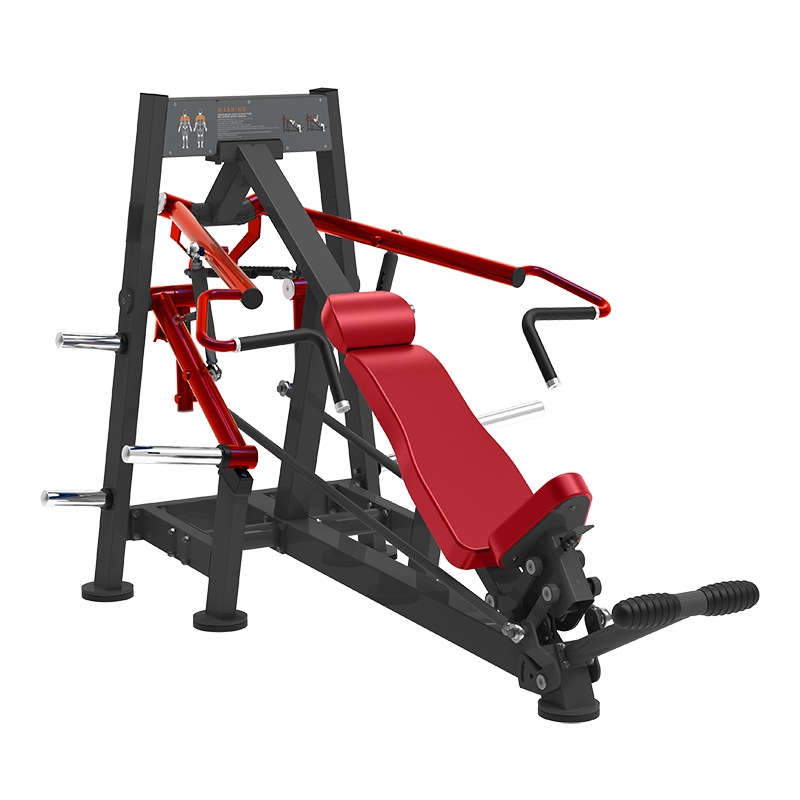
Compared with an incline press machine, the horizontal format usually targets a more neutral pressing angle. That makes it a better fit when the goal is balanced chest work rather than an upper-chest emphasis. It also tends to suit users who do not want the shoulder angle of incline pressing after a heavy session.
Selection criteria that matter more than marketing copy
When evaluating commercial gym equipment in this category, focus less on the promotional language and more on the mechanics you can verify.
First, confirm whether the machine is truly plate-loaded and whether both arms move independently. That detail changes how users train and how staff explain the station.
Second, check the path of motion. Some machines feel smooth but force an awkward starting position; others look simple but move in a way that respects the shoulder joint better. You can usually tell a lot from a test rep.
Third, consider the footprint against your room plan. A long fixed bench and dual arms may be compact relative to a full machine line, but it still needs room for plate loading, user entry, and nearby traffic. In a crowded gym, that matters more than a polished catalog photo would suggest.
Fourth, think about finish and maintenance. Matte black powder coating can age well, but only if the cleaning regimen is sensible and the machine is not dragged around. Ask how replacement pads, sleeves, and wear parts are supported.
Common mistakes when sourcing a press station like this
One common mistake is to assume all plate-loaded presses are interchangeable. They are not. Small differences in arm geometry can make one machine feel excellent and another feel cramped.
Another mistake is buying for appearance instead of user flow. A machine can look heavy-duty in the showroom and still be a nuisance if the loading points are awkward or the bench height does not suit the average member.
A third mistake is underestimating the operational side. Plate-loaded equipment needs plate availability, organization, and basic staff familiarity. If the gym already struggles with plate clutter, adding more loading stations without a plan can make the room feel messier, not stronger.
Why manufacturer capability still matters
Shandong Minolta Fitness Equipment Co., Ltd. says it has more than a decade of experience in the fitness equipment sector, a 120,000 square meter facility, and production across more than 300 equipment types. It also notes exports to over 100 countries. For buyers, that does not replace a model-specific review, but it does suggest manufacturing depth and familiarity with commercial product lines.
For strength equipment, that matters because fabrication quality is not just about the visible welds. It includes cutting, machining, coating, upholstery, assembly, and quality control. A company with broader production capability is more likely to handle those steps in a repeatable way. Still, a smart buyer should verify the actual machine, not the brand story alone.
Practical questions to ask before you place an order
Ask whether the machine is fully plate-loaded and whether the arms operate independently or in a linked pattern. Ask what the bench structure looks like in the final product, especially if the photo shown is representative but not exact. Ask about packaging, spare parts support, and how the machine is assembled on arrival. Those questions are unglamorous, but they reduce surprises.
If you are sourcing for a chain or multi-site rollout, request consistent documentation for finish, assembly method, and component replacement. If you are sourcing for a smaller studio, ask whether the footprint and plate storage needs fit your room without crowding the training area.
Who should consider this machine now
An iso-lateral horizontal press is most useful for facilities that want a sturdy, familiar chest press with enough training flexibility to satisfy stronger users. It suits commercial gyms, hotel gyms, and dedicated strength spaces where plate loading is an accepted part of the routine. It is less compelling if you are building a very small studio with no plate inventory or if your membership base needs a highly simplified machine set.
For teams comparing upper-body press options, the best next step is to line up the actual machine against your floor plan, user profile, and plate inventory. If the geometry works and the frame quality checks out, this can be a dependable station. If the motion feels cramped or the loading layout fights the user, keep looking. That is usually where the real decision is made.