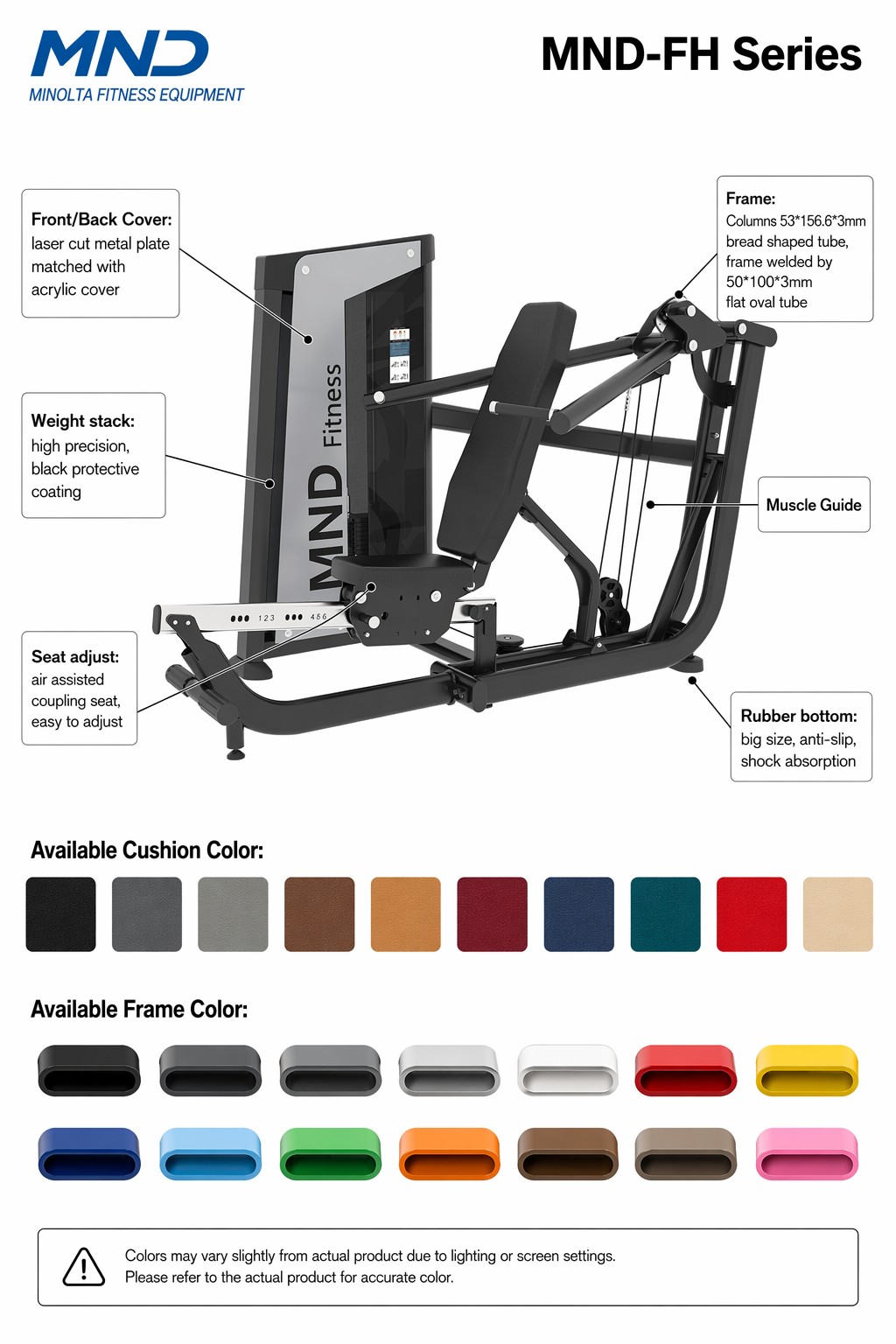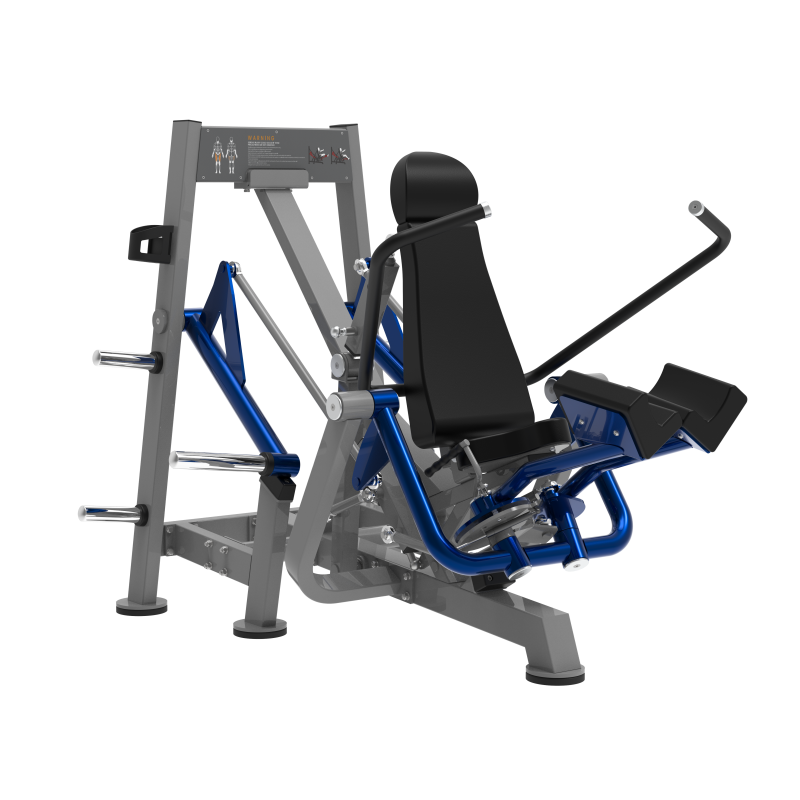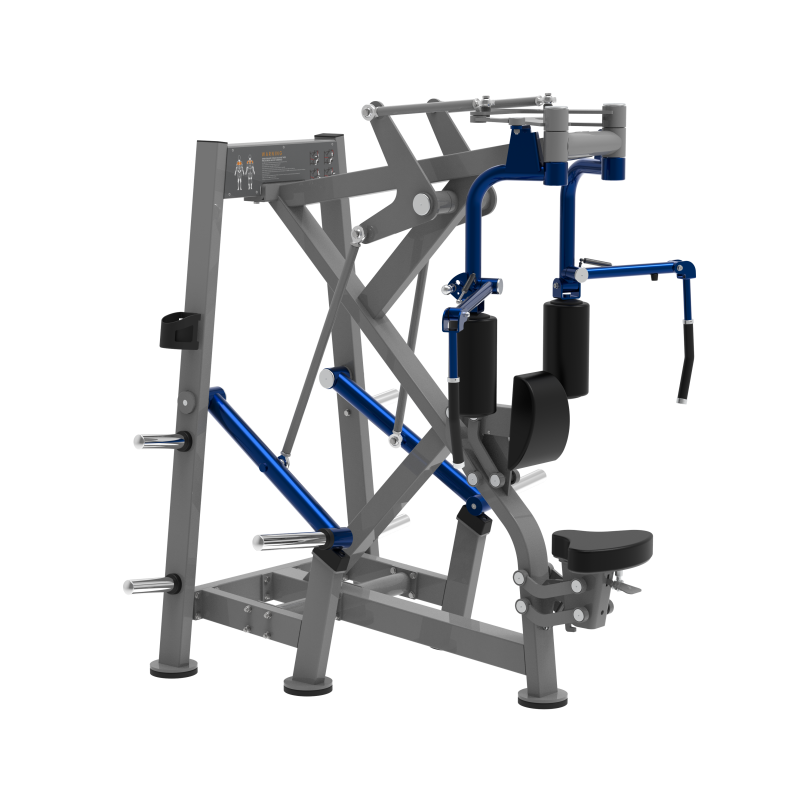



For commercial facility planners and gym procurement teams, the push-movement sector on the gym floor tends to create consistent maintenance and traffic headaches. Traditional flat bench stations tie up standard Olympic bars, consume significant square footage, and require attentive spotters. When upgrading resistance zones, evaluating a dedicated unit like the SPL01 Vertical Chest Press allows operators to balance safety, mechanical reliability, and user throughput without ballooning floor real estate.
While selectorized pin-stack units dominate light-traffic circuits, high-volume commercial facilities often lean toward robust lever-arm architecture. The SPL01 represents a targeted approach to pressing biomechanics: an upright posture that accommodates a broad demographic of lifters while delivering the heavy resistance profile expected from dedicated chest press gym equipment.
Biomechanical Advantages of the Upright Pressing Profile
Lying supine under a loaded bar poses inherent risks, particularly in unstaffed or 24-hour fitness clubs. The upright orientation of a vertical press machine alters how gravitational and rotational forces interact with the user’s glenohumeral joint.
In a seated position, the user’s thoracic spine rests flush against a reinforced back pad, reducing the natural tendency to excessively arch the lower back under maximal loads. For athletes dealing with minor anterior shoulder impingement or reduced thoracic mobility, an upright chest muscle training equipment piece eliminates the strain of 'unracking' a heavy barbell from behind the head. Instead, users start their movement within an active, stabilized range.
Additionally, accessibility plays a massive commercial role. Deconditioned lifters, corporate wellness members, and physical therapy patients often find sitting down into a vertical station far less intimidating than climbing down onto a horizontal flat bench.
Frame Architecture and Mechanical Construction
When evaluating any plate loaded chest press for long-term commercial duty, sourcing managers must look past aesthetic powder coats and inspect structural welding, pivot points, and steel gauge profiles.
Manufactured in industrial hubs like Ningjin—where Shandong Minolta Fitness Equipment Co., Ltd. bases its extensive 120,000-square-meter production hub—heavy-duty strength machines benefit from localized steel supply chains and heavy-tube laser profiling. Units within the broader MND strength families emphasize heavy structural tubing designed to endure millions of load cycles without frame flexing.
Key structural elements to inspect on the SPL01 and similar lever-driven frames include:
- Pivot Assemblies: Commercial pivot housings should feature sealed industrial bearings rather than simple bronze bushings. Sealed cartridge bearings isolate the rotational movement from chalk dust and ambient moisture, preventing binding when one arm is driven harder than the other.
- Converging Linkages: The most biomechanically sound units do not push straight forward in a rigid planar line. They converge slightly toward the chest’s midline, mirroring the pectoral muscle fibers’ natural contraction path.
- Weight Horns and Load Distribution: As a dedicated plate loaded strength machine, the weight-peg angles must prevent Olympic plates from drifting during aggressive eccentric transitions, while maintaining enough horn length to handle standard bumper or urethane plates.
Integrating the SPL01 into Commercial Floor Layouts
Floor spacing directly dictates revenue per square meter in boutique studios and multi-branch commercial chains alike. Standard barbell stations require a safety buffer of at least 1.5 meters on either side for loading and unloading, effectively eating up eight to ten square meters per station.
A fitness center chest press like the SPL01 isolates its loading horns within the machine’s operational perimeter. Because the user pushes away from their seated position along a fixed convergent arc, the required clearance zone drops noticeably. Sourcing managers can comfortably group these units alongside other selectorized or plate-loaded stations without impeding member circulation corridors.
| Equipment Style | Primary Loading Type | Spotter Required? | Floor Footprint Impact | Best Suited For |
|---|---|---|---|---|
| Olympic Flat Bench | Barbell / Free Weight | Yes (at high loads) | High (requires lateral bar clearance) | Powerlifting & Traditional Free-Weight Zones |
| Selectorized Chest Press | Weight Stack & Cable/Cam | No | Moderate | Circuit Training & General Fitness Demographics |
| SPL01 Vertical Press | Independent Lever / Plate Loaded | No | Compact to Moderate | Progressive Overload, Bodybuilding, Commercial Heavy Zones |
Purchasing and Material Longevity Considerations
For procurement teams handling bulk orders across overseas markets, equipment durability often boils down to touchpoints and surface treatments. A machine can have an overbuilt steel chassis, but cheap upholstery or inferior hardware will result in early warranty claims.
Pay close attention to high-density foam padding. On an upper body workout machine handling heavy pressing forces, the backrest pad takes substantial compressive loading. Low-density polyurethane collapses within a year of commercial use, leaving users pressing directly against the backing board. High-density, molded foam wrapped in tear-resistant commercial vinyl withstands continuous friction and frequent chemical wipe-downs.
Adjustability is another frequent point of failure. The seat-lift mechanism on any gym chest press equipment should utilize a high-visibility, spring-loaded pop pin or a counterbalanced stepped ladder. Loose, rattling seat posts degrade user confidence and accelerate wear on the inner post sleeves.
Routine Maintenance Checks for Facility Technicians
While plate-loaded units lack the steel cables and pulley sheaves found on pin-select systems, they are not maintenance-free. Facility managers should establish a basic quarterly protocol:
- Torque Verification: Check frame assembly bolts. Constant eccentric vibration can loosen hardware over time, particularly around base-plate connections.
- Bearing Smoothness: Manually cycle the movement arms without weight plates. Any grinding, side-to-side slop, or uneven resistance points to bearing wear or misaligned pivot pins.
- Rubber Footing and Bumpers: Ensure base rubber isolation pads remain intact to prevent frame creep on rubber tile flooring. Inspect stop-bumpers to verify arms do not contact the frame chassis at full return.
Frequently Asked Questions
Can the SPL01 Vertical Chest Press accommodate unilateral pressing?
Yes. Because the lever arms operate on independent pivot points, lifters can train one arm at a time to correct muscular imbalances, or alternate arms during rehabilitation and hypertrophy-focused routines.
How does maintenance compare between plate-loaded and selectorized presses?
Plate-loaded machines typically require far less maintenance. With no wire cables to fray, pulleys to split, or stack guide rods to lubricate, technician time is largely confined to checking pivot bearings and wiping down contact pads.
What floor anchor requirements apply to this machine?
Most commercial-grade vertical press frames feature wide, low-center-of-gravity base footprints with heavy rubber feet, eliminating the mandatory need for concrete anchoring under standard use. However, facilities in seismic zones or installations on elevated wooden flooring should follow local structural anchoring guidelines.
Final Procurement Perspectives
Selecting strength inventory involves balancing user demand for heavy, effective biomechanics against long-term maintenance costs. For facility managers looking to reinforce their push circuits, sourcing reliable equipment from established manufacturing operations ensures steady parts availability and structural longevity. If your facility is planning an expansion or updating its strength floor, contact the team at Shandong Minolta Fitness Equipment Co., Ltd. to review technical drawings, bulk container configurations, and full specification sheets for the SPL01 series.