


Rethinking Lower-Body Strength: The Shift to Multi-Planar Abduction
Glute training has shifted from an auxiliary workout segment to a major commercial floor driver over the last five years. Gym operators and strength coaches are increasingly vocal about the limitations of standard seated abduction units that lock the hip into a strict transverse plane. The SPL69 3D abduction trainer represents a distinct mechanical response to this demand, moving away from purely planar movement toward a compound arc that mimics natural hip articulation. For sourcing directors and facility owners, deciding whether to specify this class of equipment comes down to biomechanical utility, frame longevity, and total cost of ownership under heavy cycle counts.
Traditional selectorized abduction units force users into a fixed 90-degree hip angle, isolating the gluteus medius under a constrained, single-axis pivot. While easy to manufacture, standard units often cause users to hyperextend the lumbar spine or leverage their quadratus lumborum when working against heavy stacks. A professional hip abductor machine built with an angled or multi-planar travel path changes the vector, introducing slight external rotation or hip extension as the leg moves outward. That design difference shifts the load cleanly across the superior gluteal complex while reducing knee torque.
Kinematics and Cam Geometry: How the SPL69 Differs
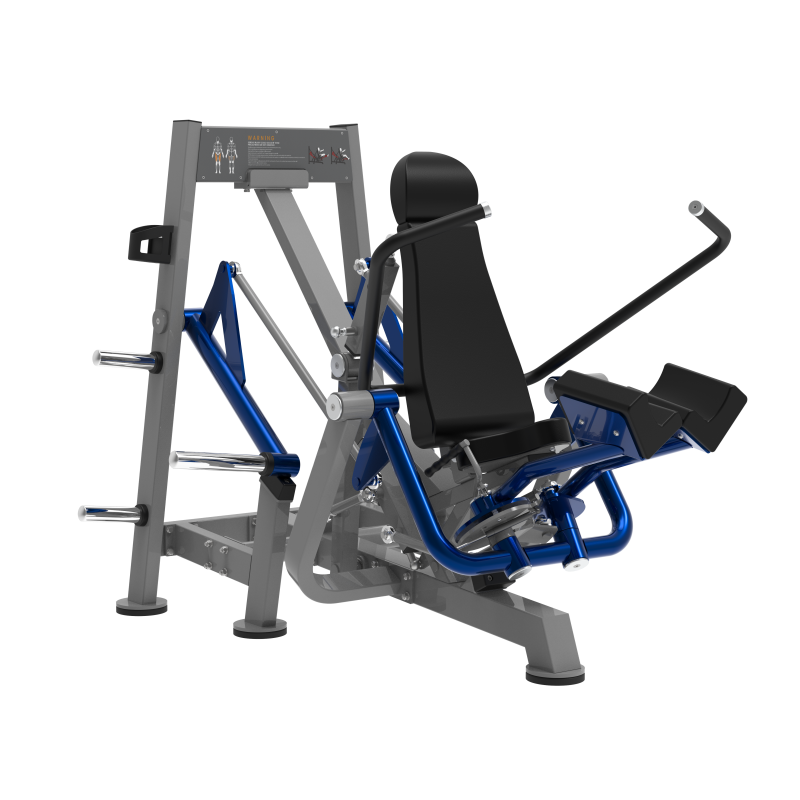
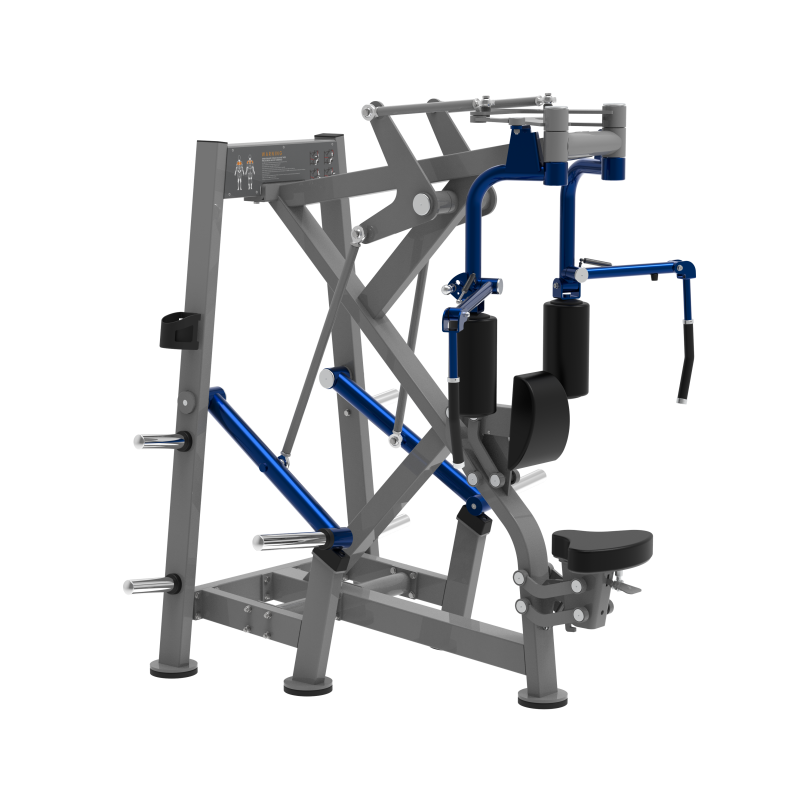
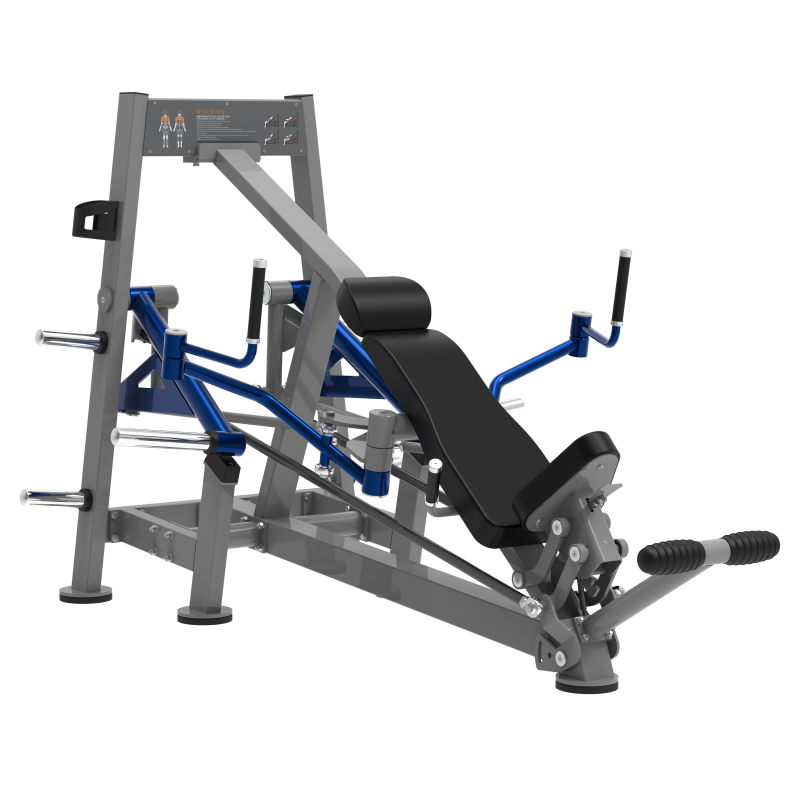
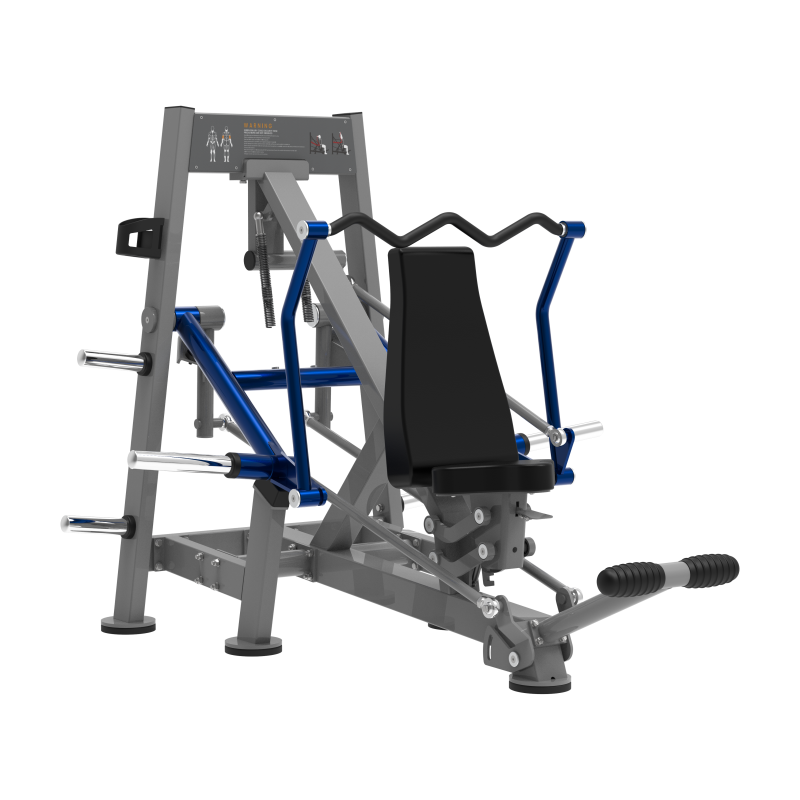
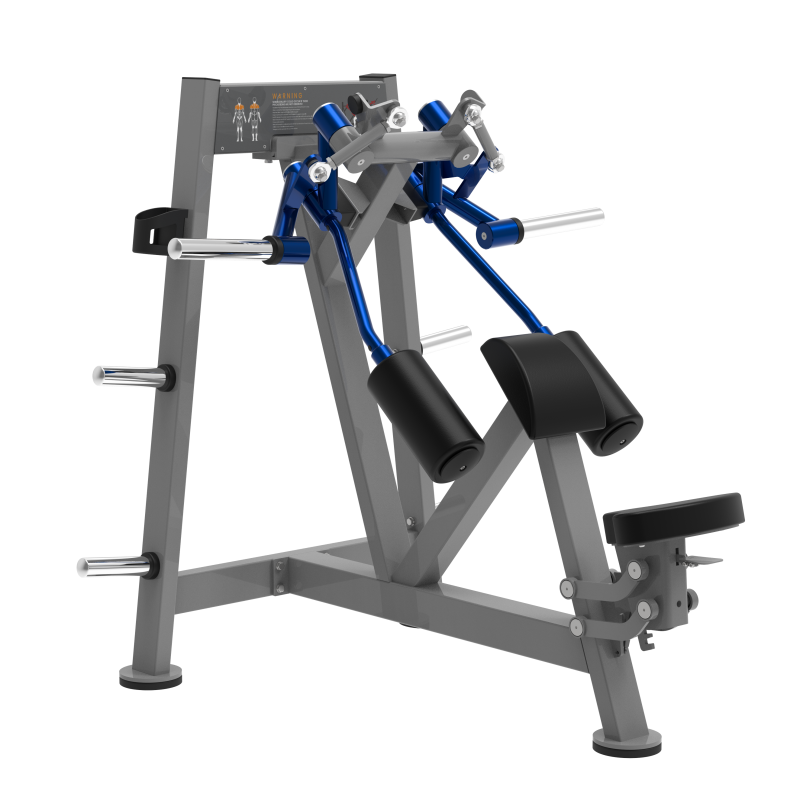
The primary engineering distinction of the SPL69 3D abduction trainer lies in its dual-axis pivot arms. Instead of rotating on a single vertical post, the linkages sweep outward along an inclined coordinate path. This three-dimensional path follows the anatomical line of action of the piriformis, gluteus medius, and upper gluteus maximus fibers.
In standard commercial gyms, members often stand on the footplates or lean awkwardly forward over the back pad to simulate this exact movement on traditional selectorized pieces. That improvised use accelerates uneven wear on linear guide rods and bushing housings. Designing the motion arc directly into the frame eliminates member improvisation, centering the force path through the chassis and protecting mechanical linkages from asymmetric sheer stress.
Key Manufacturing and Specification Benchmarks
Procuring commercial-grade lower-body machinery requires a close look at raw materials, joint architecture, and finish quality. Factories situated within specialized manufacturing clusters—such as the hardware and tooling corridor in Ningjin, Shandong, where Shandong Minolta Fitness Equipment Co., Ltd. operates its 120,000-square-meter facility—rely on consolidated supply chains for structural steel, precision laser cutting, and robotic welding. When sourcing from established manufacturers across the MND-AN, MND-FM, or MND-FS strength series, procurement managers should benchmark incoming specifications against several key physical criteria:
- Chassis Tubing and Gauge: Look for main structural tubing measuring no less than 50 x 100 mm with a 3 mm (11-gauge) wall thickness. Lighter 14-gauge tubing may suffice for light institutional use, but heavy commercial environments will exhibit frame flex at the pivot mounting plates during peak eccentric loading.
- Bearing Assemblies: Dual-axis motion requires sealed industrial ball bearings or heavy-duty pillow block bearings rather than simple bronze bushings. Bushings operating under combined radial and thrust loads tend to develop mechanical play within twelve to eighteen months of high-volume use.
- Upholstery Resilience: The thigh bolsters and lumbar pads experience high shear forces. Ensure the specification calls for high-density reconstituted foam wrapped in tear-resistant, double-stitched commercial vinyl. Soft, open-cell foam degrades rapidly, causing the user's knees or thighs to contact the inner backplate.
- Counterbalance and Cam Design: An effective professional hip abductor machine utilizes a machined eccentric cam rather than a circular pulley. Glute activation curves drop off at peak abduction; a matched cam ensures resistance remains uniform throughout the movement instead of spiking sharply at the outward limit.
Comparing Movement Approaches for Commercial Gym Layouts
Facility planners must determine how an advanced unit fits alongside or replaces legacy equipment. The table below outlines how multi-angle abduction designs compare with traditional flat seated units and standing multi-hip stations.
| Feature / Parameter | Traditional Seated Abductor | SPL69 3D Abduction Trainer | Standing Multi-Hip Unit |
|---|---|---|---|
| Movement Plane | Single transverse (2D) | Multi-planar angled sweep (3D) | Single plane per setup (adjustable) |
| Glute Isolation Quality | Moderate; hip flexor involvement | High; aligned with fiber orientation | Moderate; requires heavy core stabilization |
| Floor Footprint | Compact (~1.4 - 1.7 m²) | Moderate (~1.8 - 2.2 m²) | Narrow footprint, high vertical profile |
| Pivot Wear Rate | Low; radial load only | Moderate; requires periodic bearing checks | Low to moderate depending on arm length |
Floor Layout, Cable Routing, and Daily Maintenance
Because the SPL69 3D abduction trainer introduces a wider outward arc, floor placement requires broader lateral clearance than a legacy box unit. Sourcing teams should account for at least 400 mm of peripheral clearance on either side of the footplates at maximum extension to prevent collisions with neighboring selectorized frames or dumbbell walkways.
Cable routing on compound-angle units also requires regular maintenance attention. While standard flat units use a single drop-down cable or direct belt linkage, multi-axis motion frequently routes high-tensile aircraft cable (typically 5.8 mm coated steel rope) through swiveling pulleys. Technicians should inspect these pulleys during standard monthly maintenance schedules. Pay close attention to cable tension near the terminator bolt; any fraying of the nylon sheath indicates that the pulley alignment has drifted out of parallel with the primary swing arm.
Lubrication of solid guide rods is straightforward: avoid petroleum-based heavy greases that attract gym dust, sweat, and lint. A dry PTFE or pure silicone spray keeps selector plates traveling cleanly without binding, particularly on machines subjected to all-day use in commercial strength clubs.
Sourcing Cautions for Overseas Buyers
When purchasing equipment for cross-border export across Europe, the Middle East, or South America, minor spec discrepancies can turn into expensive field repairs. Always request detailed drawings of the swing arm pivot hubs and confirm the specific grade of fasteners used. Grade 8.8 bolts should be the standard minimum for all frame load points; lower-grade hardware can stretch under cyclic lateral fatigue.
Packaging specifications must also be negotiated before shipment. Complex linkage arms on a professional hip abductor machine are susceptible to transport damage if packed loose in cartons. Insist on iron frame palletizing or reinforced plywood crates with custom foam blocks to secure the cantilevered arms and weight stack tower against lateral impacts during sea transit.
Frequently Asked Questions
Can users adjust the range of motion for varying flexibility levels?
Yes. Commercial units are equipped with a multi-position index plate at the central cam. Users pull a pop-pin to narrow or widen the starting spread, accommodating tight adductors or joint mobility restrictions safely without forcing hip hyperabduction at the start of the set.
Is the machine suited for general membership or strictly athletic training?
The angled seat angle and intuitive trajectory make it fully accessible to general gym members. In fact, many recreational lifters find it more comfortable than conventional units because the angled torso position relieves stress on the lower back.
What spare parts should be included in an initial container order?
For large container orders, buyers should include spare selector pins, extra cable assemblies cut to exact length with factory swages, replacement thigh pads, and two sets of pivot arm bearings. Having these wear parts on hand avoids downtime while international shipments are in transit.
Planning Your Facility's Glute Zone Equipment Mix
Upgrading a commercial strength floor requires balancing novelty with practical durability. While classic machines handle standard volume, installing targeted units like the SPL69 3D abduction trainer addresses the clear market demand for functional, glute-specific biomechanics. Review your current floor utilization, assess your member demographics, and speak directly with your manufacturing partners to review technical specifications, welding standards, and freight logistics before committing your capital expenditure budget.