


Specifying Heavy-Duty Strength: What Commercial Facilities Demand from Power Cages
In any free-weight zone, the cage is the focal point of liability, structural demand, and floor throughput. When evaluating options like the SPL62 Olympic power rack for a high-traffic training facility, procurement managers are not just buying formed steel channels; they are buying structural margin against dropped loads, repeated bar collisions, and round-the-clock wear. Choosing the wrong setup risks premature finish failure, unstable footings under asymmetric loads, and safety catches that bind under nominal working weights.
For gym operators, club owners, and institutional fitness directors, selecting an Olympic-style commercial power rack involves balancing floor footprint against functional versatility. A rack must handle heavy squats, bench presses, overhead work, and pull-up variations without flexing or requiring structural retrofits. Understanding how these units are manufactured, how upright specs affect daily longevity, and where budget designs typically fail is critical before signing off on equipment purchase orders.
Core Engineering: Uprights, Steel Thickness, and Frame Geometry
The difference between an institutional-grade rack and an entry-level frame comes down to steel profile, tube gauge, and joinery design. A legitimate commercial power rack typically relies on structural tubing ranging between 50x80 mm to 75x75 mm (or imperial 3x3-inch equivalents) with a minimum wall thickness of 2.5 mm to 3.0 mm (11-gauge steel). Thinner tubing—often 1.5 mm to 2.0 mm found in residential or light-commercial gear—deforms under point loading when heavy barbells land squarely on safety spotter arms.
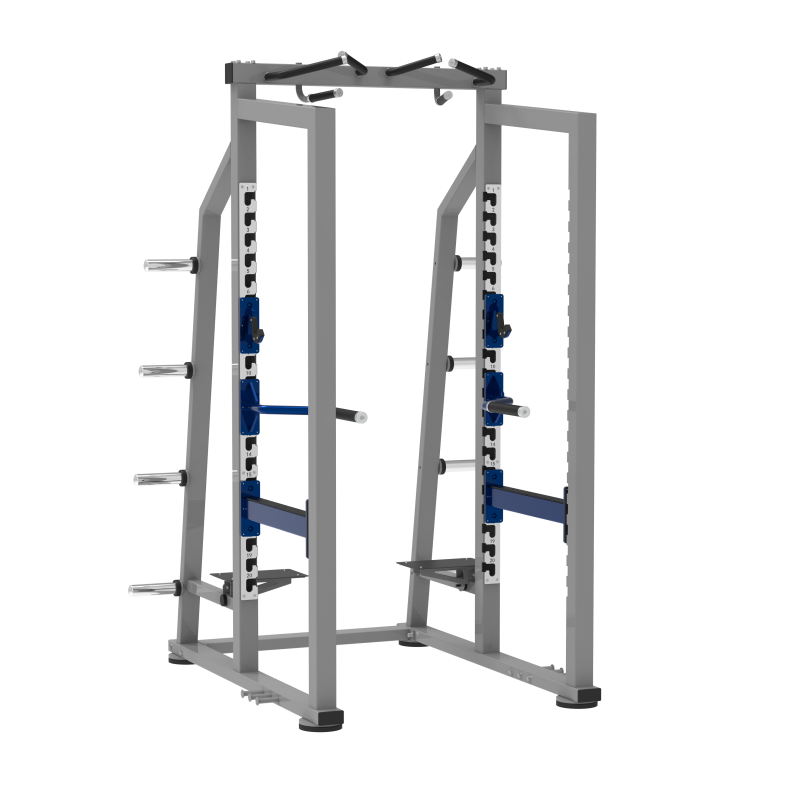
The SPL62 Olympic power rack incorporates heavy-gauge rectangular and square structural steel engineered to manage severe dynamic impacts. At critical load junctures—specifically where the uprights meet the base frame and overhead crossmembers—structural gussets and thick base plates transfer vertical loads directly down to the floor frame rather than concentrating bending moments on hardware fasteners.
Hole design also dictates functionality. Laser-cut holes must maintain clean tolerances across all four faces of the uprights. Rough cutouts or jagged edges quickly peel powder-coat finishes and chew through the protective UHMW plastic linings of J-cups and spotter pins. Spacing needs to be tight enough through the bench press and clean-pull zones (typically 1-inch to 2-inch intervals) to allow lifters of varying anthropometry to unrack and set safety margins safely.
Integration Within Commercial Weight Rooms
Layout efficiency directly affects floor revenue. When laying out functional free-weight zones, floor space per station must account for plate storage, lifter clearance, and coach access. A bare power rack requires external weight trees, which increases perimeter clutter and trip hazards. In contrast, cage designs that integrate rear-mounted weight storage horns consolidate the entire lifting station inside a self-contained footprint.
The layout of the SPL62 Olympic power rack accommodates integrated bumper and cast-iron plate storage along the rear uprights. This serves a secondary engineering purpose: loading several hundred kilograms of plates onto the rear posts lowers the rack's center of gravity, significantly improving dynamic stability even when unbolted during transient trials, though permanent floor anchoring remains the recommended standard for institutional facilities.
Manufacturing Quality: The Ningjin Industrial Cluster
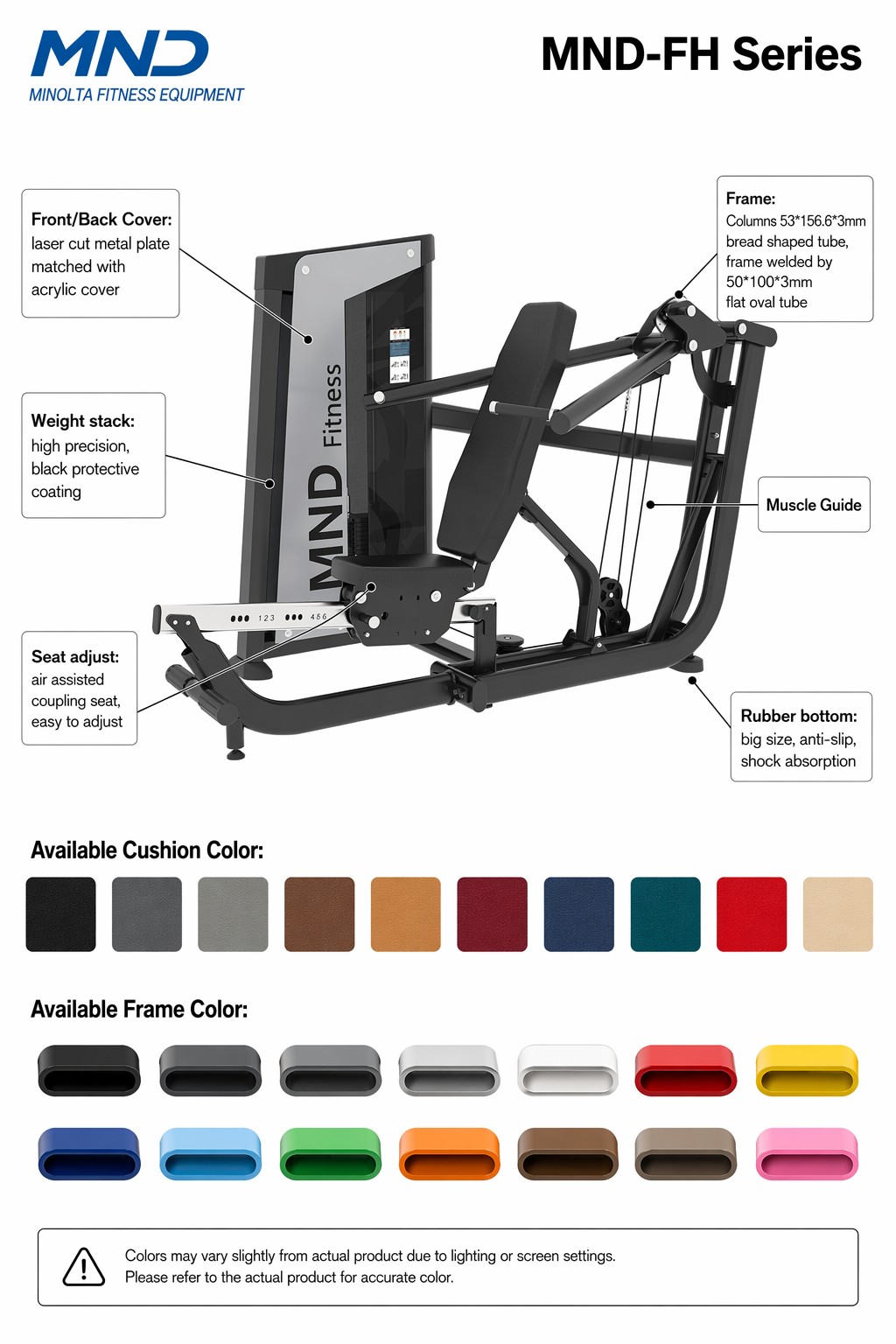
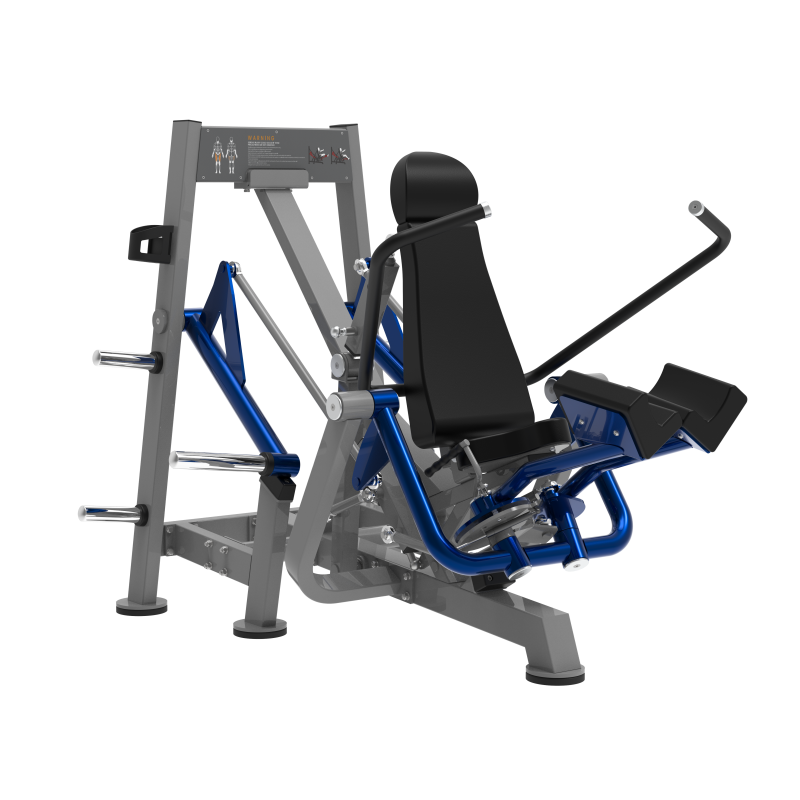
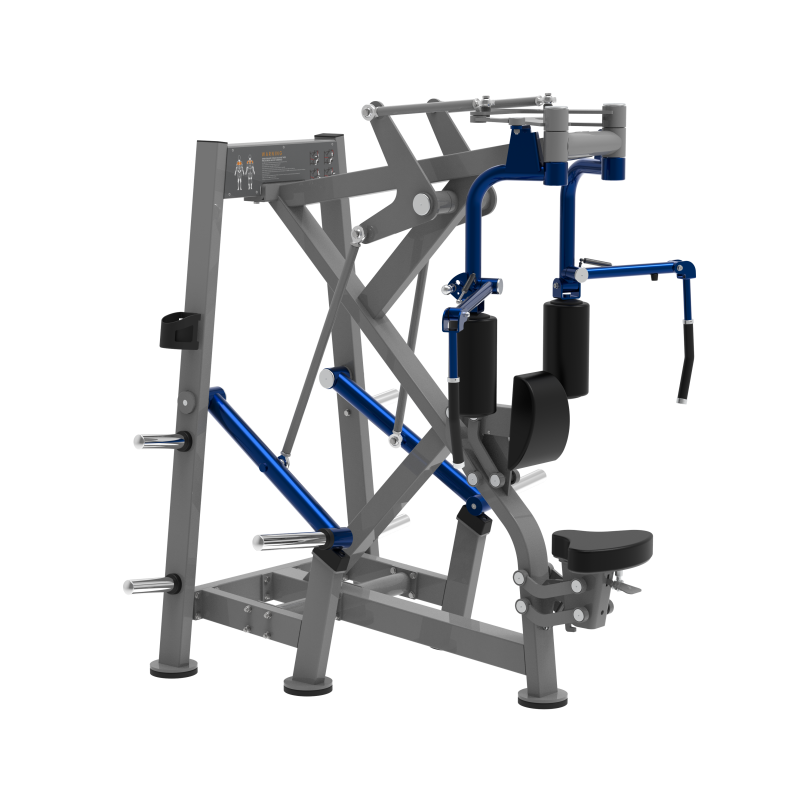
Where and how equipment is fabricated has a direct bearing on long-term ownership costs. Shandong Minolta Fitness Equipment Co., Ltd. (MND FITNESS) operates within the established Ningjin hardware and machinery manufacturing hub in Shandong. Spanning a 120,000-square-meter facility with specialized production workshops and a quality control laboratory, the manufacturer leverages regional raw material supply chains to build comprehensive strength lines—ranging from selectorized stations to heavy platforms and cages.
In facilities producing strength lines like the MND-AN, MND-FM, and related commercial frames, the manufacturing sequence determines durability:
- Precision CNC Laser Profiling: Ensures upright hole alignment is identical across left and right uprights. Misalignment by even two millimeters causes safety arms to rack unevenly, frustrating lifters and binding under load.
- Robotic and Precision MIG Welding: Uniform penetration along structural baseplates eliminates the porosity and stress risers common in manual, rushed welds.
- Multi-Stage Surface Preparation and Electrostatic Coating: Commercial strength equipment faces continuous contact with knurled steel bars and sweat. Proper degreasing, shot-blasting, and dual-layer electrostatic powder coating protect against atmospheric corrosion and surface chip propagation.
With equipment distributed to commercial facilities across more than 100 countries, consistent quality control at the factory level—from tubing inspection to packaging hardware—prevents the on-site installation delays that often plague overseas procurement.
Procurement Pitfalls: What Spec Sheets Often Hide
When comparing vendor quotes, sourcing managers often focus solely on total rack weight and gross footprint dimensions. Doing so overlooks the mechanical details that dictate actual lifespan in a busy gym:
- Unprotected Safety Catchers: Bare metal-on-metal contact between barbells and safety arms ruins expensive Olympic bars and chips paint, leading to raw surface rust within months. Ensure catches feature durable UHMW wear strips.
- Inadequate Base Anchoring Flanges: If a rack lacks wide, pre-drilled foot plates for concrete wedge anchors, it cannot be safely used for heavy band work or high-displacement pull-up attachments.
- Shallow J-Cup Depth: Poorly angled J-cups cause the bar to roll forward during heavy racking, creating a hazardous drop point for tired lifters.
- Tolerances on Pin Attachments: If attachment pins fit too loosely inside upright holes, the cage will rattle, lean, and wear down hole edges prematurely under cyclic loading.
Specification Checklist: Light vs. Full Commercial Power Cages
| Feature | Light Commercial / Club Entry | Full Commercial (e.g., SPL62 Standard) |
|---|---|---|
| Steel Wall Thickness | 1.8 mm – 2.0 mm (13–14 Gauge) | 2.5 mm – 3.0 mm (11 Gauge or heavier) |
| Structural Upright Size | 50 x 50 mm or 60 x 60 mm | 50 x 80 mm up to 75 x 75 mm |
| Bar Catch Liners | Thin rubber pads or bare steel | High-density UHMW composite inserts |
| Plate Storage | External or optional bolt-on | Integrated multi-peg frame design |
| Static Weight Capacity | 250 kg – 350 kg | 500 kg+ rated working capacity |
Frequently Asked Questions
Does the SPL62 Olympic power rack require permanent floor bolting?
While the integrated base frame and plate storage pins provide substantial counterweight stability, any commercial power rack should ideally be secured to a sound concrete slab using sleeve anchors or heavy-duty concrete screws. This eliminates any possibility of frame walking during heavy dynamic lifts or resistance band work.
Can standard Olympic accessories fit this frame?
Compatibility depends on the upright dimensions and pinhole diameter. The SPL62 uses standardized commercial sizing, allowing straightforward integration of compatible dip bars, landmine pivots, and resistance band pegs, provided pin diameters match the frame's laser-cut perforations.
What maintenance is required for commercial strength cages?
Power racks require relatively low maintenance compared to pin-selected weight machines or cardio equipment. However, high-volume gyms should mandate weekly checks on crossmember hardware torque, verify that UHMW liners on J-cups are not split, and inspect base floor anchors for loosening caused by building vibration.
Final Assessment and Next Steps
Sourcing commercial strength stations requires balancing upfront freight and manufacturing costs against lifecycle reliability. A robust unit like the SPL62 Olympic power rack provides the structural resilience and functional adaptability required for collegiate training rooms, commercial fitness clubs, and boutique strength facilities.
If you are planning a facility buildout or updating an existing strength zone, consult directly with the technical sales team at Shandong Minolta Fitness Equipment Co., Ltd. Review complete structural drawings, confirm upright steel thickness, and discuss containerized freight logistics tailored to your project schedule.