


Engineering the Modern Arm Curl Station: Beyond Basic Preacher Geometry
In high-traffic strength facilities, few pieces of free-weight equipment endure as much localized abuse as a commercial Olympic arm curl bench. Unlike plate-loaded selectorized arm machines that distribute mechanical force across guide rods and cam pulleys, an Olympic arm curl station absorbs direct, shock-loaded barbell drops, repetitive knurling abrasion on rack hooks, and heavy shear stress on angled chest pads. For commercial gym developers and fitness equipment sourcing managers, specifying the right arm curl station is less about aesthetics and more about structural longevity, biomechanical isolation, and low maintenance overhead.
Too often, procurement teams treat arm curl stations as interchangeable secondary benches. The reality on the gym floor quickly proves otherwise. Benches built with undersized tubing or lightweight bar catches wobble under heavy EZ-curl loading, while substandard upholstery splits at the chest apex within six months of opening. Selecting commercial-grade equipment requires a practical understanding of frame tubing gauges, pad core densities, polyurethane wear shields, and ergonomic clearances.
Frame Architecture and Impact Loading
The primary load path of an arm curl station differs sharply from that of a standard flat or incline Olympic bench. Users sit or stand leaning forward, driving downward vector forces through their elbows into the support pad while repeatedly dropping or re-racking an Olympic EZ-curl bar onto lower or upper catches.
Industrial structural requirements for this category center on tube geometry and wall thickness:
- Steel Tubing Profile: High-traffic commercial lines typically utilize heavy-gauge structural steel—commonly 50 x 100 mm or 60 x 120 mm rectangular or flat-oval tubing with a wall thickness between 2.5 mm and 3.0 mm. Round tubing can look clean, but flat-oval and rectangular profiles offer superior torsional resistance against side-to-side racking leverage.
- Base Stability and Footprint: A broad, triangular or H-shaped base prevents tip-risk when a lifter dumps a heavily loaded bar onto the forward horns. Integrated rubber foot caps are essential not just for protecting epoxy floors, but for damping vibration that loosens frame fasteners over time.
- Welding Standards: Continuous robotic welds along high-stress cross-members prevent the microscopic fatigue cracking that frequently develops on hand-tacked budget frames.
Pad Ergonomics, Angle, and High-Density Cushioning
The biomechanics of a dedicated arm curl bench depend heavily on the angle and firmness of the upper-arm support pad. A poorly angled pad either strains the anterior deltoid and bicep tendon at full extension or permits excessive torso rocking, defeating the purpose of bicep isolation.
Most commercial standards fix the pad angle between 35 and 45 degrees. However, ergonomics fail completely if the foam structure breaks down under daily compression:
- Foam Composition: Standard recycled bonded foam deteriorates rapidly when subjected to concentrated elbow pressure. Commercial benches require high-density, one-piece molded polyurethane foam (typically 70 to 90 kg/m³ density). Molded foam retains its rebound elasticity, ensuring users do not feel the underlying plywood baseboard during heavy sets.
- Upholstery Skin: Marine-grade or commercial PVC/PU synthetic leather with anti-microbial and sweat-resistant coatings is non-negotiable. Critical attention should be paid to seam placement: top-edge stitching creates a localized trough where sweat pools, causing vinyl hardening and premature seam splitting. Beveled, seamless pad wraps or underside-stitched edges provide vastly superior lifespans.
- Seat Adjustment Mechanisms: Height-adjustable seats should employ smooth-glide pop-pin mechanisms backed by chrome or stainless-steel sleeve inserts. Painted adjustment posts will chip within weeks, leading to surface rust and sticky pin action.
Bar Catch Design: Polyurethane Liners vs. Bare Metal
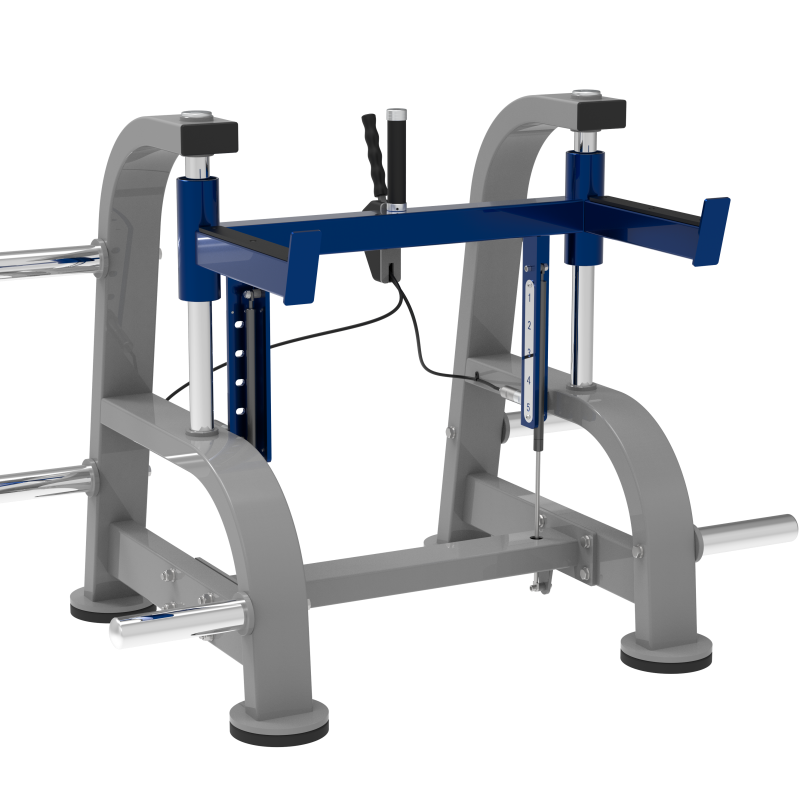
One of the clearest differentiators between institutional strength equipment and light-duty alternatives is how the bench handles barbell contact. Whether you are reviewing a standalone Olympic curl station or a multi-tier unit like the SPL65 Olympic arm curl rack, the rack catch assembly dictates how noisy the floor is and how long the bars last.
Aggressive Olympic bar knurling acts as a file against bare steel catches. Within months, paint chips away, raw metal gouges the bar knurl, and rust forms across both contact surfaces. A well-engineered Olympic arm curl bench utilizes replaceable, injection-molded high-density polyethylene (HDPE) or thermoplastic polyurethane (TPU) wear guards. These liners absorb bar impact shock, eliminate metal-on-metal clatter in busy rooms, and preserve the knurling of specialized curl bars.
Furthermore, sourcing managers should verify catch tiering. Having dual-level rest hooks—an upper tier for unracking without overstretching the lower back and a lower safety catch for failed reps—is critical for user safety, particularly when lifters train to failure without a spotter.
Specification Matrix for Sourcing Managers
When comparing production submittals from commercial fitness equipment manufacturers, use this quick reference matrix to verify baseline industrial requirements:
| Component | Entry-Level / Light Commercial | Heavy Commercial Grade |
|---|---|---|
| Mainframe Steel | 1.5 mm – 2.0 mm wall thickness | 2.5 mm – 3.0 mm (Q235 structural steel or equivalent) |
| Arm Pad Core | Recycled bonded foam / raw plywood backing | High-density injection molded PU foam, contoured |
| Bar Rest Protection | Bare painted steel or thin rubber strip | Heavy-duty bolted TPU / HDPE impact wear guards |
| Adjustment Post | Painted steel with simple screw pin | Chrome-plated or stainless steel with quick-lock pull pin |
| Coating Process | Single-pass powder spray | Multi-stage shot-blasting, anti-corrosion primer + dual electrostatic powder coat |
Manufacturing Quality: The Shandong Production Ecosystem
Understanding where and how strength equipment is built provides vital context during vendor selection. Shandong Province—particularly Ningjin County—has matured into China's central manufacturing hub for commercial fitness hardware. The concentration of laser tube-cutting facilities, robotic bending centers, and surface-finishing plants allows established manufacturers to balance tight structural tolerances with competitive export pricing.
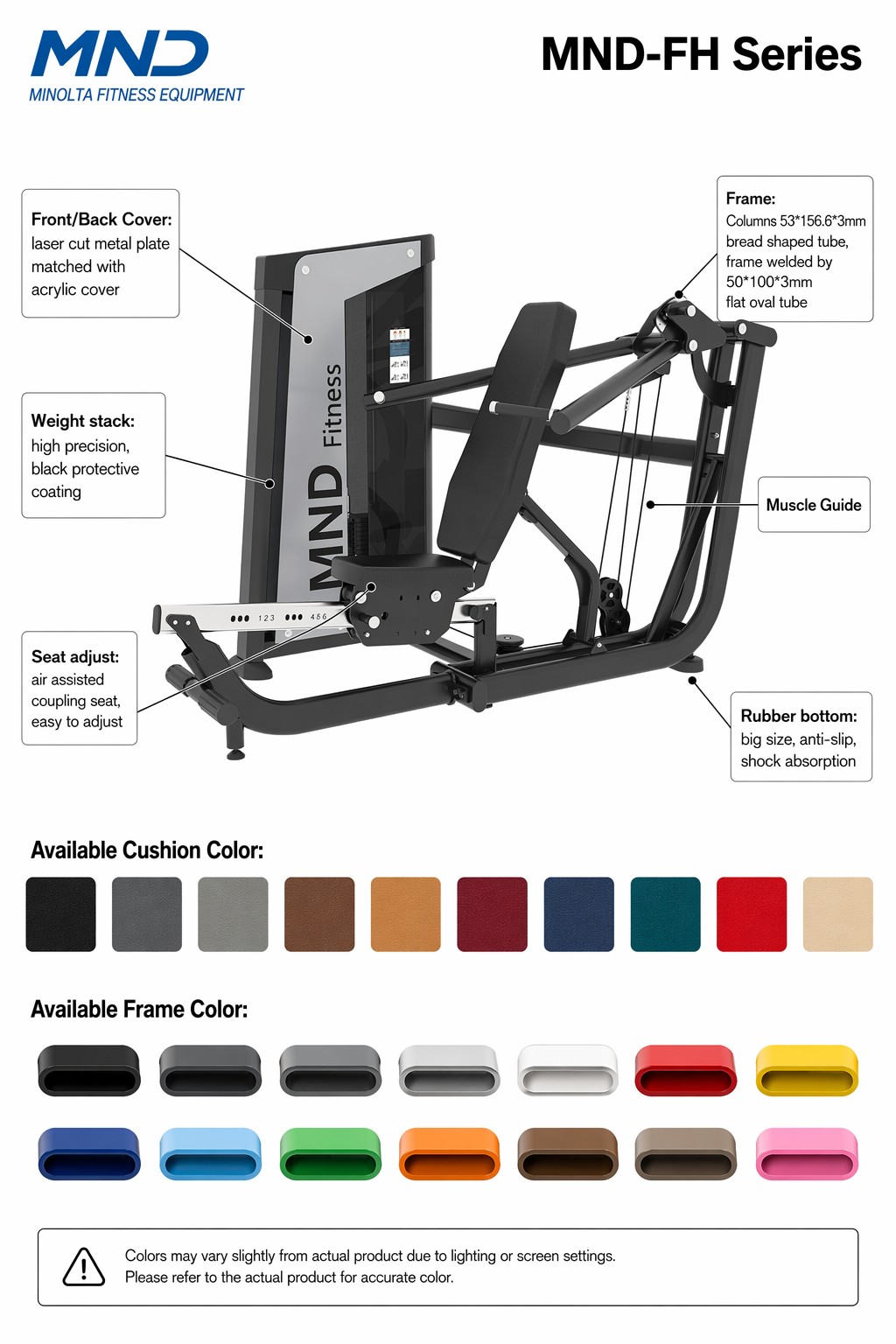
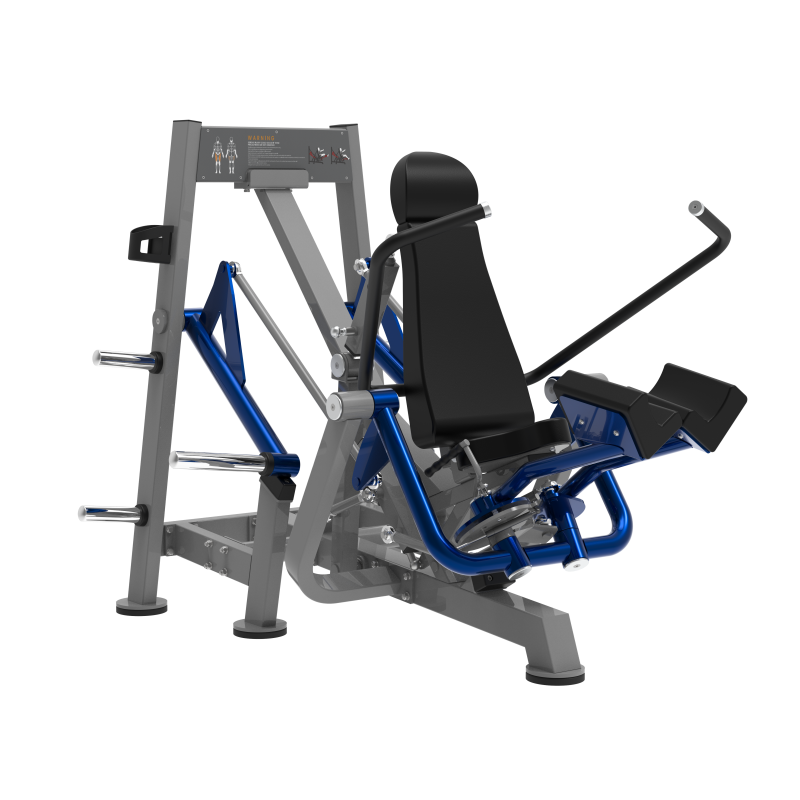
Operating within this hardware cluster, Shandong Minolta Fitness Equipment Co., Ltd. (operating globally under the MND FITNESS brand) operates a dedicated 120,000-square-meter manufacturing campus. With more than a decade of experience producing both cardio systems and extensive strength lines (spanning the MND-AN, MND-FM, MND-FH, and MND-FB series), Minolta maintains specialized production workshops and an in-house quality control testing lab. For facility operators looking at comprehensive strength fit-outs, pairing plate-loaded stations with dedicated free-weight units like the SPL65 Olympic arm curl rack from established industrial bases ensures frame finish consistency across the entire weight room floor.
Common Procurement Pitfalls to Avoid
When purchasing commercial arm curl benches in volume, sourcing teams should look out for recurring manufacturing compromises:
Overlooking pad apex clearance: If the upper edge of the arm support pad terminates in a sharp 90-degree corner rather than a contoured radius, it digs into the user's armpits, causing discomfort and limiting tricep seating. Always demand side-profile technical drawings showing an ergonomic contour at the chest interface.
Relying on single-bolt pivot seats: Low-cost adjustable seats often utilize a single clamp bolt through the vertical tube, resulting in lateral wobble as soon as the user sits down. Heavy commercial benches should feature zero-slop guide sleeves or dual-tolerance locking mechanisms that eliminate seat play under offset loading.
Neglecting surface pre-treatment: In strength equipment, sweat is the primary driver of frame degradation. If the underlying carbon steel is not properly acid-washed and shot-blasted before powder application, sweat migrating down the seat stem will cause the powder coat to bubble and flake away at the welds within twelve to eighteen months.
Frequently Asked Questions
Can an Olympic arm curl bench accommodate both straight and EZ-curl Olympic bars?
Yes, provided the spacing between the rack hooks aligns with standard commercial Olympic bar sleeve offsets. Standard commercial catches are typically spaced between 900 mm and 1000 mm center-to-center, which allows standard 1.2 m Olympic curl bars and standard 2.2 m Olympic bars to rack safely without sleeve interference.
How should commercial gym operators maintain upholstery on curl stations?
Daily cleaning should use non-alcoholic, pH-neutral sanitizing wipes or diluted mild soap solutions. Alcohol-based or solvent cleaners strip the plasticizers from commercial vinyl, accelerating hardening, micro-cracking, and pad splitting around high-friction elbow zones.
What is the typical load capacity required for a commercial-grade arm curl station?
A true commercial bench should support a combined user and barbell weight rating of at least 300 kg (660 lbs). This accommodates a 120 kg athlete handling 100+ kg barbell sets with substantial dynamic impact margins during aggressive re-racking.
Evaluating Your Next Equipment Order
Investing in a dedicated Olympic arm curl bench comes down to evaluating whether the product has been built for commercial durability or light boutique utility. Focus on steel gauge verification, ensure bar catches are fully shielded with replaceable polymers, and inspect upholstery foam specifications before signing off on purchase orders. For custom gym layouts, OEM/ODM strength configurations, or technical specifications on commercial arm curl stations, direct factory inquiries to Minolta's technical sales team to review frame drawings and bulk logistics options.