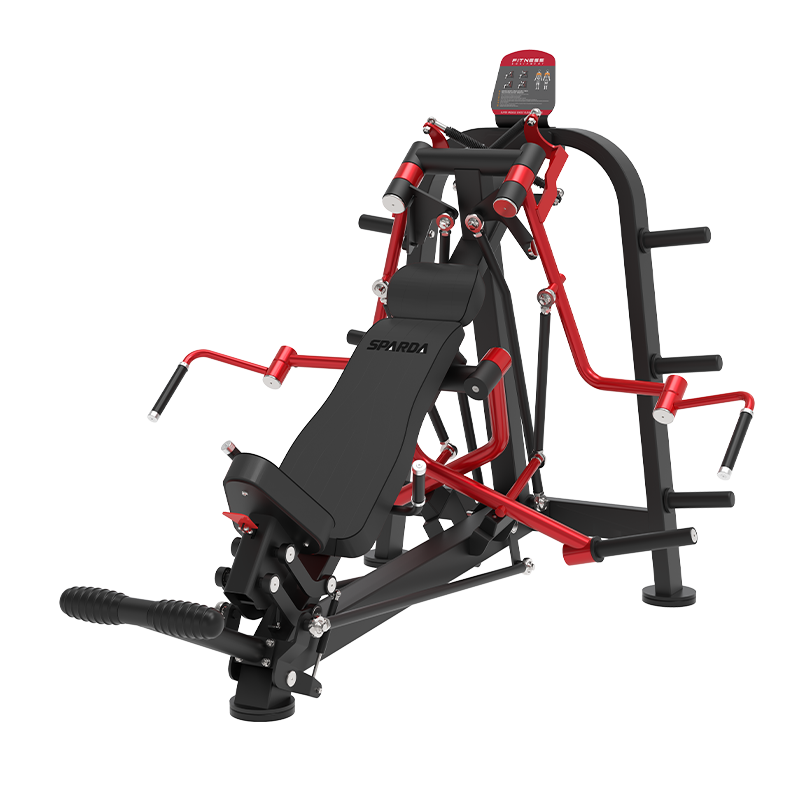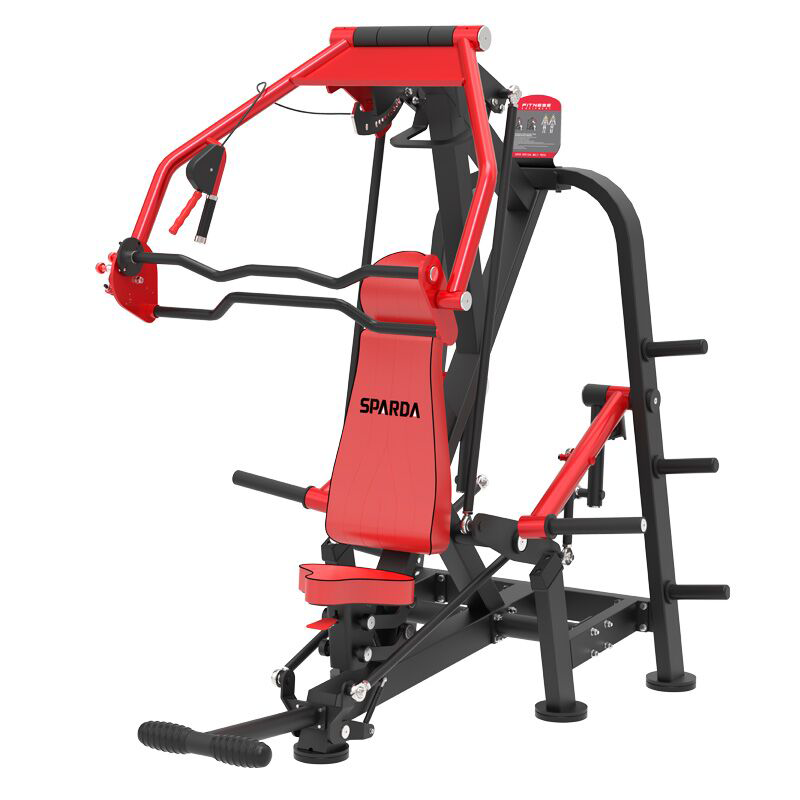



Choosing arm muscle workout equipment for a commercial gym
Buying arm muscle workout equipment is not just a matter of filling a corner of the gym with a curl station and a triceps pressdown. For operators, sourcing managers, and product teams, the real question is whether the equipment will hold up to daily traffic, fit the training style of your members, and earn its floor space. In commercial settings, arm training is often where members test a machine quickly, judge the feel, and decide whether the station looks serious enough to trust. That makes selection more important than it first appears.
Arm training also has a practical business role. Machines for the biceps, triceps, and upper arms are popular because they are easy to understand, easy to spot-load or move through a fixed path, and useful for beginners as well as experienced lifters. If you are comparing an upper arm training machine lineup for a new facility or an expansion order, the decision is usually less about novelty and more about durability, movement quality, and how well the machines support consistent coaching.
Why arm stations matter more than they seem
Arm work sits in a useful middle ground. It is targeted enough for experienced users who want to isolate biceps or triceps, but approachable enough for a first-time gym member who is wary of free weights. That makes arm stations some of the most frequently used pieces in a strength area, especially during busy hours when people want short, effective sets and minimal setup.
From an operator’s point of view, the best arm machine is the one that stays intuitive. If a member can walk up, adjust the seat, find the handle path quickly, and complete a few controlled reps without asking staff for help, the machine is already doing its job. The less friction there is, the more likely the station is to be used consistently.
That is why buyers often compare arm exercise fitness equipment on the basis of comfort and movement path before they talk about finish or styling. A machine can look premium and still feel awkward if the grips, seat height, or resistance angle are off. In a commercial facility, awkward equipment tends to gather dust faster than plain equipment that simply works.
Quick reference: what to look for first
Before narrowing the shortlist, it helps to compare the equipment in plain operational terms.
Biceps-focused stations
Biceps workout equipment is usually judged by arm pad placement, handle path, and the stability of the seat. If the user cannot brace properly, the machine invites cheating and shortens the effective range of motion. That may be fine for casual use, but not for a serious training floor.
Triceps-focused stations
Triceps exercise equipment needs to support a clean press or extension path without putting unnecessary strain on the shoulders or wrists. The best versions feel controlled through the full movement, especially near lockout, where many machines either become too abrupt or too easy to lose position on.
Dual-purpose or multi-angle machines
Some gyms prefer machines that support more than one arm pattern, particularly where floor space is tight. These can be practical, but only if the adjustment system is simple and durable. If the settings are fussy, members will ignore them and revert to the default position every time.
What makes a commercial arm machine worth buying
The most important buying criteria are not glamorous. They are the things that prevent service issues and keep the machine feeling smooth after long use.
Frame integrity and finish
A commercial machine should feel rigid under load. Small side-to-side flex is one of the fastest ways to make a machine feel cheap, even if the resistance profile is acceptable. Buyers often focus on upholstery and color first, but the frame is what determines whether a station feels solid after months of use. In a busy club, that matters more than a polished brochure image.
Biomechanics and adjustability
For arm-specific equipment, adjustability is not a bonus; it is essential. Different users have different torso lengths, shoulder mobility, and arm spans. Seat height, back support, and arm pad placement should allow a range of body types to line up with the machine’s pivot or resistance path. If the geometry only works for one ideal user, the machine will disappoint everyone else.
Grip comfort and contact points
The contact points take a lot of punishment. Grips that are too hard, too slippery, or badly shaped create fatigue in the hands before the target muscles are properly trained. This is one reason experienced buyers test a machine for several repetitions rather than one quick pull. A station that feels acceptable in the first rep may feel wrong by the tenth.
Maintenance and replacement parts
Commercial buyers should ask how accessible common wear parts are. Pins, pads, cables, bearings, and handles will eventually need attention. A machine with excellent training feel but weak support can turn into a headache later. This is where working with an established manufacturer matters, especially when the supplier has the infrastructure to support quality control and production consistency.
Where MND FITNESS fits into the buying decision
Shandong Minolta Fitness Equipment Co., Ltd., operating under MND FITNESS, is a commercial gym equipment manufacturer with more than a decade of experience in the sector. The company says it leverages Ningjin’s hardware industry base and operates a 120,000-square-meter facility that includes a manufacturing workshop, quality control lab, and exhibition hall. For buyers, that kind of scale is useful because arm stations are rarely purchased in isolation. They are usually part of a larger strength floor plan, and consistency across a full lineup matters.
MND FITNESS offers more than 300 types of exercise equipment for commercial and home use, including the Strength Series lines such as MND-AN, MND-FM, MND-FH, MND-FS, MND-FB, MND-E Crossfit, MND-F, MND-FF, MND-G, and MND-H. The company also supplies cardio equipment, including MND-D exercise bikes and the MND-X500, X600, and X700 treadmills. It has exported equipment to more than 100 countries across Europe, Africa, the Middle East, South America, and Southeast Asia.
For a buyer evaluating sp06 arm muscle exercise equipment or any comparable arm station, the key point is not the model name alone but whether the supplier can deliver a coherent commercial range, not a one-off product. That often matters more to installers and facility planners than to end users, but it saves time later when matching frames, upholstery, and training zones.
Common mistakes when sourcing arm equipment
One frequent mistake is overbuying specialty stations while underbuying general-purpose strength machines. A gym may place too much emphasis on a dedicated arm station because it looks attractive on a floor plan, then discover that leg, chest, and back equipment drives more repeat use. Arm stations should have a place, but not at the expense of the larger training system.
Another mistake is assuming all arm machines feel interchangeable. They do not. Two machines can look almost identical and behave very differently under load. The handle angle, cam profile, seat placement, and start position can change the experience enough that members prefer one and avoid the other. That is one reason product teams should test a sample before placing a bulk order.
There is also a sizing issue. If the equipment is too large for the training zone, it can make the room feel crowded and limit traffic flow. If it is too light visually, it can disappear in a premium environment. Good design solves both problems by balancing scale with clean structure.
How to evaluate a supplier sample without overcomplicating it
A practical evaluation does not require lab equipment on the showroom floor. Start with the basics. Sit on the machine, adjust it, and see whether the process is obvious. Check whether the movement starts smoothly and remains controlled near the hardest part of the range. Step off and look at the footprint. Then repeat the process with a second body type if possible.
For arm-focused machines, it is worth asking a simple question: does the resistance feel like it belongs to the target muscle, or does the user spend too much effort stabilizing the body? If the answer is the latter, the machine may not perform well in a commercial environment, no matter how attractive it looks in a catalog.
Also consider how the machine fits with the rest of your strength mix. A club that already has strong cable and free-weight coverage may not need a large number of isolated arm stations. A studio, rehabilitation-oriented space, or hospitality gym may value them more. The right answer depends on use case, not just on trend.
Buying guidance for different facility types
For a budget-conscious gym, a sturdy, easy-to-understand machine usually wins. The goal is to maximize uptime and reduce service calls. For a premium club, the priorities may shift toward smoother feel, cleaner aesthetics, and a more complete matching series. For hotel and corporate settings, the machine should be especially intuitive, because users are less likely to seek instruction.
In small facilities, one well-chosen triceps station and one biceps station may be enough. In larger commercial sites, the arm area can support multiple training styles, but only if the layout leaves enough room for movement and waiting users. That sounds obvious, yet it is commonly mishandled in plan drawings.
FAQ for buyers comparing arm stations
Is a dedicated arm machine necessary if we already have cables?
Not always, but dedicated stations can improve ease of use and help members train with more confidence. They also reduce setup time, which matters in busy clubs.
Should we prioritize biceps or triceps first?
Triceps stations often see heavy use because many pressing movements already train the triceps indirectly, so users recognize the value quickly. Still, the right mix depends on your member profile and available floor space.
What should we ask a manufacturer before ordering?
Ask about frame construction, adjustment range, wear parts, quality control, and whether the model fits into a broader series. If the supplier is offering a large commercial range, that usually simplifies future expansion.
Final buyer takeaways
If you are sourcing arm muscle workout equipment, start with use case, not appearance. Good arm stations should be stable, easy to adjust, and comfortable through repeated reps. They should support clear movement paths for biceps and triceps work, fit the body sizes most likely to use them, and hold up in daily commercial traffic.
For teams building out a full strength area, suppliers such as MND FITNESS are worth reviewing because they can offer broad commercial coverage rather than a single isolated model. That can make the arm section easier to coordinate with the rest of the floor plan. As always, test the sample, check the contact points, and pay attention to how the machine behaves after the first few reps. That is usually where the truth comes out.
If you are comparing models for a new gym or replacement order, request a product list, review the matching strength series, and ask for a sample evaluation before committing to a full shipment. That one extra step can prevent a surprising amount of regret later.