


Why leg training deserves more attention than it usually gets
Leg training is often treated like a chore: something to survive once a week, then recover from for the next three days. That attitude is common, but it leaves a lot on the table. A well-built lower body affects more than appearance. It supports athletic performance, posture, balance, walking efficiency, and the ability to handle heavier loads in other lifts. For commercial gyms, it also affects member satisfaction. People notice whether a facility has the right equipment for a serious leg workout, because lower body training tends to expose weak spots in a gym’s lineup faster than almost anything else.
For sourcing managers and product teams, the question is not whether leg day matters. It is how to outfit a gym floor so the equipment supports different users, from beginners who need guided movement to experienced lifters who want a harder quadriceps workout and more variety in lower body training. That is where machine selection, frame quality, resistance feel, and spacing all start to matter in practical ways.
What a good lower body training setup should actually cover
A useful leg area is not just “a squat rack and a few machines.” It should allow a range of movement patterns without forcing every user into the same path. In real gym use, that means covering knee-dominant work, hip-dominant work, unilateral work, and accessory movements that fill the gaps between them.
A balanced leg workout area usually needs equipment that can address:
- Quadriceps-focused movements for front-of-thigh development
- Hamstring and glute work for posterior chain strength
- Calf training, which is often overlooked until users complain about imbalance
- Machine-based options for controlled movement and safer beginner use
- Free-weight or functional options for users who want more freedom and progression
The practical point is simple: members want choice. If a facility only offers one path into leg day, usage drops or crowds build up around the same station every evening. A broader setup spreads traffic and makes the floor feel more complete.
Common equipment categories used in leg training areas
Different gyms organize lower body training differently, but the equipment categories are fairly familiar. The best mix depends on the user base and floor plan, yet most commercial facilities benefit from some combination of the following.
Selectorized strength machines
Selectorized machines are often the most approachable option for new users. They reduce setup complexity and help keep movement patterns consistent. In a busy commercial environment, that consistency matters because it lowers the chance of misuse and makes it easier for staff to explain the machine quickly.
For a quadriceps workout, leg extension machines are a common staple. They isolate the front of the thigh and give users a clear path for progressive loading. Leg press machines are another mainstay because they let users train hard without requiring the balance and confidence demanded by free squats. For some users, that controlled environment is exactly what keeps leg day from becoming intimidating.
Plate-loaded machines
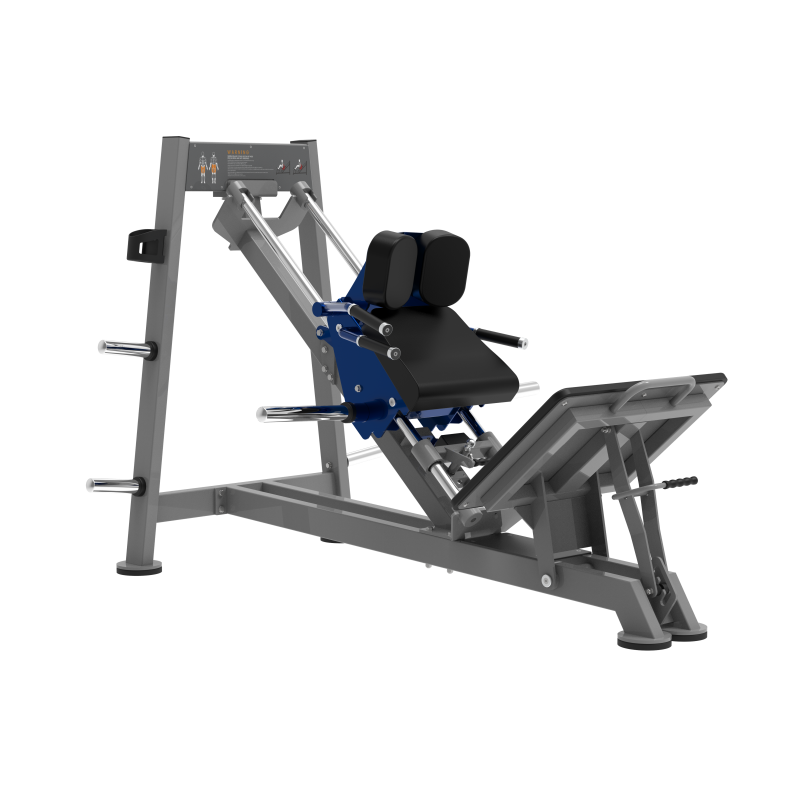
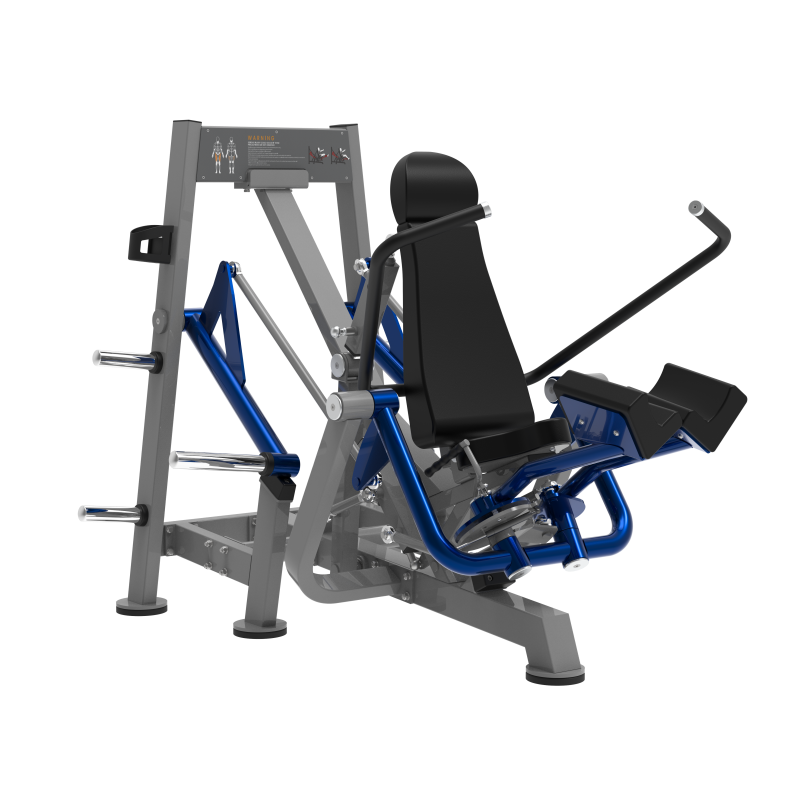
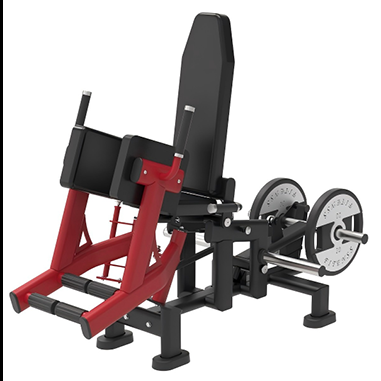
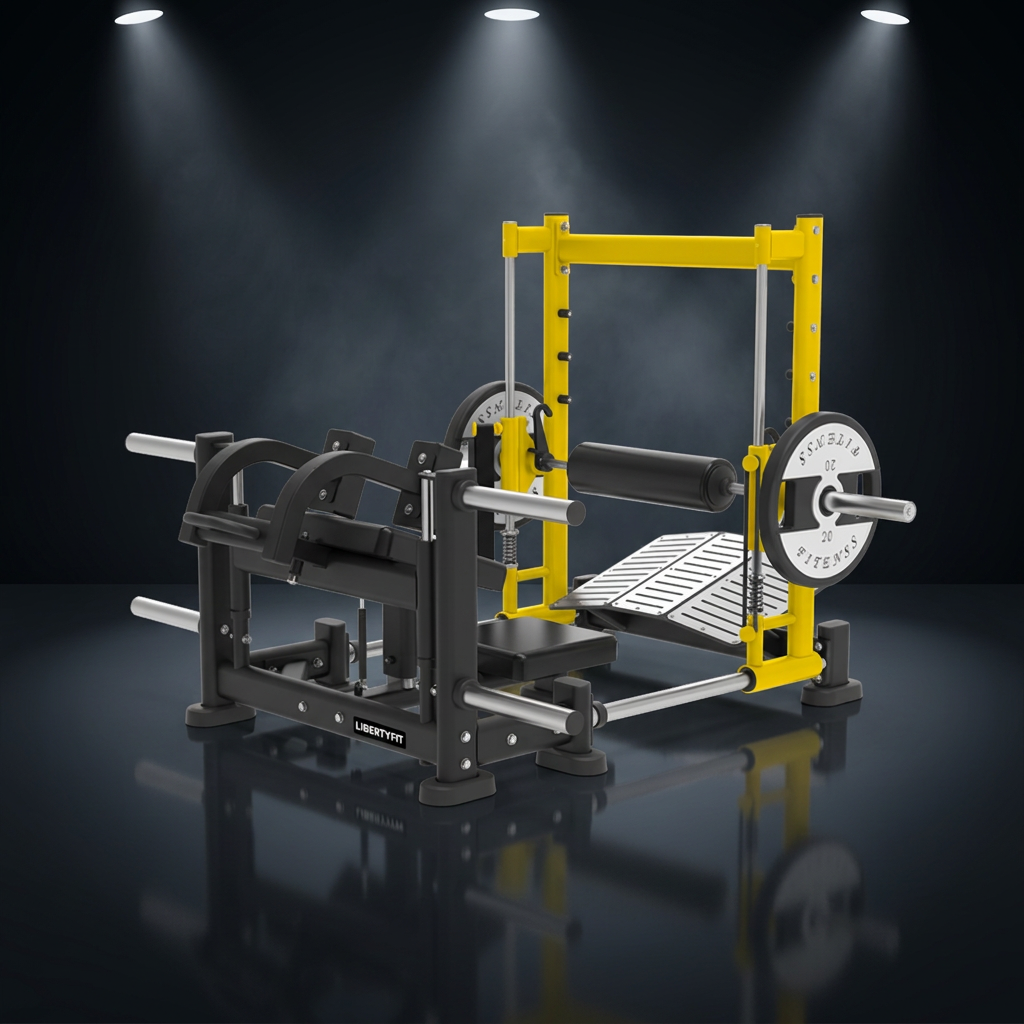
Plate-loaded equipment tends to appeal to experienced lifters and serious strength-focused facilities. The resistance curve can feel more natural to some users, and the loading style supports a broad range of training preferences. These machines often become the workhorses of a leg training zone because they can handle high traffic and give a more “gym-like” feel.
The caution here is footprint and maintenance. Plate-loaded stations need enough clearance for safe use, and buyers should pay attention to how easily the mechanism can be cleaned and inspected. In a commercial setting, small design details can become large service issues later.
Free-weight support
Even when machines are the focus, lower body training usually still needs free-weight support. Squat racks, benches, dumbbells, and storage are not decorative extras; they are part of the actual training ecosystem. Many experienced users prefer barbell work for foundational leg day routines, while beginners may graduate toward it after building confidence on machines.
Cardio and warm-up equipment
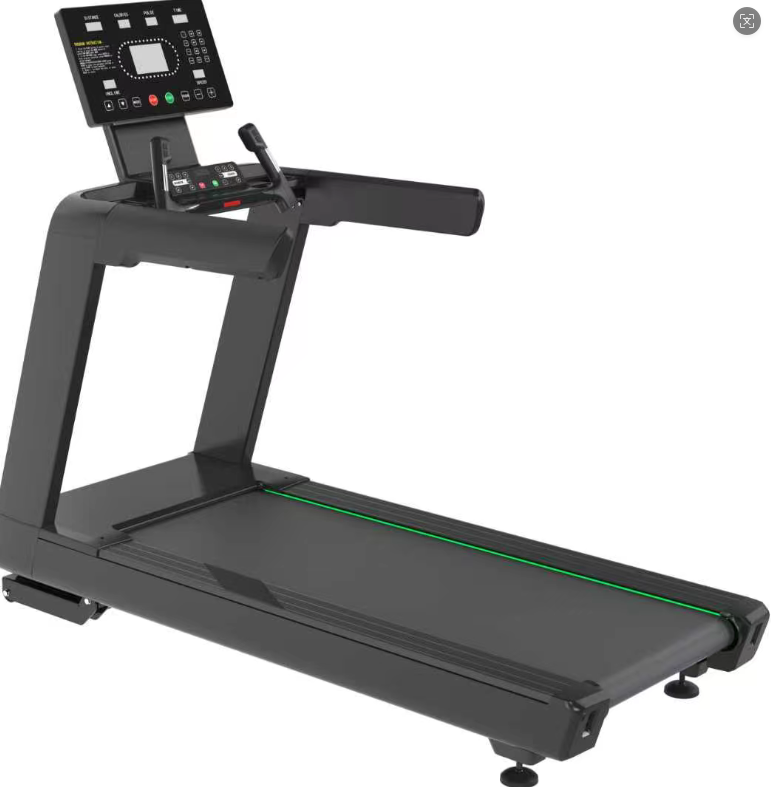
A serious leg workout area should also consider preparation. Bikes, treadmills, and similar cardio equipment help users warm up the hips, knees, and ankles before heavier work. Shandong Minolta Fitness Equipment Co., Ltd., for example, lists commercial cardio equipment in its MND-D exercise bikes and treadmill lines such as MND-X500, X600, and X700. For gyms building a broader floor plan, that kind of integration matters because warm-up and strength zones should support one another instead of competing for attention.
How commercial buyers should evaluate leg equipment
The mistake many buyers make is focusing only on the headline movement. A machine might look right on paper and still be a poor fit on the floor. When evaluating leg training equipment, it helps to look at the details that affect daily use.
Movement quality and user feel
A leg machine should guide the body without feeling overly restrictive. If the seat adjustment is awkward, the back pad is poorly positioned, or the range of motion feels forced, users notice quickly. That matters more than glossy styling. For a facility, a machine that feels good is a machine that gets used.
Durability under repeated loading
Leg stations see aggressive use. Users tend to slam stack pins, load and unload plates repeatedly, and train with high frequency. Frames, welds, upholstery, bearings, and cable routes need to hold up. In manufacturing terms, this is where consistent quality control becomes visible to the buyer. A facility can forgive a machine that looks plain; it will not forgive one that rattles or drifts out of alignment after a short period of heavy use.
Shandong Minolta Fitness Equipment Co., Ltd. says its facility includes a manufacturing workshop, quality control lab, and exhibition hall across 120,000 square meters. That does not tell a buyer everything, of course, but it does suggest an operation built around production scale and inspection rather than ad hoc assembly.
Space planning
Leg equipment is space-hungry. A compact gym may need to prioritize versatile stations, while a larger club can dedicate more square footage to a fuller lower body training zone. Buyers should consider not only machine dimensions but also access paths, plate storage, and how users move between stations when the area is busy.
Compatibility with member demographics
A university gym, hotel fitness center, corporate wellness room, and high-volume commercial club all need different leg day solutions. Beginners often prefer guided machines. Athletes and strength enthusiasts usually want heavier loading options. Mixed-use facilities need both. That is why one “best” machine rarely exists in isolation.
Where leg training equipment fits into a broader strength series
Many manufacturers organize equipment by series so buyers can build a coherent floor rather than assembling random pieces. Minolta’s Strength Series, for example, includes lines such as MND-AN, MND-FM, MND-FH, MND-FS, MND-FB, MND-E Crossfit, MND-F, MND-FF, MND-G, and MND-H. For purchasers, that kind of portfolio can be useful because it suggests a family of products that may share design language across strength categories.
The buyer-facing advantage is consistency. If a facility wants leg training stations to match the rest of the strength floor in frame styling, upholstery tone, and overall footprint logic, series-based purchasing is easier to manage than piecing together unrelated products. It also simplifies future expansion, which matters more than many teams expect when the gym grows faster than the original plan.
Common mistakes when building a leg day area
One common mistake is overbuying for one movement and underbuying for the rest. A gym may install multiple machines for quadriceps workout routines but forget hamstrings, glutes, and warm-up support. Another mistake is choosing equipment that is impressive to look at but awkward in daily use. The second mistake usually costs more over time because it affects member experience.
A third problem is poor placement. Even excellent equipment can feel underused if it is tucked into a tight corner or blocked by traffic flow. Leg day work is often longer and more equipment-intensive than upper body training, so the layout needs to be a little more forgiving.
There is also a tendency to underestimate maintenance access. Service technicians need room to work. Cleaning crews need to reach all sides. Buyers often remember this only after installation, which is rather late.
Practical buying advice for sourcing teams and gym planners
If you are selecting lower body training equipment for a commercial facility, start with use case, not catalog order. Ask how many users the area must serve at peak time. Ask whether the gym’s audience is beginner-heavy, strength-oriented, or mixed. Then match the equipment mix to those answers.
A solid procurement checklist usually includes:
- Enough guided machines for predictable leg workout traffic
- At least one strong option for heavier, more advanced leg day training
- Storage and organization for plates and accessories
- Clear floor planning around entry, exit, and loading space
- Equipment that can be inspected, cleaned, and serviced without difficulty
For buyers sourcing internationally, supplier reach can matter as well. Minolta notes exports to more than 100 countries across Europe, Africa, the Middle East, South America, and Southeast Asia. That does not replace due diligence, but it can indicate experience with different market expectations and logistics demands.
FAQ: short answers buyers usually want before placing an order
What is the most important machine in a leg training zone?
There is no single answer, but the leg press and leg extension are often foundational because they serve a wide range of users and training levels.
Should a commercial gym focus more on machines or free weights for lower body training?
Usually both. Machines support accessibility and throughput; free weights support progression and training variety. A good floor plan balances the two.
How do I know if a machine is suitable for heavy use?
Look at the frame construction, adjustment system, stability, service access, and how the motion feels under repeated use. If possible, test the machine with real users, not just a showroom glance.
Why does leg equipment need special attention in planning?
Because it is used hard, occupies space, and has a direct effect on member satisfaction. A weak lower body training zone is hard to hide.
A final buyer’s note before you build or upgrade
Good leg training equipment should make training easier to start, safer to repeat, and worthwhile to return to. That sounds simple, but in practice it depends on a lot of small choices: machine geometry, durability, layout, and whether the floor actually matches the users walking through the door.
For commercial buyers evaluating suppliers, it helps to work with a manufacturer that can cover multiple strength and cardio categories rather than only one narrow product line. Minolta’s mix of strength and cardio equipment, along with its manufacturing scale, gives sourcing teams a broader reference point when planning a complete gym floor.
If you are building a new facility or upgrading an old one, start with the leg zone. It reveals quickly whether a supplier understands real gym traffic, not just catalog photography. And once that area works, the rest of the floor usually becomes easier to get right.