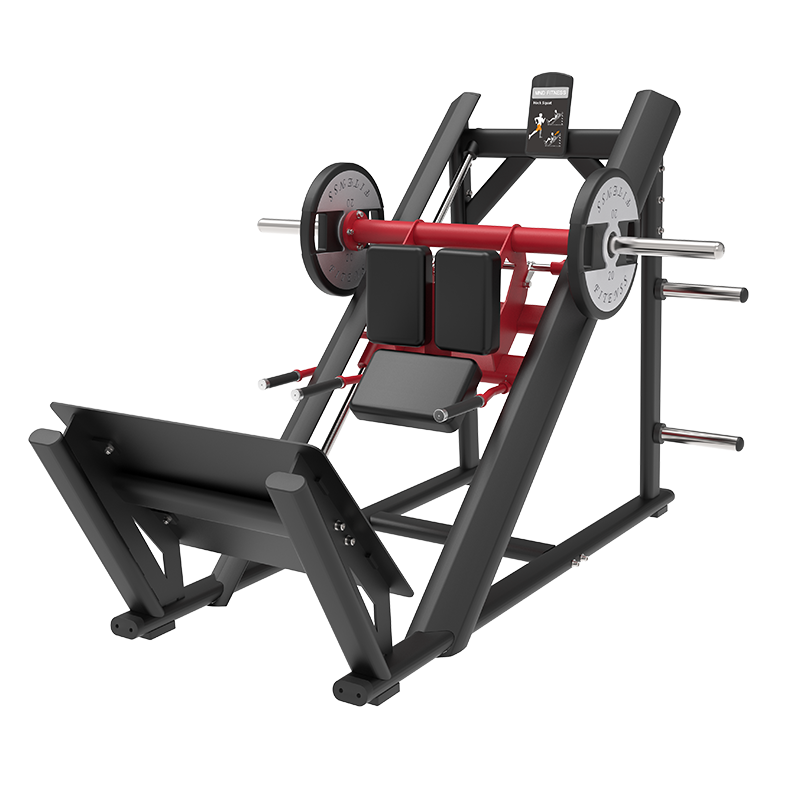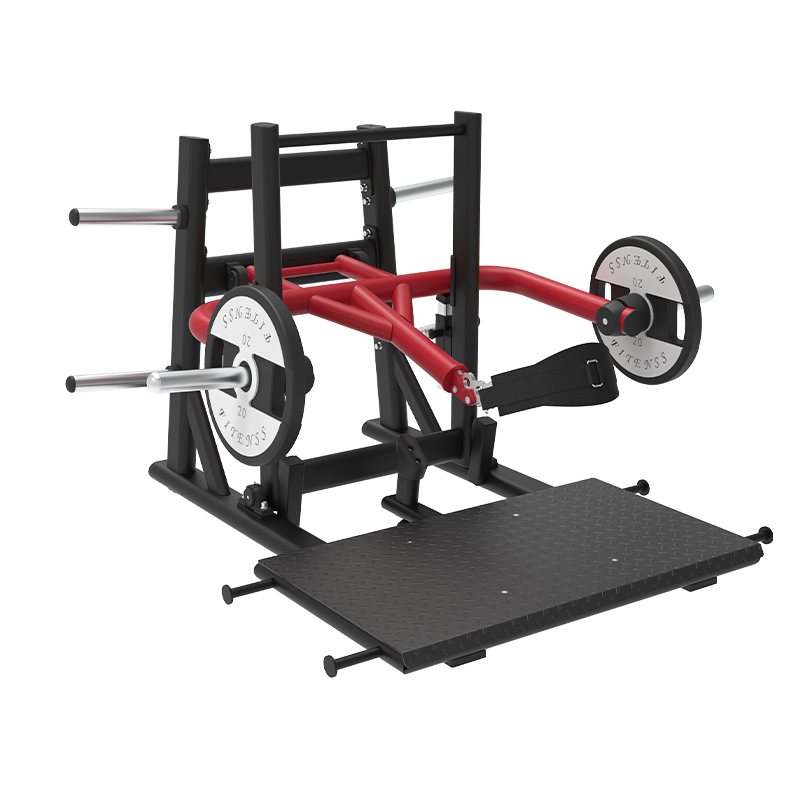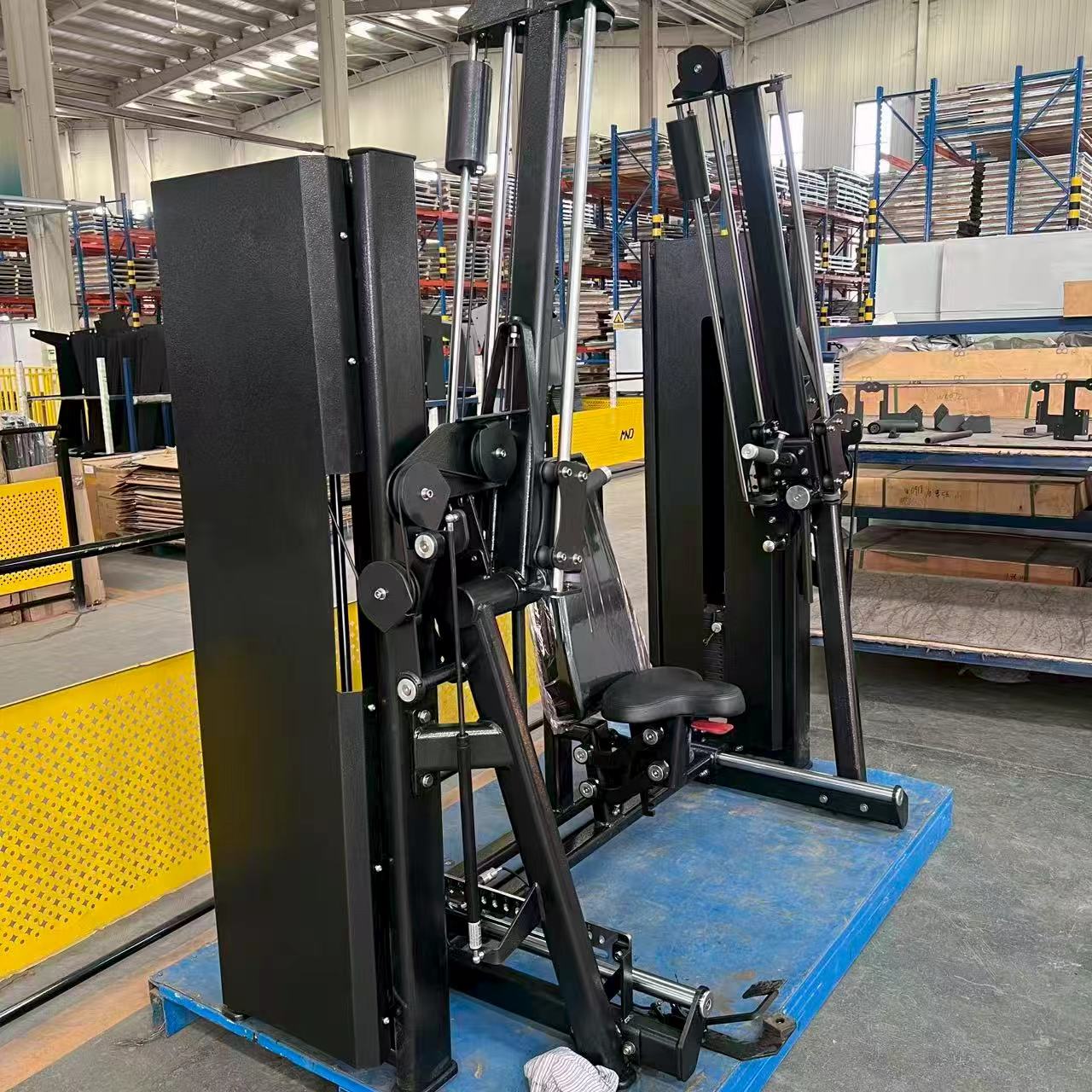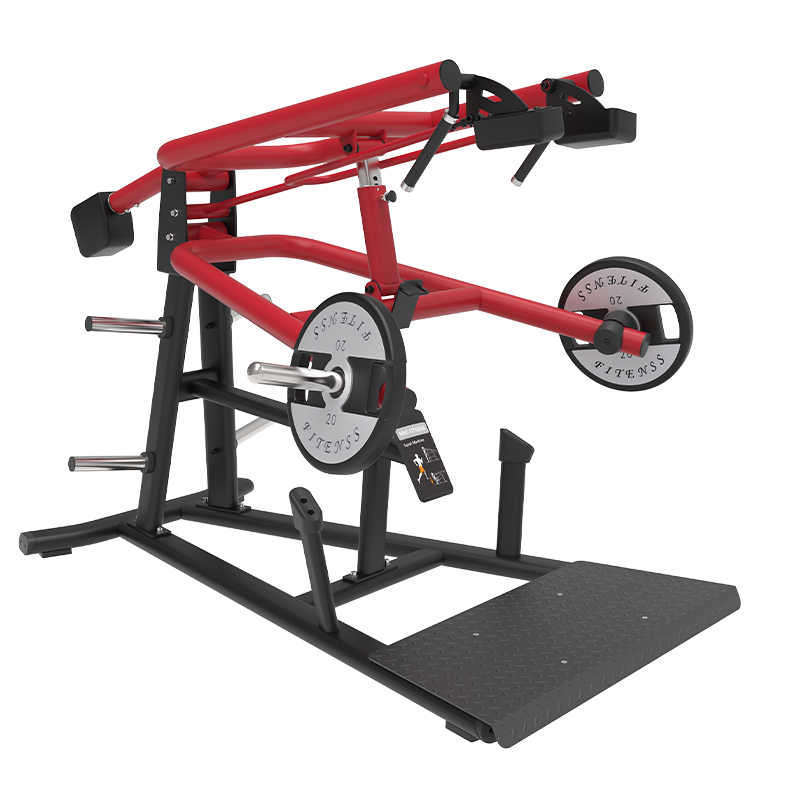



For high-traffic strength facilities, universities, and commercial fitness centers, few pieces of lower-body equipment experience the sheer physical abuse delivered to a Heavy Duty Plate Loaded Incline Hack Squat. Between 400-plus kilograms of cast-iron or urethane Olympic plates, rapid eccentric reversals, and continuous daily cycles, standard light-commercial sleds inevitably expose their weak links: binding bearings, frame deflection, and sheared stopper welds. For sourcing managers and gym owners, choosing the right machine isn’t an aesthetic decision—it is a risk management and biomechanical assessment.
Selecting an incline hack squat that survives years on a commercial gym floor requires looking beneath the powder coat. Buyers must evaluate chassis gauge, linear motion architecture, footplate adjustability, and the geometry of the weight horn placement relative to the user’s center of gravity.
The Biomechanical Case for Plate-Loaded Incline Sleds
Selectorized pin-loaded machines serve general fitness crowds well, but serious strength training spaces lean heavily on plate-loaded systems for compound quad development. The typical 45-degree fixed angle shifts axial compressive load away from the lumbar spine while directing the resultant force vectors directly through the patellofemoral and hip joints.
However, bad machine geometry creates unnecessary shear forces at the bottom of the movement. When the user reaches peak knee flexion (around 90 to 110 degrees), the footplate angle and backrest support must work together to prevent pelvic tucking (posterior pelvic tilt). If the footplate is too small or set at an overly aggressive static rake, lifters compensate by lifting their heels, drastically increasing patellar tendon stress. Commercial machines must offer either an oversized curved footplate or multi-angle mechanical adjustments to accommodate lifters from 160 cm to over 195 cm without compromising foot placement.
Frame Architecture and Motion Mechanics: What Separates Commercial from Light-Duty
When evaluating factory specifications for an incline hack squat, mechanical durability comes down to three main structural assemblies: the primary frame, the carriage guide system, and the lockout safety assembly.
1. Structural Tubing and Frame Rigidity
In budget equipment, you frequently see thin-wall 2.0 mm (14-gauge) structural steel. Under maximum loading, this allows slight torsional flex in the guide towers. That flex causes the guide carriage to bind midway through the lift. True heavy-duty commercial builds employ structural steel tubing—typically 50×100 mm, 60×120 mm, or custom flat oval profiles—with wall thicknesses of at least 3.0 mm (11-gauge). Welds at stress-bearing nodes near the bottom carriage stops should ideally be robotically laid or heavily gusseted to distribute cyclical impact forces.
2. Linear Bearings vs. Industrial Polyurethane Rollers
Carriage travel mechanisms generally fall into two categories:
- Hardened Steel Guide Rods with Linear Ball Bearings: These provide an exceptionally low-friction glide when new. However, in dusty environments or facilities where regular greasing is neglected, chalk and grit can penetrate the bearing seals, scoring the case-hardened shafts and creating permanent friction spots.
- Precision Machined Rollers on Heavy Steel Tracks: High-tensile solid steel rails paired with sealed industrial polyurethane or heavy-duty nylon wheels are increasingly favored in high-throughput gyms. They handle lateral shifting better, operate quietly, and tolerate stray gym chalk with significantly lower maintenance overhead.
3. Safety Catch Geometry and Weight Horn Capacity
Safety lockouts should never be an afterthought. A commercial unit requires dual-sided safety release handles that disengage smoothly under load, along with multi-position mechanical bottom stops. Sourcing managers should inspect the weld penetration on these stops; a dropped 350 kg sled hitting a safety stop must not compromise the integrity of the base frame.
Additionally, examine the usable length and angle of the plate horns. Weight horns welded at a slight upward rake (typically 2 to 3 degrees) prevent plates from drifting outward during heavy, rapid repetitions without requiring immediate collar clamping.
Key Technical Specifications to Compare
| Feature | Light / Mid-Commercial Grade | Heavy-Duty Commercial Grade |
|---|---|---|
| Steel Tubing Profile | 50×75 mm, 2.0 mm wall (14-gauge) | 60×120 mm or larger, 3.0 mm wall (11-gauge) |
| Rated Sled Capacity | 250 kg – 300 kg | 450 kg – 600+ kg |
| Footplate Design | Fixed single-angle, compact plate | Oversized diamond-plate, multi-angle adjustable |
| Carriage Suspension | Basic sleeve bushings or small bearings | Sealed precision industrial bearings / roller wheels |
| Upholstery | Standard bonded foam, thin vinyl | High-density molded PU foam, double-stitched wear covers |
Manufacturing Sourcing Insights: The Ningjin Hardware Cluster
For procurement officers sourcing strength equipment from China, regional manufacturing ecosystems dictate production quality and lead-time stability. Shandong Province, and specifically the Ningjin industrial belt, has developed into one of the world's most concentrated manufacturing hubs for commercial gym hardware.
Facilities such as Shandong Minolta Fitness Equipment Co., Ltd. (MND FITNESS) operate directly out of this manufacturing corridor. With operational footprints spanning roughly 120,000 square meters—incorporating dedicated machining workshops, testing laboratories, and finished equipment exhibition halls—manufacturers in this region benefit from immediate local supply chains for cold-drawn steel tubing, precision laser cutting, and electrostatic powder coating.
Minolta integrates these capabilities across their heavy strength lines (such as the MND-FB, MND-FF, and MND-G series), ensuring that high-stress equipment like the Heavy Duty Plate Loaded Incline Hack Squat receives proper structural steel sizing and repeatable weld quality. When ordering in container volumes for export to regional distributors or turnkey gym buildouts across Europe, the Middle East, or South America, sourcing from an integrated manufacturer with on-site QC labs significantly reduces the variance in bearing tolerances and finish quality.
Practical Buyer Advice: What to Verify Before Ordering
Before issuing a purchase order for container quantities or club fit-outs, sourcing teams should demand clear verification on a few specific details that frequently cause field issues:
- Unloaded Carriage Weight: Ask for the empty sled weight (starting resistance). For general membership facilities, a starting carriage weight between 25 kg and 35 kg is accessible to broader demographics. Sleds exceeding 50 kg empty can intimidate deconditioned members.
- Upholstery Resilience: The shoulder bolsters and lumbar pad take enormous point loads. Demand high-density molded polyurethane foam. Rebonded scrap foam compresses rapidly within six months, leaving users pressing their clavicles directly against structural backplates.
- Plate Horn Diameter: Ensure the weight storage and loading pins are strictly machined for standard 50 mm Olympic plates, with chrome plating or stainless steel sleeves to prevent cosmetic gouging from plate collars over time.
- Shipping Volume and Modular Assembly: Incline hack squats are notoriously bulky. Verify whether the frame arrives fully welded (requiring large crate footprints and wide doorway access) or uses a precision bolt-together modular base. If bolt-together, verify that grade 8.8 or higher tensile fasteners are specified for all dynamic structural joints.
Frequently Asked Questions
What is the ideal frame angle for an incline hack squat?
Most commercial units are built at a 45-degree angle. This provides an optimal balance between quad isolation and natural hip mechanics, keeping direct spinal compression lower than a conventional barbell squat while maintaining manageable sled friction.
Can linear bearing systems handle extreme load drops?
Linear ball bearings on hardened shafts perform smoothly, but they do not like aggressive shock loads. If a lifter dumps a heavily loaded sled onto the bottom safety stops, the impact can slightly bow the guide shafts if the stop springs are under-engineered. Roller-bearing systems running on rigid box-section tracks tend to handle accidental shock loading with higher structural resilience.
How often does a commercial hack squat require maintenance?
In high-use facilities, guide rails or tracks should be wiped clean of dust, sweat, and chalk weekly. Avoid using thick tacky grease that traps grit; light silicone spray or dry PTFE lubricant is preferred for linear shafts. Fastener torque on safety catches and footplates should be audited on a monthly preventive maintenance schedule.
Upgrade Your Strength Zone with MND FITNESS
Outfitting a serious facility requires equipment engineered to survive heavy commercial turnover without constant maintenance interventions. Sourcing teams, distributors, and club developers looking for robust plate-loaded strength options can consult with Shandong Minolta Fitness Equipment Co., Ltd. Reach out to the MND FITNESS engineering and export sales teams today to review full structural specifications, custom powder-coat options, and factory-direct container logistics tailored to your commercial development plans.