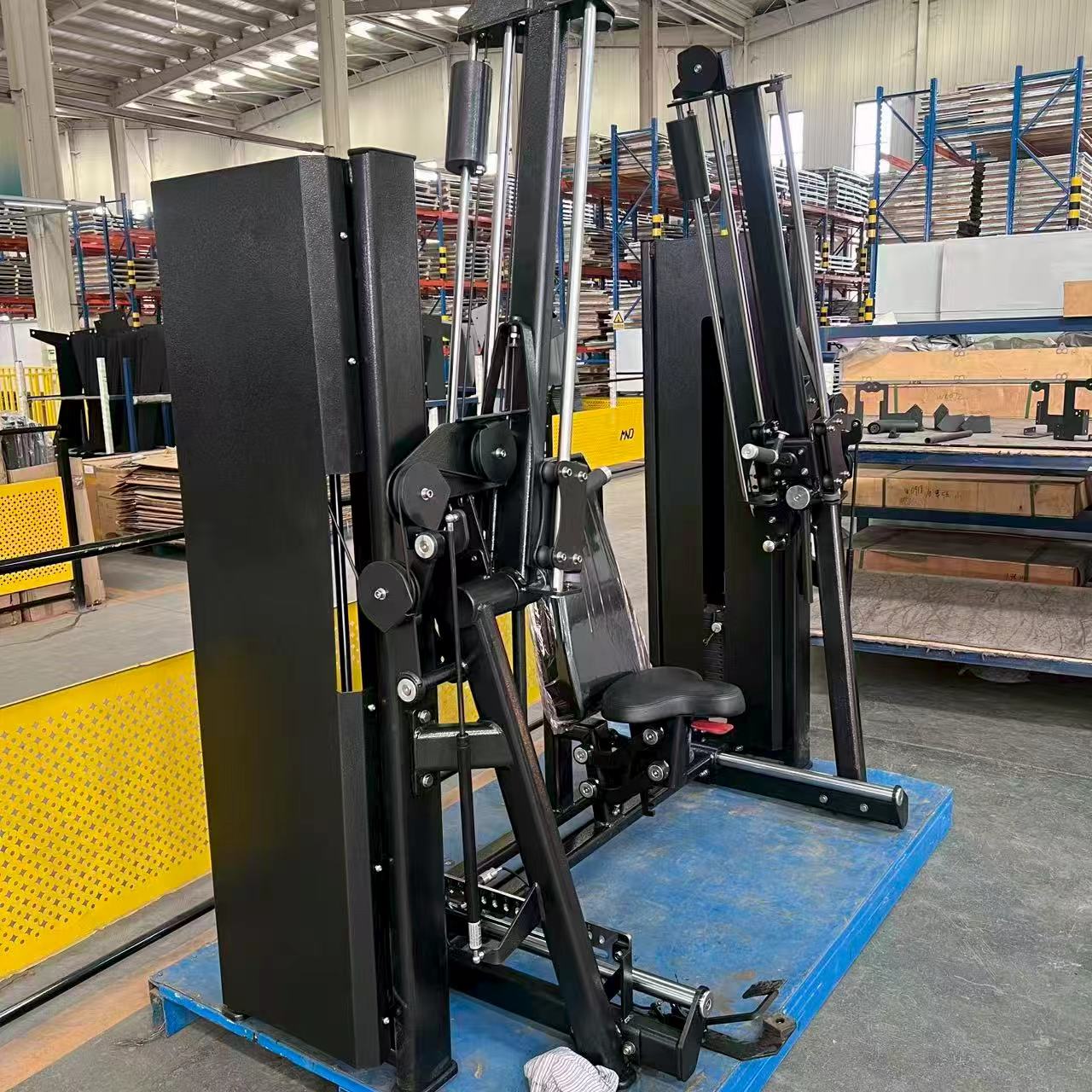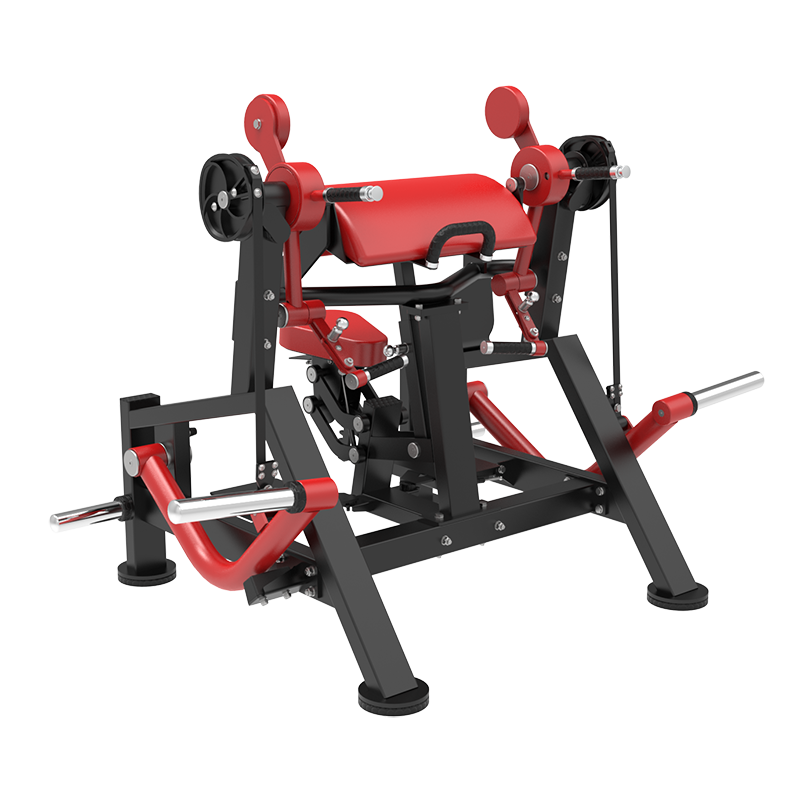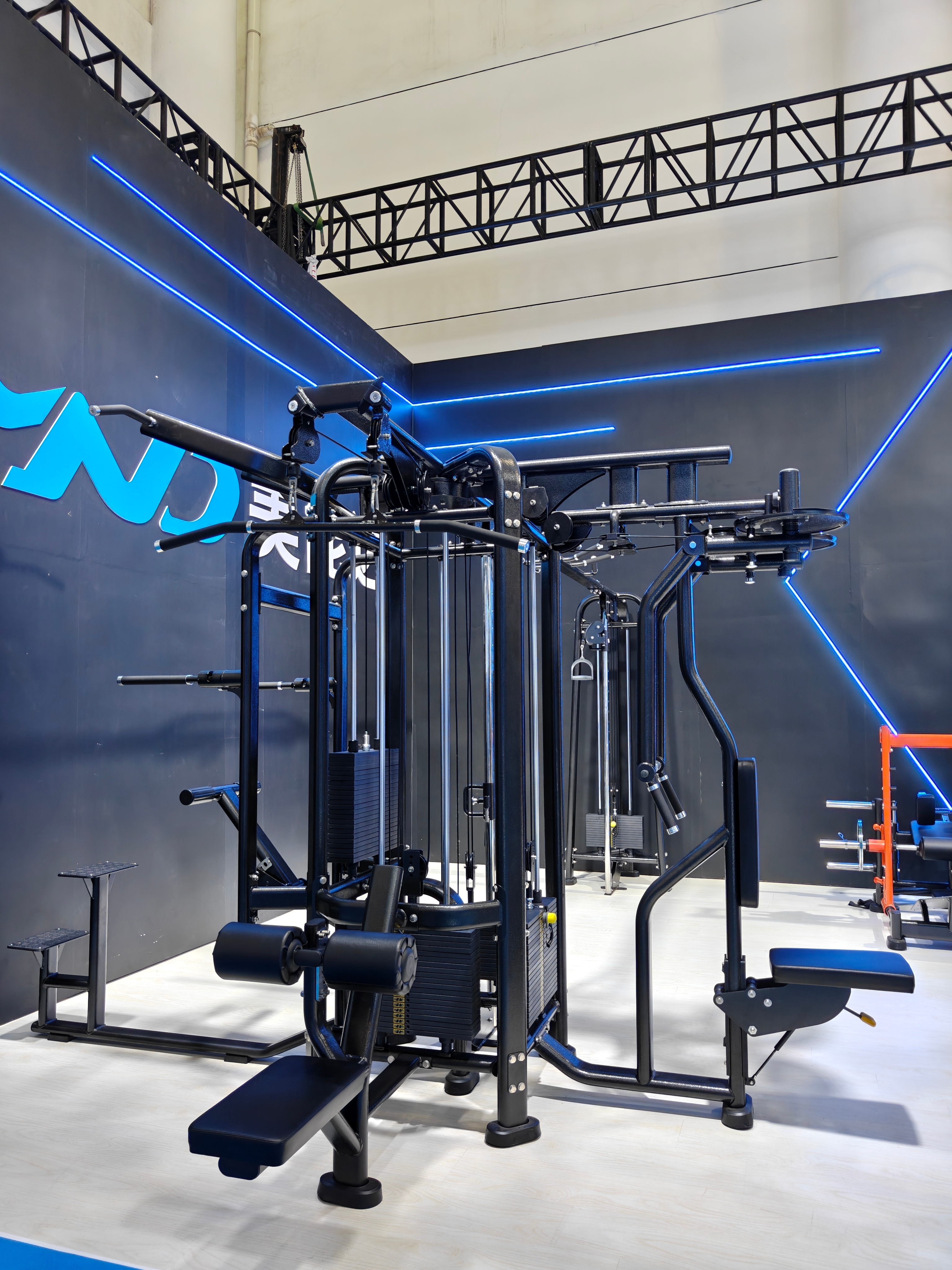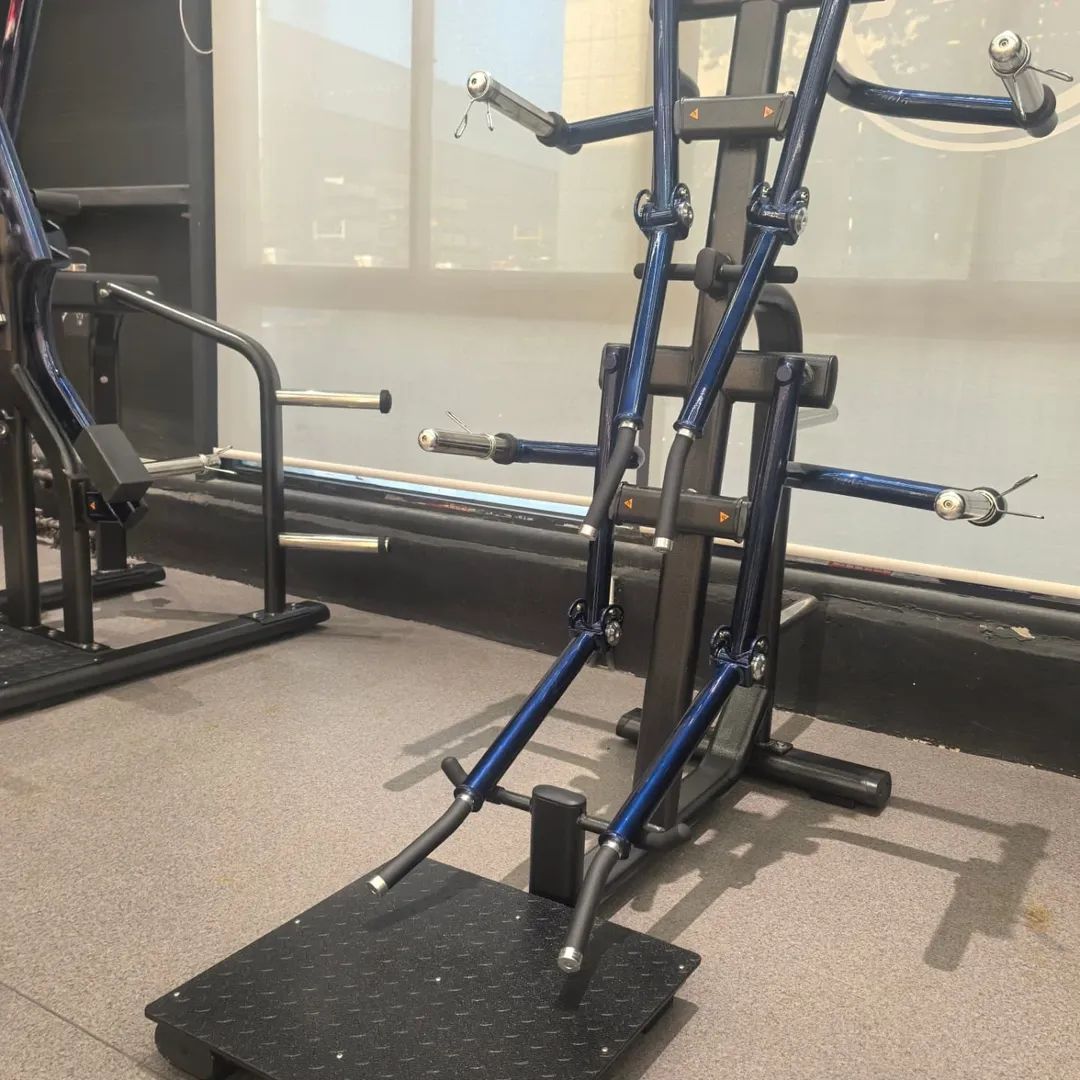



Commercial gym floor space comes at a high premium, often running upwards of $40 per square foot annually once lease, insurance, and utilities are tallied. For fitness facility operators, corporate wellness centers, and hotel gyms, balancing equipment variety against square footage is a constant battle. Sourcing a multi functional chest shoulder press allows operators to cover two staple upper-body movements—the horizontal press and the vertical overhead press—on a single weight stack and footprint.
However, combining two distinct biomechanical movement paths into one frame is not simply a matter of adding extra handles to a seat. Sourcing teams and equipment distributors must evaluate whether a hybrid machine preserves proper joint kinematics or introduces mechanical compromises that frustrate end users and accelerate hardware wear.
The Biomechanical Challenge: Merging Horizontal and Overhead Paths
Designing a dedicated chest press machine requires an arm trajectory that matches the convergent movement of the pectoralis major. By contrast, an effective shoulder press machine demands a vertical or slightly forward-angled arc that tracks the glenohumeral joint without pinching the rotator cuff at bottom lockout.
When these movements are integrated into a dual function chest shoulder press, the engineering team must solve the pivot point dilemma. In lower-tier equipment, manufacturers often use a fixed pivot arm and rely solely on an adjustable backrest. The user sits upright for shoulder presses and leans back for chest presses. In practice, this cheap shortcut compromises pressing angles: the chest press ends up feeling like an awkward high-incline press, while the shoulder press often forces the elbows too far behind the coronal plane, placing excessive shear strain on the anterior capsule.
Higher-grade commercial designs utilize multi-position lever arms with quick-release indexing cams, paired with a multi-angle gas-assisted seat back. This setup lets the user adjust the starting arm position relative to their shoulder joint before moving the seat, ensuring the pressing handles line up with mid-chest during horizontal presses and clear the clavicle comfortably for overhead work.
Structural Checkpoints: Frame Rigidity, Bearings, and Cables
Because a multi functional press handles force applied along two distinct vectors, the frame undergoes twisting moments that single-purpose machines rarely encounter. Sourcing managers should inspect specific build details:
Steel Gauge and Frame Geometry
Light commercial gear made from thin 1.5mm to 2.0mm tubing will display noticeable lateral flex when a user performs heavy single-arm or asymmetric presses. Commercial-grade builds require structural steel tubing with a wall thickness of at least 2.5mm to 3.0mm, typically in 50×100mm flat oval or rectangular profiles. Shandong Minolta Fitness Equipment Co., Ltd. (MND FITNESS), operating out of Ningjin’s established industrial hardware cluster, relies on these heavy-gauge structural profiles across lines like their MND-FS and MND-G series to handle high-frequency gym use without structural fatigue.
Pivot Shafts and Bearing Assemblies
Bushings made of nylon or sintered bronze may suffice for light home use, but in a commercial chest shoulder press, brass or dual sealed industrial ball bearings are non-negotiable. Bushings will develop radial play after a few months of heavy daily reps, leading to handle wobble, uneven resistance, and premature finish wear where metal rubs on metal.
Cable Routing and Pulleys
Hybrid presses often require more intricate cable routing or direct linkage mechanics to switch between range-of-motion settings. If cables are routed around small-diameter nylon pulleys (under 90mm), cable fatigue and jacket peeling occur rapidly. Look for deep-groove aluminum or fiberglass-reinforced nylon pulleys with sealed 6202 bearings and a minimum 5.8mm nylon-coated aircraft cable rated for at least 1,000 kg breaking strength.
Dedicated Stations vs. Dual-Function Combo Units
Choosing between standalone units and a chest shoulder press machine comes down to volume, user demographics, and available square meters.
- Floor Space: A dual-function combo uses approximately 1.8 to 2.2 square meters of floor space. Supplying separate chest and shoulder stations requires roughly 3.8 to 4.5 square meters, including user clearance zones.
- Equipment Cost: A single chest and shoulder press combo saves between 35% and 45% in capital outlay compared to buying two distinct selectorized units with separate weight stacks and shrouds.
- Peak-Hour Bottlenecks: In high-throughput facilities (such as university gyms or large commercial clubs with 2,000+ members), dual-function machines can create operational bottlenecks. If one member is using the unit for shoulder work, nobody can perform chest presses. Dual units are best suited for hotel fitness rooms, corporate facilities, residential compounds, or secondary circuits in large gyms.
- Maintenance Load: Fewer weight stacks mean fewer cables to replace and fewer guide rods to lubricate, though the adjustment mechanisms (pop-pins, gas springs, and pivot collars) on multi purpose chest press units experience roughly twice the daily wear.
What Sourcing Teams Overlook During Factory Audits
When evaluating manufacturers for multi functional gym equipment, product specifications on paper only tell part of the story. Buyers often miss several practical vulnerabilities during initial sample testing:
Pop-Pin Tolerances: Adjustment pins must engage cleanly. If the hole indexing on the seat adjustment plate is cut with loose tolerances, the seat will rock under load. If it is cut too tight without chamfered edges, members will struggle to lock the pin, leaving the seat unsecured during a press.
Weight Stack Increments: Chest pressing involves larger muscle groups (pectoralis, triceps) capable of moving heavier loads than the anterior deltoids. A stack configured solely with 10 kg (22 lb) plate jumps will be far too coarse for shoulder pressing, especially for rehabilitation or novice users. Sourcing managers should specify fractional add-on weights (1.5 kg to 2.5 kg micro-weights) or a stack configuration with smaller initial increments.
Powder Coat and Upholstery Abrasion: On a multi gym chest press, users change seat angles constantly. High-contact adjustment tracks should feature stainless steel or hard-chrome striker plates. If the pop-pin rubs against bare powder coating, the paint will chip within weeks, exposing the underlying steel to corrosive sweat.
Practical Buyer Advice for Importing Strength Equipment
Before signing off on container orders of commercial chest shoulder press units, request the factory’s weld map and raw material inspection logs. Many manufacturers in regional clusters leverage local sub-tier tube-bending and laser-cutting shops; ensure the supplier performs in-house automated robotic welding on primary load-bearing joints.
Ask for a video of the machine loaded to its maximum stack weight and cycled through both full chest and full shoulder travel paths. Pay close attention to cable tracking: does the cable ride off-center or scuff against the pulley flanges at any point of the stroke? Misaligned pulleys are the leading cause of premature cable snapping.
Finally, negotiate a mandatory wear-and-tear spares kit for every 10 units ordered. The kit should include extra pop-pin assemblies, gas-assist dampers, weight stack selector pins, and precut replacement cables with swaged terminals.
Frequently Asked Questions
Can a multi functional chest shoulder press replace flat bench and overhead barbells?
It is not intended to replace free weights entirely. A selectorized combo unit provides guided, joint-friendly resistance curves ideal for general hypertrophy, rehabilitation, and unsupervised training environments where spotters are absent.
How often should the cables and guide rods on a dual press be serviced?
In commercial environments, guide rods should be cleaned and wiped with silicone-based lubricant weekly. Cables should be visually inspected weekly for jacket cracks, fraying, or cable elongation, with full replacement scheduled annually or every two years depending on usage cycles.
Is a gas-assisted seat back essential on these combo units?
Yes, for commercial installations. The backrest on a combo unit is often heavy because of internal steel backing plates and dense foam. Without gas assistance, female users or older members will find it awkward and potentially dangerous to adjust between chest and shoulder press positions.
Planning Your Facility’s Strength Layout
Selecting the right multi functional strength training equipment requires balancing durable engineering with realistic floor dynamics. If you are outfitting a new facility or upgrading your existing strength circuit, review technical drawings, bearing specs, and stack ratios with your manufacturing partner early in the design cycle. For technical inquiries, custom weight stack configurations, or container-load sourcing consultations across commercial lines, reach out to the engineering team at MND Fitness to discuss your project requirements.