


Why a pulldown still earns floor space in serious gyms
A well-made pulldown is one of those pieces of equipment that looks plain until you start planning a training room without it. Then the gaps show up fast. The machine supports one of the most useful upper-body pulling patterns in strength training, and it does so with a stability level that free weights rarely match for beginners, general fitness members, or lifters returning from a layoff. In a commercial setting, that matters. A pulldown has to be durable, easy to understand, and valuable enough to justify the footprint. For buyers comparing a pulldown machine against other strength stations, the real question is not whether it is fashionable. It is whether it will earn repeat use and hold up under daily traffic.
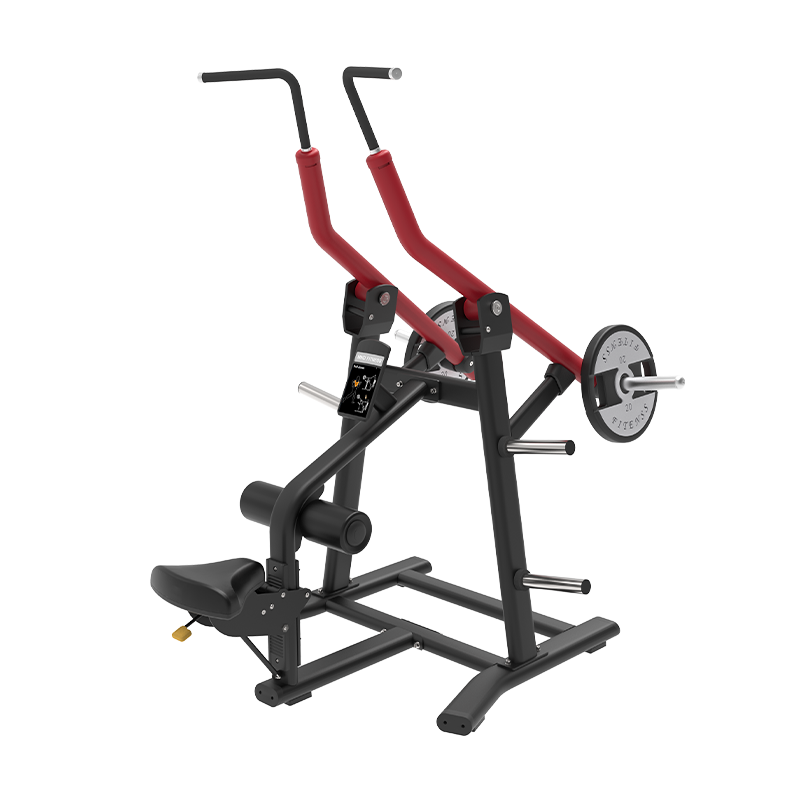
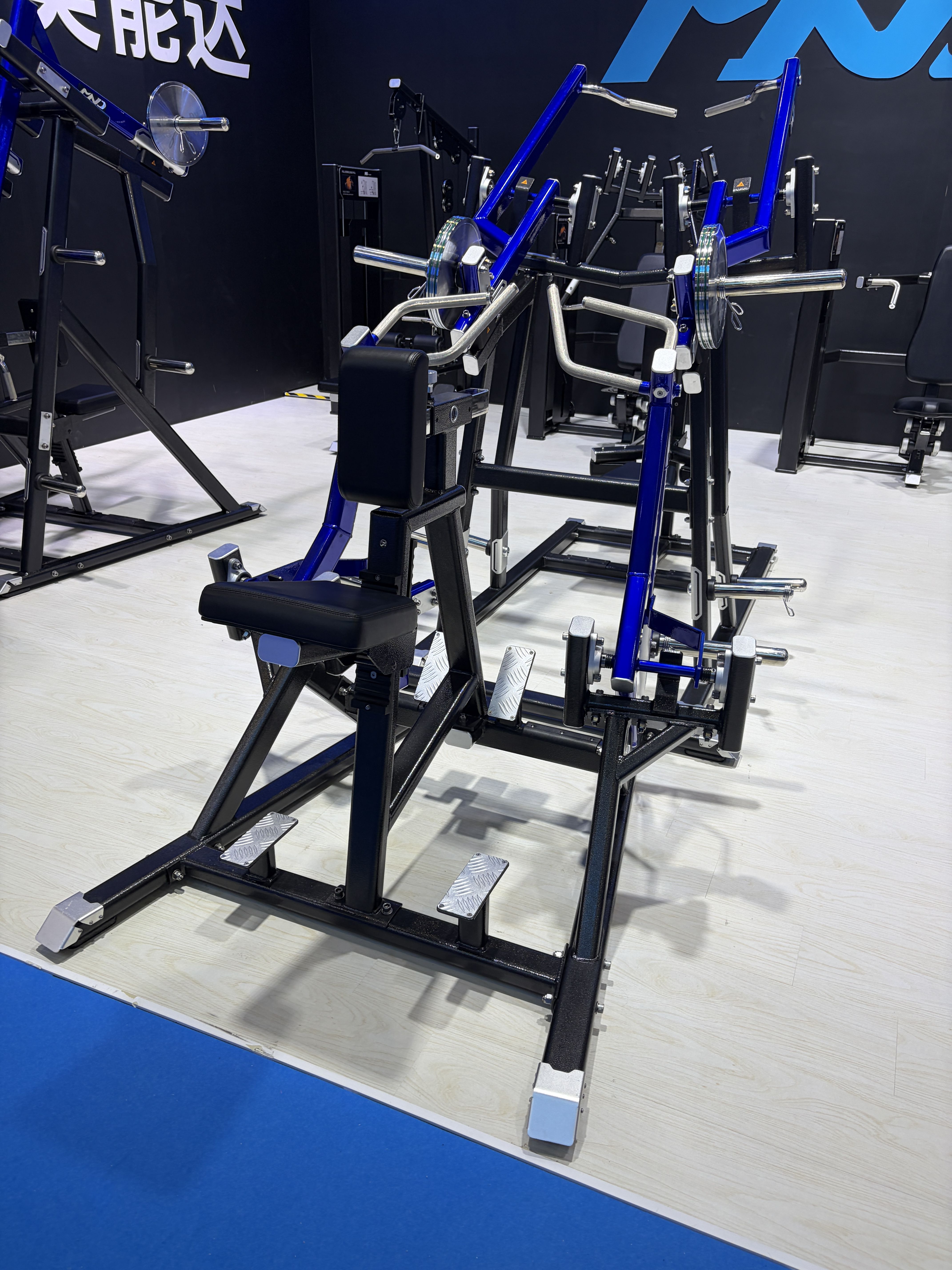
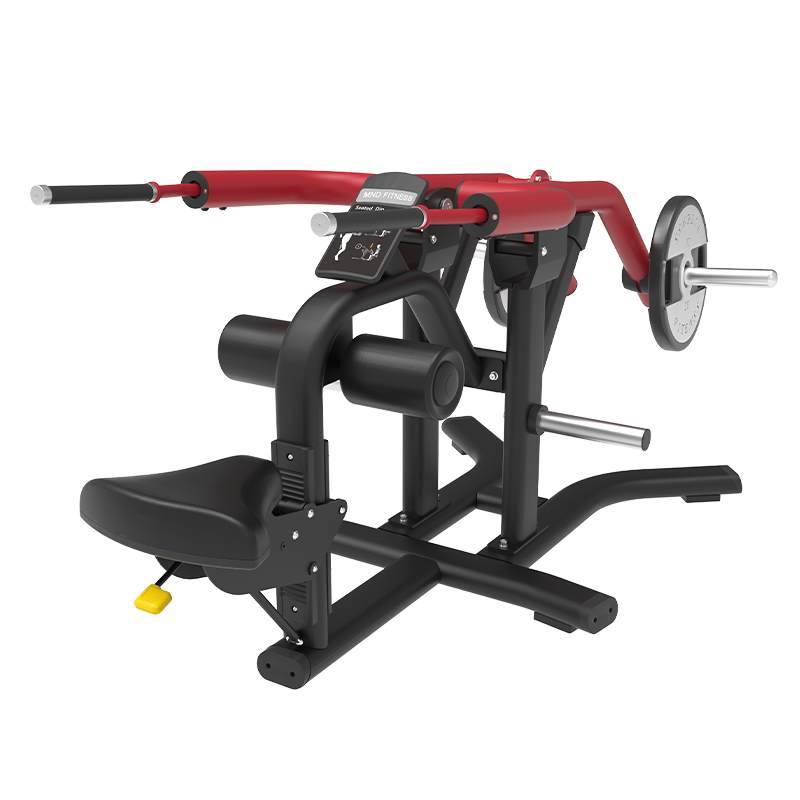
The machine described here appears to be a plate-loaded, seated pulling unit with a welded steel frame, red lever arms, a padded seat, thigh or leg rollers, and side-mounted storage pegs. That combination usually points to a lat pulldown or high-row style station rather than a cardio machine or a pure accessory bench. The exact exercise path is not fully visible, so it is safer to treat the motion profile as likely rather than fixed. Still, the design gives buyers enough clues to evaluate where it fits: commercial gyms, hotel fitness rooms, training studios, and home setups that need a robust pulling station without the complexity of a full cable stack.
What buyers should notice first
When sourcing a pulldown for a gym buildout, the visible details often tell you more than the brochure. A plate-loaded design changes the ownership equation right away. It removes the need for a selectorized weight stack, which can simplify construction and lower some maintenance concerns. At the same time, it shifts responsibility to the operator or facility to manage plate inventory and keep loading organized. That is not a bad trade-off, but it is a real one.
The seated layout is another practical clue. A pulldown seat, together with the thigh or leg rollers, helps anchor the user during the pull. That is important because a good pulling machine should load the back and arms, not turn into a body-English contest. Adjustable support components are especially useful in mixed-user facilities where different body sizes pass through the same station all day.
There is also the matter of storage. The visible weight-storage horns are more than a convenience. In a commercial room, they keep plates near the machine, reduce clutter, and make the unit feel complete. For buyers, that means fewer loose plates drifting across the floor and fewer interruptions in traffic flow.
How this type of machine is usually built
Commercial strength equipment of this kind is typically made through a familiar manufacturing chain: steel tube fabrication, welding, powder coating, upholstery, then final assembly. The frame shown here appears to use black powder-coated structural members with red tubular lever arms. That is a common and sensible combination. Powder coating helps the frame withstand the routine scraping, cleaning, and shoe contact that comes with daily gym use. Upholstered pads and foam or rubber grips address comfort, but they also affect perceived quality. Members notice a sloppy grip or a thin pad faster than a spec sheet problem.
For this kind of pulldown, pivot points matter as much as the frame finish. Buyers should ask how the lever arms move, how the machine feels under load, and whether the motion remains smooth across the working arc. I would be cautious about assuming iso-lateral operation or a particular bearing arrangement unless the manufacturer states it clearly. A machine can look excellent and still feel awkward if the arm path does not match common biomechanics.
Pulldown, pulldown door, pulldown exercise: why the wording matters
Search terms can blur together, but equipment buyers need cleaner distinctions. A pulldown exercise refers to the movement pattern itself: a vertical or angled pulling action aimed at the lats, upper back, rear shoulders, and arms. A pulldown machine is the station that delivers that pattern. A pulldown seat and thigh pad arrangement typically supports the user while the load is applied from above or from a lever path.
The phrase pulldown door can appear in searches, but in a gym-equipment buying context it usually has little to do with strength training. The same goes for pulldown cabinet, which is more often associated with storage or cabinetry hardware than fitness. Buyers comparing products should stay focused on the machine’s loading method, movement path, support system, and footprint rather than getting sidetracked by unrelated search language.
Selection criteria that actually matter
The fastest way to overbuy or underbuy a pulldown is to focus on appearance alone. A sharp frame color and heavy steel tubes do not guarantee a better training experience. Instead, look at the following practical points.
1. Training audience
A commercial gym needs a unit that will survive repeated use by people of different sizes and training skill levels. A hotel gym may need a simpler, more intuitive machine. A serious home gym may value compactness and plate loading more than absolute finish sophistication.
2. Loading style
Plate-loaded units are attractive when you want a straightforward strength feel and already have Olympic plates on hand. Selectorized versions make adjustment faster, but they add different maintenance and cost considerations. Either approach can work; the better choice depends on how the room is used.
3. User stabilization
A pulldown should help the user stay planted. Look for a solid seat, supportive pads, and a setup that does not allow the torso to swing excessively. If the adjustment range is poor, taller or shorter users may struggle to get set up properly.
4. Handle and grip quality
The visible grips on this machine appear padded, which is a good sign. In practice, handle comfort affects whether members return to the station or avoid it. A rough grip or awkward diameter can quietly reduce usage more than buyers expect.
5. Storage and room layout
If the machine includes plate horns, place it where loading is convenient without blocking walkways. That sounds basic, but many gym layouts fail on simple circulation issues. A strong station becomes a nuisance if users must fight the room to use it.
Why Minolta’s manufacturing base is relevant
Shandong Minolta Fitness Equipment Co., Ltd. operates from Ningjin, an area known for hardware manufacturing depth. That matters because commercial gym equipment lives or dies on fabrication discipline. Minolta says its facility covers 120,000 square meters and includes a manufacturing workshop, quality control lab, and exhibition hall. The company also reports more than a decade in the fitness equipment sector, over 300 types of exercise equipment, and exports to more than 100 countries across Europe, Africa, the Middle East, South America, and Southeast Asia.
For buyers, that does not replace a product inspection, but it does suggest scale and process maturity. The company’s strength series spans multiple lines, including MND-AN, MND-FM, MND-FH, MND-FS, MND-FB, MND-E Crossfit, MND-F, MND-FF, MND-G, and MND-H. If you are sourcing a pulldown as part of a broader strength package, that breadth can matter. Matching frame styling, finish consistency, and equipment family is easier when one supplier can cover multiple stations.
Common mistakes when sourcing a pulldown
One mistake is buying a machine because the frame looks heavy. Weight alone does not prove better stability. The frame geometry, pivot placement, and user support are what make the difference.
Another common error is overlooking setup simplicity. If members need a long explanation before they can use the machine safely, usage will be uneven. That is a problem in commercial facilities where floor staff cannot babysit every station.
Buyers also underestimate the value of plate organization. A plate-loaded pulldown with no logical storage plan turns into a clutter source. Small operational problems often become large customer complaints.
And finally, do not assume every pulldown machine behaves the same way. One model may feel more lat-dominant, another more upper-back dominant, and another may simply feel smoother. Test or request detailed motion information before committing.
Practical buyer advice before you place an order
Ask for clear photographs of the seat adjustment, support rollers, loading points, and pivot areas. Request dimensional information if your room is tight, even if the manufacturer has not published every figure. If the seller cannot tell you the exact load path or arm type, treat that as a sign to slow down.
It is also wise to think about maintenance access. A machine that looks easy to clean is usually easier to own. Upholstery replacement, bolt checks, and finish touch-ups should be part of the long-term picture, not afterthoughts.
If you are building a matching strength zone, consider whether this pulldown belongs near rowing stations, chest-supported pull machines, or accessory benches. Good placement makes the unit feel busy and useful. Poor placement makes even a well-built station look forgotten.
FAQ: what buyers usually ask
Is this machine only for lat pulldowns?
Not necessarily. Based on the visible lever structure, it is likely suited to a lat pulldown or high-row style movement, but the exact profile should be confirmed with the manufacturer.
Is plate loading a disadvantage?
Not by itself. Plate loading is often a good fit for facilities that already manage free weights well. The trade-off is slower loading compared with a selectorized stack.
Does this suit a home gym?
It can, if the user wants a commercial-style pulling station and has room for a seated machine plus plate storage. For a compact home gym, footprint is the first issue to check.
What should I verify before buying?
Confirm the exercise path, seat and pad adjustability, loading compatibility, overall dimensions, and service support. Those practical points matter more than a generic product description.
A sensible next step for sourcing teams
If you are evaluating a pulldown for a new gym, a refresh, or a private training room, start with use case rather than catalog styling. Decide who will use the station, how often, and what loading method fits your floor plan. Then ask the supplier for the information that changes ownership: movement behavior, support adjustments, finish details, and spare-part availability.
For buyers looking at Minolta’s commercial fitness range, this kind of pulldown fits naturally into a broader strength lineup. The company’s scale, product breadth, and export experience suggest it is prepared for project sourcing, but as always, the machine itself should be judged on build, feel, and serviceability. That is the part members will notice, and the part your operations team will live with long after the purchase order is closed.