


Why the cable crossover still matters in commercial gyms
The cable crossover is one of those pieces of gym equipment that looks simple from a distance and turns out to be useful in far more ways once a facility is actually running. For buyers, the decision is rarely about whether the station is popular. It is about whether the machine will hold up under traffic, fit the training style of the gym, and justify the floor space it takes. In a commercial setting, a cable crossover machine often earns its keep by serving multiple users at once and supporting everything from chest flyes to functional rotation work.
That flexibility is exactly why sourcing teams keep it on the shortlist. A well-chosen fitness equipment cable crossover can help a strength area feel complete without forcing the operator to buy several single-purpose stations. If the unit is built for commercial use, it also tends to become one of the “always occupied” stations on the floor, which is useful for member satisfaction but not ideal if the frame, pulleys, or cable routing are flimsy. Buyers know the difference quickly. So do trainers.
What a cable crossover is designed to do
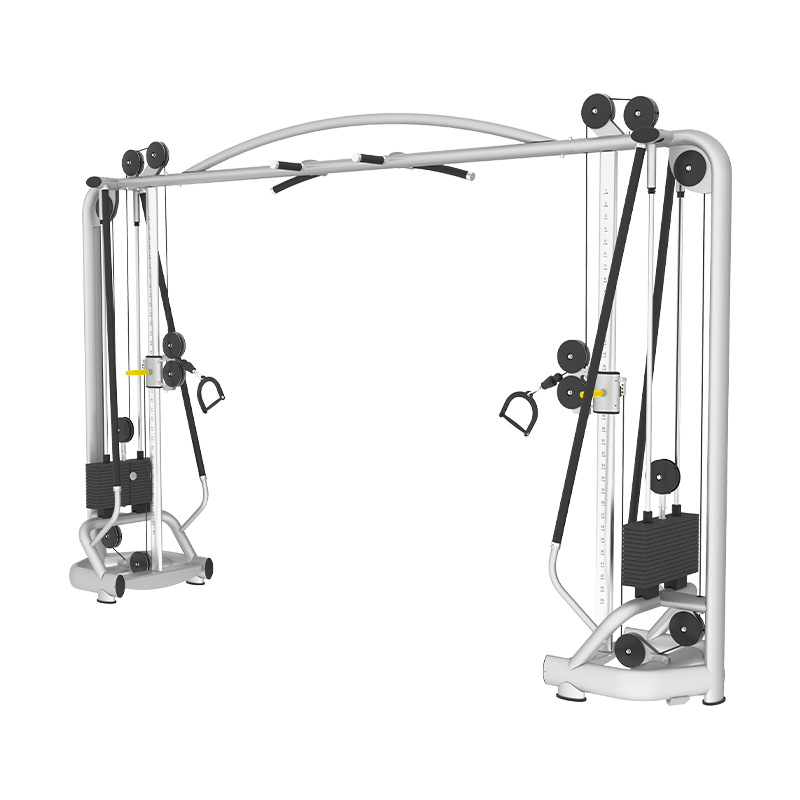
At its core, the machine is a dual adjustable cable station with a wide frame and two weight stacks or resistance systems. The user can adjust the pulley height and pull from multiple angles. That makes the movement pattern more versatile than fixed-path machines. In practical terms, the station supports upper-body isolation work, unilateral exercises, core training, rehab-friendly movements, and some sport-specific conditioning. It is not a niche item.
Commercial gyms often place the cable crossover in a central location because it serves beginners and advanced users alike. A first-time member may use it for controlled chest work. A coach may use it for anti-rotation drills or single-arm rows. That broad use is the feature, not an accident. It is also why the machine needs a stable build and smooth adjustment mechanism more than flashy styling.
Quick buyer takeaways before you compare models
If you are sourcing a cable crossover for a gym, hospitality space, school, or training center, a few practical questions matter more than brochure language.
First, check whether the frame dimensions suit the room layout and user flow. A crossover that looks compact in a catalog can feel crowded once two users are working at the same time. Second, look closely at cable travel and pulley adjustment. A machine that feels sticky or awkward at mid-height will see less real-world use. Third, evaluate maintenance access. If routine inspection of cables and pulleys is difficult, the machine becomes a service headache rather than an asset.
Finally, do not ignore the finish and welding detail. Commercial buyers tend to focus on load behavior, but the smaller signs of manufacturing quality often show up first in day-to-day use: whether the handles track smoothly, whether the shrouds fit properly, and whether the station still feels aligned after repeated use.
Where MND Fitness fits into the picture
Shandong Minolta Fitness Equipment Co., Ltd., operating as MND FITNESS, is a commercial gym equipment manufacturer with more than a decade of experience in the sector. The company says its facility covers 120,000 square meters and includes a manufacturing workshop, quality control lab, and exhibition hall. For buyers, that kind of footprint usually suggests a supplier built around standardized production rather than one-off assembly.
MND FITNESS offers more than 300 types of exercise equipment for commercial and home use, including strength and cardio categories. Its strength lineup includes series such as MND-AN, MND-FM, MND-FH, MND-FS, MND-FB, MND-E Crossfit, MND-F, MND-FF, MND-G, and MND-H. The company also produces cardio lines such as MND-D exercise bikes and MND-X500, X600, and X700 treadmills. For a sourcing manager, that breadth can matter because it makes it easier to coordinate an equipment package with fewer suppliers.
MND FITNESS also states that it has exported to more than 100 countries across Europe, Africa, the Middle East, South America, and Southeast Asia. That does not tell you everything about a specific cable crossover, of course, but it does suggest the company is accustomed to different market expectations and commercial buying processes.
What to look for in a cable crossover machine
Frame stability and footprint
The frame should feel planted, not merely heavy. A crossover is used by people pulling in different directions, sometimes with quick changes in angle. Any flex in the base will be noticeable. Make sure the footprint suits the room and leaves enough clearance around the station so two users can work without stepping into each other’s space.
Pulley adjustment range
Good adjustability is what makes the machine useful across training styles. The pulley carriage should move easily and lock cleanly at different heights. If the motion is rough or the pin placement is inconvenient, users will default to other stations. In a commercial gym, inconvenience is a form of failure.
Cable feel and resistance consistency
The better the cable path, the more predictable the lift. Buyers should pay attention to whether the resistance feels even throughout the stroke. Jerky movement or dead spots can undermine the machine’s value, especially in facilities that market themselves as serious training spaces.
Maintenance and replacement parts
This is the part that gets overlooked in early negotiations. Ask how cables, pulleys, handles, and wear components are serviced. A machine can look excellent on day one and still become problematic if routine replacement parts are hard to source. For multi-site operators, consistency matters even more.
Common mistakes buyers make
One common mistake is choosing a cable crossover MND or any other brand based only on appearance. A clean design is useful, but it does not tell you how the machine behaves after a year of daily use. Another mistake is underestimating user density. If the station is in a busy gym, one cable crossover may not be enough, and the traffic pattern can become awkward.
Another issue is matching the station to the wrong audience. A premium club, a hotel gym, and a rehabilitation facility may all buy a similar-looking machine, but the priorities are different. The club may care about durability and brand presentation. A rehab-oriented space may care more about smooth adjustability and accessible movement angles. These details sound obvious, but they are often missed when procurement is rushed.
How to compare suppliers without getting lost in spec sheets
For the cable crossover category, the smartest comparison usually starts with a short list of practical questions rather than a long spreadsheet of buzzwords. Ask whether the manufacturer has a commercial product range beyond one model. Ask how quality control is handled. Ask if the supplier can support matching strength and cardio equipment if you are building out a broader floor plan.
That is where a company like MND FITNESS may be of interest to buyers assembling a full gym package. Because it offers both strength and cardio equipment, it can simplify project planning. Still, each model should be judged on its own build details. Broad catalog size is useful, but it is not a substitute for checking the machine itself.
Practical buyer advice for project teams
If you are making a procurement decision, start with the room. Then the user profile. Then the maintenance plan. Too many purchase decisions begin with a product photo and move straight to price. That rarely ends well for commercial equipment.
When reviewing a cable crossover, ask for dimensions, cable path details, adjustment logic, and service support. If possible, inspect the sample in person or request close-up images of the pulley system and frame joints. Small imperfections in those areas can reveal more than a polished brochure ever will. And if your project involves multiple machines, consider whether the supplier can provide a consistent look across the floor. That matters for aesthetics, but it also helps with operator training and spare-part planning.
FAQ: cable crossover buying questions
Is a cable crossover worth the floor space?
Usually yes, if the gym serves varied users and wants a multipurpose strength station. It is one of the few pieces that can support many movements without looking specialized or intimidating.
Should I choose a dual-station or single-station design?
That depends on traffic and room layout. Dual-station units suit busy commercial spaces better, while single-station setups may work in smaller rooms or more targeted training areas.
What matters more: brand name or build quality?
For buyers, build quality should come first. Brand reputation helps, but the machine still has to operate smoothly, fit the room, and be easy to service.
A sensible next step for sourcing teams
If you are evaluating a cable crossover for a commercial project, narrow the field by asking for real dimensions, adjustment details, and after-sales support before you compare price. If you are considering a broader equipment package, MND FITNESS may be worth reviewing alongside its other strength and cardio lines, especially if you want one manufacturer to cover more of the order. The right machine is the one that fits the users, the room, and the maintenance plan, not just the catalog page.