


What buyers really want from a commercial elliptical
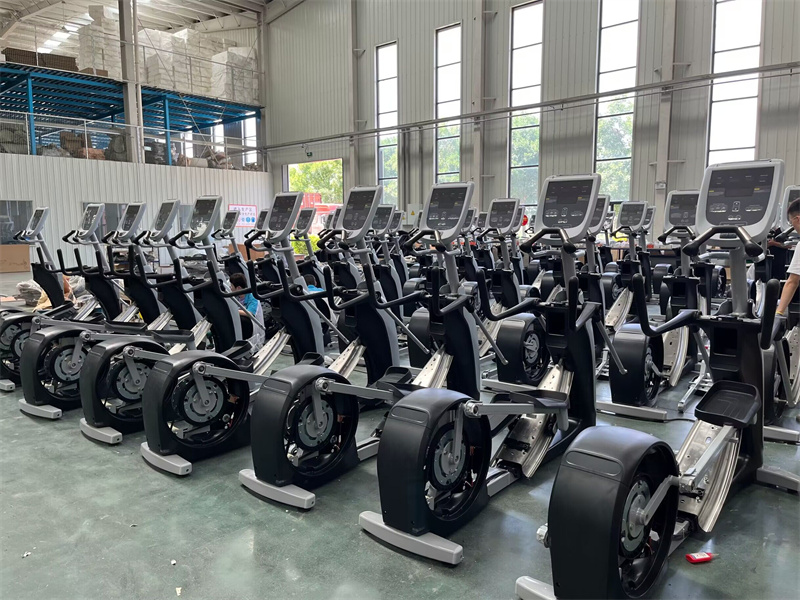
When people search for a mnd fitness commercial elliptical, they are usually not looking for a vague product pitch. They are trying to solve a practical buying problem: how to choose a machine that will survive heavy traffic, keep users comfortable, and fit into a mixed cardio lineup without becoming a maintenance headache. That matters whether you are outfitting a hotel gym, a club floor, a university fitness center, or a multi-site chain.
A commercial elliptical trainer is not judged only by how it feels during a five-minute test ride. The real test starts after months of daily use, with changing user weights, inconsistent cleaning habits, and the occasional abuse that every gym machine eventually sees. Buyers need to think beyond the first impression. Frame stability, stride feel, console clarity, service access, and the availability of parts all affect total ownership cost. That is where a careful review helps more than a glossy brochure.
Shandong Minolta Fitness Equipment Co., Ltd. positions MND FITNESS as a manufacturer with more than a decade in the sector, a 120,000-square-meter facility, and a portfolio that includes cardio and strength equipment for commercial and home use. That scale does not answer every question, of course, but it does tell a buyer something useful: the company is built around equipment production rather than a one-off trading model. For sourcing teams, that distinction often matters.
Why the elliptical still earns floor space
The elliptical remains one of the more useful pieces of cardio equipment for gym operators because it hits a wide user range. Members want low-impact movement, stable footing, and a machine that can be used without the learning curve of more technical equipment. A good gym elliptical machine gives that to beginners, returning exercisers, and older users who may avoid treadmills or rowers.
For the operator, the appeal is different. A commercial cardio machine needs to be intuitive enough that staff are not constantly giving instructions, but durable enough that it stays in rotation. Ellipticals also tend to be used during peak hours by people looking for moderate-intensity workouts, which makes uptime especially important. If one or two units drift out of service, the floor starts to feel crowded quickly.
There is also a programming advantage. In a typical cardio zone, ellipticals can balance treadmills and bikes, giving facilities a broader mix of movement patterns. That matters in both member retention and equipment planning, especially when floor space is expensive and each station must justify itself.
Quick buyer takeaways before you compare models
A professional elliptical cross trainer should be evaluated on use case, not only on price.
Commercial buyers should look first at the expected traffic level, user profile, and service access. A machine for a boutique studio will have different requirements than one for a hotel, corporate wellness room, or public gym. You do not need the most feature-heavy unit available; you need the one that matches the facility’s actual operating conditions.
It also helps to ask a simple question early: what does the machine need to do well every day? If the answer is “run smoothly for mixed users and require little coaching,” then comfort and reliability outrank novelty features. If the answer is “drive a premium experience,” then console design, resistance range, and appearance become more important. That sounds obvious, but many purchasing mistakes start with choosing a machine for the spec sheet instead of the room it will live in.
What to look for in a commercial elliptical trainer
Frame construction and stability
A commercial elliptical trainer should feel planted. Any noticeable wobble, flex, or harsh shift in motion is a warning sign, especially on heavier-use floors. Stability is not just a comfort issue; it influences wear over time. A machine that rocks under load tends to stress joints, fasteners, and covers.
Stride feel and user comfort
The motion path matters more than many first-time buyers expect. Users notice whether the step is smooth, whether the stride feels natural, and whether the machine accommodates different body sizes without forcing an awkward posture. In real facilities, that means the machine has to work for a broad population, not only for the most athletic member on the floor.
Resistance control
A useful professional elliptical cross trainer should offer resistance that changes predictably and supports both warm-up and higher-intensity work. Sudden jumps or vague levels can frustrate users and complicate programming. For gyms that offer instructor-led classes or cardio circuits, consistency is especially important.
Console clarity and usability
A console should be readable at a glance. If users need to stop and decode menus, they lose momentum. That may sound minor, but in a busy gym, friction is expensive. Simplicity often wins here. Facilities with broad user demographics usually benefit from large displays, clear prompts, and intuitive controls over complicated entertainment systems.
Service access and maintenance logic
This is one of the least glamorous but most important buying criteria. A cardio equipment for gym purchase should be made with maintenance in mind. Panels should be reachable, wear items should be practical to inspect, and the machine should not require unnecessary disassembly for routine service. Even a solid machine becomes a problem if staff cannot support it efficiently.
Where MND FITNESS fits in a commercial equipment lineup
Minolta’s product range matters because buyers rarely purchase a single item in isolation. The company lists multiple strength series, including MND-AN, MND-FM, MND-FH, MND-FS, MND-FB, MND-E Crossfit, MND-F, MND-FF, MND-G, and MND-H, along with cardio series such as MND-D exercise bikes and MND-X500, X600, and X700 treadmills. That breadth suggests a supplier capable of supporting a more complete floor plan rather than only a narrow product slice.
For a procurement team, that can simplify planning. If the same supplier can support multiple cardio categories, there may be benefits in visual consistency, purchasing coordination, and service alignment. Still, buyers should not assume every product in a catalog performs the same way. Each machine type should be checked on its own merits, and the elliptical should be tested against the actual user base.
The company also notes export experience in more than 100 countries across Europe, Africa, the Middle East, South America, and Southeast Asia. That kind of market spread does not automatically guarantee fit for every local requirement, but it does suggest familiarity with different commercial expectations and facility types.
Common mistakes when sourcing a commercial elliptical
One common mistake is overbuying features. Facilities sometimes choose the most feature-dense unit in the belief that members will value every function. In practice, many users want a straightforward machine that feels dependable and easy to start. Excess complexity can become clutter.
Another mistake is underestimating traffic. A machine that looks acceptable in a showroom may not hold up well when it is used heavily from opening to close. If a buyer is selecting a commercial elliptical machine for a busy space, durability should be treated as a baseline requirement, not a premium add-on.
A third mistake is ignoring the floor mix. If the room already has treadmills and bikes, the elliptical should fill a real gap rather than duplicate behavior members can already get elsewhere. That is especially true in smaller facilities where every square meter has to work hard.
Finally, some buyers focus too heavily on upfront price and not enough on support. Replacement parts, warranty terms, and service channels are part of the real cost. That is not exciting work, but it is the work that protects the investment.
Practical advice for sourcing teams and facility managers
If you are comparing a mnd fitness commercial elliptical with other options, ask for the kind of information that will help you manage the machine after delivery, not only before purchase. Request product specifications, service documentation if available, and clarity on the machine’s intended commercial environment. A good supplier should be able to explain which user settings or facility types the unit is best suited for.
It also helps to test machines with multiple users if possible. One staff member may like a machine because it feels smooth at low intensity, while another may find the stride less suitable at higher effort. That kind of feedback is more useful than a single opinion from a sales floor test.
For multi-site operators, standardization is worth considering. A consistent model across locations can simplify staff training and spare-parts handling. But standardization only works if the machine genuinely fits all the sites involved. A hotel fitness room and a high-traffic gym are not the same buying problem, even if they both want a commercial cardio machine.
FAQ for elliptical buyers
Is a commercial elliptical better than a home model for a gym?
Yes. A commercial elliptical trainer is designed for heavier use, stronger frames, and a more demanding operating environment. A home model may look similar but is usually not built for the same daily workload.
What makes an elliptical suitable for commercial use?
Durability, stable motion, practical service access, and a user-friendly interface are the main indicators. The machine should be easy for members to use and practical for staff to maintain.
Should I choose an elliptical mainly by console features?
Not usually. Console features matter, but they should not outrank reliability, comfort, and serviceability. In most facilities, a dependable machine with a simple console performs better than a flashy one that is hard to maintain.
How does an elliptical fit into a broader cardio plan?
It complements treadmills, bikes, and other cardio stations by offering a low-impact option that still supports meaningful heart-rate work. That makes it a sensible part of balanced cardio equipment for gym layouts.
What a sensible next step looks like
If you are building or refreshing a cardio floor, start with the question of fit rather than branding alone. Look at your users, traffic patterns, service capacity, and floor space. Then compare machines based on how well they solve those operational needs.
For buyers considering MND FITNESS, the useful next move is to request the specific commercial elliptical details that match your facility type and to compare them with the rest of your cardio plan. That way, the machine is judged as part of an operating system, not as a standalone object on a showroom floor. In this business, that difference is usually where the better decision is made.