


Why a dedicated lateral raise station still earns floor space in commercial gyms
The lateral raise looks simple, which is exactly why buyers underestimate it. In a crowded fitness floor, shoulder isolation equipment often gets treated as an accessory rather than a revenue-driving staple. That is a mistake. A well-designed Lateral Raise station gives members a controlled way to train the deltoids without turning every set into a balancing act, and it gives operators a machine that is easy to teach, easy to supervise, and easy to keep moving during busy hours.
For sourcing managers and product teams, the real question is not whether people can do a Dumbbell Lateral Raise with free weights. They can. The question is whether a commercial machine creates a better user experience, improves consistency from one member to the next, and reduces friction on the gym floor. In many facilities, the answer is yes, especially when the goal is to offer shoulder work that is guided, repeatable, and friendly to mixed ability levels.
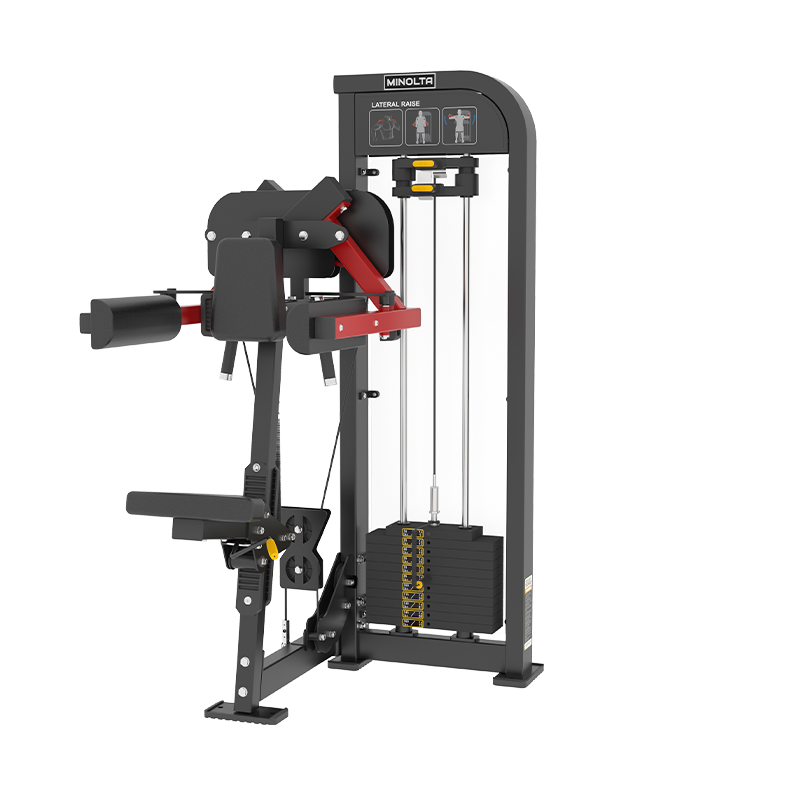
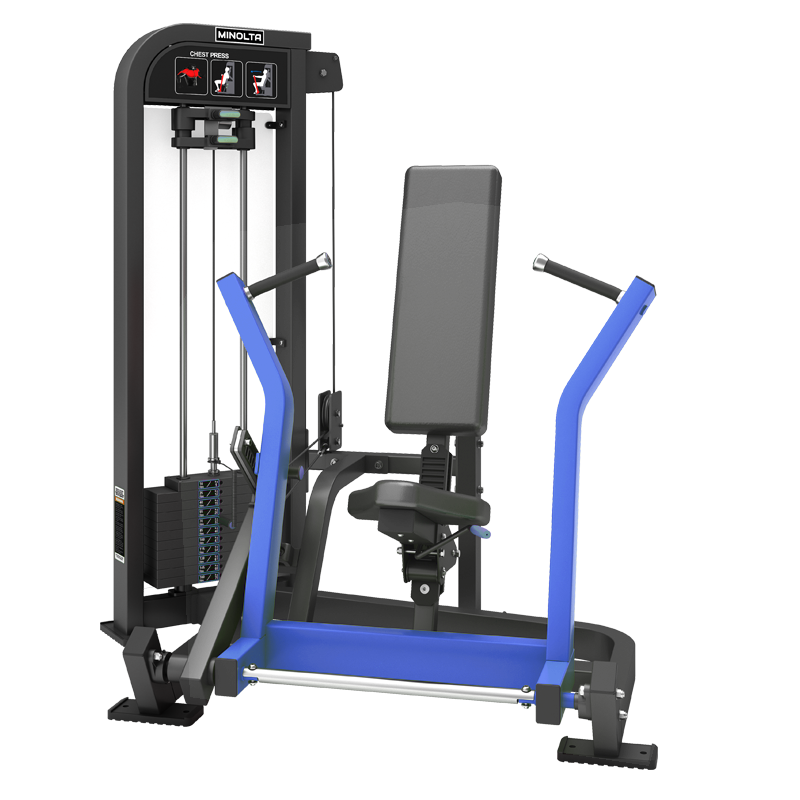
The machine shown here is a selectorized strength-training unit marked “LATERAL RAISE,” with a visible weight stack, padded contact points, a dark gray/black tubular steel frame, and red lever arms. It looks built for commercial use, not casual home duty. That matters, because buyers in gyms, hotels, and rehabilitation settings usually need equipment that can survive frequent use and still feel smooth enough to justify the footprint.
What the machine is really solving
A Shoulder Lateral Raise done with free weights is effective, but it also exposes the user to a few common problems: inconsistent path, momentum cheating, awkward loading at the start of the lift, and excessive reliance on stability rather than shoulder isolation. A guided machine helps narrow those variables. That is useful for beginners, older users, and members returning from a layoff who need a simpler movement pattern.
A machine-based Side Lateral Raise also makes programming easier for trainers. Load can be selected quickly, sets are cleaner to supervise, and the movement is more approachable for people who may feel uncertain about the correct arc of the lift. That does not make the machine “better” in every training context. It does make it easier to deploy at scale in a commercial setting where clarity matters more than gym-floor heroics.
The visible instructional graphics on the top panel are another small but important detail. People notice these things. A machine that explains itself saves staff time and reduces misuse, especially during peak hours when nobody wants to stop and demonstrate every rep.
Quick buyer takeaway: when this machine makes sense
A commercial Lateral Raise station is a sensible purchase when your facility needs one or more of the following:
More shoulder-isolation options without depending on free-weight coaching
A fixed-path machine that feels approachable to newer members
Equipment that supports high-throughput training areas and supervised exercise zones
A targeted upper-body accessory station for gyms, hotel fitness rooms, or physio-oriented strength spaces
A product line that fills out a strength circuit with recognizable movements
If your floor plan is already crowded with chest presses, pulldowns, and leg equipment, the lateral raise machine can still earn its place because it addresses a movement pattern that is often under-served. Shoulders are a visible training priority for many members. Facilities that ignore that tend to hand the business to competitors with better accessory selection.
How the visible construction points to commercial intent
The frame appears to use tubular steel with welded joints and a powder-coated finish, which is the kind of construction buyers expect in a serious commercial unit. The lever arms are red, the contact surfaces appear padded, and the weight stack sits integrated into the frame rather than hanging off as a crude add-on. Those are not cosmetic details only; they influence durability, maintenance, and the overall user impression.
The likely combination of steel forming, welding, powder coating, upholstery, and cable or pulley assembly suggests a typical commercial fitness equipment fabrication process. That is not glamorous work, but it is exactly the kind of manufacturing discipline that determines whether a machine feels stable after thousands of cycles or starts showing slop and noise too early. For procurement teams, that is where the long-term value lives.
One practical caution: buyers sometimes focus too much on the aesthetic finish and not enough on the movement quality. A machine can look sharp in a showroom and still feel awkward under load. If possible, test the arm path, start resistance, and handle position with users of different heights and shoulder widths. Small ergonomic issues become big complaints once the machine lands on a busy floor.
Dumbbell, cable, seated, and machine versions: what changes, what doesn’t
The Dumbbell Lateral Raise is the most familiar version of the exercise. It is flexible, inexpensive, and space-efficient. But it also demands more technique and stabilization. Cable Lateral Raise variations can offer a smoother tension profile and are useful in mixed-use training areas, though they still depend on cable station access and user understanding.
A Seated Lateral Raise often reduces lower-body compensation and can help users stay more honest through the torso. The seated position may also feel more accessible for beginners. The trade-off is that seat adjustment, pad placement, and arm path become more important. If those elements are poorly executed, the machine can feel restrictive instead of supportive.
A standalone selectorized machine like the one described here sits in a different category. It is built for a repeated commercial pattern: select the load, take the position, and move through the guided range. That predictability is exactly why facilities buy it.
Selection criteria that matter more than marketing copy
1. Movement path and shoulder comfort
The machine should feel natural through the lateral arc without forcing the elbows into an awkward flare or the wrists into a cramped angle. A smooth lever path matters more than flashy branding.
2. Padding and contact quality
The visible pads and handles should support repeated use without feeling cheap or collapsing too quickly. Vinyl-covered foam is common in commercial equipment, but the real test is how it holds up under sweat, cleaning, and daily traffic.
3. Frame stability and finish
A floor-standing frame with good weld quality and powder coating helps with durability and appearance. In commercial settings, chipped finish and wobble are not just cosmetic issues; they affect perceived quality.
4. Serviceability
Weight-stack machines are popular because they are straightforward to use, but they also need accessible maintenance. Cable routing, pulley access, and replacement parts all matter over the life of the machine.
5. Floor footprint
Shoulder isolation stations compete for space with higher-demand equipment. A buyer should ask whether the Lateral Raise machine adds genuine value to the program or simply fills an empty corner.
Where Minolta fits into the conversation
Shandong Minolta Fitness Equipment Co., Ltd. is presented as a commercial fitness equipment manufacturer with more than a decade of experience, a 120,000-square-meter facility, and a lineup that includes multiple strength and cardio series. The company says it offers over 300 types of exercise equipment and exports to more than 100 countries across Europe, Africa, the Middle East, South America, and Southeast Asia.
For buyers, that scale suggests a manufacturer that understands the needs of commercial channels rather than one-off hobby builds. The mention of a manufacturing workshop, quality control lab, and exhibition hall is also relevant. It does not tell you everything about any single machine, but it does indicate a supplier structure that can support product development, inspection, and customer evaluation.
That said, caution is still appropriate. A broad catalog does not automatically mean every unit fits every market. Ask for detailed specifications, movement diagrams, and service information before you commit. The photo shows a selectorized Lateral Raise station, but it does not reveal resistance ratio, stack weight, or adjustment range. Those need confirmation during sourcing.
Common mistakes buyers make with shoulder isolation equipment
The first mistake is buying for novelty rather than use. A shoulder machine may look impressive, but if the movement feels odd or the instruction is unclear, it becomes an underused square meter.
The second mistake is ignoring the user population. A machine that works for larger athletic users may not fit smaller members, rehab patients, or older adults as well as expected. Shoulder equipment should be tested across body types, not just by the tallest person on the sales visit.
The third mistake is overestimating how much one feature can rescue a poor design. A stack, a bright finish, or a branded placard does not compensate for poor ergonomics. Commercial buyers have all seen attractive equipment that becomes a maintenance nuisance within a year.
Practical advice for gyms, hotels, and rehab facilities
If your facility serves general fitness members, the Lateral Raise machine helps reduce the intimidation factor of shoulder training. If you operate a hotel gym, the machine offers a straightforward guided exercise that does not require much coaching. If you manage a rehab or physio-adjacent space, a machine-guided movement may be easier to integrate into progressive upper-body programs, though clinical use should always be evaluated by qualified staff.
Placement matters too. Put the machine where staff can see it and where users can read the instruction panel without blocking traffic. Shoulder accessories often work best near other upper-body machines, not hidden behind the more glamorous strength gear.
FAQ for procurement and product teams
Is a machine-based lateral raise better than free weights?
Not universally. Free weights are more flexible and often more demanding. A machine is usually better when consistency, ease of use, and supervision matter more than maximum variation.
Is this the same as a Cable Lateral Raise station?
No. Cable versions rely on cable tension and setup, while a selectorized machine uses a guided lever and visible weight stack. The feel and maintenance profile are different.
What should I confirm before placing an order?
Confirm the full dimensions, stack weight, adjustment features, resistance feel, upholstery materials, and service support. The visible product information does not supply all of that.
Who is the main buyer for this type of equipment?
Commercial gyms, boutique training spaces, hotel and corporate gyms, and rehabilitation-focused facilities are the most obvious buyers.
The purchase decision, in plain terms
If you need a shoulder accessory that is easy to learn, easy to supervise, and suitable for repeated commercial use, a dedicated Lateral Raise machine is worth serious consideration. It is not the flashiest piece in the room, and it should not be. Its job is to deliver a familiar movement with enough structure to keep members moving and staff spending less time correcting form.
That is the real buying argument. Not hype. Not an overblown performance claim. Just a practical piece of strength equipment that can quietly improve the usability of a gym floor when it is built well and selected with care.
If you are evaluating this category for a new facility or a refresh, start with the movement feel, the frame quality, and the service path. Then ask whether the supplier can support the rest of the commercial package with consistent manufacturing and after-sales responsiveness. That is where a machine like this proves its value.