


Why a Rear Delt/Pec Fly machine still earns floor space in a commercial gym
For operators comparing strength equipment, the Rear Delt/Pec Fly is one of those stations that can look ordinary on a spec sheet and still make a real difference on the gym floor. It covers two movements that many members need but often train badly on their own: chest fly work and rear shoulder isolation. In other words, it helps solve a common problem for facilities that want efficient upper-body training without giving up too much space.
That matters to sourcing managers and product teams for a practical reason. A machine like this is not just another chest accessory. It is a selectorized station that supports guided movement, makes it easier for less experienced users to train with better form, and gives experienced users a controlled way to target the pecs and rear delts. The dual-function layout also makes it easier to justify the footprint. In a hotel gym, apartment fitness room, rehab-oriented training space, or commercial facility with limited square meters, that is not a minor detail.
Shandong Minolta Fitness Equipment Co., Ltd. appears to position this style of product within its commercial strength line, alongside a wide range of MND series machines. The company says it operates from a 120,000-square-meter facility and produces more than 300 types of exercise equipment. Those broad capabilities do not tell you everything about one machine, of course, but they do suggest a manufacturer that understands the commercial equipment category and the expectations around build consistency, packaging, and export readiness.
What the machine is designed to do
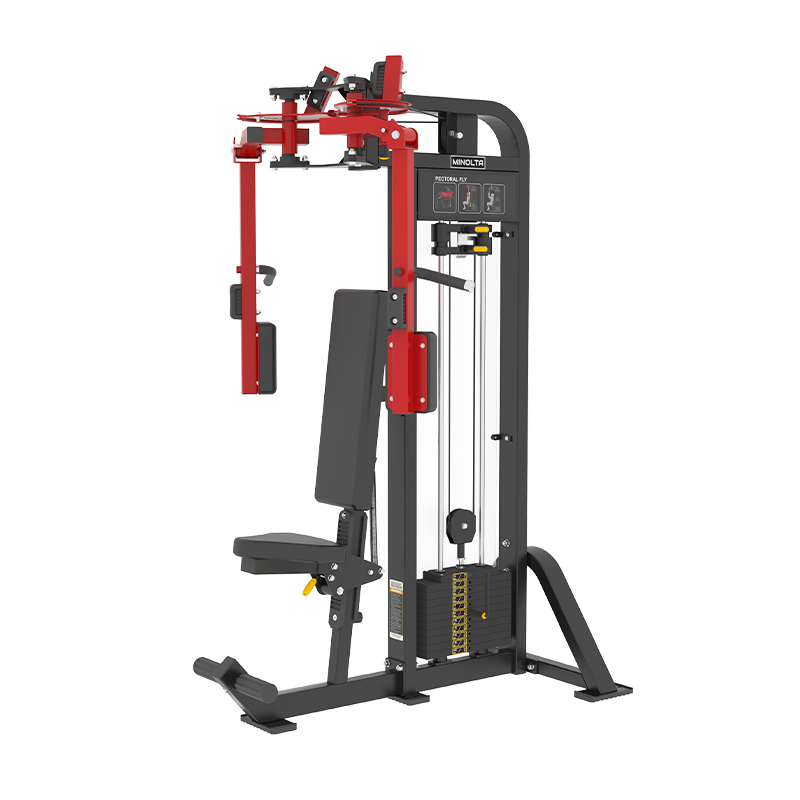
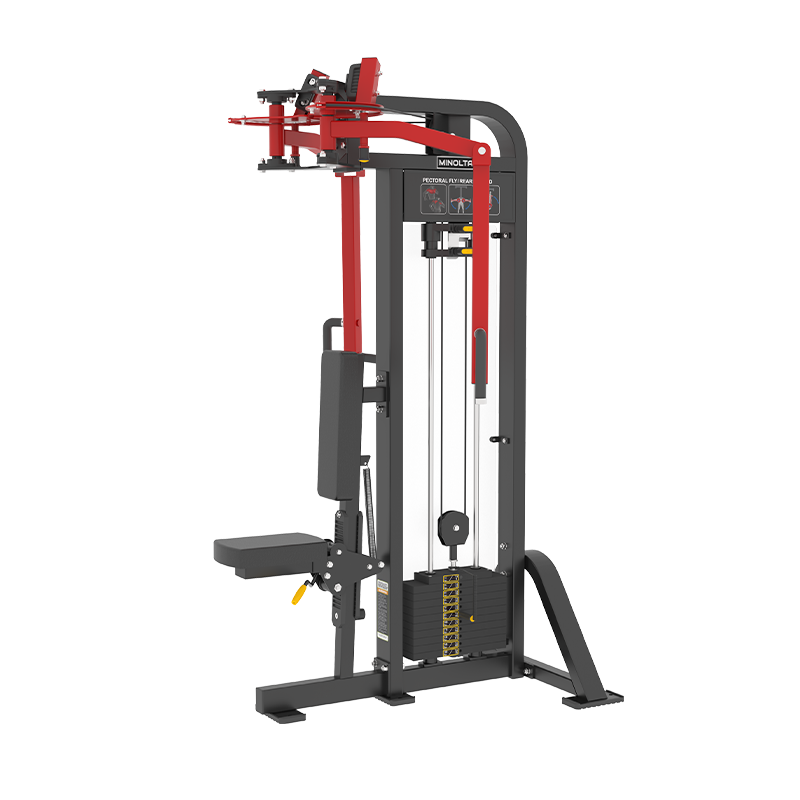
A Rear Delt/Pec Fly machine combines two familiar patterns in one seated station. In the chest fly mode, the user brings the arms together in front of the body to isolate the pectoral muscles. In the rear delt mode, the movement reverses and emphasizes the rear shoulder and upper back region. The visible label on this product panel reads “Pectoral Fly / Rear Delt,” which is the simplest way to think about it.
Commercially, this is attractive because it meets two different training needs without requiring two separate machines. The compact floor footprint also helps. A full cable area can offer more versatility, but it generally asks for more open space and more user supervision. A dedicated chest fly machine or reverse pec deck gives a more guided movement path and often a cleaner user experience, especially in busy facilities.
That is one reason a pec fly machine remains common in well-run gyms. Some members do not want to set pulleys, choose handles, or manage instability when they are trying to isolate a muscle group. They want to sit down, adjust the setup, and work through a controlled range of motion. A rear delt machine does the same for the back of the shoulder, where many lifters are undertrained and prone to sloppy form.
Key visual and functional details buyers can verify
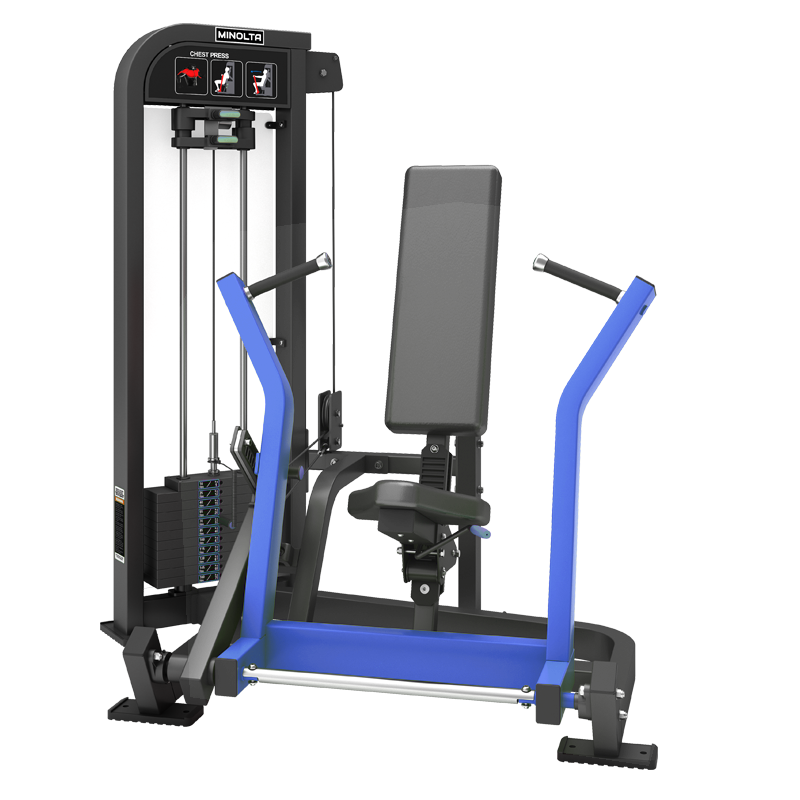
Based on the product information provided, this unit is a commercial gym strength machine with a selectorized weight stack and a cable-and-pulley resistance system visible in the center. It has a tall upright frame, an arched top support, a fixed seat, a back pad, arm pads or handles, and two upper lever arms connected to the resistance mechanism. The base is floor-supported with stabilizing feet, which is typical for a machine intended for regular commercial use.
The frame appears to be fabricated steel with a powder-coated finish, mostly matte black with red moving arms and accents. Upholstery is black, as is the enclosed weight stack. The layout suggests a dual-function upper-body station rather than a simple plate-loaded accessory. Just as important, no plates are required for operation. That makes it easier for general members to use and reduces clutter around the machine.
There are some things you should not assume from the image alone. Exact stack weight, frame gauge, pivot-bearing type, cable construction, foam density, and adjustment range are not visible and should be verified with the supplier. In procurement, that caution saves time later. A machine can look robust in a photo and still differ significantly in service life if the internal components are underbuilt or the adjustments are awkward.
Why dual-function design is attractive in real facilities
Facility operators often like machines that pull double duty, but only when the user experience does not suffer. This is where a Rear Delt/Pec Fly earns its place. It gives two common isolation exercises in a single station, which can help fill a gap in upper-body programming without expanding the equipment list too aggressively.
For a hotel gym or apartment gym, this matters even more. Those environments usually do not need a dozen specialized stations. They need a short list of versatile pieces that are simple to understand, durable under mixed usage, and visually reassuring. A selectorized chest fly machine can do that job well. The same logic applies to rehab-oriented training spaces, where controlled path-of-motion equipment is often preferred over free movement that depends heavily on user coordination.
There is a subtle advantage here too. Because the movement is guided, the machine can help reduce the learning curve for users who might otherwise avoid fly variations entirely. That does not make it a medical device, and it should not be treated as one, but it does mean the station can support more consistent training behavior across a wider range of users. From a buyer’s perspective, consistency is value.
How to evaluate a rear delt fly machine before you buy
Procurement decisions around strength machines often go wrong when buyers focus on the visible frame and ignore the user touchpoints. With this category, the details matter. A rear delt fly machine or reverse pec deck should be evaluated for ease of entry, adjustability, smoothness of motion, and how naturally the arm path matches a broad range of body sizes.
1. Check the adjustment logic first
The seat and arm-area adjustments should be easy to understand without a long orientation. If a member has to guess how to change position for chest fly versus rear delt work, the machine will get used less often. The best commercial units make the setup obvious: sit, set height, choose the direction of the movement, and go.
2. Inspect the motion path, not just the upholstery
Comfortable pads help, but they do not compensate for poor geometry. The lever arms should guide the movement in a way that feels stable through the working range. A chest fly machine that forces an awkward shoulder position can quickly become a machine people skip. The same is true for rear delt work, where users often compensate with the neck or lower back if the setup is off.
3. Confirm serviceability
In commercial equipment, uptime matters more than brochure language. Ask how the cable routing is serviced, whether replacement parts are available, and how the weight stack enclosure is accessed. A machine that looks sleek but is difficult to maintain can become an operational nuisance. That is especially true in multi-site operations where maintenance teams need predictable parts support.
4. Match the machine to the facility type
A large performance gym may still choose separate specialized stations if traffic is heavy enough. But for many commercial settings, a dual-function piece like this is the more sensible purchase. It is not about chasing maximum specialization. It is about balancing floor space, member usability, and maintenance burden.
Common mistakes buyers make with pec fly and rear delt stations
The most common mistake is assuming that all chest fly equipment feels the same. It does not. Some units emphasize chest comfortably but feel clumsy in reverse. Others work better as a rear delt machine than as a pec fly machine. If both functions are important to your facility, the machine needs to be assessed in both directions.
Another mistake is underestimating how much commercial users value quick setup. A machine that seems “feature rich” can actually slow down the floor if the switches, seat position, or start position are not intuitive. In a busy gym, friction kills utilization.
A smaller but real issue is ignoring the visual weight of the equipment. The product here uses a black frame with red moving arms, which gives a clear commercial look. That is useful in many interiors, but the real question is whether the finish holds up under repeated contact, cleaning, and routine traffic. Powder-coated surfaces are common in this sector, but not all coatings age equally. It is worth asking about finish durability and replacement touch-up protocols if your facility has high turnover or heavy use.
What Minolta’s broader manufacturing profile suggests
Shandong Minolta Fitness Equipment Co., Ltd. says it works from Ningjin’s hardware industry base and offers strength and cardio series across multiple product families, including MND-AN, MND-FM, MND-FH, MND-FS, MND-FB, MND-E Crossfit, MND-F, MND-FF, MND-G, and MND-H, plus cardio lines such as MND-D bikes and MND-X treadmills. That breadth matters because strength equipment buyers often want a supplier that can support more than one purchase cycle.
A manufacturer with that range is usually better positioned to support package orders, branding consistency, and multi-category sourcing. It does not eliminate the need for inspection, of course. You still need to confirm the exact specification of the Rear Delt/Pec Fly unit in question. But it does mean the supplier appears to operate in the commercial segment rather than treating gym equipment as an occasional side product.
Practical buyer advice for sourcing teams
If you are evaluating this kind of machine for a commercial project, ask for three things before you commit. First, request the exact specification sheet for the model offered to you, not a generic catalog page. Second, verify the adjustment points and user instruction labels, because these affect day-to-day usability more than many buyers expect. Third, compare the service parts plan. Weight-stack equipment is convenient until a cable, guide rod, or selector component needs attention.
It also helps to think in terms of traffic mix. If your users are mostly beginners, the guided movement and selectorized stack are a strong advantage. If your members are advanced lifters who already use cables and benches comfortably, the machine still has value, but it will compete with freer options. That is not a reason to avoid it; it is a reason to place it where it will be used.
For buyers balancing budget and utility, the dual-function layout makes a persuasive case. One machine supporting both a pec fly machine function and a reverse pec deck style movement is easier to justify than two separate single-purpose stations, provided the motion quality is acceptable. That is the real decision point.
FAQ: quick answers buyers usually want
Is this machine plate-loaded or stack-loaded?
Based on the visible selector pin and enclosed stack, it appears to be stack-loaded. Do not assume exact resistance values without supplier confirmation.
Can it be used in a hotel or apartment gym?
Yes, that is one of the stronger use cases. The guided motion and compact footprint are well suited to lower-complexity fitness spaces.
Why choose this over a full cable station?
A dedicated rear delt fly machine and chest fly station is usually easier to learn and more compact for targeted work. A cable station is more versatile, but it asks more from the user.
What should I verify before ordering?
Ask about dimensions, stack weight, adjustment range, finish, replacement parts, and the exact model configuration. Those details are often where projects succeed or disappoint.
A sensible next step
If your project needs a commercial-grade upper-body isolation station, the Rear Delt/Pec Fly deserves a close look rather than a quick pass. It solves a real floor-space problem, supports both chest and rear shoulder training, and fits the kind of straightforward user experience many facilities now want. The smart move is to request a full specification package from the supplier, then compare the machine’s adjustment logic and serviceability against the rest of your equipment list. That is usually where the better purchase becomes obvious.