


Why a seated chest press still matters in modern gym planning
A Seated Chest Press looks straightforward enough: sit down, brace your back, press the handles forward. But for buyers, facility operators, and product teams, that simplicity is exactly the point. A well-chosen machine gives users a controlled pressing path, predictable loading, and a training option that works for beginners, general fitness members, and lifters who want extra volume without turning every session into a free-weight balancing act.
That matters because chest training is not just about “doing presses.” In a commercial gym, you are deciding how people will build upper-body strength training capacity, how safely they can train when fatigue sets in, and how efficiently traffic moves through the strength area. A machine-based press can reduce setup friction and lower the barrier to entry for a pectoral muscle workout. It also helps facilities offer a clearer progression from supported machine work to more complex barbell or dumbbell pressing.
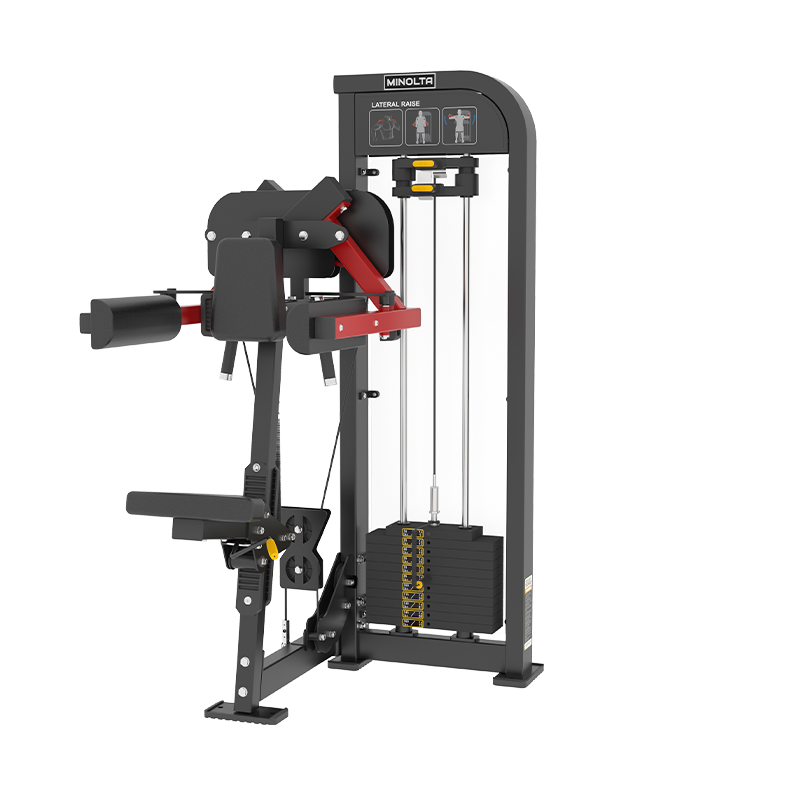
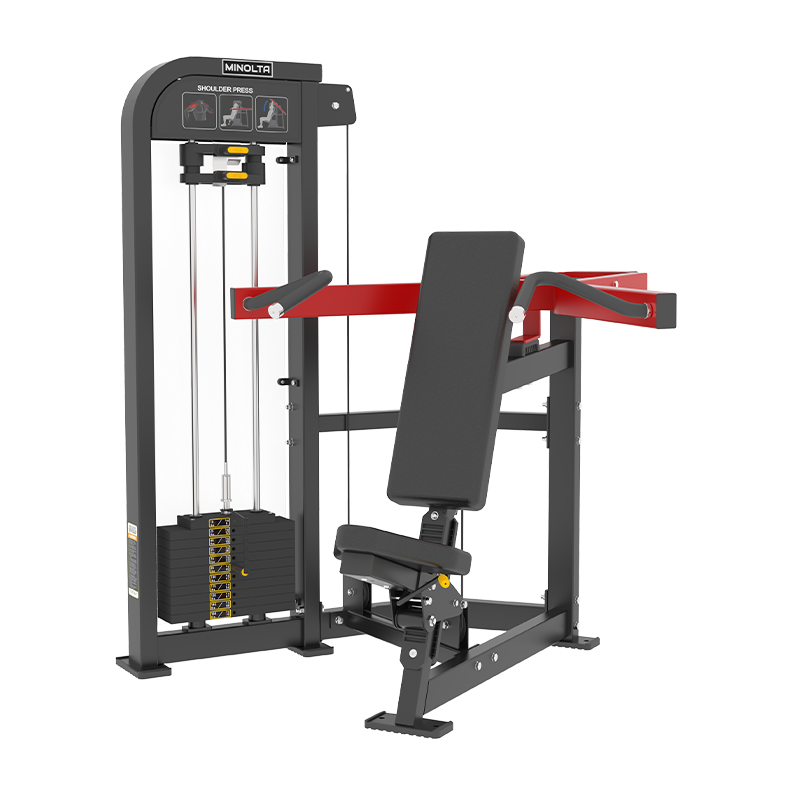
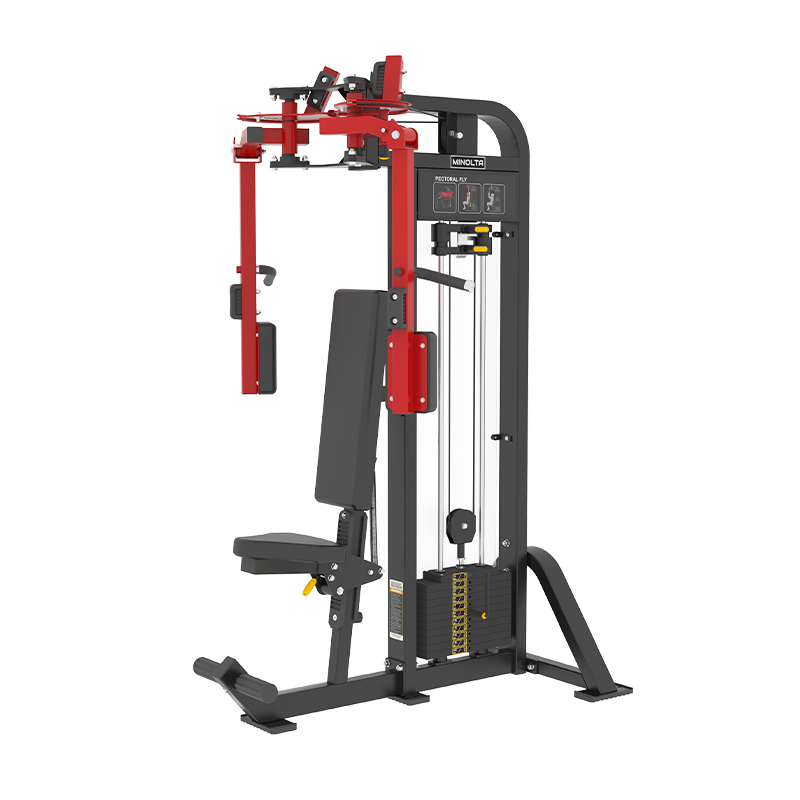
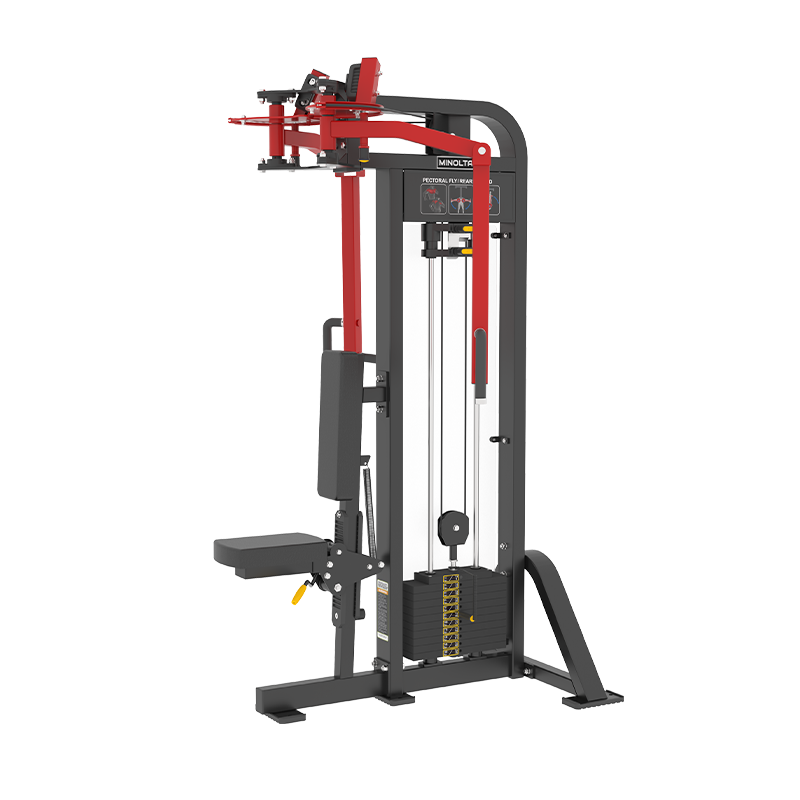
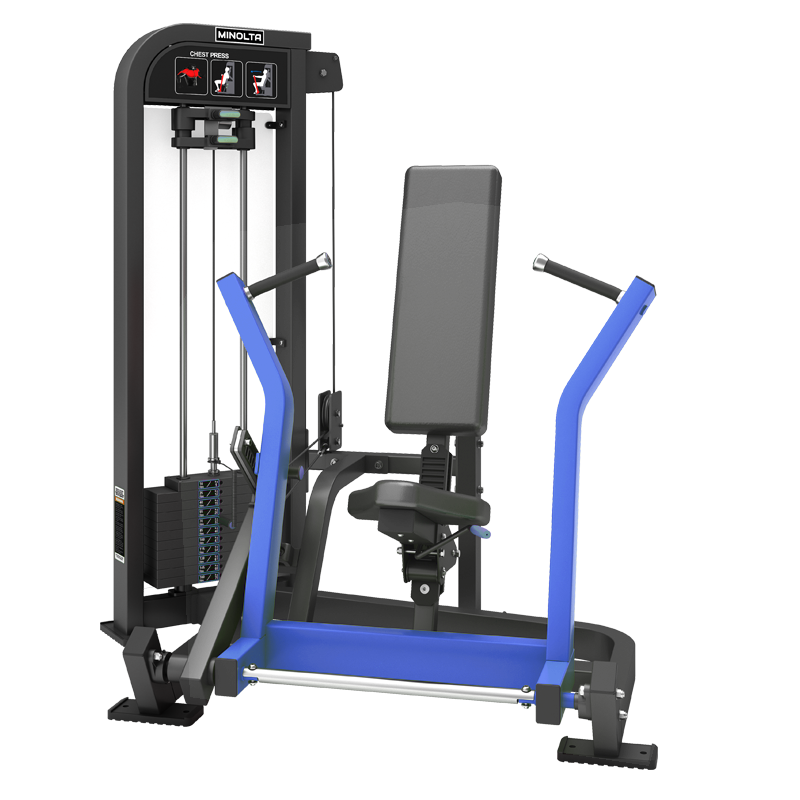
The machine described here is a selectorized commercial strength-training unit with a seated format, back support, forward press arms, and an integrated weight stack. The visible MINOLTA branding, black powder-coated steel frame, blue accent sections, and upholstered pads suggest a typical commercial build intended for repeat daily use in a gym, club, hotel fitness room, rehab setting, or training center.
What the machine is designed to do
The basic task of a chest press machine is to guide the user through a pressing motion while stabilizing the torso. The seated position and back pad help keep the athlete from cheating the movement with momentum, while the handles and arm path encourage a repeatable pressing angle. For many users, that makes the exercise easier to learn than free-weight pressing, and often safer to continue when fatigue is high.
In practical terms, this kind of chest press machine supports three important outcomes. First, it isolates the upper-body pressing pattern in a way that is easier to coach. Second, it provides a machine alternative for users who are not ready for heavy bench work. Third, it allows facilities to offer structured resistance work that fits into circuit training, rehab-adjacent exercise, or general conditioning programs.
It is worth saying plainly: a machine does not replace every free-weight exercise. It does, however, fill a valuable role. If a facility is trying to serve a broad audience, a seated press is often one of the better pieces of chest workout equipment to include because it is intuitive, easy to maintain, and familiar to most users after a single demonstration.
Key features buyers can actually evaluate
When you are reviewing a selectorized chest press, the visible details tell you a lot about how the machine is likely to behave in daily use.
Stable seated structure
The machine shown uses a fixed seat with a large vertical back pad. That matters more than it sounds. A good back support reduces wobble, helps align the shoulder line, and makes the press more repeatable from one user to the next. In a busy facility, repeatability is not a luxury; it is what keeps programming practical.
Selectorized weight stack
The integrated stack makes loading fast. Instead of handling plates, users select resistance with a pin and begin the set. For gyms, this shortens turnover time and reduces clutter around the station. It also helps keep the machine suitable for supervised environments where speed and simplicity matter.
Dual-arm press layout
Dual handles and forward-moving press arms usually create a movement path that feels natural to a wide range of users. Depending on the machine’s geometry, the pressing pattern may feel closer to a horizontal press or a slightly angled chest press. That distinction matters when you are matching the machine to your training floor. Facilities that already have incline and flat pressing options may value one feel; rehab or general fitness settings may prefer another.
Commercial frame and finish
The black powder-coated steel frame and blue accent sections suggest a commercial finish intended to resist routine wear. Powder coating is standard for this category because it handles scuffs and cleaning better than basic paint. Upholstered pads, usually vinyl or a similar synthetic surface on commercial equipment, should be easy to wipe down and hold their shape under repeated use.
How this kind of machine fits into upper-body programming
Facilities often underestimate how much value there is in having one dependable machine press in the strength lineup. The seated chest press works well as a primary machine press for novice members, but it also has a place in more advanced programming.
For beginners, it teaches the pressing pattern without requiring the same balance and coordination as dumbbells or barbells. For intermediate users, it is a useful hypertrophy tool because it lets them train chest and triceps with less setup fatigue. For stronger athletes, it can serve as a volume accessory after free-weight work, or as a controlled option during deloads and return-to-training phases.
The machine also helps facilities manage training flow. Not every member wants to lie on a bench, adjust dumbbells, or ask a coach for spotting. A seated chest press gives them a direct, low-friction path into work sets. That is one reason these machines remain common in commercial gyms even as training trends shift.
What Minolta’s manufacturing background suggests, cautiously
Shandong Minolta Fitness Equipment Co., Ltd. states that it draws on Ningjin’s hardware industry base and offers a broad commercial lineup, including strength and cardio series. The company also describes a facility with a 120,000-square-meter footprint, manufacturing workshop, quality control lab, and exhibition hall, plus export experience across more than 100 countries.
For buyers, that does not answer every technical question about this specific seated press, but it does provide context. A manufacturer with a large product range and commercial focus is more likely to understand the practical issues that matter in gym procurement: frame consistency, weld repeatability, upholstery durability, and the need for equipment that can live on a public floor rather than in a light-use home setting.
Still, caution is smart. Do not assume the exact stack weight, frame gauge, adjustment range, resistance curve, or warranty terms unless they are documented. For procurement, those details matter more than the branding on the top panel.
Selection criteria that should guide a buyer
Choosing a seated chest press is less about chasing a feature list and more about fitting the machine to the users you serve.
User profile
If the gym serves beginners, general population members, or older adults, a supported press is often a wise choice. If the audience is mostly advanced strength athletes, the machine should complement, not crowd out, other pressing options.
Movement feel
Press angle, handle position, and range of motion determine whether the machine feels chest-dominant, shoulder-heavy, or somewhere in between. The right feel depends on the programming style of the facility. A good chest press machine should not force awkward shoulder position at the start or end of the rep.
Flooring and footprint planning
Selectorized commercial machines are efficient, but they still need space for safe access, loading, and cleaning. The vertical tower and side arms visible here suggest a footprint that should be planned carefully, especially in compact training rooms.
Serviceability
Cable-and-pulley assemblies, stack guides, upholstery, and pivot points all need routine inspection. In buying terms, the machine should be easy to service without specialized downtime. That is a practical issue many procurement teams only discover after installation, which is usually too late.
Common mistakes when sourcing chest press equipment
One common mistake is treating all pressing machines as interchangeable. They are not. A machine with a fixed seat and rigid path may feel excellent for one user group and awkward for another. Another mistake is overemphasizing appearance. A bright finish and clean signage are nice, but commercial value comes from how the machine performs after months of use.
Another buyer-side error is ignoring maintenance access. If the weight stack, guide rods, or linkage are difficult to inspect, the machine becomes more expensive to keep in service. That may not show up on day one, but it shows up eventually.
And finally, some buyers forget that the machine is part of a larger floor plan. A seated press should work with adjacent stations, not compete with them. If your facility already has multiple chest workout equipment options, adding one more should solve a gap, not just fill space.
Practical advice for gyms, clubs, and rehab-oriented facilities
If you are buying for a commercial floor, think about use case before finish details. A hotel gym may prioritize intuitive operation and fast turnover. A rehabilitation-oriented space may want very clear seating support and a controlled, predictable path. A strength-focused club may care more about durability, resistance feel, and whether the machine complements heavier free-weight work.
Training staff should also be able to explain the exercise in a sentence. That sounds minor, but it is one of the best tests of whether a machine belongs on your floor. If a coach can say, “Set the seat, keep your back on the pad, press forward under control,” then the machine is probably user-friendly enough for public use.
FAQ for buyers comparing seated chest press machines
Is a seated chest press good for beginners?
Yes. The supported position and guided press path make it a common entry point for upper body strength training.
Can it replace bench pressing?
Not entirely. It is better viewed as a controlled machine press that complements free weights rather than replacing them.
What should I verify before purchase?
Confirm the stack weight, dimensions, resistance feel, service access, upholstery quality, and warranty details from the supplier documentation.
Why choose selectorized over plate-loaded?
Selectorized units are usually faster to use, easier to manage on a busy floor, and simpler for general members to operate.
A sensible next step for sourcing teams
If you are evaluating a Chest Press Machine for a commercial floor, ask for the full specification sheet rather than relying on appearance alone. Compare the seat geometry, handle path, stack configuration, and maintenance requirements against your user base and floor plan. For many buyers, the right machine is the one that gets used often, stays in service, and does not create coaching headaches.
That is where a well-built Seated Chest Press earns its place. It is not flashy, but it is dependable, easy to understand, and useful across a wide range of facilities. In the end, that combination is often what keeps a strength area moving smoothly day after day.