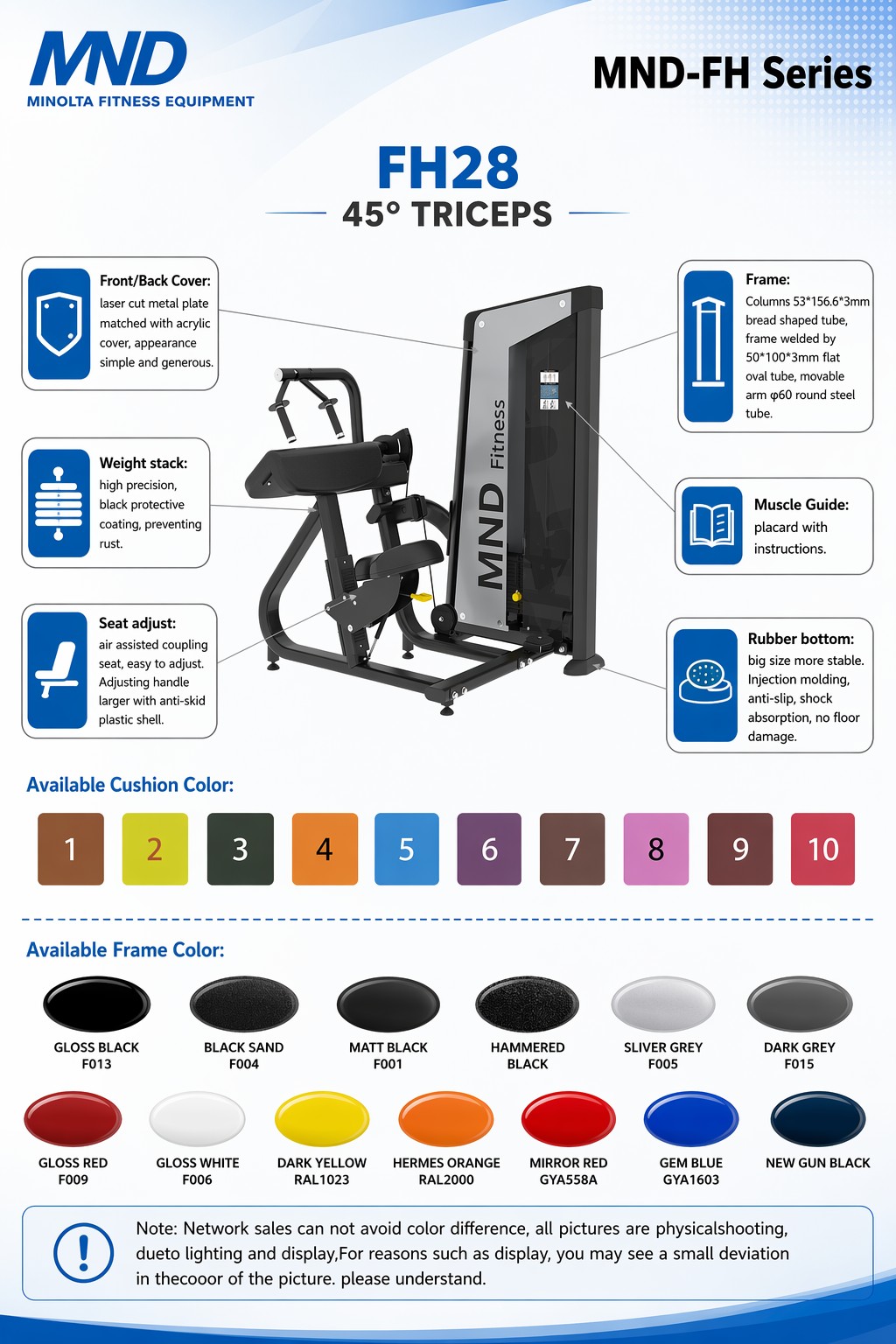



Cardio floor layouts in high-turnover facilities face an ongoing debate: whether to buy dedicated air ergs that emulate open water dynamics, or magnetic units that offer silent, linear resistance. Sourcing managers frequently find that neither pure format completely covers both HIIT classes and rehab or steady-state training. The MND-D20 rowing machine addresses this division by pairing an open flywheel damper with an internal eddy-current brake, positioning itself as a heavy-duty dual resistance rowing machine for commercial fitness centers, hotels, and athletic conditioning spaces.
For procurement teams balancing floor space, durability, and member satisfaction, choosing an ergometer requires looking past external shroud aesthetics. You need to look directly at the transmission, rail extrusion tolerances, and flywheel integration. Here is an engineering and sourcing breakdown of how hybrid resistance operates, where the design excels, and what to verify before issuing a purchase order.
The Mechanics of Hybrid Resistance: Air Plus Magnetics
A traditional air resistance rowing machine relies on fluid dynamics: user pull spins an impeller, and air resistance scales quadratically with stroke speed. The faster the catch and drive, the stiffer the stroke feels. However, at lower stroke rates, pure air units offer very little baseline loading. Conversely, a standard magnetic resistance rowing machine uses permanent magnets near an aluminum or copper disc, offering consistent drag regardless of stroke velocity, but lacking the lively kinetic snapback that rowers expect.
Combining these two mechanics transforms the MND-D20 into an effective 2 in 1 rowing machine. It incorporates a dual-stage resistance mechanism:
- 10-gear air damper: Regulates the intake aperture volume around the perimeter of the impeller housing. Opening the damper from 1 to 10 increases air intake, shifting the baseline drag factor and mimicking the drag variance between a light scull and a heavy rowboat.
- 8-gear magnetic brake: Operates independently via an adjustable manual or motorized bracket that moves permanent neodymium magnets closer to the conductive flywheel core. This 8 gear magnetic resistance rower setup creates direct eddy-current deceleration, delivering firm resistance even at slow, deliberate rehabilitation cadences.
By functioning as an air and magnetic resistance rower, the MND-D20 lets athletes use rapid, high-wattage air resistance for sprint intervals, while allowing coaches to dial in magnetic drag for targeted power building and strength-endurance intervals.
Frame Rigidity and the Detachable Mechanism
In standard light-commercial designs, modularity is often the first point of mechanical failure. When a manufacturer markets a detachable rowing machine, facility engineers must scrutinize the junction box between the front flywheel assembly and the aluminum monorail. Constant dynamic loading during maximal effort drives torsional flex directly through the mid-frame coupling.
The MND-D20 utilizes an engineered quick-release latching system backed by reinforced steel mounting plates. Built as a 150kg capacity rowing machine, the monorail extrusion features an internal I-beam reinforcement profile. This prevents center sag under heavy athletes during the finish phase of the stroke, where downward seat roller load peaks.
The primary trade-off with any split-frame unit is routine maintenance. In a high-traffic cross-training gym, that center latch will experience slight micro-abrasion over thousands of cycles if the locking pin is not properly torqued during initial assembly. For facilities that do not regularly break down machines for upright wall storage, applying threadlocker to the structural fastening points during installation is good practice to ensure long-term stability.
Technical Comparison: Single Resistance vs. MND-D20 Hybrid
| Feature / Metric | Pure Air Ergometer | Pure Magnetic Ergometer | MND-D20 Dual Resistance Rower |
|---|---|---|---|
| Resistance Profile | Dynamic (speed-dependent) | Constant (speed-independent) | Combined: Dynamic air curve + linear magnetic base |
| Damping & Drag Range | 10 damper settings (air only) | 8–16 digital steps | 10 gear air resistance rower + 8 magnetic positions |
| Acoustic Output | High (turbine noise) | Near silent | Moderate (damped by magnetic load at lower RPMs) |
| Drive System | Nickel-plated chain | Poly-V or nylon strap | High-tensile wear-resistant drive strap |
| Structural Rating | Commercial (135–150 kg) | Residential to Light-Commercial | Full commercial (150 kg user rating) |
Sourcing from Shandong Minolta: Production Background
Equipment longevity in cardio categories depends heavily on raw material provenance and manufacturing precision. Manufactured by Shandong Minolta Fitness Equipment Co., Ltd. (MND FITNESS), the MND-D20 draws directly from Ningjin County’s mature hardware and metal-processing cluster in Shandong.
Operating out of a 120,000-square-meter facility with over a decade of fitness manufacturing experience, Minolta utilizes automated tube-bending, robotic welding lines, and electrostatic powder coating for their extensive commercial lineup. The company exports cardio lines (including MND-X treadmills and MND-D bikes) alongside their commercial strength series across Europe, South America, and the Middle East.
For procurement managers ordering full 20-foot or 40-foot high-cube containers, sourcing directly from Minolta provides distinct consolidation advantages. The MND-D20 can be mixed with plate-loaded strength pieces (such as the MND-AN or MND-G series), simplifying logistics down to a single sea freight bill of lading while maintaining consistency in surface finishes and upholstery across an entire gym installation.
Field Evaluation: What Commercial Buyers Should Check
When evaluating sample units or conducting factory inspections for an adjustable resistance rowing machine, focus on the wear components:
1. Drive Strap Alignment and Roller Bearings
Unlike chain-driven machines that need regular lubrication and drip trays, the MND-D20 uses a quiet, high-density composite belt. Inspect the guide pulleys inside the front housing. They must run on sealed cartridge bearings with no lateral play. An off-center belt will fray quickly against the shroud under uneven single-arm pulls.
2. Footrest Adjustment Webbing and Heel Cups
The footplates endure substantial shear stress during the catch-to-drive transition. Ensure the ratcheting foot-strap assemblies hold tension without slipping when subjected to horizontal pull loads, and verify that the heel-cup length adjustments lock securely into place.
3. Console Calibration Across Resistance Modes
With an air and magnetic resistance rower, calculating wattage, pace per 500 meters, and calorie expenditure is more complex than with a pure air flywheel. The MND-D20’s console relies on an integrated sensor array that accounts for both the damper opening and magnetic position. Sourcing teams should verify that split-time readouts update smoothly across varying cadences.
Frequently Asked Questions
Does the MND-D20 require an external power supply?
Most hybrid cardio ergs utilize battery-powered or self-generating console systems to run the LCD interface, while the magnetic resistance is adjusted mechanically or via an internal servomotor. For exact input specs depending on the digital console option selected, check the specific batch configuration sheet.
How often does the air damper housing need cleaning?
In a busy commercial gym, the impeller functions like a centrifugal fan, pulling in ambient dust and gym chalk. The outer mesh housing should be vacuumed weekly, and the cage split open for internal impeller cleaning every six months to prevent chalk accumulation from skewing the drag factor.
Is the unit suitable for rigorous CrossFit-style programming?
Yes. The MND-D20 handles high-intensity interval training effectively. The reinforced monorail, 150kg weight limit, and smooth strap drive support explosive sprint efforts without the chain maintenance required by traditional air-only rowers.
Summary for Procurement Teams
Selecting a commercial rowing machine no longer requires picking strictly between the realistic feel of an air flywheel and the silent, heavy load of a magnetic brake. The MND-D20 bridges that gap by housing both systems in a rigid, detachable chassis capable of handling demanding club use.
For facility planners and commercial distributors looking to diversify their cardio equipment with equipment built in an ISO-compliant manufacturing environment, contact the commercial sales engineering team at Shandong Minolta Fitness Equipment Co., Ltd. Request detailed dimensional drawings, pallet packing dimensions, and container load optimization schedules to support your next project.