


Why a Super Lat Machine Convergent matters in a commercial gym
A Super Lat Machine Convergent sits in that small group of strength machines that looks simple from across the room and still causes buyers to ask better questions once they get close. For a commercial gym, hotel fitness room, rehabilitation studio, or institutional training area, the decision is rarely about whether people will use it. The real question is whether the machine is stable, intuitive, durable, and broad enough in its training appeal to justify its floor space.
In practical terms, this type of plate-loaded upper-body pulling machine is aimed at back, shoulders, and arms work, with the benefit of guided movement and easier loading than a selectorized stack. That matters in busy facilities where users want a clear setup and staff want fewer wear points to manage. The convergent arm geometry also tends to feel more natural for many lifters, though the exact training experience depends on the handle path, seat position, and how the machine is built. Those details are easy to gloss over in a brochure and much harder to ignore after six months on a gym floor.
For buyers comparing a Lat Pulldown Machine, a Convergent Lat Pulldown, or another Commercial Lat Machine format, the main task is not picking the most impressive-looking frame. It is matching the machine’s mechanics to the type of users you expect, the available maintenance support, and the amount of abuse the equipment will see every day.
What is visible in this machine design
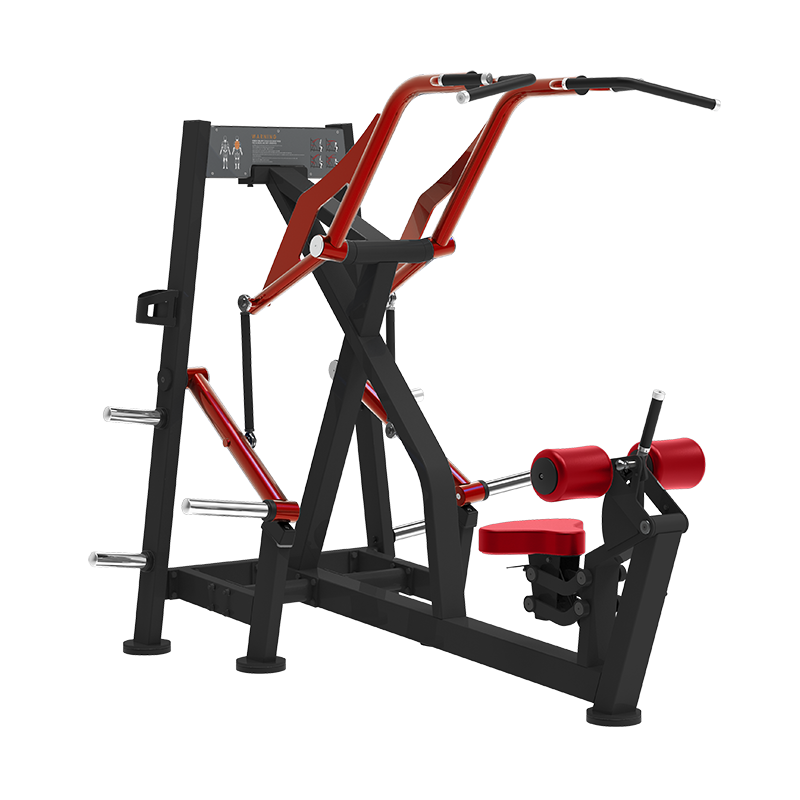
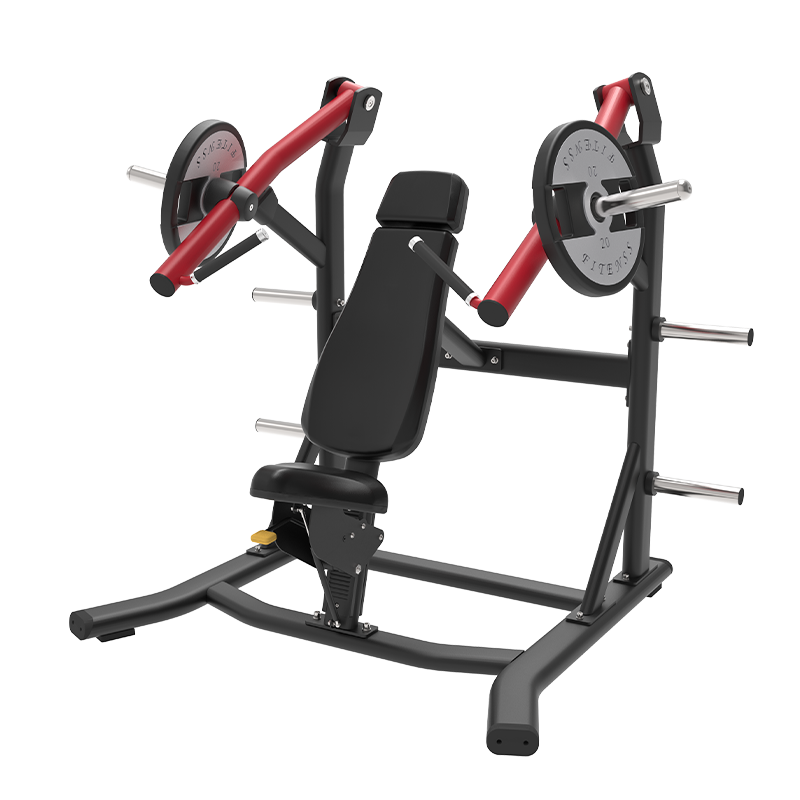
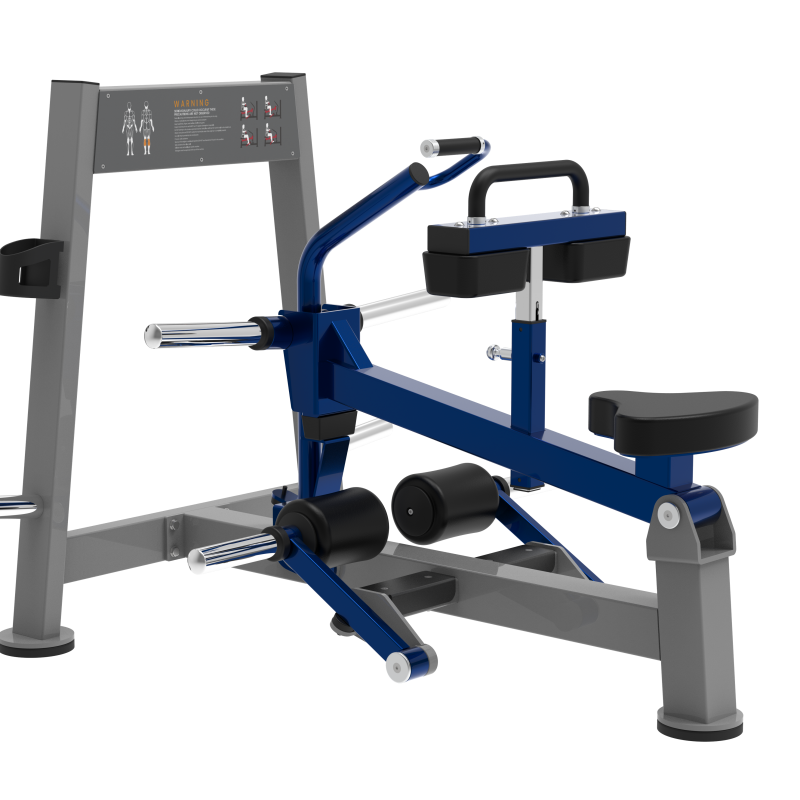
The product information points to a plate-loaded strength training machine with a heavy steel frame, pivoting arm assemblies, upper multi-grip handles, an adjustable seat, and thigh or leg restraint rollers. That combination strongly suggests an upper-body pulling station built for stable, guided motion. The structure appears to use a wide rectangular base, upright posts, and cross bracing, which is the right starting point for a machine that must stay planted under dynamic loading.
From a buyer’s perspective, a few visible details are worth paying attention to. First, plate loading gives operators a familiar workflow and reduces dependence on selectorized internal mechanisms. Second, the presence of multiple loading pegs or rods implies practical storage or loading convenience, although you should not assume the exact plate capacity from a photo alone. Third, the adjustable restraint assembly matters more than casual observers realize. If the user cannot lock the body in place comfortably, the movement becomes harder to control and far less repeatable.
The metal frame appears painted, likely with a powder-coated finish, while the pads and rollers are upholstered in black material. That is standard commercial-gym construction, but standard does not mean interchangeable. The quality of welds, joint alignment, bearing or bushing fit, and upholstery assembly often decides whether a machine feels smooth or merely heavy.
How convergent pulling machines differ from a basic lat station
The phrase Super Lat Machine Convergent usually signals a converging arm path rather than a purely vertical or linear pull. In plain language, the handles do not necessarily travel straight down in a rigid lane. They move along a path that can feel more anatomical to many users, especially when the machine is designed well and the arm motion stays balanced.
This is not just marketing language. A convergent pattern can help a machine feel less restrictive in the shoulder and upper back. It may also create a more engaging training feel because the handles can follow a path that resembles a natural pulling arc. That said, a convergent setup is only useful if the geometry is correct. Poor linkage design can create awkward resistance curves, uneven loading between sides, or a range of motion that looks clever but trains poorly.
When comparing a Back Training Machine of this type with simpler gym lat equipment, ask a basic question: does the machine guide the user into better position, or does it merely add moving parts? More joints are not automatically better. In commercial settings, every additional linkage is another area that must remain aligned under repeated use.
Where this machine fits in a facility
This kind of Upper Body Strength Machine fits well in facilities that need dependable plate-loaded equipment without overcomplicating the user experience. Commercial gyms often prefer this category because it supports a wide range of trainees, from beginners learning safe pulling mechanics to experienced lifters who want a stable back accessory movement. Hotels and corporate gyms may also like it because plate-loaded stations can be straightforward to explain and easier to service than more complex stack-based units.
Rehabilitation or training facilities may choose the format for another reason: controlled motion. While a machine should never be treated as a one-size-fits-all rehab answer, guided resistance can help users build confidence and keep movement more consistent. Still, buyers in these settings should be conservative. If the target population includes deconditioned users or people with shoulder limitations, seat geometry, handle spacing, and adjustment range matter more than the machine’s visual presence.
Construction cues that separate a serious machine from a mediocre one
Frame stability
A wide footprint and heavy steel base are not decoration. They help control sway, especially during high-effort pulling and when users are shifting on and off the seat. Cross bracing between uprights is another practical sign, because it helps distribute force through the frame instead of concentrating stress at a single joint.
Pivot quality
The pivoting arms and linkage points are where this machine earns or loses its reputation. Smooth movement usually depends on good machining at the pivot points, consistent bushings or bearings, and careful assembly. You cannot verify those details from a single image, but you can ask the supplier how the joints are built and what maintenance is expected. That is not a fussy question; it is the sort of question that saves service calls later.
Padding and restraint design
Seat padding and thigh rollers are modest-looking parts that have an outsized effect on comfort and usability. If they are too soft, users sink and lose position. If they are too firm or poorly shaped, the machine feels harsher than it should. In a busy gym, the restraint assembly also needs to be easy to adjust without creating a queue. A machine that takes too long to set up can be technically sound and still lose favor with users.
Why plate-loaded strength equipment remains popular
Plate-loaded machines continue to hold their place in commercial gyms for a simple reason: they are durable, intuitive, and flexible. Users know what to do with plates. Operators know how to inspect them. And when a machine is built properly, the mechanism can handle repeated use without depending on a complicated internal weight stack.
That does not make plate-loaded equipment automatically superior. It just makes it practical. In some facilities, the ability to change resistance in larger steps is welcome. In others, the trade-off is less precise micro-adjustment compared with a stack machine. A buyer should think about the training population and the typical workout style on the floor. If you expect many advanced lifters, plate loading is often a good fit. If you expect a high number of casual users, the setup should still remain obvious and quick.
How to evaluate a Super Lat Machine Convergent before purchase
Start with the movement path. Does the handle travel feel balanced and controllable through the full range? Then look at the adjustment sequence. Can the seat and restraint system be set quickly and securely? After that, inspect the frame from a maintenance point of view. Are the loading pegs easy to access? Is there enough room around the machine for plates, user entry, and cleaning?
Also ask about the manufacturing process. The likely category here is welded steel fabrication with machining for pivot points and bushings, followed by powder coating and upholstery assembly. That is a standard and sensible production route for a Commercial Lat Machine, but quality still depends on execution. Clean welds, aligned joints, and proper finishing details usually matter more than broad claims about “premium steel.”
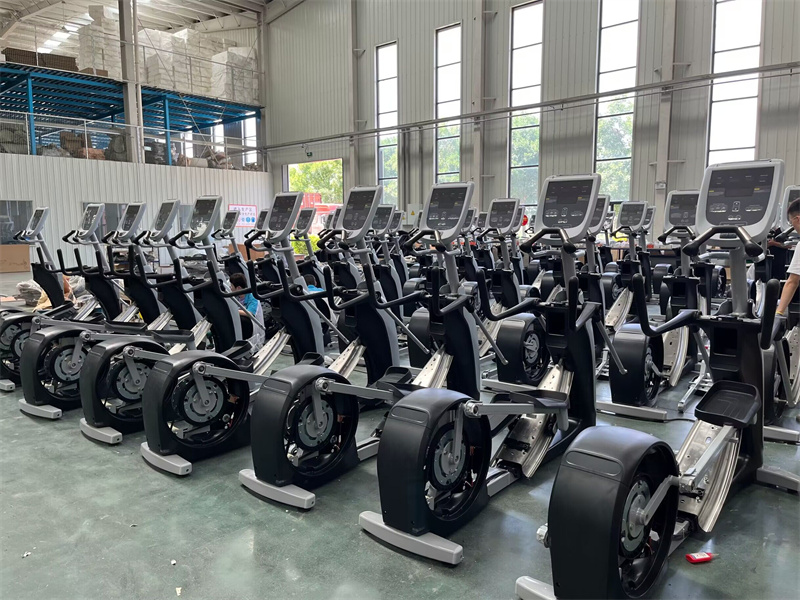
Finally, consider the supplier’s broader capability. Shandong Minolta Fitness Equipment Co., Ltd. states that it leverages Ningjin’s hardware industry and operates a 120,000 square meter facility with a manufacturing workshop, quality control lab, and exhibition hall. The company also says it offers more than 300 types of exercise equipment across strength and cardio lines and has exported to over 100 countries. For a sourcing team, that tells you something useful about scale and product range, even if it does not answer the specific mechanical questions for this one machine.
Common buyer mistakes
The first mistake is over-focusing on appearance. A machine can look imposing and still have a mediocre pull path or awkward restraint layout. The second is assuming that “commercial” automatically means gym-ready for every environment. Commercial use varies widely between a quiet hotel room and a high-traffic training club. The third is neglecting service access. If a machine needs frequent adjustment, lubrication, or part replacement, the design should make those tasks easy rather than hidden behind cosmetic panels.
Another common oversight is mismatching the machine to the user base. If your facility serves many beginners, clarity and comfort matter more than aggressive resistance curve claims. If your floor caters to serious strength trainees, the machine should feel solid under load and allow enough resistance progression to stay relevant.
Practical buyer questions to ask a supplier
Before ordering, ask how the pivot assembly is built, what finish is used on the steel frame, whether the seat and restraints are adjustable across a wide user range, and how the machine is packaged for export or domestic delivery. If the supplier can provide a clear parts list, assembly guidance, and maintenance recommendations, that is a good sign. If answers stay vague, proceed carefully.
It is also worth asking how the machine is positioned within the product line. The company mentions several strength series, including MND-AN, MND-FM, MND-FH, MND-FS, MND-FB, MND-E Crossfit, MND-F, MND-FF, MND-G, and MND-H. That breadth suggests the supplier works across different commercial segments, which may help if you want matching equipment for a full gym floor rather than a single unit.
What this machine helps a buyer decide
If you are comparing gym lat pulldown equipment for a commercial project, the decision is less about a brand slogan and more about training utility, structural confidence, and day-to-day serviceability. A Super Lat Machine Convergent, when built properly, offers a guided upper-body pulling station that can serve a busy floor without feeling fragile or fussy. It is most attractive to buyers who value plate-loaded simplicity, a stable footprint, and a movement pattern that may feel more natural than a straight-line design.
Request the detailed specification sheet, check the adjustment range, and ask for photographs of the pivot points and upholstery details if they are not already provided. For sourcing teams, that small extra step often separates a sound purchase from a machine that becomes a maintenance annoyance.
If you are evaluating this category for a project, contact the supplier with your layout, user profile, and loading preferences, then compare the machine against your other back training options on those practical grounds rather than on appearance alone.