


What Buyers Usually Mean by a Super Vertical Chest Press
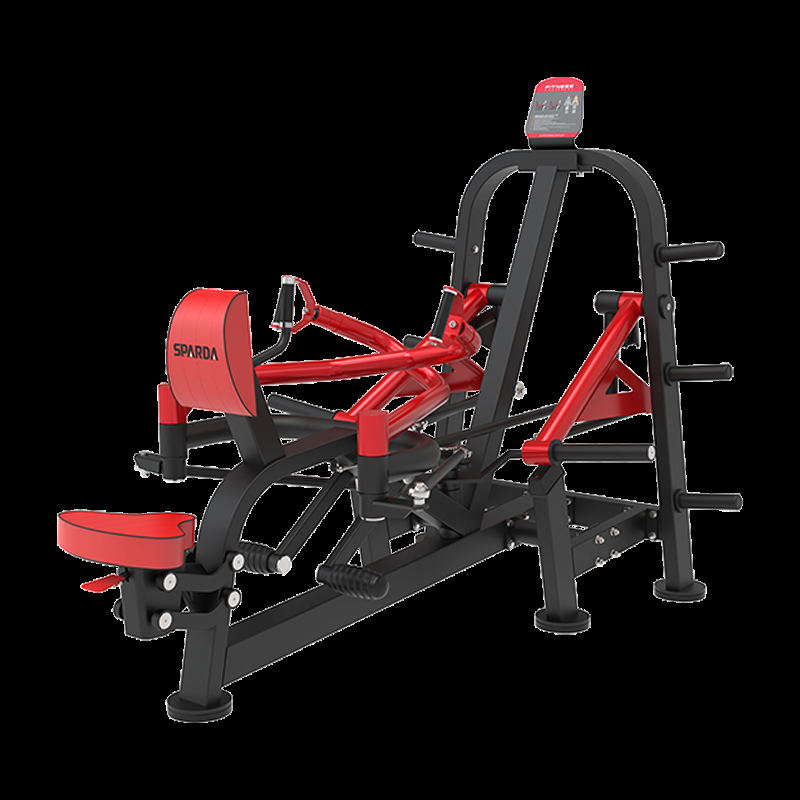
The Super Vertical Chest Press is the kind of machine buyers look at when they want a guided pressing station that feels stable, compact, and easy to teach on the gym floor. In practice, that phrase is often used for a vertical chest press machine or a very steep pressing setup rather than a loose free-weight movement. The appeal is simple: users can load the chest, shoulders, and triceps without having to manage balance, bar path, or a spotter.
That matters because a commercial chest press machine is never judged only by how hard it feels. Operators care about whether new members can use it quickly, whether experienced lifters respect it, and whether the frame, pads, and lever geometry hold up under repeated daily use. A machine can look heavy-duty from across the room and still feel awkward once someone sits down. Buyers notice that difference fast.
Why the Steeper Pressing Angle Matters
An upright pressing path changes the training experience. Some users like the feeling of pressing higher through the torso, especially when they want a machine-based movement that resembles an upper chest workout machine more than a flat press. Others simply prefer the posture because it feels natural on the shoulders and easier on the lower back than a less supported setup. The exact training effect depends on seat position, handle path, and the machine's lever design, so it is wise not to overpromise a muscle map that the hardware cannot guarantee.
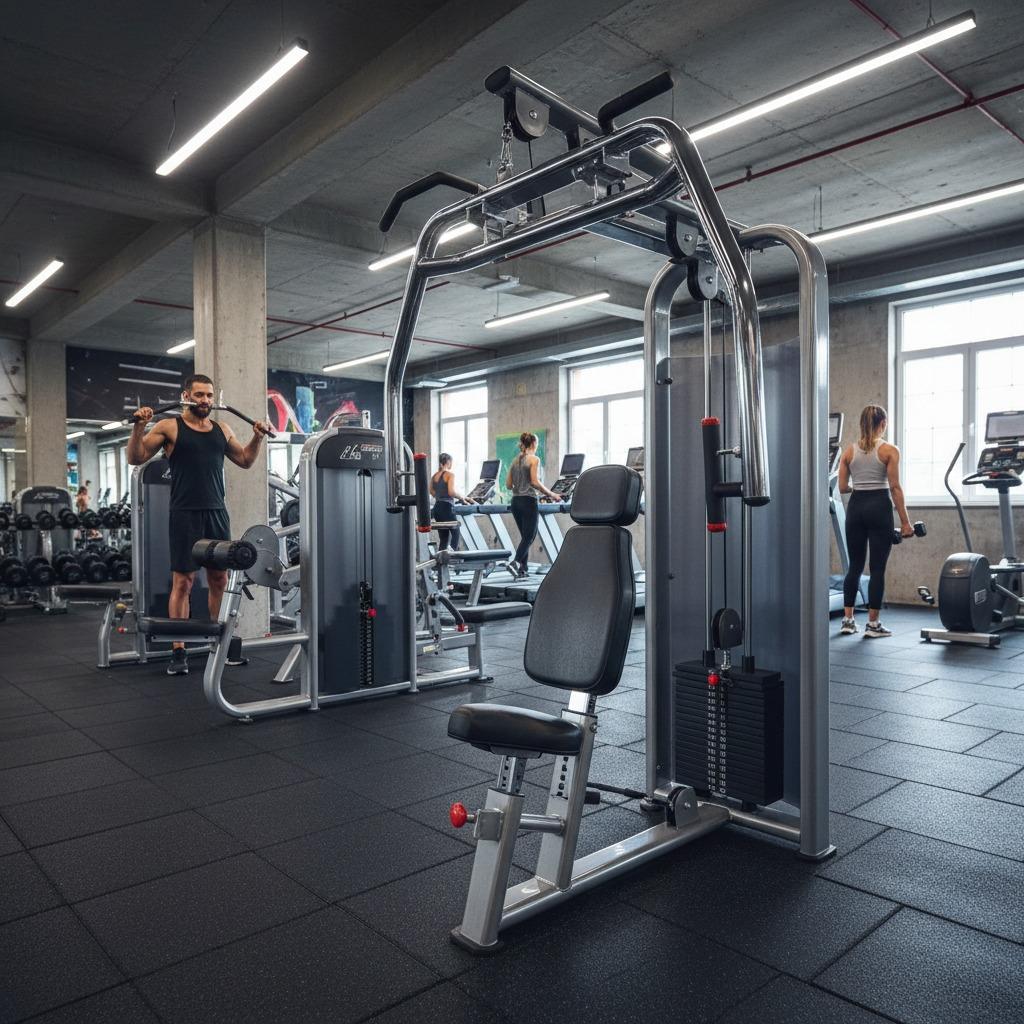
From a gym operator's point of view, the real value is consistency. A gym chest press machine with a guided motion gives the same basic movement arc to beginners, older members, and busy users who want to get in, work hard, and move on. That consistency is one reason these machines stay on the floor in commercial gyms, fitness centers, rehab spaces, and training facilities.
What to Inspect Before You Buy
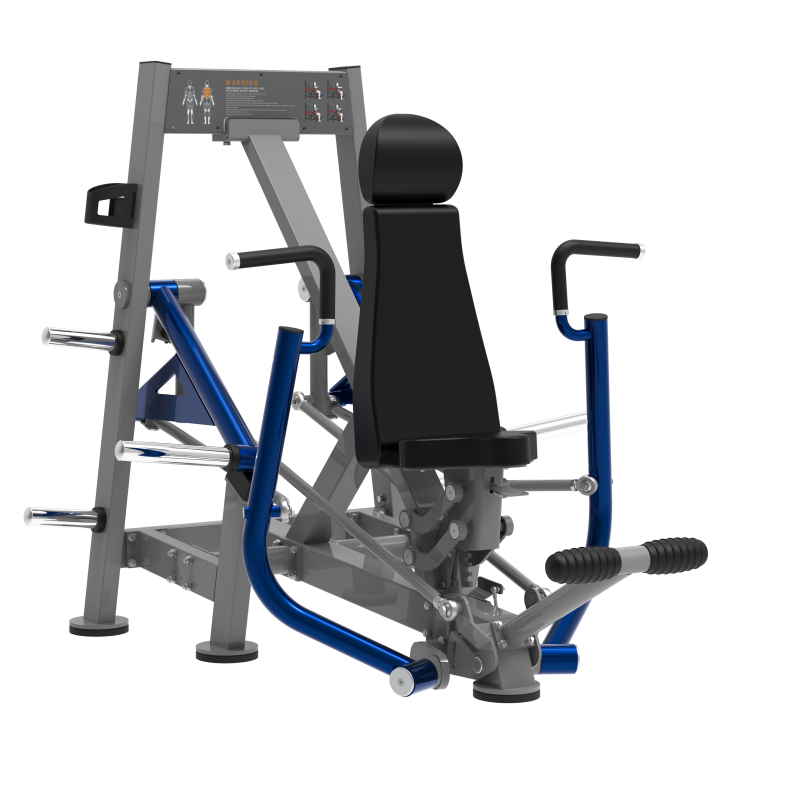
For a product in this category, the visible steel frame matters, but it is only the starting point. Heavy-duty welded tubing, stable floor contact, and clean pivot construction are the first signs that the machine belongs in a commercial setting. A good frame should feel planted when the user drives the handles forward. Any noticeable sway, flex, or loose linkage is a warning sign, especially if the machine is meant for a busy shared environment.
Padding deserves more attention than many buyers give it. Seat and back support need to be firm enough to stabilize the torso, but not so hard that long sessions become uncomfortable. On a vertical chest press machine, the backrest angle and seat height influence everything: shoulder position, range of motion, and how comfortably different body sizes can reach the handles. If those pieces are fixed in a way that suits only one user shape, the machine may look fine in a catalog and still disappoint on the floor.
Handle placement is another practical issue. The best chest press equipment lets the user start and finish the movement without wrist strain or elbow flare that feels forced. Smooth motion matters here. A guided arm should move with enough resistance to feel serious, but not so much friction that the press starts with a jerk. If the machine uses a leverage or loaded resistance path, buyers should ask for the exact mechanism, because appearances alone do not tell the whole story.
Don’t Guess the Resistance System
One of the most common buying mistakes is assuming that all commercial chest press machines work the same way internally. Some are plate-loaded, some use selectorized stacks, and others rely on a leverage design that changes the feel of the press. The wrong assumption can lead to a floor plan problem, maintenance headaches, or a machine that does not match the rest of the strength area. If the supplier does not state the resistance system clearly, ask directly.
How It Compares with Other Pressing Stations
A Super Vertical Chest Press sits in the same family as other chest pressing stations, but it is not a substitute for all of them. A flatter commercial chest press usually gives a different shoulder angle and a more straightforward horizontal drive. That may suit some programs better. A steeper machine, by contrast, can feel more upright and more specialized, which is useful when the gym wants variety without adding a lot of footprint.
For facilities trying to keep the strength zone efficient, the choice often comes down to user flow. If members already have access to free weights and a horizontal press, a steeper machine can fill a gap and add variety. If the room is small, a vertical chest press machine may also fit the layout better than bulkier equipment, but only if the step-in, seat access, and service clearance are sensible. A compact machine that is hard to use is not a win.
What Commercial Operators Should Look For
Buyers should think beyond the spec sheet and ask how the machine will behave after months of use. Frame finish, upholstery durability, and access to fasteners matter because commercial equipment is touched all day by many hands. If the machine has exposed pivot points or adjustment hardware, those areas should be easy to inspect and maintain. In a busy club, small service delays add up quickly.
Minolta, for example, positions itself as a commercial fitness equipment manufacturer with more than a decade in the industry, a 120,000-square-meter facility, and a portfolio of more than 300 exercise equipment models across strength and cardio lines. For sourcing teams, that scale is useful only if it comes with consistent fabrication, reliable documentation, and a clear after-sales process. A large workshop means little if drawings, spare parts, and communication are not equally organized.
The company's Strength Series, including MND-AN, MND-FM, MND-FH, MND-FS, MND-FB, MND-E Crossfit, MND-F, MND-FF, MND-G, and MND-H, suggests broad experience across commercial strength platforms. That does not automatically tell a buyer whether a specific Super Vertical Chest Press is the right choice, but it does show the supplier has worked across multiple machine families. For many purchasing teams, that is enough to start a more serious technical conversation.
Common Mistakes in Sourcing
The first mistake is buying on appearance alone. A machine can have a heavy frame, a polished finish, and attractive branding while still offering a press path that feels unnatural. The second mistake is ignoring adjustability. If the seat, back support, or start position cannot accommodate different torso lengths, the machine may serve only a slice of your membership base. The third mistake is skipping the service question. If maintenance access is awkward, the cost of ownership rises quietly over time.
Another easy trap is assuming every operator wants the same chest machine. A rehab facility may value controlled motion and easy entry more than absolute loading potential. A high-volume gym may care more about durability and member throughput. A training studio may want a machine that feels more specialized, almost like a signature piece. The right answer depends on the floor, not just the catalog.
Quick Buyer Questions Worth Asking
Before ordering, ask for the exact motion design, the resistance type, the user size range the machine was built around, and whether replacement pads, handles, and bearings are available. If the supplier can provide assembly drawings or a clear installation guide, that is a good sign. If they cannot explain how the guided press differs from other pressing stations, keep asking. Confusion at the quotation stage usually becomes frustration after delivery.
It is also sensible to request a short demonstration video or photos of the actual production unit, not just a render. For a commercial chest press machine, small details such as handle knurling, weld finish, and seat stability often tell you more than polished marketing copy ever will.
FAQ for Sourcing Teams
Is the Super Vertical Chest Press the same as an upper chest workout machine?
Not exactly. The terms are often used loosely, but the feel depends on the pressing angle and the machine geometry. Two machines can both be called vertical and still move quite differently.
Is a vertical design better for beginners?
Often yes, because guided motion reduces coordination demands. Still, the seat height, grip position, and start point must be comfortable, or beginners will hesitate instead of training confidently.
What should a commercial buyer prioritize?
Durability, motion quality, ergonomic fit, and after-sales support. The strongest-looking frame is not always the best long-term buy.
Where Minolta Fits Into the Decision
For teams evaluating suppliers such as Shandong Minolta Fitness Equipment Co., Ltd., the question is not simply whether the company can build a machine. It is whether the machine fits a commercial use case, can be serviced, and arrives with enough technical clarity to support procurement and installation. Minolta's export history across more than 100 countries, along with its mix of strength and cardio products, suggests the company is used to serving different market expectations. That can be helpful when a buyer needs a responsive supplier rather than a one-off quote.
If you are sourcing a Super Vertical Chest Press for a gym renovation, a new club opening, or a strength-floor expansion, the most useful next step is to compare the machine's pressing angle, frame construction, padding, and maintenance access against the rest of your equipment mix. Ask for the specification sheet, confirm the mechanism, and make sure the user experience matches the audience you actually serve. That is the kind of decision that saves money later, when the equipment is already on the floor and being used every day.