


Why a biceps curl machine still matters in a crowded strength floor
The biceps curl is one of those movements that looks simple until a facility has to choose how to deliver it at scale. A free-weight curl station is easy to understand, but not every gym can rely on dumbbells, mirrors, and coaching time alone. In commercial settings, the real question is how to keep the movement consistent, safe, and inviting for a wide range of users. That is where a dedicated biceps curl machine, including cable biceps curl setups, earns its place on the floor.
For sourcing managers and product teams, the decision is not only about the exercise itself. It is about biomechanics, guidance, durability, and how the equipment holds up when dozens of different users touch it every day. Good biceps curl form is easier to maintain when the machine does some of the work of stabilizing the body and defining the path. That matters in hotel gyms, studio training rooms, rehabilitation spaces, and larger clubs where staff can’t correct every rep.
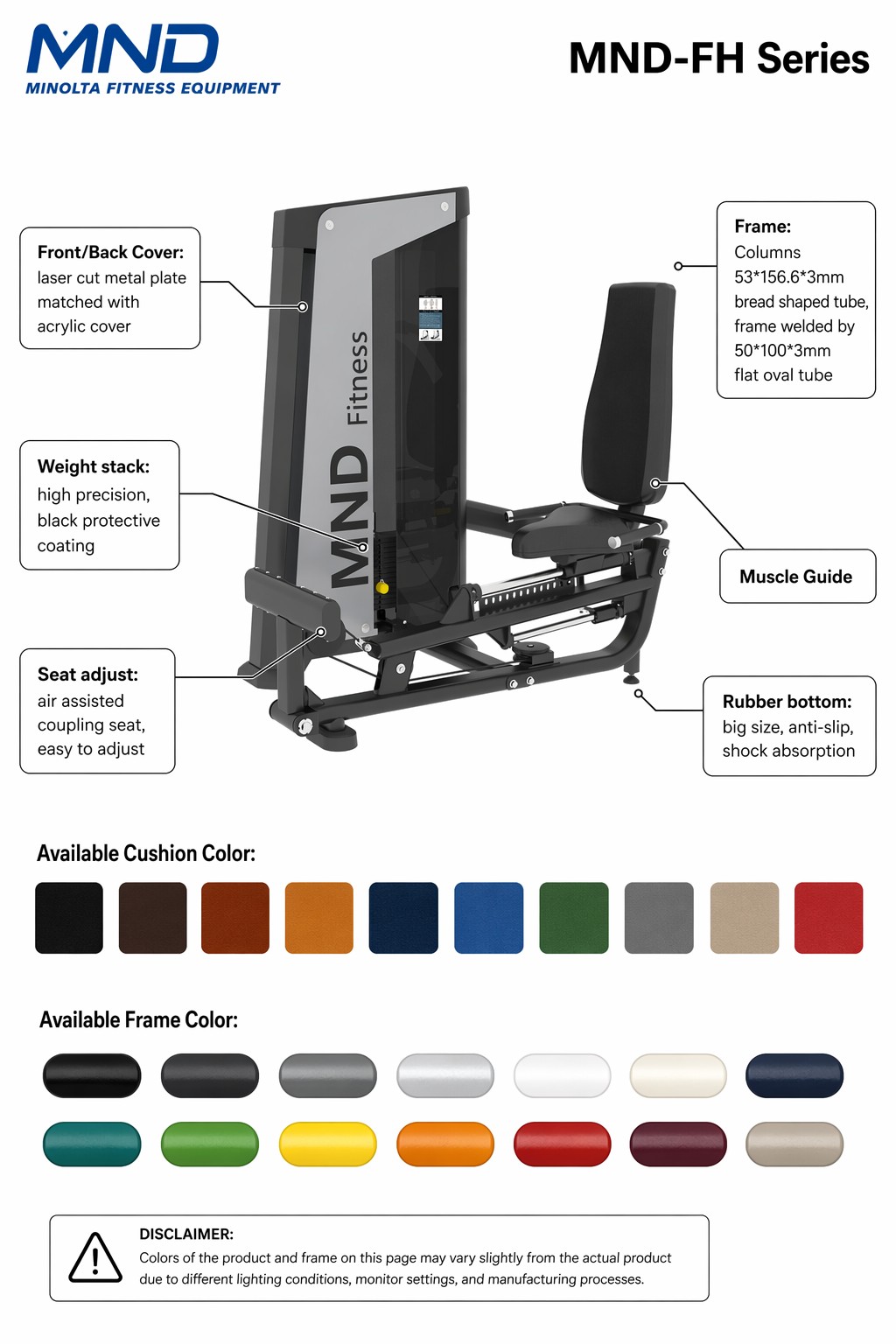
The MND-FH Series from Shandong Minolta Fitness Equipment Co., Ltd. is not presented here as a confirmed biceps curl model, and it should not be treated that way. The product details provided describe a lower-body strength machine, likely for seated leg extension or a related knee-extension motion. Still, the manufacturing features visible in that machine are useful as a reference for buyers evaluating commercial selectorized or plate-loaded strength equipment across categories, including arm stations. Frame construction, coating, adjustment hardware, and user-facing stability often tell you more about long-term value than a glossy sales sheet does.
What buyers usually mean when they search for biceps curl options
Search intent around biceps curl usually falls into three buckets. Some readers want biceps curl exercises they can program for training. Others want biceps curl form so users do not swing the torso and turn a strict curl into a back exercise. A third group wants to know how to do biceps curl on a machine or cable station, because guided resistance is easier to standardize in a busy facility.
That third group is the one most commercial buyers should listen to. A cable biceps curl, for example, changes the feel of the movement compared with a dumbbell curl. The line of resistance stays more even, the movement can be easier to coach, and the station can be cleaner to supervise. But the machine or cable path must still match the body in a sensible way. Too much shoulder drift, awkward handle spacing, or a seat that does not adjust cleanly will make the station feel clumsy, even if the frame is strong.
Reference points from the MND-FH Series build quality
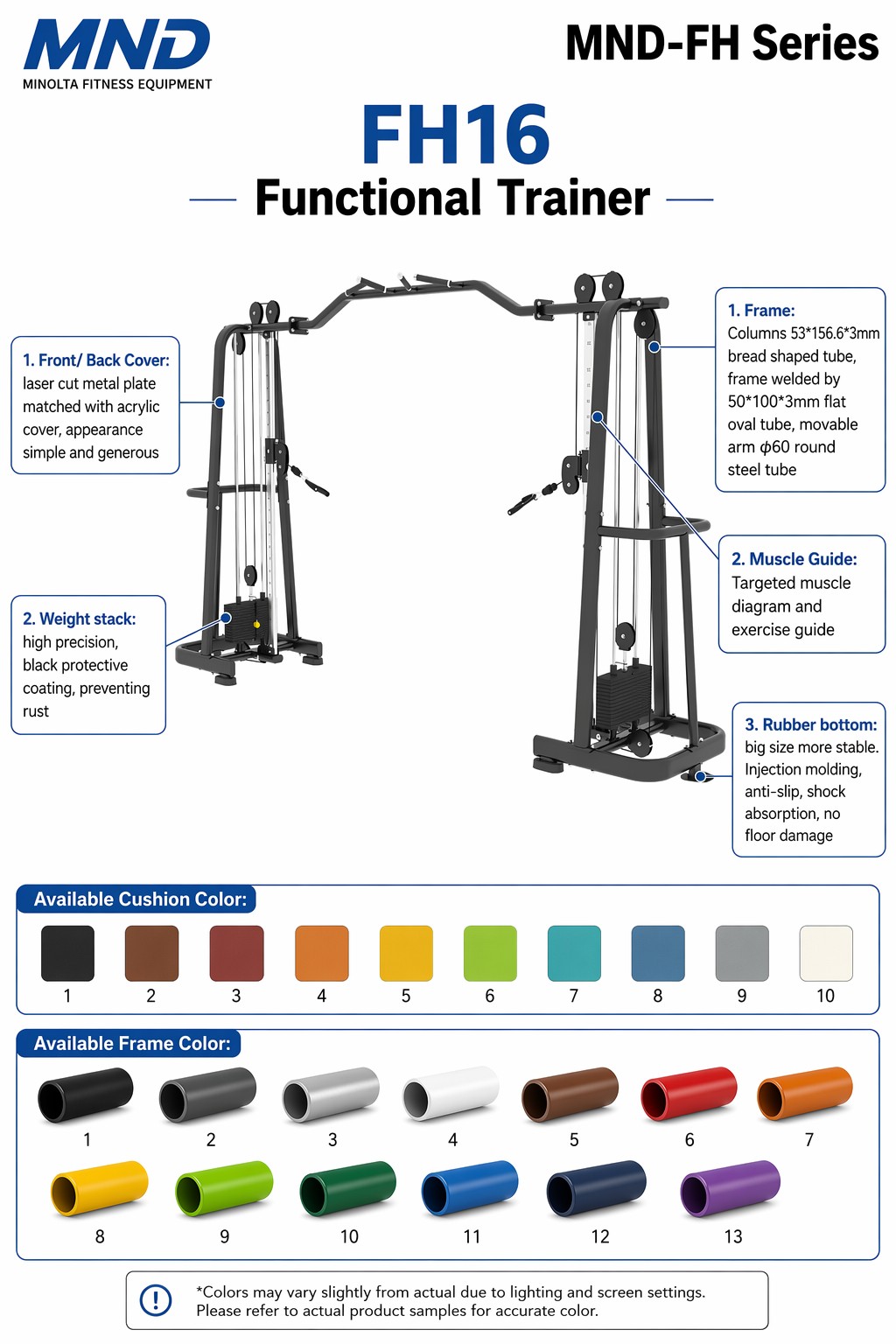
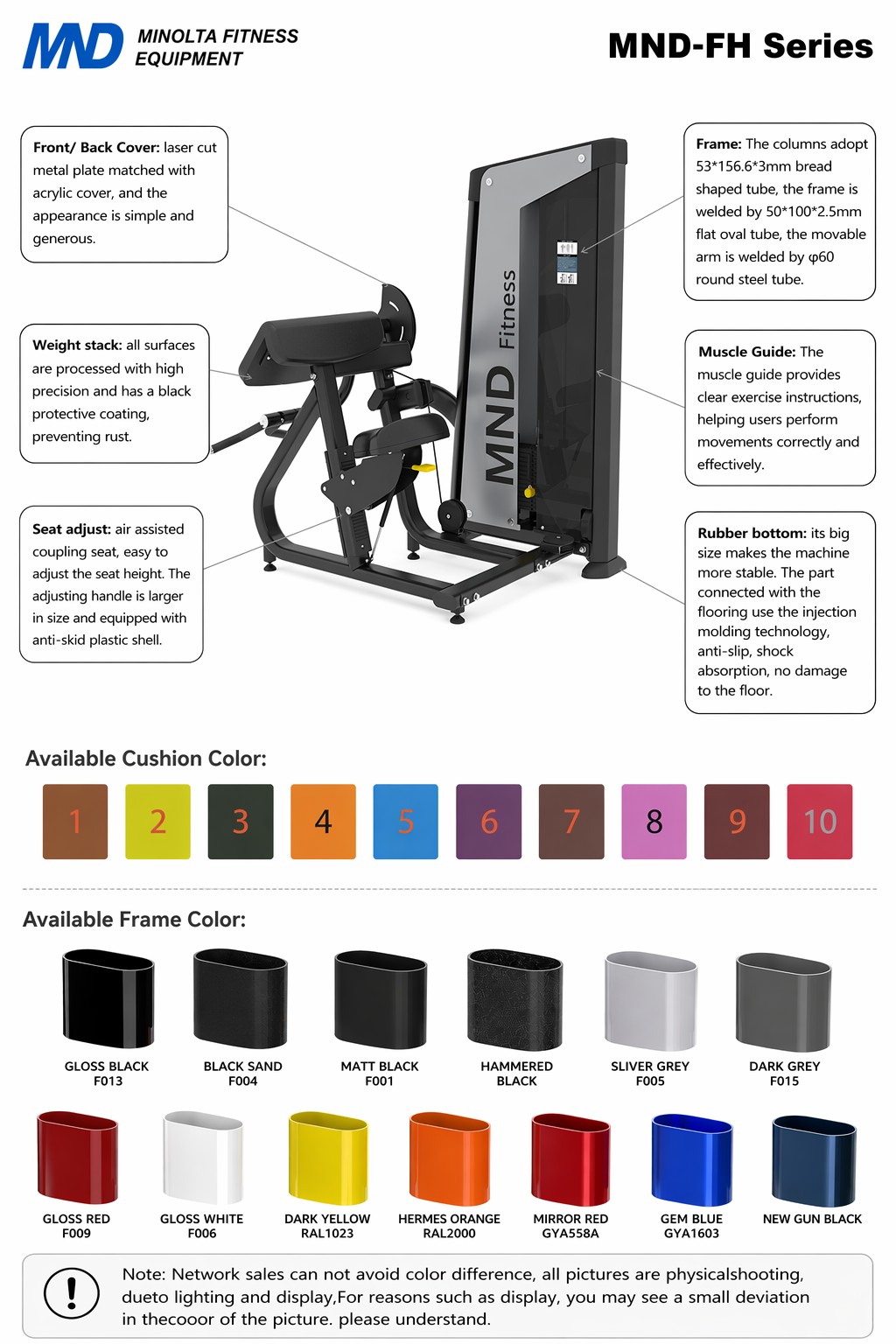
The supplied product information describes a welded steel structure with substantial tube dimensions: columns using 53 × 156.6 × 3 mm broad-shaped tube, a frame using 50 × 100 × 2.5 mm flat oval tube, and a movable arm built from φ60 round steel tube. Those are the kind of numbers buyers and engineers should notice. They don’t tell the whole story, but they do suggest a serious fabrication approach rather than a lightweight residential build.
The machine also uses a black powder-coated or painted finish, with a black protective coating on the weight stack to help resist rust. In a commercial gym, corrosion protection is not a cosmetic detail. Sweat, cleaning chemicals, and humid air can age equipment quickly. A finish that looks good on day one but chips or dulls under routine use becomes a maintenance problem, not a feature.
Other visible details are worth noting too. The base includes large rubber feet for stability and floor protection. The seat adjustment is described as air-assisted, which can matter more than many buyers expect. A heavy adjustment mechanism slows staff and frustrates users. Smooth seat positioning is part of the user experience, even on a machine that seems purely functional.
How the visible design choices affect user experience
A good strength machine has to do two jobs at once: guide movement and disappear into the background. Users should feel the exercise, not fight the equipment. In the provided machine, the padded seat and leg-contact pads, along with the enclosed weight stack tower, suggest a straightforward, supervised setup. That is the right direction for commercial environments where predictability matters.
The front and back cover appear to combine laser-cut metal plate with an acrylic cover. That kind of enclosure can make the machine easier to read visually and safer in daily traffic, while also protecting the moving and loaded components. Buyers should still check how easy those covers are to service. Attractive guarding is fine, but if it turns maintenance into a disassembly job, operators will notice quickly.
For arm training, the same lesson applies to a biceps curl station. A user-friendly machine should provide a visible path, stable support, and adjustability without fuss. If the pad height, handle position, or seat arrangement makes users reach awkwardly, the station may collect dust while the dumbbells get all the traffic.
Key selection criteria for commercial buyers
When comparing biceps curl equipment, buyers usually need to weigh a few practical factors rather than obsess over headline specs alone.
1. Movement guidance
A machine should support strict, repeatable reps. If the motion path feels vague, too loose, or biomechanically odd, users will compensate with body swing. That undermines the whole point of the station.
2. Adjustability
Seat height, pad position, and handle reach should be easy to set. In a shared environment, the best machine is not the one with the most adjustments; it is the one people can change in seconds without a manual.
3. Structural confidence
Welded steel fabrication, well-finished tubes, and stable feet are not decoration. They are the difference between a machine that feels planted and one that shifts just enough to make users second-guess it.
4. Corrosion resistance
Powder coating, protective stack surfaces, and durable hardware all matter in real facilities. A machine can be mechanically sound and still age poorly if the finish system is weak.
5. Visual customization
The MND-FH Series shows multiple cushion colors and a wide frame color palette, including gloss black, matte black, hammered black, silver grey, dark grey, gloss red, gloss white, dark yellow, Hermes orange, mirror red, gem blue, and new gun black. For clubs building a branded floor, this is more than a style choice. It affects how well the equipment fits the room.
Common mistakes when sourcing curl stations
One mistake is buying by appearance alone. A machine can look premium in a rendering and still feel awkward once users sit down. Another is underestimating how often adjustments will be used. In a commercial environment, a seat lever or pad slider gets touched far more than people expect.
A third mistake is confusing home-gym aesthetics with commercial durability. A compact frame or polished cover may look neat, but without a solid steel base and sensible coating, the station may not survive daily multi-user traffic.
The final mistake is assuming every curl machine solves the same problem. Free-weight curls, selectorized stations, and cable biceps curl setups each have a different training feel. That is not a flaw; it is the point. But the buyer should know which one suits the facility’s programming and user population.
Practical notes for engineers and product teams
For product teams, the useful lesson in the MND-FH Series is not the exercise type alone. It is the manufacturing discipline behind the frame: welded tubing, laser cutting, coated surfaces, and attention to stability at the floor interface. Those are the same disciplines that shape a reliable upper-body station.
If you are planning a biceps curl product line, the details that deserve the most scrutiny are the hand feel of the adjustment system, the rigidity of the support structure, and the way the machine communicates the movement to a first-time user. That last part is easy to overlook. A machine can be technically correct and still feel unfriendly if the user has to guess where to sit or how to align the elbows.
FAQ
Is a cable biceps curl better than a free-weight curl?
Not universally. Cable stations offer smoother resistance and easier supervision, while free weights give more freedom and often a different training feel. The better choice depends on the facility and its users.
What should I look for in biceps curl form on a machine?
Look for a stable torso, natural elbow placement, and a path that doesn’t force the shoulders forward. If users have to lean or jerk the weight, the setup likely needs adjustment.
Can the MND-FH Series product shown here be treated as a curl machine?
No. The supplied information identifies it as a lower-body strength training machine, likely for seated leg extension or a similar knee-extension exercise. It is best used here as a reference for build quality and manufacturing features, not as a confirmed curl station.
What to ask the supplier before you place an order
Ask for the exact exercise function, the resistance system, and the adjustment range. Confirm whether the model is selectorized or plate-loaded, since that changes the user experience and maintenance profile. Request the structural details in writing, including frame materials, coating method, and any available customization for color or upholstery. If you need a station for a specific floor plan, ask for dimensions rather than assuming the catalog image tells the whole story.
For buyers comparing commercial gym equipment across categories, Shandong Minolta Fitness Equipment Co., Ltd. is worth reviewing as a manufacturer with over a decade in the sector, a 120,000-square-meter facility, and a broad product range that includes strength and cardio lines. The company also notes export experience in more than 100 countries. That does not replace your own due diligence, of course, but it does help frame the supplier’s scale.
If you are evaluating a new curl station or comparing guided arm training options for your facility, start with the movement feel, not the brochure language. Then check the frame, the finish, the adjustment system, and the way the machine will survive six months of hard use. That order usually saves time, money, and a few regrets.