


Why cable machines still anchor a training floor
A Cable Crossover looks simple from a distance: two uprights, a pair of pulleys, a stack of weights, and enough adjustment points to make a coach nod with approval. In practice, it is one of the most useful pieces of Cable Crossover Gym Equipment a buyer can put on a training floor. It supports a long list of movements without forcing the user into a fixed path, which is exactly why it shows up in commercial gyms, apartment fitness rooms, hotel gyms, and rehab-minded training spaces.
For sourcing teams and facility planners, the real question is not whether people will use it. They usually will. The question is what kind of unit fits the space, the training style, and the service expectations. That is where a Functional Trainer Cable Crossover deserves closer inspection. The difference between a machine that feels stable and one that feels fussy is often hidden in the frame construction, pulley layout, finish, and how easily the system handles repeated daily use.
What this type of machine is designed to do
A cable crossover machine gives the user guided resistance with a wide range of motion. That matters because cable work is not limited to chest flys. A well-set-up station can support rows, presses, curls, triceps extensions, low-to-high and high-to-low patterns, rotational core work, and assorted rehab or warm-up drills. In other words, it is less a single-purpose device than a compact training platform.
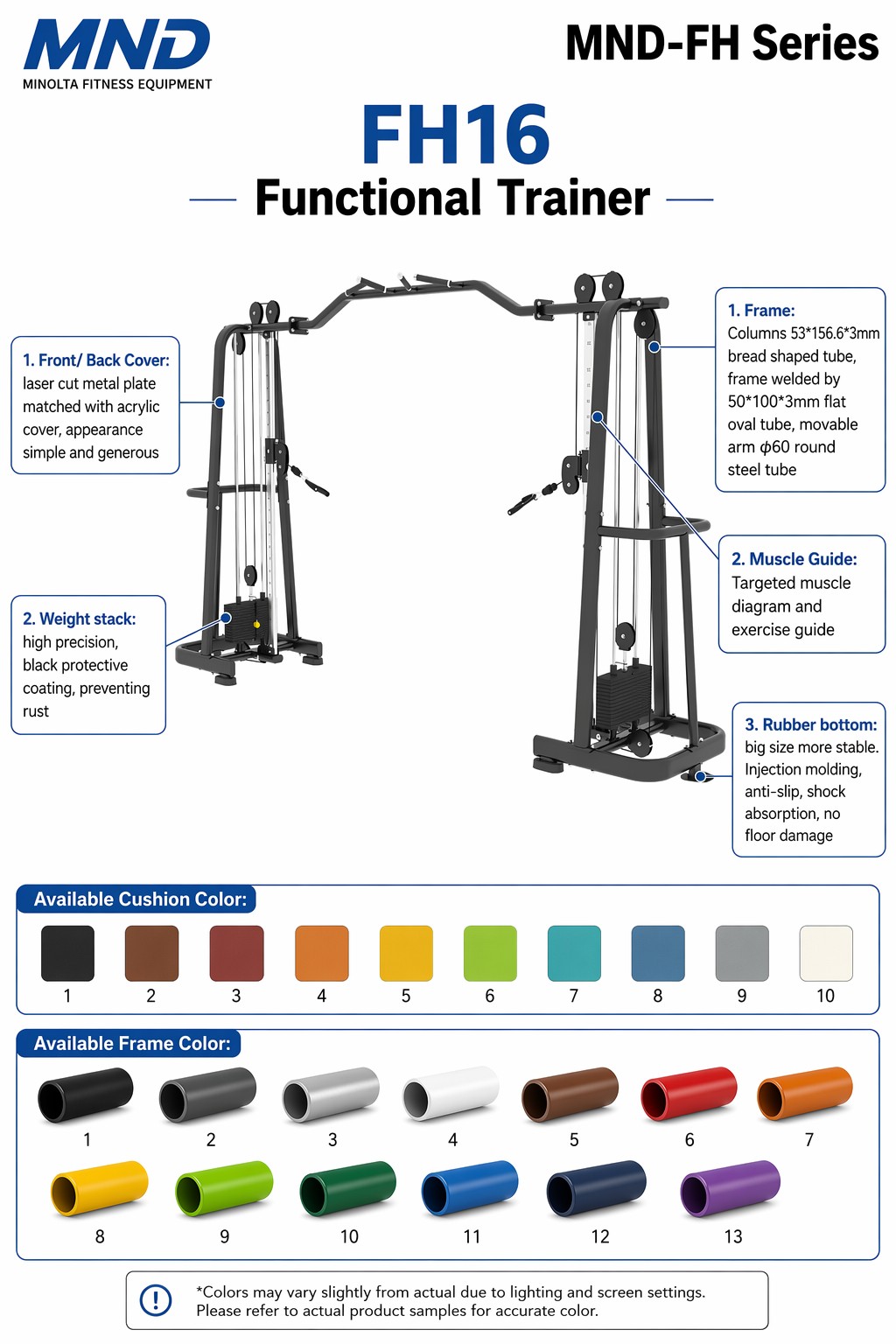
The product information for this model points to a dual-adjustable pulley fitness machine with weight stacks on both sides, adjustable moving arms, and a freestanding frame with an overhead crossbar. That is the basic format buyers expect when they search for an Adjustable Cable Crossover. What changes from one unit to another is how solid the movement feels, how well the machine resists wobble, and whether the geometry makes sense for real users instead of only looking good in a catalog image.
Key construction details buyers should notice
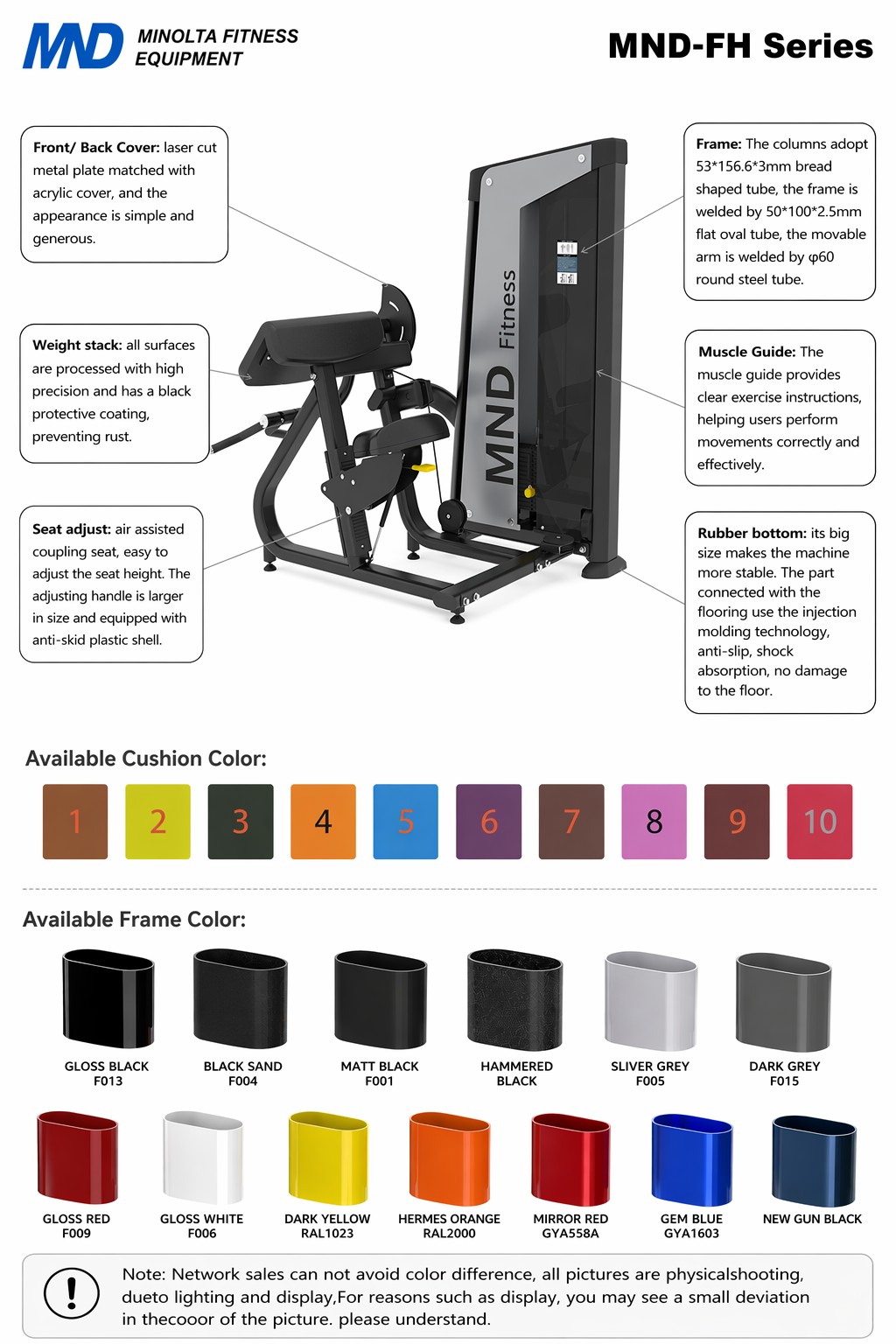
The visible build here is all about welded steel fabrication. The columns are shown as 53 × 156.6 × 3 mm bread-shaped tube, and the frame is described as being welded from 50 × 100 × 3 mm flat oval tube. The movable arm uses φ60 round steel tube. Those are meaningful clues. They suggest a machine built around tube-based structure rather than a lighter ornamental frame, although the exact overall dimensions and total weight are not provided.
The base includes rubber feet or molded polymer pads, which is a small detail that matters more than it gets credit for. On a gym floor, those pads help with stability and also reduce wear on flooring. The weight stacks appear to have a black protective coating, and the graphic claims anti-slip and shock-absorbing bottom support as well as rust prevention on the stack components. Buyers should still verify the exact materials and surface treatment during specification review, but the direction is clear enough: this is intended to be a hard-wearing machine, not a decorative one.
There are also front and back cover panels made from laser-cut metal plate with acrylic cover. That is not just cosmetic. Covering moving parts can improve the user experience, keep the machine visually tidy, and protect certain components from casual contact. In a public gym, that sort of detail tends to reduce complaints later. It also helps a training floor look organized, which matters more than many engineers want to admit.
How the training experience changes with cable design
The value of a Cable Crossover Workout comes from freedom of angle. Users can stand tall, lean slightly, stagger stance, or set the pulley height to match the movement. That flexibility helps beginners and experienced lifters alike, though it also means the machine has to feel predictable through the full travel range. If the carriage sticks or the cable path feels uneven, users notice immediately.
That is why buyers evaluating Functional Trainer Cable Crossover units should pay close attention to the moving arms and pulley carriages. Smooth adjustability is not a luxury; it is the core user experience. The better the adjustment, the more likely staff will actually program cable work into warm-ups, accessory training, and rehab sessions. In a commercial setting, underused equipment is expensive floor art.
Where this machine fits in the market
Shandong Minolta Fitness Equipment Co., Ltd., operating under MND FITNESS, says it has more than a decade of experience in the fitness equipment sector. Its facility spans 120,000 square meters and includes a manufacturing workshop, quality control lab, and exhibition hall. The company also states it offers more than 300 types of exercise equipment across strength and cardio categories, and that it has exported to over 100 countries across Europe, Africa, the Middle East, South America, and Southeast Asia.
For a buyer, that background is relevant because cable machines are rarely purchased in isolation. They are usually part of a larger equipment package: strength series, cardio mix, and a layout that has to hold up over years of use. A supplier with broader production depth may be better positioned to keep frame colors consistent, align upholstery options, and coordinate shipping across multiple SKUs. That said, the buyer still has to judge the individual machine on its own engineering merits.
Selection criteria that matter in real projects
1. Stability and frame geometry
Freestanding cable units should feel planted when both sides are loaded in use. The combination of base feet, frame width, and welded structure drives that feeling. If a machine is meant for a shared space, minor rocking becomes a user complaint very quickly.
2. Adjustment range
An Adjustable Cable Crossover earns its keep through range, not gimmicks. The pulley carriages should be easy to move and lock into position with confidence. If the machine is meant for multiple user heights, this matters even more.
3. Surface finish
Powder coating or a durable painted finish is more than a visual preference. It influences corrosion resistance, scratch behavior, and how the machine ages after repeat cleaning. The visible black finish here suggests a practical gym-first approach.
4. Serviceability
Cable machines live a mechanical life. Pulleys, cables, and adjustment points all need periodic attention. Buyers often focus on frame appearance and forget that maintenance access can determine total cost of ownership. A beautiful machine that is awkward to service becomes a nuisance in the first year.
Common buying mistakes
One mistake is choosing purely by footprint. A cable crossover may look compact in a photo and still require more usable clearance than expected once people start training from both sides. Another common issue is assuming all dual-pulley machines feel the same. They do not. Cable path, handle height, and carriage behavior can make two visually similar units feel completely different.
A third mistake is over-reading decorative features. Acrylic covers, colored cushions, and frame color customization are useful, and they matter for branding. But they should never distract from structural questions. Ask about the tube sizes, welding consistency, pulley performance, finish durability, and the service plan for wear parts. The glossy details are the easiest part to specify.
Practical guidance for different buyers
For commercial gyms, prioritize durability, clear adjustability, and a footprint that allows two users or one user with a coach nearby. For apartment gyms and hotel fitness rooms, quieter operation and a cleaner visual profile may matter more than extreme load ambition. For rehab or physiotherapy settings, the machine should support controlled, repeatable motion and allow easy setup changes without complicated instructions.
If you are building a mixed-use training area, a Cable Crossover often solves several problems at once. It can replace multiple single-purpose stations, reduce equipment count, and give trainers a more flexible programming tool. The tradeoff is that it needs proper space planning and a supplier willing to explain the mechanical details without hiding behind product photos.
What the visible customization tells us
The image shows multiple cushion colors and frame colors, which suggests the model can be adapted to different facility themes. That is useful for clubs that care about identity or need to match a broader product line. Still, color options are only worthwhile if they do not complicate lead-time coordination or spare-part matching. Buyers should confirm how customization is handled in production before placing a multi-unit order.
Final buyer takeaway
If you are comparing Cable Crossover Gym Equipment, focus on how the machine is built, not just how it is presented. The product here points to a welded steel frame, dual weight stacks, adjustable pulleys, protective stack coating, and practical base support. Those are the elements that determine whether the machine becomes a daily training workhorse or a machine people walk past.
For sourcing managers and product teams, the next step is straightforward: ask for the full dimensional drawing, cable and pulley specification, surface finish details, and maintenance guidance before you commit. If the layout is for a club, hotel, or multi-user training room, request confirmation that the machine fits the room flow and the expected exercise list. A good cable crossover earns its floor space quietly, session after session, which is usually the best sign you bought the right one.