


Why buyers keep looking at MND Fitness plate loaded machines
When a gym operator, distributor, or procurement team starts comparing strength lines, the MND Fitness plate loaded machine category usually comes up for one simple reason: it gives you heavy-duty training feel without the complexity of a fully selectorized stack system. For commercial gyms, that matters. A plate loaded fitness machine can be easier to justify on the floor when the goal is durability, straightforward mechanics, and a training experience lifters already understand.
Shandong Minolta Fitness Equipment Co., Ltd., operating under the MND FITNESS brand, positions its strength range for commercial use and offers more than one family of equipment, including the MND-AN, MND-FM, MND-FH, MND-FS, MND-FB, MND-E Crossfit, MND-F, MND-FF, MND-G, and MND-H series. That breadth matters for buyers because it suggests the brand is not selling a single hero product, but a line that can be mixed across a full gym build-out. If you are comparing suppliers, you are not only asking whether one machine works. You are asking whether the platform can support a consistent facility.
What a plate loaded machine really solves
The buying case for a plate loaded strength machine is usually practical rather than glamorous. You are reducing reliance on complex weight stacks, cables, and extra internal mechanisms. That can make the machine feel more open, more direct, and in some cases more forgiving for high-load training. It also means the user or trainer can fine-tune resistance in smaller jumps with standard plates, which is one reason these units stay popular in strength-focused gyms.
For commercial buyers, the big advantage is often lifecycle cost. A plate loaded machine may not be “simpler” in every sense, but it is often easier to understand, easier to service, and less dependent on proprietary stack components. That does not make it maintenance-free; it just changes the maintenance profile. For a gym owner, that can be a useful trade.
Where the category fits best
A plate loaded fitness machine makes the most sense in facilities that want:
More training feel and higher loading potential
A sturdy visual impression on the gym floor
Straightforward equipment for experienced users
A broad strength lineup without overcomplicating machine selection
Less dependence on selectorized stack inventory for every movement pattern
It is not always the best choice for every environment. A rehab-oriented studio, for example, may prefer selectorized machines for easier load changes. That is a real-world caution buyers sometimes ignore when they are drawn to the heavier look of plate loaded equipment.
MND FITNESS as a supplier: what the company profile suggests
MND FITNESS is described as a manufacturer with more than a decade of experience in the fitness equipment sector. The company’s facility covers 120,000 square meters and includes a manufacturing workshop, quality control lab, and exhibition hall. Those are not just brochure details. For sourcing teams, they hint at production scale, in-house checking, and the ability to show product lines in a structured way before orders are placed.
The company also says it provides over 300 types of exercise equipment for commercial and home use, and that it has exported gym equipment to more than 100 countries across Europe, Africa, the Middle East, South America, and Southeast Asia. That kind of export footprint does not automatically guarantee the right fit for your market, but it does suggest the brand has experience dealing with varied buyer requirements, shipping realities, and commercial expectations.
For purchasers evaluating MND plate loaded equipment, that background matters because a gym installation is rarely about one machine in isolation. It is about matching frame style, finish, biomechanics, packaging, support expectations, and replacement strategy across an entire order.
Plate loaded versus selectorized: the decision most buyers are really making
A lot of buyers start by asking whether they should choose a plate loaded selectorless machine or a weight-stack model. In practice, the answer depends on the facility’s user base and training style.
A selectorized machine is usually quicker for beginners and clearer in settings where supervision is limited. A plate loaded machine, by contrast, tends to attract lifters who want a more gym-authentic load progression and a heavier training feel. It also often looks more substantial, which can be a branding advantage in premium clubs or performance facilities.
The trade-off is convenience. If your floor is full of first-time users, a plate loaded chest press machine or row machine may require a bit more guidance. That is not a defect; it is just part of the category. If your audience includes regular lifters, the learning curve is often minor.
Key machine types buyers ask about
Within the broader plate loaded fitness machine category, a few patterns come up again and again.
Plate loaded row machine
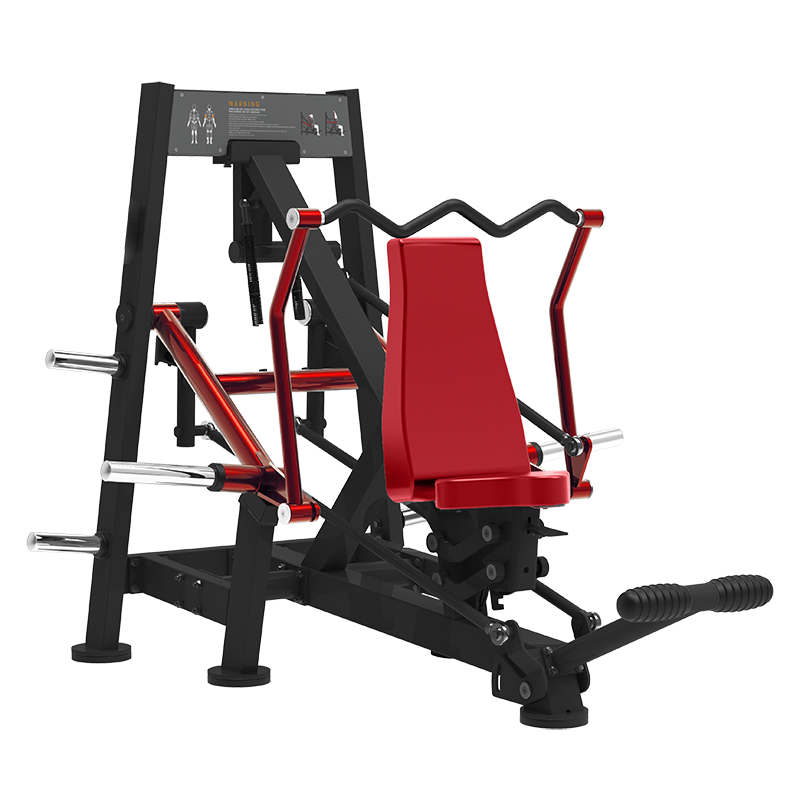
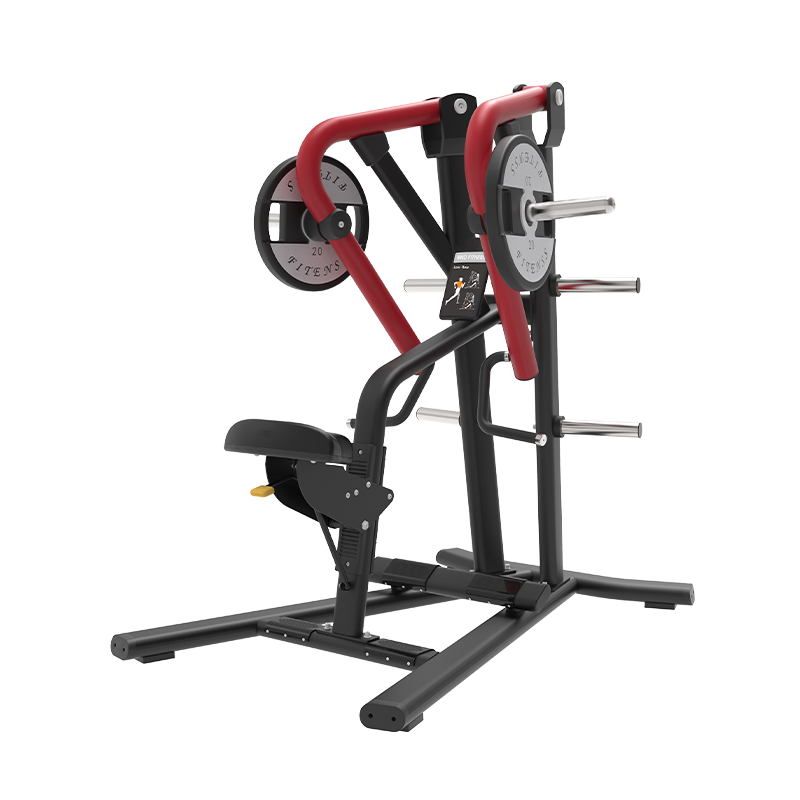
A plate loaded row machine is one of the most common pieces buyers want in a serious strength area because it trains back thickness and pulling strength while giving a stable seated or chest-supported position, depending on design. For commercial gyms, rows usually need to feel solid under load and comfortable across body sizes. Small geometry choices can make a big difference here, so this is not a place to buy by appearance alone.
Plate loaded chest press machine
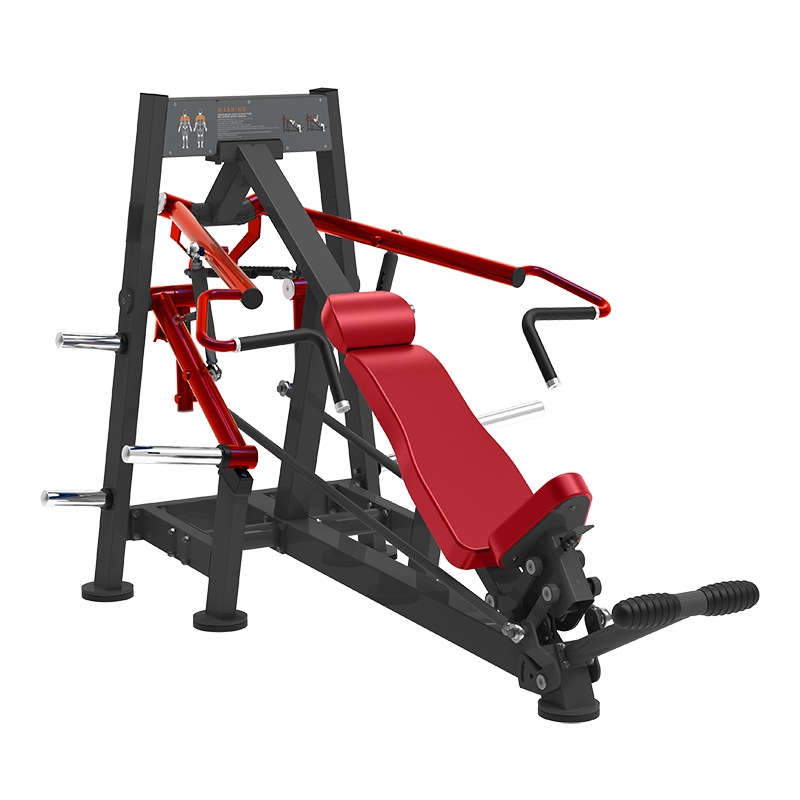
A plate loaded chest press machine is typically used where the buyer wants a stronger free-weight feel than a stack press can offer. The machine should allow a natural pressing path without forcing awkward shoulder positions. That sounds obvious, but it is exactly where low-cost machines can disappoint. If the press path feels off, users notice quickly, even if they cannot explain the mechanics in technical language.
Other plate loaded strength stations
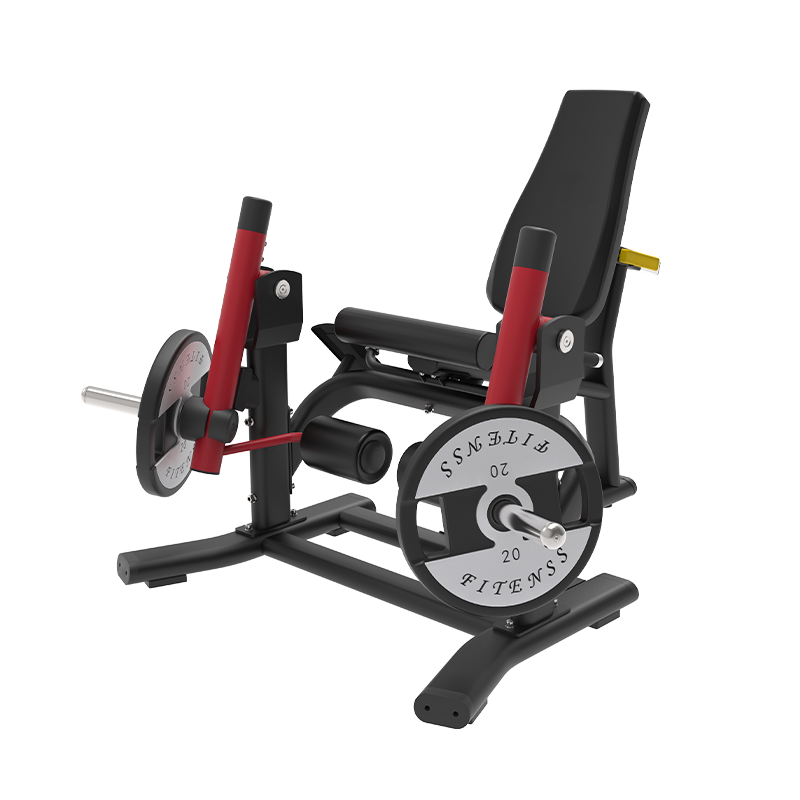
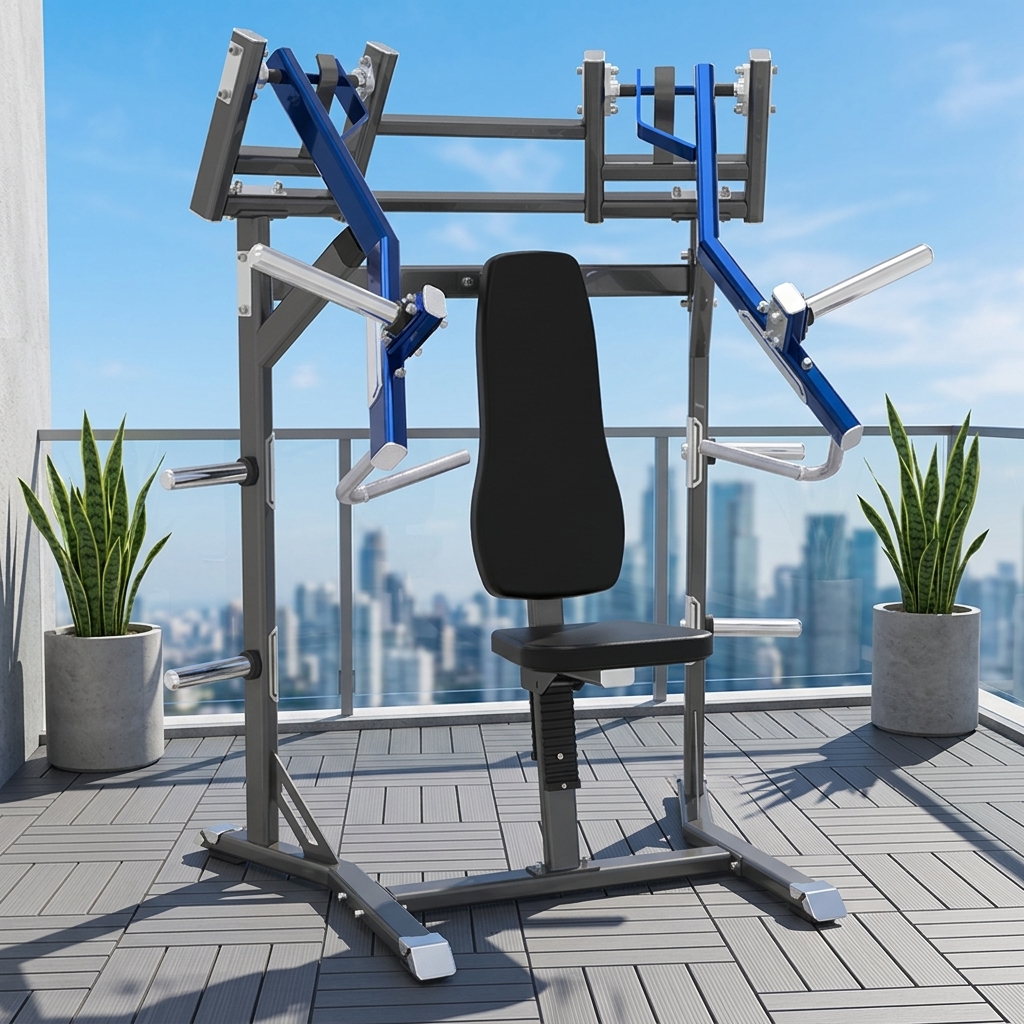
Depending on the series, buyers may also look at incline press, shoulder press, hack squat, pulldown, and other leverage-based stations. For a supplier like MND FITNESS, the value is often in line consistency: the more pieces that visually and mechanically belong together, the easier it is to spec a coherent gym floor.
What to check before you place an order
A plate loaded machine can look similar across vendors, but the buying risk sits in the details. Frame thickness, weld consistency, lever arc, grip placement, upholstery durability, and plate horn positioning all affect day-to-day usability. None of these are glamorous topics, yet they determine whether the machine becomes a workhorse or an annoyance.
Here is the practical shortlist sourcing teams usually care about:
Frame stability under repeated commercial use
Range of motion that suits multiple body types
Clear loading and unloading access around the horns
Grip texture and handle spacing that feel secure, not aggressive
Seat and pad adjustment that holds position over time
Finish quality that can survive cleaning, sweat, and frequent contact
Packaging and assembly logic for shipment and installation
Documentation and parts support from the manufacturer
A caution worth stating plainly: a machine can be strong and still be a poor fit if the movement arc feels cramped. That is especially true on plate loaded row and press units, where the biomechanics are easy to underestimate during a quick showroom walk-through.
Commercial use cases where MND plate loaded equipment makes sense
For multi-site gym groups, the appeal is partly visual consistency and partly buying efficiency. If a supplier can support a broad strength range, it becomes easier to standardize procurement across branches. For independent gyms, the appeal is more about member perception. A room full of plate loaded equipment sends a different message from a small stack-based circuit: it signals heavier training and a more dedicated strength culture.
That said, not every buyer should chase the same mix. A neighborhood gym with many casual users may want a balanced floor with some selectorized machines and only a few plate loaded stations. A powerlifting-focused facility or athletic performance center may lean the other way. The right answer is usually a blend, not a slogan.
Common mistakes buyers make
One common mistake is buying by catalog image. Another is assuming all plate loaded equipment is basically interchangeable. It is not. Small differences in lever geometry can change the training feel enough to matter.
A second mistake is underestimating floor planning. Plate loaded machines often need sensible spacing around the loading points and user entry path. If you crowd them too tightly, your facility can feel busy and awkward even when the equipment itself is good.
A third mistake is neglecting the after-sale side. Replacement pads, handles, and hardware matter. A commercial gym can tolerate cosmetic wear; it cannot tolerate long downtime on a popular back or chest station.
How to evaluate MND Fitness against other suppliers
If you are comparing MND plate loaded equipment with other commercial brands, start with line completeness, then move to construction details, then to support. The broader question is not whether a single machine is attractive. It is whether the manufacturer can help you build a durable floor plan and keep that floor plan operational.
MND FITNESS, based on the company information provided, appears positioned as a broad-line manufacturer with both strength and cardio equipment, which can be useful if you are consolidating suppliers. That does not remove the need for sample review, but it may reduce sourcing complexity if the product match is right.
FAQ for buyers
Is a plate loaded machine only for advanced lifters?
No. It is often most appreciated by experienced lifters, but beginners can use it with guidance. The main issue is supervision and setup, not exclusivity.
Is a plate loaded machine harder to maintain?
Not necessarily. In many cases, it is simpler in mechanism than stack-based equipment. But commercial use still demands inspection, tightening, and parts management.
Can one supplier cover a full commercial gym package?
Yes, if the supplier offers both strength and cardio lines. MND FITNESS states that it offers more than 300 types of exercise equipment, which can be useful for coordinated procurement.
What to do next
If you are sourcing a MND Fitness plate loaded machine for a new gym, a refurbishment project, or a distributor program, the smart next step is to request the exact models you are considering and compare them on movement path, frame construction, and commercial fit. Don’t stop at the sales sheet. Ask how the machine will serve your members, how it will fit your floor, and what support you can expect after installation.
For buyers who want a single supplier across strength and cardio, Shandong Minolta Fitness Equipment Co., Ltd. is worth shortlisting. For buyers who need only one or two signature pieces, it is still worth checking whether the plate loaded row machine, plate loaded chest press machine, or another station in the range matches your training philosophy before you commit to a full order.