


Why a lowrow keeps showing up in serious training spaces
If you spend time sourcing equipment for a commercial gym, hotel fitness room, or rehab-minded strength area, the lowrow earns attention for a simple reason: it fills a useful gap between free-weight rows and more guided back training. A lowrow gives the user a supported pulling path, usually from a seated position, which can make back work easier to standardize across different skill levels. For operators, that matters because consistency drives usage, and usage drives value.
The phrase lowrow is often used broadly by buyers and trainers, sometimes interchangeably with terms like low row workout, low row machine, seated low row, or low pulley row. In practical terms, people are usually looking for a machine that lets the user pull from a low line of resistance while keeping the torso braced. That setup can be appealing in facilities where safety, pacing, and repeatability matter more than raw athletic variety.
What buyers are usually trying to solve
A back workout low row is not only about lat development. In the commercial setting, the real questions are more mundane: Will beginners understand it quickly? Will stronger users still respect it? Can staff keep it moving without constant adjustment or coaching? And will the machine hold up after a year of heavy traffic, chalk, sweat, and occasional rough handling?
That is where the design of the low row machine matters. The best units are not just pieces of steel with handles. They are guided resistance stations built to reduce friction in the workout experience. The seat position, chest or torso support, lever travel, and loading method all change how the machine behaves under real use. A plate-loaded design, such as the kind commonly seen in commercial strength lines, is especially attractive where operators want mechanical simplicity and a straightforward user experience.
Plate-loaded low row versus selectorized alternatives
A useful way to look at this category is to compare the low row exercise format with more automated machines.
Plate-loaded low row
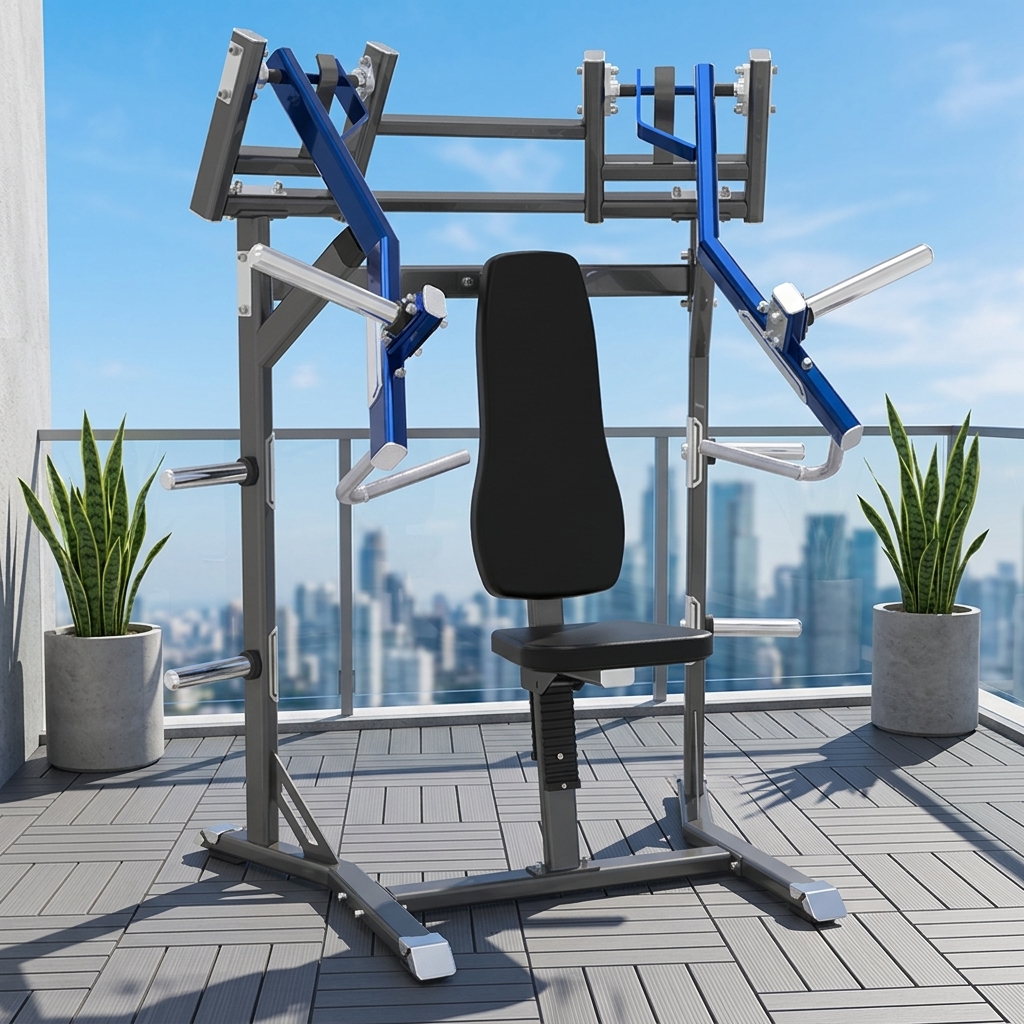
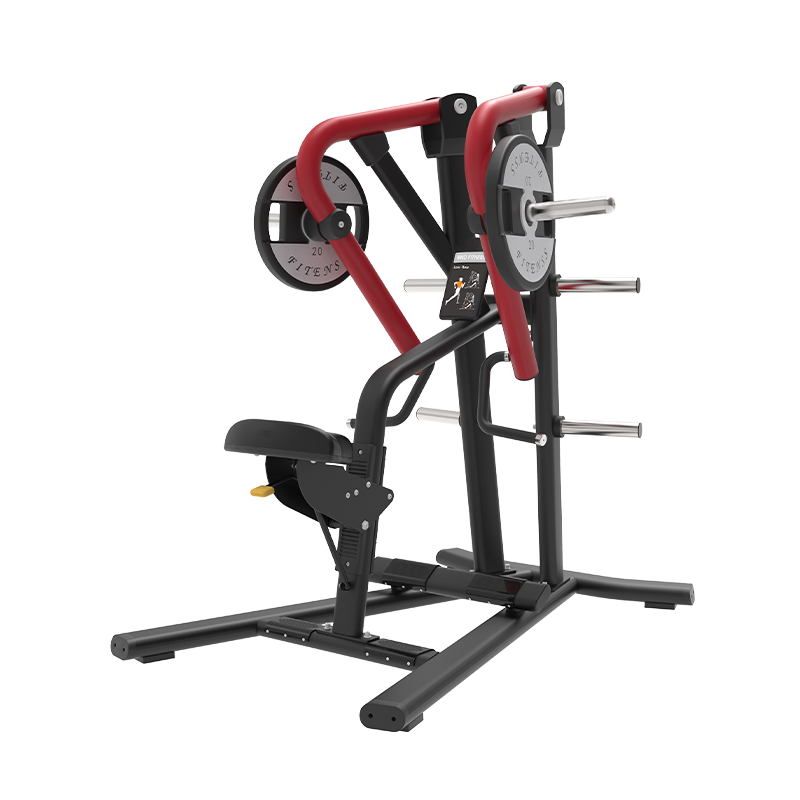
This style uses weight plates on loading sleeves or horns. It tends to be favored in strength-focused gyms because it feels direct and durable. The machine shown in the provided product information appears to fit this general family: a welded steel frame, dual lever arms, seated support, and visible plate storage pegs on the side. That combination usually appeals to buyers who want a compact footprint and a rugged feel.
The tradeoff is obvious: users must load plates manually. In a busy facility, that is not always a problem, but it does require better housekeeping and some user education.
Selectorized low row
A selectorized machine is easier to change weight on the fly, which can be helpful in rehabilitation or high-turnover commercial settings. The downside is more complexity, more moving parts, and often a bigger maintenance burden over time. For some buyers, that is the wrong direction.
So the decision is not simply “which is better.” It is “which operating model fits the room.” A plate-loaded low row usually wins where durability and training authenticity matter. A selectorized unit may be better where speed and supervised simplicity matter more.
What to look for in the machine itself
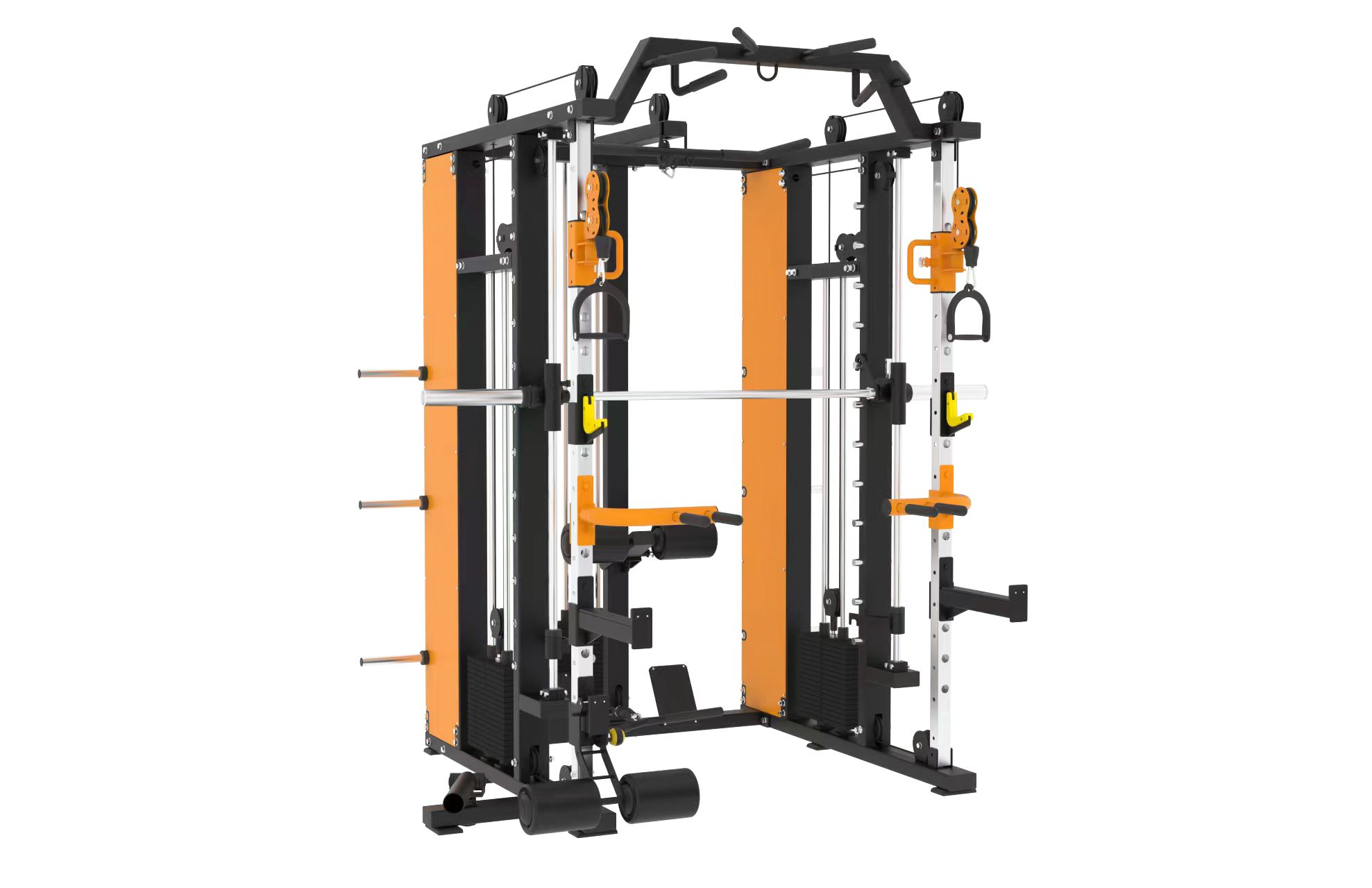
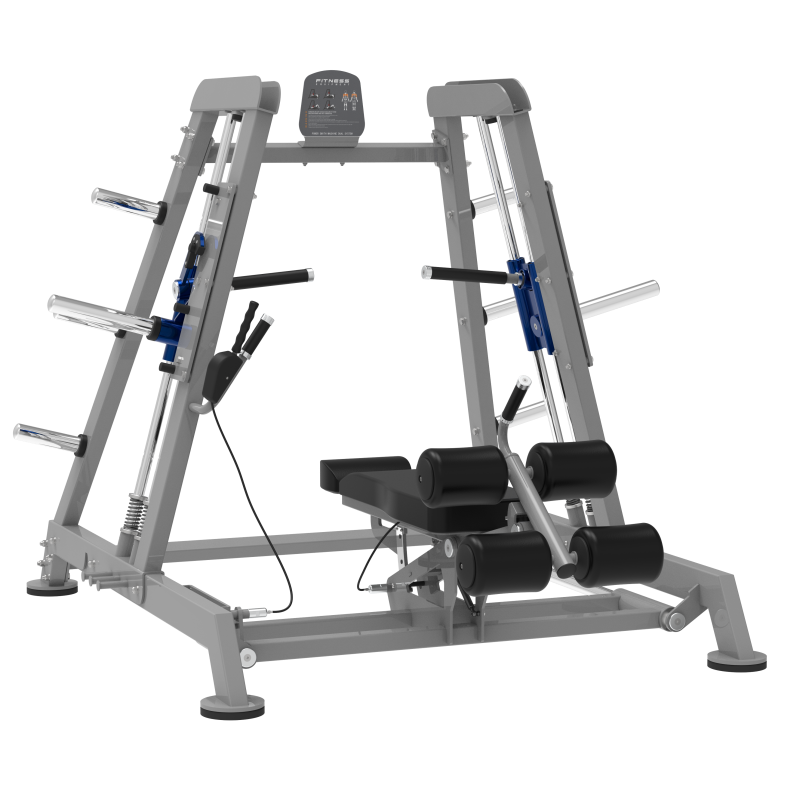
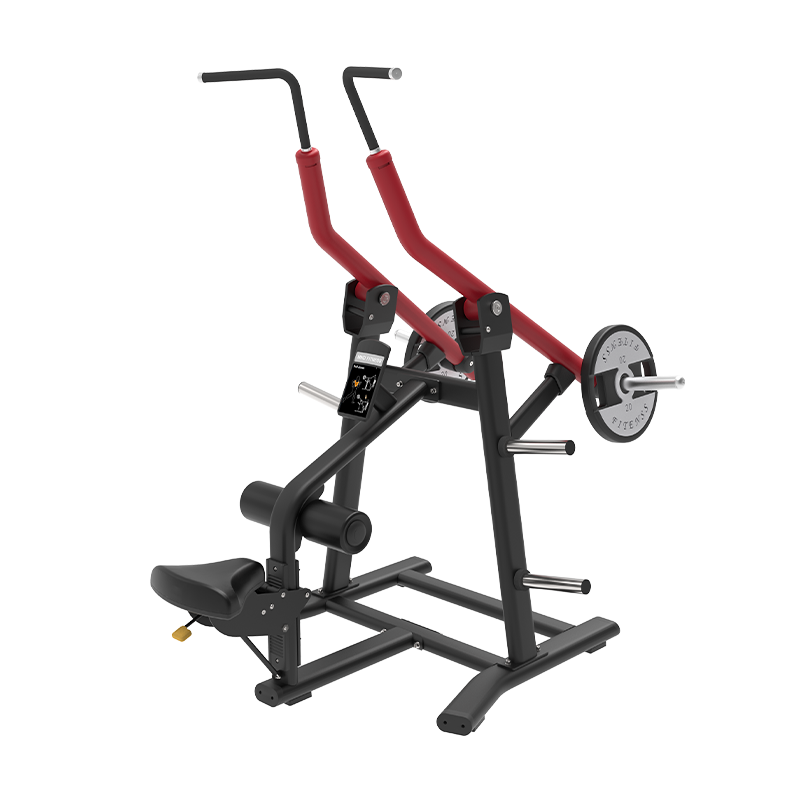
The visible product details suggest a commercial gym equipment fabrication approach: steel frame construction, powder-coated finish, upholstered seat and back support, pivoting press or pull arms, and integrated storage pegs. Even without assuming a precise model, those elements point to a category that should be judged on build quality and motion quality more than cosmetic features.
Pay close attention to these points during evaluation:
The frame should feel stable when loaded and used repeatedly, not just when empty on a showroom floor.
The pivot points and arm travel should look clean and controlled. On a low pulley row or similar guided station, rough motion can become obvious fast.
The seat and support pads need to be comfortable enough for repeated sets, but not so soft that users sink and lose position.
The plate horns or sleeves should be easy to load and unlikely to interfere with foot placement or handle access.
Storage pegs are not a luxury. In real facilities, they keep plates close to the station and reduce clutter around the floor area.
A practical caution: a compact floor footprint can be appealing, but compact does not automatically mean easy to use. Some machines save space by tightening clearances in ways that irritate larger users. If possible, test the entry, seat adjustment, and handle path with different body sizes before buying in volume.
How this fits into a commercial equipment lineup
Shandong Minolta Fitness Equipment Co., Ltd. positions itself as a commercial gym equipment manufacturer with more than a decade of experience, a 120,000-square-meter facility, and a range that spans strength and cardio categories. That matters because buyers often want one sourcing relationship that can cover multiple areas of a gym floor, not just a single station.
A lowrow or seated low row style machine is often used in:
commercial gyms that need dependable back training stations
fitness centers serving mixed skill levels
hotel gyms where guided movement is easier for occasional users
sports training environments that want structured horizontal pulling work
rehabilitation or strength-conditioning spaces where the line of motion should feel supported
If a supplier can support both strength and cardio lines, that can simplify procurement, replacement planning, and visual consistency across the facility. Still, buyers should separate catalog breadth from product fit. A big portfolio does not automatically guarantee that every station is ideal for every room.
Choosing the right low row for your facility
The smartest buyers start with the user base, not the spec sheet.
If your members are mostly beginners, the low row machine should be intuitive at first glance. Clear loading points, obvious hand placement, and a seat that naturally positions the body help reduce staff intervention.
If your facility has serious lifters, the machine needs enough structural confidence that people trust it under load. Strong users can be skeptical of light-feeling frames, especially on plate-loaded equipment.
If your room is tight, the integrated plate storage pegs and compact frame become more important. That kind of design can reduce the need for separate storage trees near the station.
If your use case leans toward rehab or controlled exercise prescription, motion smoothness and body support deserve more weight than brute appearance.
A related buyer-facing warning: do not choose a low row solely because it looks like a back workout machine. Some units sit higher, pull differently, or bias the movement toward one pattern over another. Small geometry changes can make the exercise feel closer to a press, a row, or something awkward in between.
Why construction method matters more than marketing language
Commercial strength equipment is usually made through a mix of tube bending, welding, machining of pivot joints or shafts, powder coating, and upholstery work. That mix is not glamorous, but it decides whether a machine feels tight and serviceable or loose and noisy after months of use.
For a lowrow, that means the frame and pivots should be judged like industrial hardware, not like furniture. Weld quality, coating consistency, and fit around the moving joints all affect how the machine ages. In the field, poor alignment shows up as side-to-side wobble, uneven resistance feel, or annoying squeaks that nobody wanted but everybody hears.
Common mistakes buyers make
One common mistake is overvaluing a sleek product photo. The machine may look polished, but what matters is whether it stays stable under repetitive use.
Another mistake is ignoring plate management. A plate-loaded station without sensible storage can become messy quickly, and messy equipment gets used less.
A third mistake is assuming one pulling station covers every training goal. A low row exercise is valuable, but it is not a complete back solution. Facilities still need to think about vertical pulling, free-weight work, and programming balance.
Practical sourcing advice
When you talk to a supplier, ask for the basics that affect daily use: machine category, intended exercise path, frame construction approach, finish type, and what is included as standard versus optional. If the model is being considered for commercial deployment, ask how the station is assembled, how moving parts are serviced, and whether replacement components are easy to identify.
For a manufacturer like MND FITNESS, the broader value proposition is the ability to source across strength and cardio ranges, which can be helpful if you are building or refreshing a full facility. But for this specific machine, keep the conversation focused on function. A strong procurement decision is built on motion, durability, and user fit, not on a product brochure’s enthusiasm.
FAQ: quick answers buyers usually want
Is a lowrow suitable for beginners?
Usually yes, especially when the machine provides clear seating support and a simple pulling path.
Why choose a plate-loaded low row?
It offers a direct feel, mechanical simplicity, and often better long-term durability in heavy-use settings.
Does a low row replace other back equipment?
No. It is one useful tool in a broader back-training lineup.
What should I inspect first?
Check frame stability, pivot smoothness, loading convenience, seat support, and whether the footprint works in your actual room.
The next step for serious buyers
If you are comparing a lowrow against other back stations, make the decision around user profile and facility duty cycle. For many commercial environments, a plate-loaded seated row style machine is a practical choice because it balances simplicity, durability, and training value without occupying the sprawling footprint of larger systems.
Before you place an order, request the exact configuration details, confirm the exercise path, and test whether the machine fits the people who will actually use it. That is the part that saves money later.
For procurement teams evaluating commercial strength equipment, the right move is to ask for the specifications that matter most to your floor plan and your users, then compare them with a real test of motion and finish. That is usually where the good machines separate themselves from the merely attractive ones.