


Targeting the Costal Fibers: Engineering Considerations for Lower Chest Fly Stations
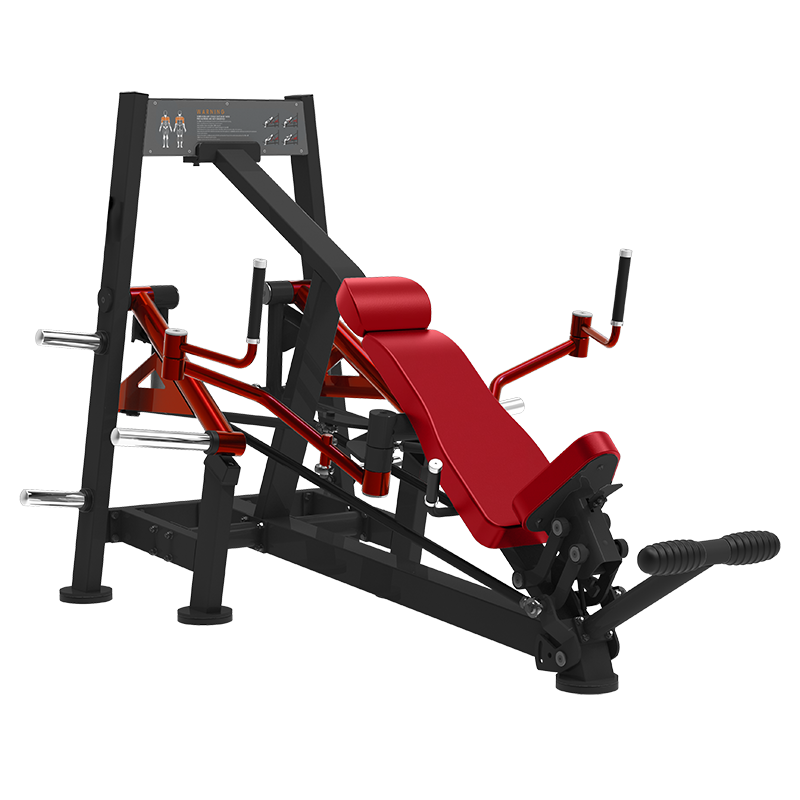
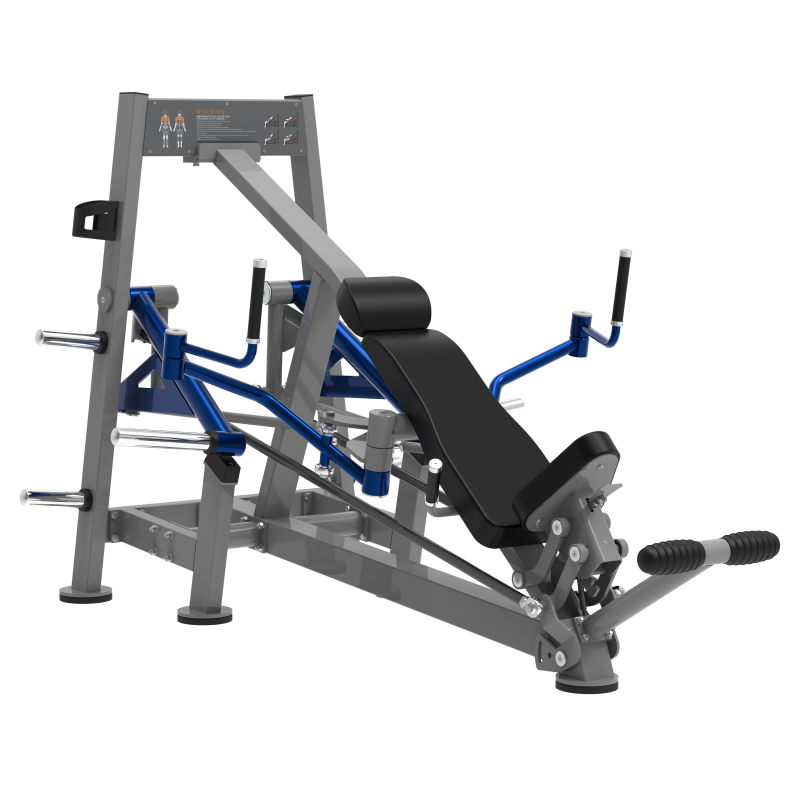
Most commercial weight rooms have no shortage of pressing gear, but isolating the abdominal head of the pectoralis major remains a persistent weak spot in floor planning. Members frequently tie up dual adjustable pulleys to perform decline cable crossovers, causing bottlenecks in functional training zones. Integrating a dedicated lower chest flight machine solves this throughput problem while giving lifters a mechanically stable, repeatable convergence path that free pulleys rarely deliver without substantial stabilization fatigue.
For gym owners, franchise operators, and equipment procurement teams, selecting the right machine isn't just about picking a design with a downward handle stroke. The geometry of the pivot axis, cam resistance profiling, and linkage rigidity dictate whether the unit delivers genuine muscle activation or simply grinds through the lifter’s anterior deltoids and glenohumeral joints.
Biomechanical Alignment: What Separates Proper Design from Re-Badged Pec Flyes
The sternal and abdominal portions of the pectoralis major originate along the sternum and the aponeurosis of the external oblique, inserting into the lateral lip of the bicipital groove of the humerus. To fully recruit these fibers without joint shear, the movement must track along a downward and inward arc—essentially moving from shoulder height down toward the hips and mid-torso.
When evaluating lower chest gym equipment, buyers should look closely at how the pivot axes are oriented relative to the user's torso:
- Downward Converging Arc: A flat fly machine moves on a single horizontal plane perpendicular to the back pad. A true downward fly incorporates angled pivot sleeves that force the handles downward and inward, mirroring the direction of the costal fibers.
- Neutral vs. Pronated Grip Articulation: Fixed grips force the wrist into an unnatural position during terminal contraction. Units designed with free-swiveling handles or floating grip collars reduce torque at the elbow and wrist, accommodating lifters with differing limb lengths.
- Seat Angle and Thoracic Support: If the back pad is completely vertical, the lifter must arch aggressively to align the lower chest with the path of motion. High-end selectorized stations feature a subtle forward lean (around 5 to 10 degrees) or an elevated lumbar wedge that naturally sets the sternum proud.
Structural Build and Mechanical Durability
Commercial strength equipment takes constant abuse from dropped stacks, uneven handle pulls, and off-axis torque. Sourcing managers reviewing production samples should evaluate the mechanical guts rather than just exterior powder coating.
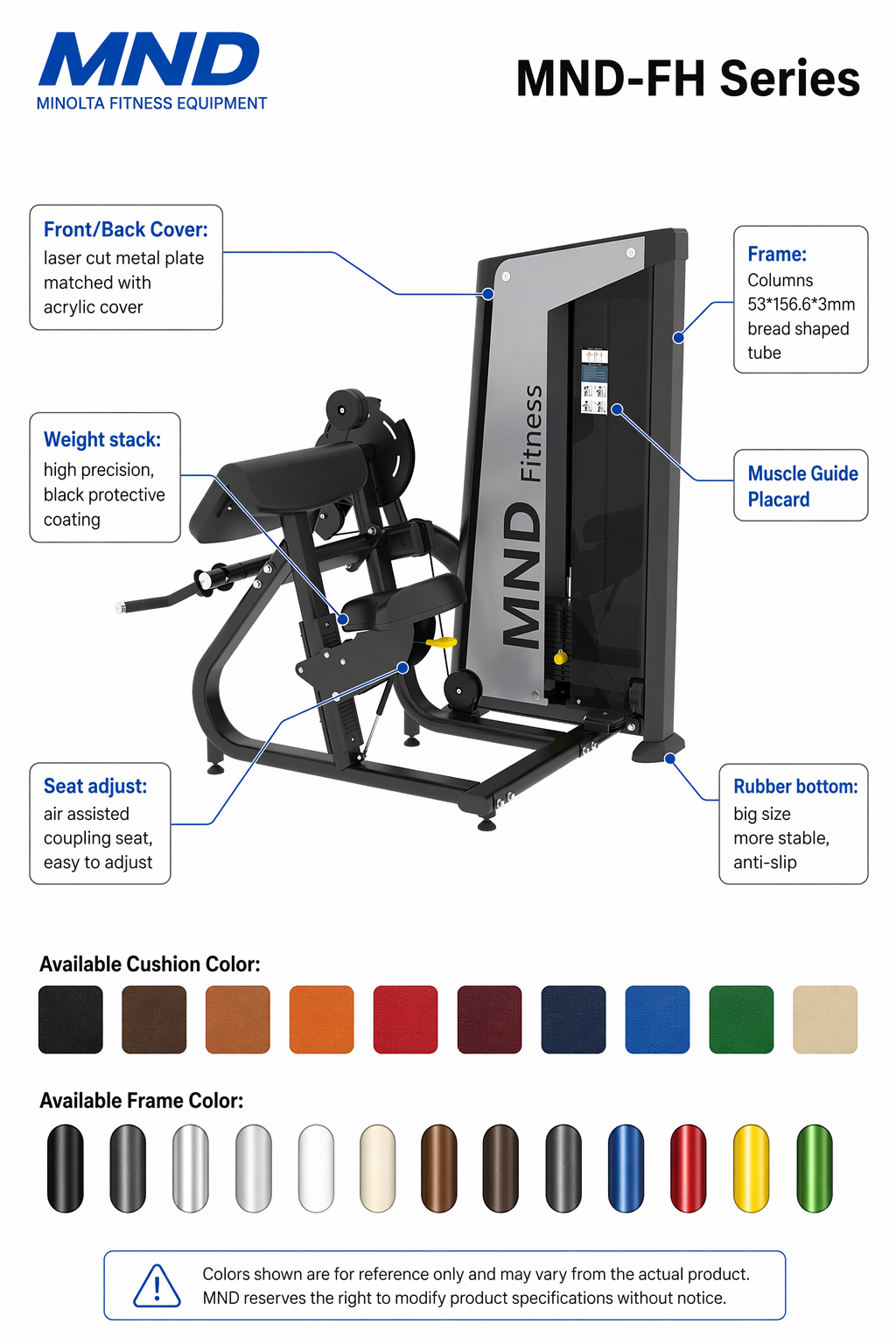
From a manufacturing standpoint, frame rigidity is the foundation. Equipment fabricated in specialized industrial hubs—such as Shandong Minolta Fitness Equipment Co., Ltd. (MND FITNESS), operating out of Ningjin’s established hardware manufacturing base—typically relies on heavy-gauge rectangular or flat-oval steel tubing (often 50x100mm or 60x120mm with wall thicknesses of 2.5mm to 3.0mm). Thin-gauge tubing twists under unilateral loading, which introduces lateral play into the movement arm and prematurely wears the internal bearings.
Bearing selection at the main swing pivots is equally critical. Low-end imports often press basic skateboard-style 608 bearings into pivot points, which quickly develop play. Commercial selectorized lines—such as MND's MND-F, MND-FM, and MND-FS series—utilize sealed spherical or tapered roller bearings inside machined pivot housings. These handle both radial forces from heavy stack selections and axial forces generated when an athlete pushes outward while pulling down.
Cam Profiles and Resistance Curve Realities
A frequent flaw in lower chest flight machine manufacturing is a circular pulley cam. A circular cam delivers a 1:1 linear resistance curve throughout the range of motion. Biomechanically, this is inefficient. The human pectoral muscle is mechanically strongest mid-stroke and weakest in the overstretched starting position and the fully shortened terminal contraction.
An elliptical or nautilus-shaped cam counteracts this imbalance:
- Initial Stroke: The radius of the cam is smaller, relieving joint stress at the shoulder joint when the humerus is abducted behind the torso.
- Mid-Path: The radius expands to challenge the muscle through its strongest mechanical leverage.
- Peak Contraction: The cam tapers slightly to prevent premature lockout while maintaining enough tension to maximize muscle recruitment across the lower chest fibers.
Without an engineered cam, lifters either use momentum to yank the weight out of the hole—risking pec tears—or they fail to complete the final 15% of the movement where lower pectoral recruitment peaks.
Specification Comparison for Facility Planning
Floor space in commercial gyms commands a premium. When balancing single-purpose stations against multifunctional cable setups, review the footprint and user requirements:
| Feature | Selectorized Lower Chest Fly | Dual Cable Column (Crossover) | Plate-Loaded Decline Press/Fly |
|---|---|---|---|
| Floor Footprint | Compact (approx. 1.5m - 2.0m²) | Large (approx. 6.0m - 10.0m²) | Moderate (approx. 2.5m - 3.5m²) |
| Learning Curve | Low (fixed axis, fast setup) | High (requires balance/core stability) | Low to Moderate |
| Maintenance Burden | Low (single cable/pulley routing) | Moderate (multiple pulleys, sliders) | Very Low (no cables) |
| Throughput Speed | Rapid (pin-selected weight) | Slow (frequent height adjustments) | Moderate (plate loading/unloading) |
Procurement Pitfalls: What Sourcing Teams Miss
A common oversight during factory inspections is ignoring the seat adjustment mechanism. Because the downward arc requires precise shoulder-to-pivot positioning, seat height is not optional. Pin-and-hole selectors that use low-grade plastic knobs often strip, and gas-assist struts that lack proper dampening either launch the seat upward or freeze entirely under heavy use.
Another issue lies in pad durability. Lower chest movements press the thoracic spine hard into the backrest to stabilize against the downward pull. Thin foam bottoms out, forcing the user's vertebrae against the mounting plate. Look for high-density molded polyurethane foam wrapped in commercial-grade vinyl (minimum 1.2mm thickness) with double-stitched perimeter seams.
Frequently Asked Questions
Can standard incline/flat fly machines be converted with seat adjustments?
Generally, no. Adjusting seat height on a flat fly machine simply raises or lowers the hand position relative to the torso, but the arms still move across a horizontal plane. A true lower chest motion requires an angled downward trajectory that flat machines cannot replicate without placing the rotator cuff in an impinged, awkward position.
How does plate-loaded compare to pin-selected for lower chest isolation?
Selectorized units maintain consistent tension via internal cable-cam linkages and offer faster weight changes, making them ideal for high-volume commercial clubs and beginner-friendly spaces. Plate-loaded variants offer raw capacity and direct linkage feel favored by bodybuilding gyms, but they require wider footprint clearance for weight plate horns and floor loading zones.
What stack weight is adequate for a commercial downward flight station?
Because chest fly movements involve a long lever arm, users work with significantly less weight than they would on a chest press. A weight stack ranging between 80 kg and 100 kg (176 lbs to 220 lbs) is generally more than sufficient for commercial installations, provided the pulley system maintains an effective 1:1 or 2:1 mechanical ratio suited to isolation movements.
Optimizing Your Strength Layout
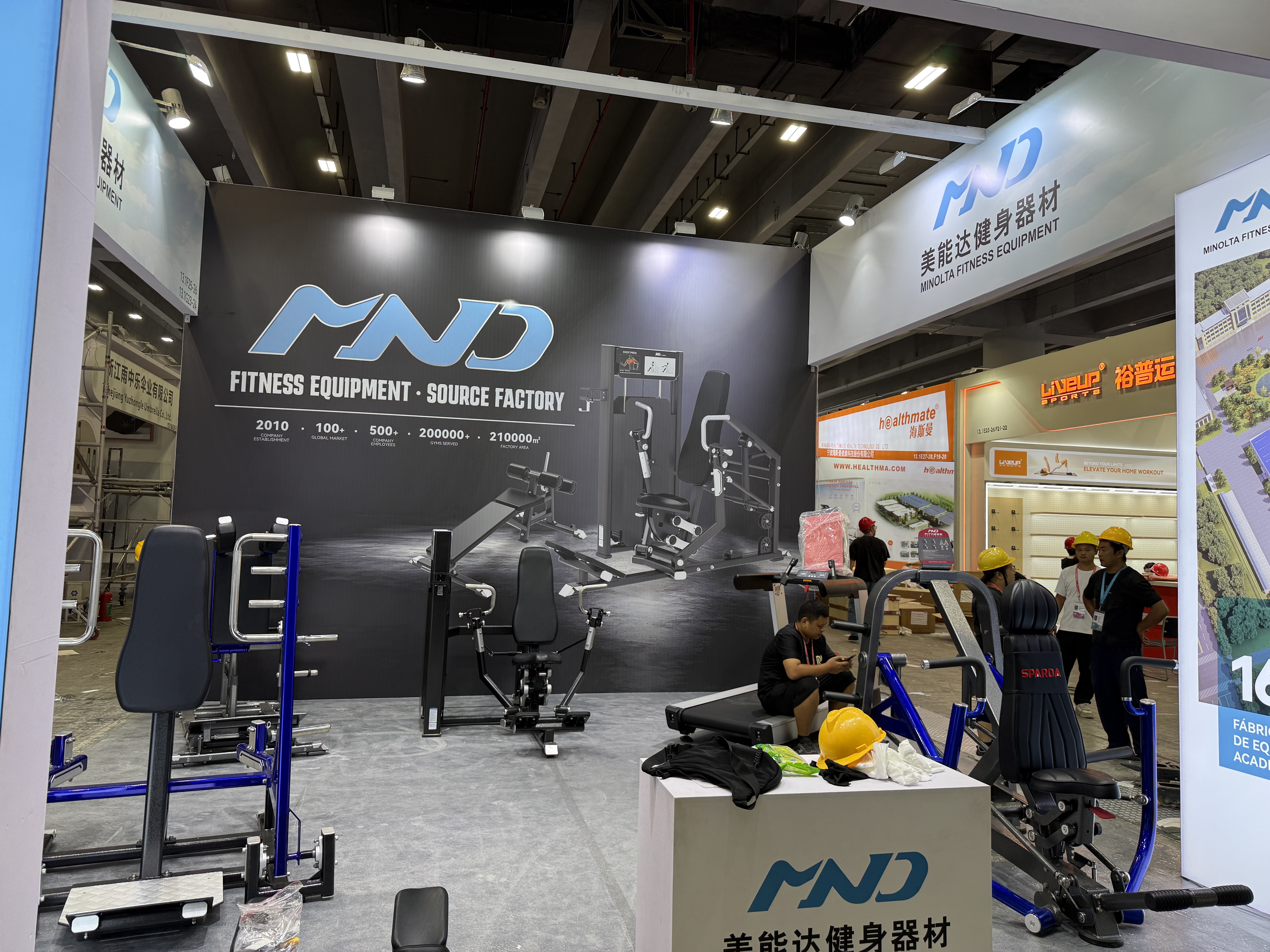
Whether you are outfitting a full commercial gym chain or updating an established club, targeting hard-to-reach muscle groups with dedicated stations improves member retention and floor safety. MND FITNESS manufactures an extensive line of strength stations across multiple series from our 120,000-square-meter facility, exporting proven commercial designs to more than 100 countries worldwide. If you are reviewing layout schematics or need technical specifications on selectorized strength equipment, contact our export engineering team to evaluate frame configurations, custom upholstery options, and container load planning.