


Navigating Canton Fair Fitness Equipment: A Ground-Level Sourcing Guide
Walking the sprawling corridors of the Pazhou Complex during the China Import and Export Fair can overwhelm even seasoned procurement directors. Sourcing Canton Fair fitness equipment is not simply about picking attractive frame designs off an exhibition stand; it is an exercise in structural vetting, supply chain tracing, and separating genuine manufacturing operations from opportunistic middlemen. With global shipping rates fluctuating and gym members expecting commercial-grade durability, making the wrong call at a trade booth leads to expensive warranty liabilities six months later.
For distributors, gym franchises, and brand owners sourcing wholesale fitness equipment China offers, the Canton Fair remains a primary discovery hub. However, high-gloss booth lighting often masks thin-walled steel tubing, second-rate pulleys, and questionable pivot bearing assemblies. Knowing how to evaluate what you see on the show floor—and knowing what questions to ask when the sales representative hands you their catalog—dictates whether your sourcing run yields a reliable partner or a shipping container full of maintenance headaches.
Exhibition Layout: Where to Target Your Walk
Navigating the complex requires tactical planning. Fitness gear typically slots into the sports, travel, and recreation product sections. While buyers often search for Canton Fair Phase 2 fitness equipment, scheduling can vary across spring and autumn sessions, frequently aligning Canton Fair sports and leisure products into Phase 3 or designated specialized halls depending on the session structure. Always verify the current phase directory prior to landing in Guangzhou to avoid burning two days in unrelated hardware or building material zones.
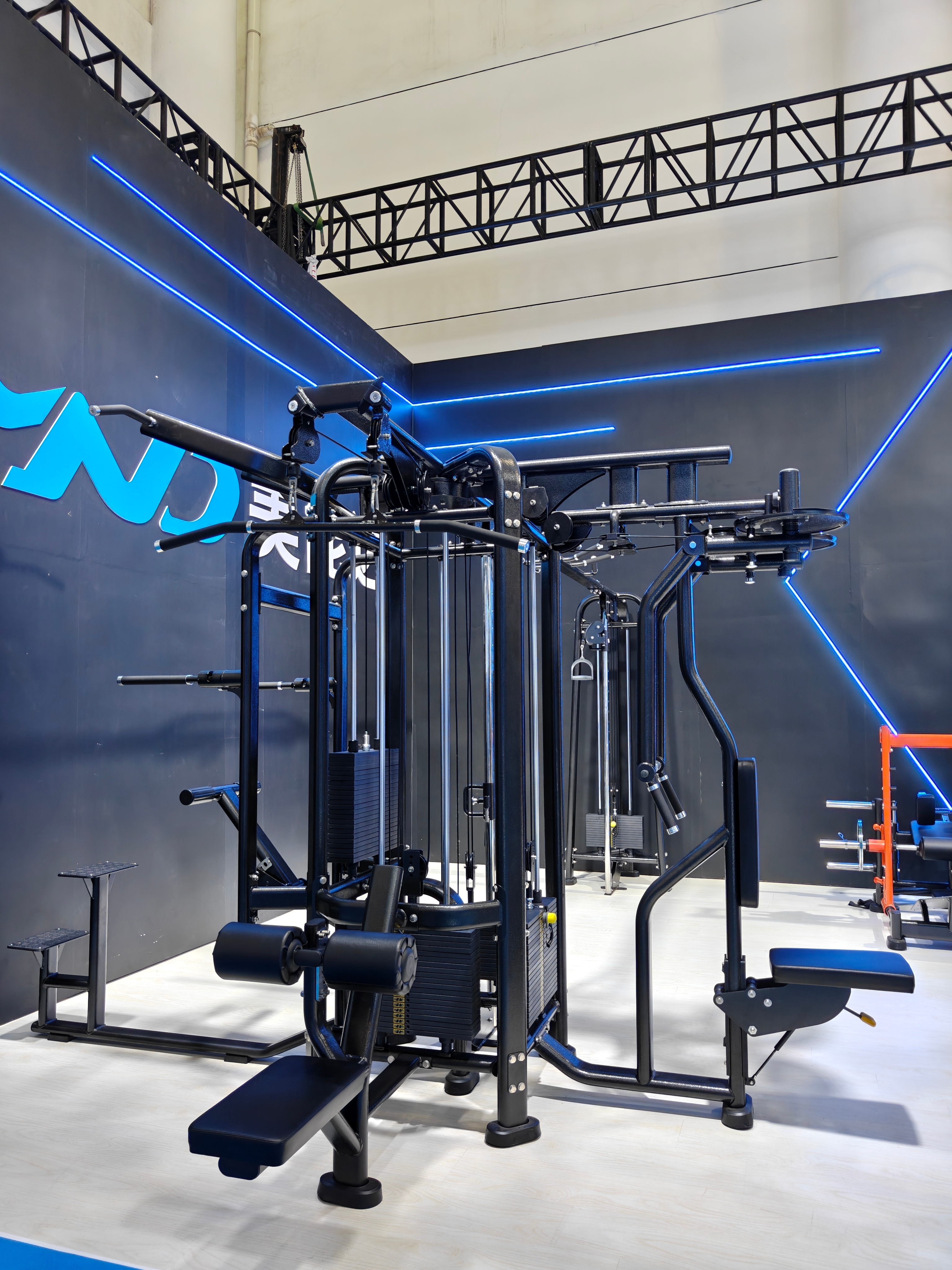
When you enter the sports halls, the density of Canton Fair fitness equipment exhibitors can be dizzying. Booths range from multi-bay displays featuring fully operational selectorized strength lines to 9-square-meter standard stalls displaying generic resistance bands and light home gear. If your objective is commercial gym equipment Canton Fair displays will demand a strict qualification protocol. While basic home gym equipment Canton Fair booths cater to light-duty, flat-pack retail, commercial strength units demand heavy-gauge structural steel and precise biomechanics.
Separating Trading Outfits from Real Manufacturers
Roughly a third of the companies exhibiting sports equipment operate strictly as export trading companies. While trading firms have their place for low-volume consolidation, dealing directly with an established gym equipment manufacturer China guarantees tighter engineering tolerances, consistent batch powder coating, and accessible spare parts support down the road.
Here is how you assess an exhibitor’s true operational footprint while standing in their booth:
- Examine the Welds and Tube Ends: Robotically welded frames show uniform, tight scallops with zero undercut. If you spot spatter around the bracket joints or uneven hand-grinding beneath the paint, the factory relies on manual, inconsistent fabrication. Check the end-caps: are they thick rubber or cheap, brittle plastic?
- Inspect the Drive Cables and Pulleys: Pull the pin on a selectorized stack and pull the cable slowly through its full arc. High-grade systems use nylon-coated aircraft cables (often tested to several thousand pounds of tensile load) coupled with deep-groove aluminum or fiberglass-reinforced nylon pulleys. If you feel friction or micro-vibrations, the pulley bearings are substandard.
- Ask About Origin Clusters: China’s fitness equipment manufacturing is heavily concentrated geographically. The northern cluster—centered around Dezhou and Ningjin in Shandong Province—dominates heavy commercial strength fabrication due to its dense hardware, tubing, and laser-cutting ecosystem. In contrast, coastal hubs in Zhejiang and Guangdong often lean toward consumer cardio, light plastics, or accessories. If a vendor claims to manufacture heavy pin-select multi-stations in a region known solely for injection molding, proceed with caution.
The Manufacturing Cluster Advantage: Shandong & Ningjin
Understanding regional manufacturing dynamics helps filter the exhibitor directory. In the commercial strength sector, Shandong Minolta Fitness Equipment Co., Ltd. (MND FITNESS) exemplifies how Ningjin’s hardware cluster translates into high-output, heavy-duty production. Backed by local steel-supply infrastructure, MND operates out of a 120,000-square-meter footprint encompassing automated fabrication workshops, rigorous quality inspection labs, and extensive demo facilities.
Scale matters because commercial equipment demands immense tooling investment. When a fitness equipment supplier China operates at this volume—exporting across more than 100 countries spanning Europe, South America, Africa, and Southeast Asia—their product ecosystem must support both strength and cardio variations without cutting structural corners.
Evaluating Commercial Strength vs. Cardio Machinery
When negotiating at the fair, differentiate how you inspect strength lines versus motorized or electronic cardio units. The failure points are fundamentally distinct.
Strength Series Engineering
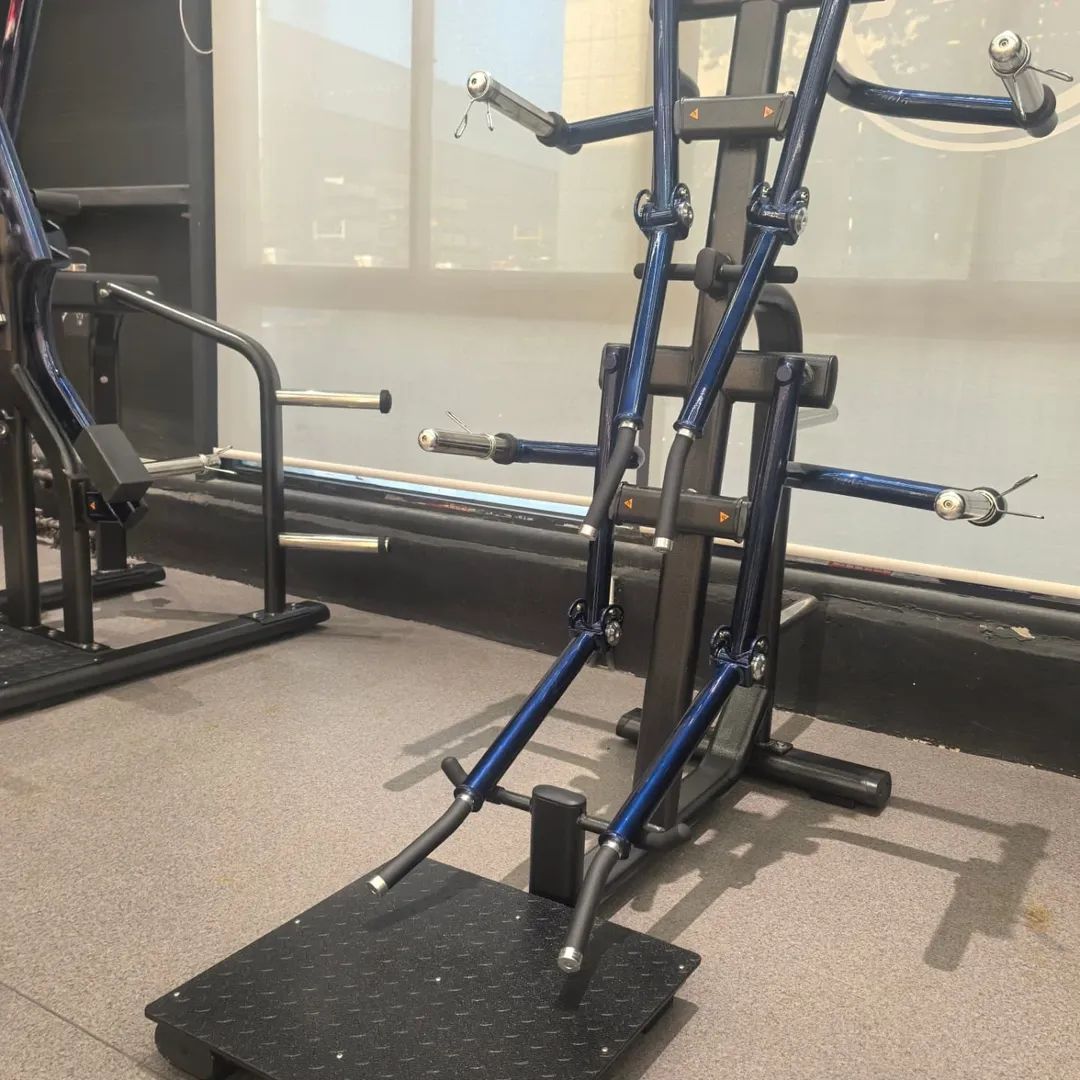
Commercial strength ranges—such as the MND-AN, MND-FM, MND-FH, MND-FS, and MND-FB selectorized stations, along with the MND-E Crossfit frames and plate-loaded MND-F, FF, G, and H series—must endure relentless public abuse. Look closely at:
- Steel Tubing Wall Thickness: Reliable commercial stations typically utilize 2.5 mm to 3.0 mm wall thicknesses in oval or rectangular structural tubes. Insist on raw tube specifications; lower-tier producers shave costs by dropping to 1.8 mm, which flexes under heavy loads.
- Weight Stacks and Guide Rods: Check the guide rods for chrome plating uniformity. Solid steel rods, rather than hollow tubes, minimize stack chatter. Guide rod bushings should be self-lubricating to prevent seizing in high-humidity gym environments.
- Cams and Convergence Angles: Sit on the machine and perform several repetitions. The resistance profile should match human muscular strength curves—increasing or tapering smoothly rather than dropping off suddenly at peak contraction.
Cardio Mechanics and Electronics
Evaluating Canton Fair gym equipment like commercial treadmills (such as the MND-X500, X600, and X700) or high-intensity MND-D series exercise bikes requires focusing on internal drivetrains rather than exterior styling:
- Continuous vs. Peak Horsepower: Clarify whether motor ratings reflect continuous duty (CHP) or peak rating. Commercial applications require robust AC motors designed to operate 12 to 16 hours daily without thermal tripping.
- Deck Thickness and Reversibility: Double-sided, pre-lubricated phenolics-coated running decks dramatically lower long-term club operating costs. Ask whether decks can be flipped once worn.
- Incline Screws and Frame Rigidity: Step heavily on the running board at maximum incline. Frame deflection indicates insufficient cross-bracing in the base chassis.
Factory Audits Beyond the Booth
Never sign a high-volume purchase order entirely on the Canton Fair show floor. The fair serves as a qualifying filter. Once you establish pricing parameters and confirm structural details with Canton Fair fitness equipment exhibitors, schedule a direct visit to the manufacturing facility before boarding your return flight.
A factory visit confirms whether the vendor actually owns the laser cutters, bending cells, and powder-coating lines, or whether they simply sub-contract fabrication out to disparate workshops. Walking through Shandong Minolta’s testing labs and production lines, for instance, provides clear verification of batch repeatability that cannot be matched by looking at a pristine single sample staged inside an exhibition hall.
Frequently Asked Questions
Which Canton Fair phase features fitness and gym equipment?
Fitness gear, sports equipment, and leisure goods are generally hosted in Phase 3 of the fair, although specific allocations for sports accessories and home recreation occasionally touch other sections. Always verify the official Canton Fair floor directory for the specific session you plan to attend.
Can I purchase single showroom samples directly from the fair?
Yes, many exhibitors prefer selling floor samples on the final afternoon of the phase to save on return freight. However, verify beforehand whether the item is a true production-run unit or a non-standard prototype assembled purely for display.
What are standard warranty practices when sourcing gym equipment from China?
Commercial manufacturers generally provide 5 to 10 years on structural mainframes, 1 to 2 years on moving mechanics (pulleys, bearings, cables), and shorter coverage on high-wear items like upholstery. Reliable suppliers will bundle a 1% to 2% critical wear-parts kit directly inside your initial container shipment.
Next Steps for Your Sourcing Run
If you are planning your upcoming sourcing schedule or evaluating options for wholesale fitness equipment China, preparation before entering the complex is critical. Review product specifications, shortlist verified manufacturers like Shandong Minolta Fitness Equipment Co., Ltd., and book on-site factory inspections well ahead of fair week to secure competitive production slots and protect your procurement investment.