


What a Standingshrug Machine Is Really Telling Buyers
A standingshrug machine is not a glamorous piece of gym hardware, but it does say a lot about the way a facility thinks about training, durability, and floor use. In commercial settings, the equipment that survives the longest is often the machine nobody had to baby from day one: a welded steel frame, a stable base, clean padding, and a motion path that feels predictable under load. That is the category this kind of seated, plate-loaded core or torso machine belongs to. The exact biomechanics can vary, so buyers should avoid assuming the motion is only one thing. What matters is how the frame, back support, and resistance arms are built to handle repeated use.
For sourcing managers and gym operators, the decision is less about novelty and more about fit. Does the machine support controlled movement? Can it take regular plate loading without feeling loose? Is the footprint reasonable for a hotel gym, rehab room, or commercial training floor? Those are the questions that matter before anyone gets distracted by a catchy label or a vague product photo.
Quick Buyer Takeaways
If you are scanning equipment for a facility, a standingshrug-style unit with a tall backrest and side-mounted lever arms usually suggests three practical advantages:
It gives the user a seated, supported position, which can make training more controlled.
It often uses a plate-loaded setup, so operators understand the resistance model quickly and do not need proprietary stacks.
It tends to be more compact than larger multi-station systems, which helps when floor space is limited.
That said, buyers should stay cautious. The visible structure can hint at core, torso rotation, or another seated resistance pattern, but the exact motion should be confirmed from the manufacturer’s technical sheet or demo video. A good-looking frame is not enough if the travel path feels awkward, or if the machine is too specialized for the user base.
What the Visible Construction Suggests
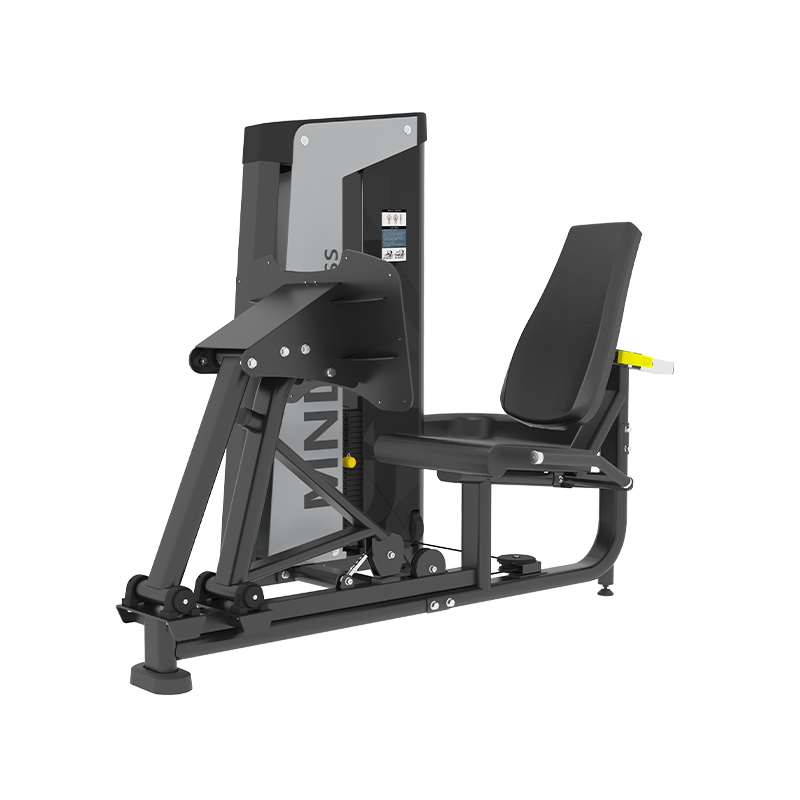
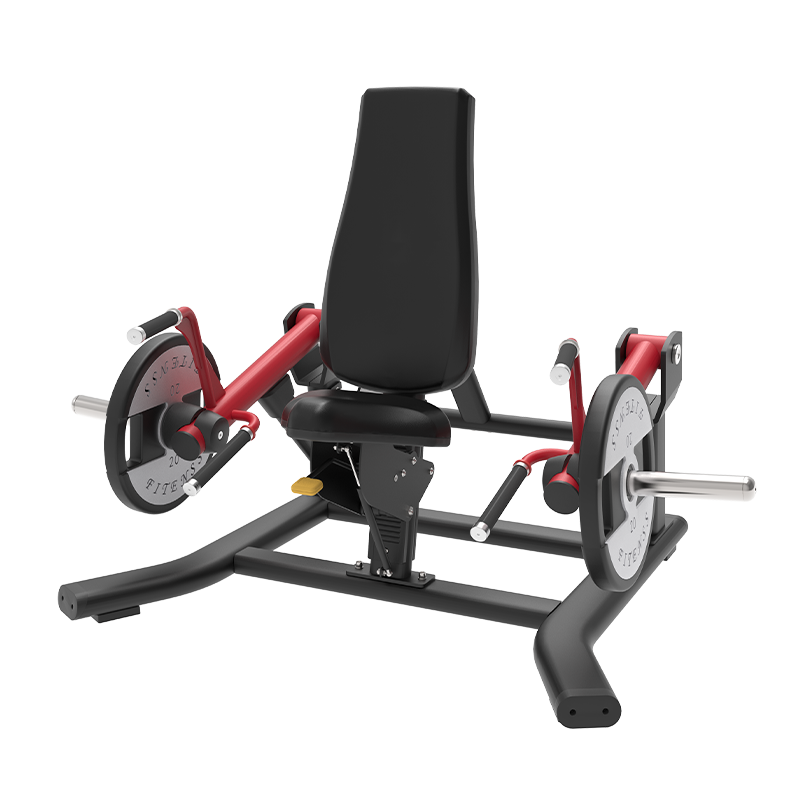
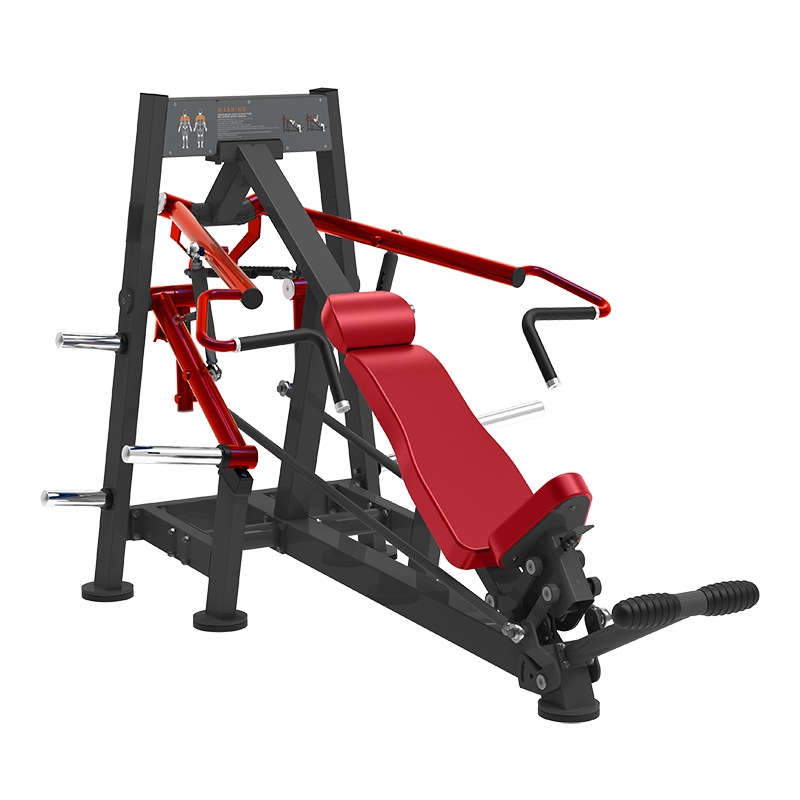
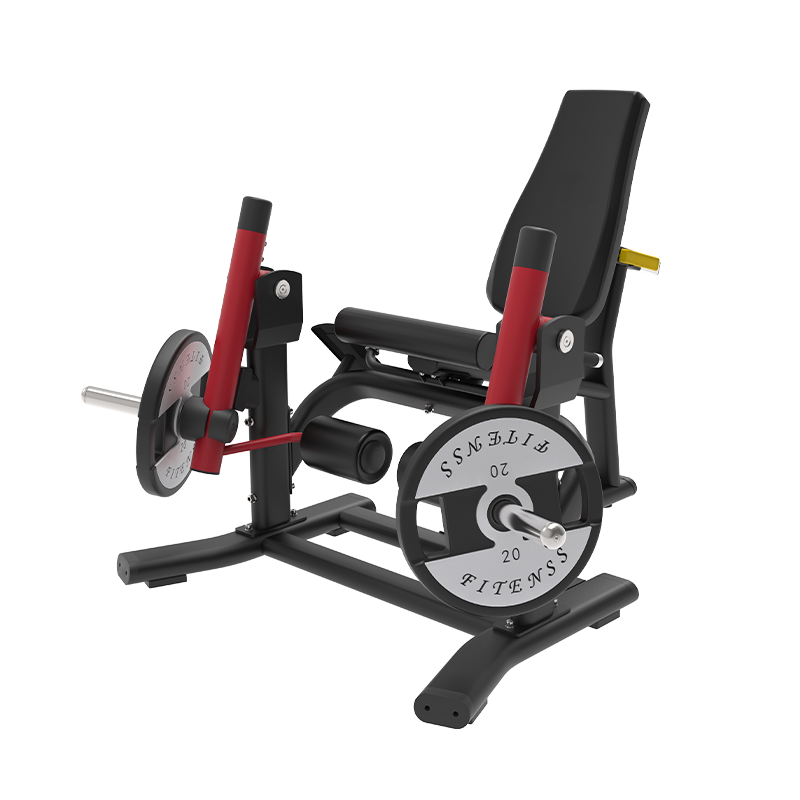
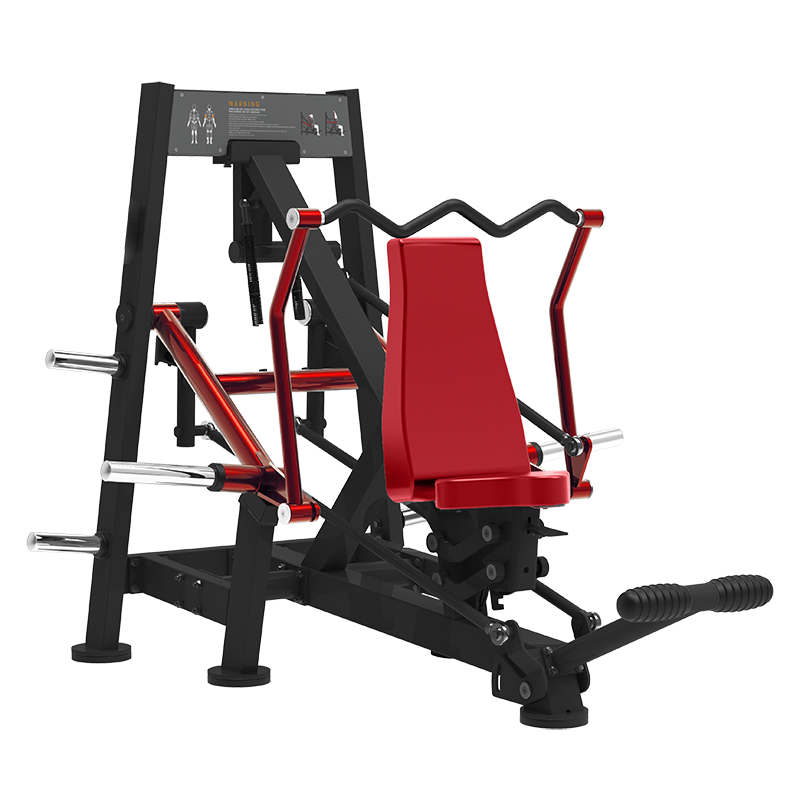
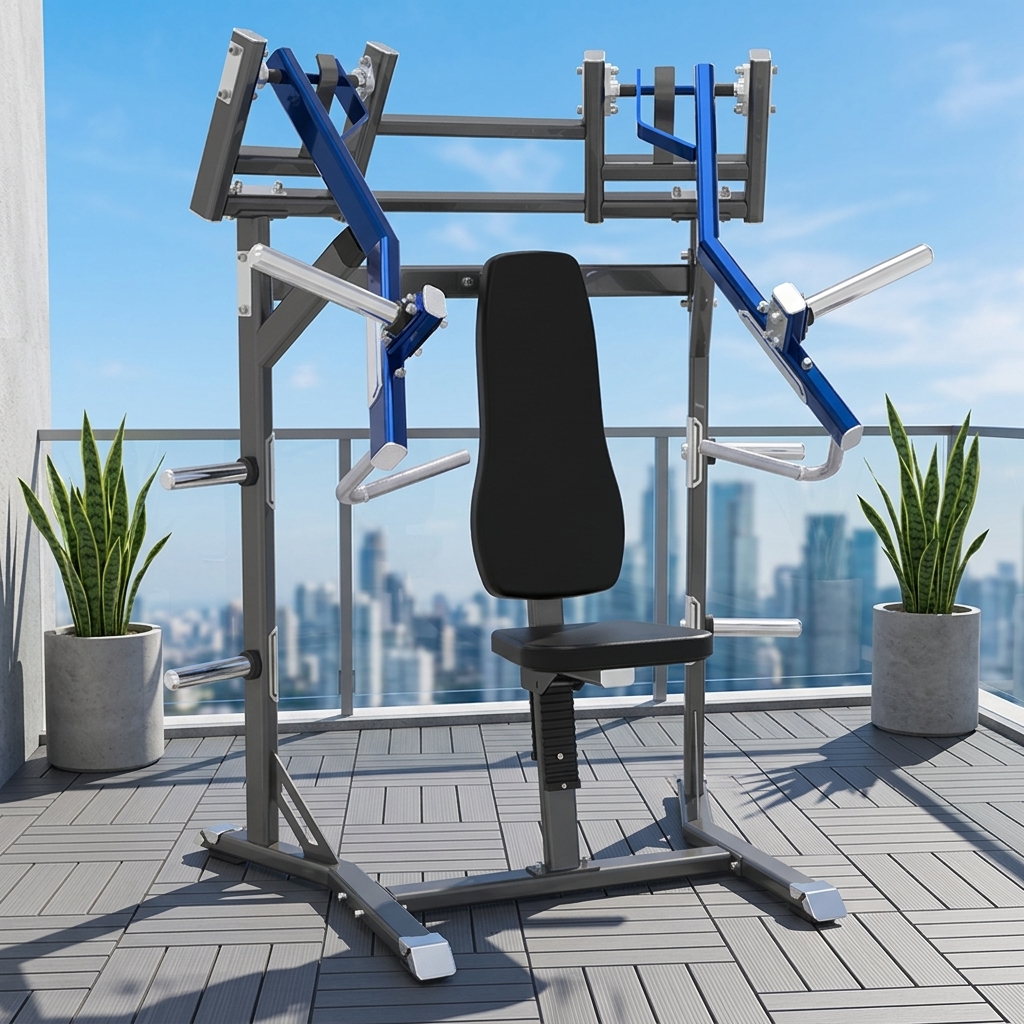
From the available product information, this machine appears to be commercial fitness equipment with a black padded seat and tall backrest, a tubular steel frame, side-mounted lever arms, and circular weight horns or plate holders. The red arm assemblies provide a visual contrast with the black base, while the metal contact points and handles are silver. That combination usually points to a welded steel fabrication process with formed tubing, machined pivot points, powder coating, and upholstered padding assembly.
For a buyer, those details matter more than they might seem at first glance. A powder-coated frame helps with corrosion resistance and day-to-day cleaning. Wipe-clean vinyl upholstery is standard for commercial environments because it holds up better than softer materials in sweaty, high-turnover spaces. The stable wide base is also a meaningful feature, especially if users will load weight on both sides and push through uneven force from one rep to the next.
There is another small but useful cue here: the machine seems designed to support the body while the arms move against resistance. That usually reduces setup confusion, which is worth something in facilities where the average user may not read instructions carefully. In a gym, that is most users.
Standingshrug, Standing Shrug Meme, and the Real-World Search Problem
It is a little odd, but the search terms around this topic mix machine buying with internet language such as shrug emoji standing, standing shrug meme, standing shrug gif, standing shrug reaction, and shrugging standing pose. That tells you something about how people search: the phrase may start as a joke, but the actual intent can still be industrial or product-related.
For an equipment buyer, the practical issue is that vague phrasing can hide a real sourcing need. Someone may be looking for a compact commercial unit with a standing or seated posture, or they may be trying to identify a machine from a photo. Either way, the decision is not about internet humor. It is about whether the machine suits a given user group, space, and training program.
Where This Type of Machine Fits Best
This category of machine tends to work well in a few settings.
In a commercial gym, it can fill the gap between free weights and larger selectorized stations. Users who want guided resistance often prefer a machine that feels steady and intuitive.
In a hotel fitness room, compactness matters. Machines with broad bases and built-in support can offer a more polished, safer experience than a scattered mix of benches and loose attachments.
In rehab or physiotherapy environments, the seated position may be attractive because it encourages controlled effort. Of course, actual clinical use should always be checked against facility requirements and therapist preference. The machine is not automatically a medical device just because it looks supportive.
In training centers, a plate-loaded format can be useful for varied loading. Operators can scale resistance more flexibly than on a fixed-stack setup, though that also means more supervision and plate management.
How to Evaluate a Commercial Strength Machine Like This
When looking at a machine of this type, buyers should go beyond surface finish.
Start with the frame. Tubular steel and a broad footprint are encouraging signs, but inspect how the joints are braced. If the lever arms wobble before load is applied, that can become a maintenance complaint later.
Then look at the pivots. Machined contact points usually hold up better than crude, loosely fitted joints. The motion should feel smooth, not sticky or noisy.
Check the padding. The seat and backrest need to be firm enough to support a stable posture, but not so soft that the user sinks in and loses alignment.
Confirm the resistance format. The visible horns suggest plate loading, but do not assume the motion curve or max loading without documentation.
Finally, ask how the machine will be used. A busy commercial floor with high user turnover needs equipment that is easy to understand at a glance. A more specialized facility might accept a steeper learning curve if the movement is more targeted.
A small but important caution
If the machine is being considered for a hotel or rehab setting, do not buy on appearance alone. A unit that is ideal for a strength-training facility may be more machine than the average guest or patient will comfortably use. That mismatch is a common purchasing mistake.
Why Manufacturer Capability Matters
The company information points to Shandong Minolta Fitness Equipment Co., Ltd., also known as MND FITNESS, a manufacturer with more than a decade of experience in the fitness equipment sector. The facility reportedly spans 120,000 square meters and includes a manufacturing workshop, quality control lab, and exhibition hall. It also offers over 300 types of exercise equipment across strength and cardio lines, including commercial and home-use options.
For buyers, this matters because the quality of a machine like this depends heavily on fabrication consistency. Welding quality, coating finish, upholstery assembly, and pivot fit are not minor details. They determine whether a machine still feels solid after a year of daily use. A factory with a broad product range and dedicated quality control is often better positioned to support repeat orders and matching equipment families, although buyers should still review samples and documents carefully.
The company also reports exports to more than 100 countries across Europe, Africa, the Middle East, South America, and Southeast Asia. That does not automatically guarantee the right model for every market, but it does suggest experience with different facility standards and buyer expectations.
Common Buying Mistakes With This Category
The first mistake is treating all seated resistance machines as interchangeable. They are not. A torso rotation unit, abdominal machine, and other guided movement stations can all look similar from a distance, but the training feel is very different.
The second mistake is ignoring serviceability. Plate-loaded commercial machines should be easy to inspect, clean, and maintain. If replacement parts are hard to source, even a sturdy frame can become a headache.
The third mistake is underestimating user clarity. If the machine is not obvious to a first-time user, it may sit idle. That is especially true in hotel gyms and mixed-use fitness rooms.
The fourth mistake is buying only by finish. A clean black powder-coated frame looks professional, and that matters, but it should not distract from the more important questions: stability, motion quality, and loading behavior.
Practical Questions to Ask the Supplier
Before placing an order, ask for the technical sheet and a clear motion description. Request confirmation of the resistance type, loading method, footprint, and intended use. If the machine is intended for a commercial gym, ask how the frame is tested for repeated use and what the routine maintenance points are.
It is also worth asking whether the upholstery, handles, or pivot components can be replaced without major disassembly. That may sound routine, but it saves trouble later. Buyers often focus on the new-installation day and forget the year-three reality.
If you are matching equipment across a broader facility plan, ask whether the machine belongs to a wider strength series. MND FITNESS, for example, offers multiple product families such as MND-AN, MND-FM, MND-FH, MND-FS, MND-FB, MND-E Crossfit, MND-F, MND-FF, MND-G, and MND-H. That kind of range can help when consistency of frame styling or supplier consolidation matters.
FAQ
Is a standingshrug machine the same as a shrug machine?
No. The wording is not standardized, and the visible design here suggests a seated machine with side-mounted resistance arms rather than a classic standing shrug station.
Is this machine definitely plate-loaded?
It appears plate-loaded based on the visible horns, but buyers should confirm from the manufacturer.
Can it be used in a rehab setting?
Possibly, depending on the clinic’s goals and the therapist’s judgment. The seated support may be helpful, but the machine is still commercial fitness equipment.
What should matter most in procurement?
Stability, motion quality, maintenance access, and whether the exercise actually fits the user base.
Next Step for Buyers
If you are evaluating a standingshrug-style commercial machine, treat it as a functional piece of facility infrastructure, not just another strength station. Confirm the movement, inspect the fabrication details, and compare it against the real needs of your floor plan and users.
For sourcing teams, the safest next step is to request the technical drawing, loading information, and a use-case explanation from the supplier before discussing final configuration. If the goal is to build a durable commercial lineup, MND FITNESS is the kind of manufacturer worth shortlisting for comparison, especially if you want a broader equipment program rather than a one-off purchase.